• Following Us

  • Categories

  • Check out the Archives


  • Awards & Nominations

Non-Review Review: Terminator – Dark Fate

Terminator: Dark Fate is perhaps the second-best of the four attempts to make a third Terminator movie.

To be fair, the previous three efforts have all been exercises in figuring out how close or how far to hew to Terminator 2: Judgment Day. There has been a sense of watching various chefs trying awkwardly to replicate a signature dish. Does a Terminator sequel need Sarah Connor? Does Sarah Connor have to be played by Linda Hamilton? Is Arnold Schwarzenegger essential, and to what degree? James Cameron isn’t going to direct because he has his own projects, but what level of involvement is “just right”? Is it enough for him to do some press, to be a producer, or does he need a story credit?

Fight and flight.

The results have been as interesting as they have been frustrating. Few film franchises has branched quite as dramatically as the Terminator franchise, perhaps reflecting the series’ own preoccupation with time travel. Terminator 3: Rise of the Machines, Terminator: Salvation and Terminator: Genisys have all tried to figure out a way to make a sequel to Judgment Day, and have only really managed to agree that each of the others adopted the wrong approach. Dark Fate at least seems like the right Terminator sequel for its own time and place, tapping into a wave of nineties anxiety and franchise dominance.

Dark Fate is only moderately successful as a film in its own right, and as a follow on to one of the most beloved blockbusters of all-time. It says much more about the larger Terminator franchise than about Dark Fate that it counts as one of the best sequels to Judgment Day.

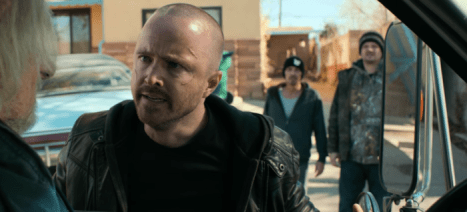
Hes back.

Continue reading

Non-Review Review: Zombieland – Double Tap

“Time to nut up or shut up,” reflects veteran zombie hunter Tallahassee as a horde of the undead make their way across the front lawn of the Elvis-themed motel where he has taken up residence. His doppelganger, Albuquerque, responds derisively, “Isn’t that phrase a little 2009?”

It is more than “a little” 2009. Then again, Zombieland: Double Tap is more than a little 2009. The film is the latest in a line of long-delayed sequels, including Deadwood: The Movie, Maleficent: Mistress of Evil, Toy Story 4 and Rambo: Last Blood. It feels as if the studios are rushing through their development slate as the end of the decade approaches, frantically trying to check off any potential sequels and spin-offs that might have been gestating. This is all a little strange, given that Zombieland was itself a modest critical and commercial hit, and hardly a film crying out for a sequel that has been a decade in the making.

“Tonight were going to party like it’s 2009.”

Double Tap feels rooted in 2009, for better and for worse. It is great to see this cast reassembled, as if the intervening decade had never happened. Part of the appeal of Zombieland was the combination of an apocalyptic horror with a low-key hangout comedy, and that is dependent on cast chemistry. The years have not altered that. However, there’s also an awkwardness to the film, a sense in which it hasn’t managed to keep pace with times. A few of its jokes feel curiously dated, but it also seems strangely disengaged from any shifting cultural trends over the past decade.

The result is a movie that is as solid and charming as the original film, but which occasionally feels like it is running in place. Double Tap is easy and entertaining, but never quite gets the blood flowing.

Columbus’ Day.

Continue reading

Non-Review Review: Maleficent – Mistress of Evil

Maleficent: Mistress of Evil might be the worst wide release of 2019, which is no small accomplishment in a year that produced Welcome to Marwen, Life Itself and Hellboy.

To be fair, the film’s starting point is decidedly eccentric. There is an argument to be made that the original Maleficent helped to kick start Disney’s live action remake renaissance, alongside the greater success of Alice in Wonderland. While the film didn’t quite do Aladdin or The Lion King numbers, it earned a hefty three-quarters-of-a-billion dollars at the global box office. It isn’t a surprise that it got a sequel. It is a surprise that the sequel took half-a-decade to materialise, to the point that Disney’s live action cinematic slate has already moved well beyond this villain-centric reimagining.

She’s really glowing lately.

Even allowing for the five year gap, Mistress of Evil is a staggeringly tone-deaf piece of work. The original Maleficent was a very clumsy piece of allegory, but an ambitious one. Obviously drawing from the same basic revisionist approach as Wicked or Oz: The Great and Powerful, the film attempted to offer an empathic and compassionate approach to one of the great villains of the Disney canon. The film depicted Maleficent as the victim of assault and shaming, a target of a patriarchal smear campaign.

Unfortunately, despite nods at subverting conventional gender narratives, Maleficent doubled down on them. Instead of allowing its title character her own strength and independence, Maleficent insisted on redeeming the character through the narrative of motherhood. This was decidedly uncomfortable, the obvious insinuation being that the only way for a woman to recover from such a brutal assault was through embracing conventional gender roles. Still, as misguided and clunky as the execution was, it was interesting to see a family-focused blockbuster story grappling with these sorts of big ideas.

“I’m Batman.”

Mistress of Evil somehow finds a way to double-down on the misguided clunkiness while also stripping out anything resembling an interesting or engaging social commentary. Almost everything about the movie is horrendously and grotesquely misjudged. Mistress of Evil is a frankly inexplicable hybrid of groan-worthy fifties domestic sitcom and pained allegory about the folly of resistance even when being herded into gas chambers. That isn’t even a “read” of the film, it’s “what is literally depicted on screen.”

The result is one of the most ill-judged blockbusters of the past twenty years.

Magnificent.

Continue reading

New Escapist Column! “Deadwood: The Movie”, “El Camino” and Closure In The New Age of Television…

I published a new In the Frame piece at Escapist Magazine yesterday. This one looks at the recent releases of Deadwood: The Movie and El Camino: A Breaking Bad Movie as an illustration of how much the television landscape has changed in recent years.

These belated capstones to beloved series – Deadwood and Breaking Bad – are interesting because they afford the creative talent the opportunity to wrap up their story free from the production constraints of television, the urgent desperate churn of the conveyor belt that demands workable solutions in insanely short periods of time. These epilogues arrive years after the fact, and are the product of careful consideration and reflection. They allow their creators to tie a little bow around their work. After all, sometimes it is nice to have distance.

You can read the piece here, or click the picture below.

151. Fight Club – Summer of ’99 (#10)

Hosted by Andrew Quinn and Darren Mooney, and this week with special guests Charlene Lydon and Alex Towers, The 250 is a (mostly) weekly trip through some of the best (and worst) movies ever made, as voted for by Internet Movie Database Users. New episodes are released every Saturday at 6pm GMT.

This time, continuing our Summer of ’99 season, David Fincher’s Fight Club.

1999 was a great year for movies, with a host of massively successful (and cult) hits that would define cinema for a next generation: Being John Malkovich, Magnolia, American Beauty, The Green MileThe Insider, The Matrix. The Summer of ’99 season offers a trip through the year in film on the IMDb‘s 250.

A successful young insurance claims adjuster finds himself comfortable existence literally blown to pieces after two chance encounters: first with his unlikely kindred spirit Marla Singer and then with charismatic anarchist Tyler Durden. However, what initially seems liberating quickly escalates into something that is much less comfortable.

At time of recording, it was ranked 10th on the Internet Movie Database‘s list of the best movies of all-time.

Continue reading

New Escapist Column! “Joker” as a Perverted Superhero Origin Story…

I published a new In the Frame piece at Escapist Magazine yesterday. Naturally, it tackled the big release of the moment, Todd Phillips’ Joker.

Joker has been the source of a lot of controversy and attention. However, one of the most interesting debates around it has been the discussion over whether it counts as a superhero story at all – director Todd Phillips and actor Marc Maron have been quick to distance the film from the genre. However, despite these claims, Joker actually works very well as a perversion of the archetypal superhero origin story. In doing so, it suggests something interesting about the state of the genre at the current cultural moment.

You can read the piece here, or click the picture below.

Non-Review Review: The Day Shall Come

The Day Shall Come is an ambitious piece of work that suffers from some very fundamental flaws.

Chris Morris’ long-awaited follow-up to Four Lions treads on relatively familiar ground. The narrative unfolds along two threads in parallel. The first of these focuses on Moses Al Shabazz and the Church of the Star of Six, a vaguely radical (but completely non-violent) religious organisation built around addressing historical injustice and using psychic powers to bring down construction cranes over Miami. The other narrative thread is build around the bureaucratic machinations of local law enforcement, desperate to justify the bulking up of their budget after the attacks on the World Trade Centre.

My ami.

Separately, these elements feel like they should work well enough for Morris. The opening credits promise that the film is “inspired by one hundred true stories” and the set-up is absurdist enough that it feels entirely believable. Morris’ knack has always been in articulating the heightened and surreal aspects of the modern world while grounding them in mundanity, so that even the most outlandish of concepts feels anchored in a world that is recognisable and convincing. Like all great satirists, Morris holds a mirror up to the world that he sees and produces a caricature that feels as true as an naturalist portrayal.

However, The Day Shall Come just doesn’t work. A lot of this is tonal, with one of the film’s two central story lines occasionally veering into trite sentimentality that feels completely at odds with the rest of the film and which plays as an attempt to soften Morris’ more conventional and abrasive style. The result is a film that has a few compelling elements and solid (if bleak) gags, but which often feels unjustly worried about how its audience will respond and so sands down its rough edges to make something more palatable. The problem is that the rough edges are by far the most interesting parts.

He can preach until he’s horse.

Continue reading

150. Joker – This Just In (#9)

Hosted by Andrew Quinn and Darren Mooney, and this week with special guest Jenn Gannon, The 250 is a (mostly) weekly trip through some of the best (and worst) movies ever made, as voted for by Internet Movie Database Users. New episodes are released every Saturday at 6pm GMT.

This week, Todd Phillips’ Joker.

In eighties Gotham, a failed clown descends into madness as the city breaks down around him. Garbage builds up in the streets as violence lurks in the alleyways. What kind of a man can survive such a world?

At time of recording, it was ranked 9th on the Internet Movie Database’s list of the best movies of all-time.

Continue reading

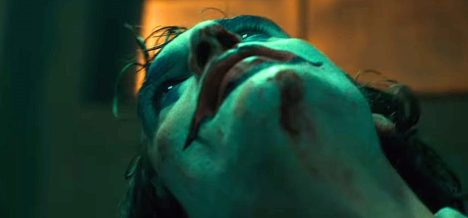
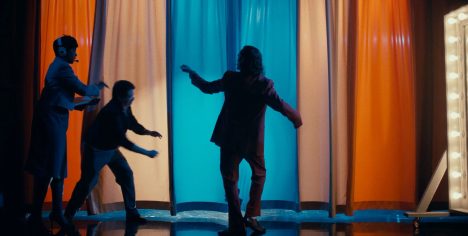
Non-Review Review: Joker

The most interesting parts of Joker are inevitably going to be drowned out in shout matches about the least interesting parts of Joker.

Before the film was released, it seemed to have a totemic power. Critics (especially American critics) seemed tied up in how “dangerous” this cinematic origin story of a killer clown could be. Entertainment Weekly refused to assign the film a simple letter grade. Vulture ruminated on whether mainstream audiences were ready for a film that combined the moral ambiguity and grit of seventies cinema with the trappings of superhero blockbusters. The film won the Golden Lion at the Venice Film Festival, and director Todd Phillips did his bit to stir the pot by complaining about the “far left” or “woke” culture.

All of which seems to combine to suggest that Joker is a film of the moment, to imbue the live action R-rated autumnal release about Batman’s arch enemy with a powerful cultural resonance. Joker seemed to exist as a Rorschach test, even before anybody arguing about it had actually watched a full scene of footage from it. Listening to the chatter, reading the churn of the internet, it seemed like Joker had to mean something. Even if the film refused to provide a simple meaning, that meaning would be imposed on it. Joker was to be the best and worst of the current moment. It was to be a film that spoke to the “now.”

As such, it is almost a relief how stridently Joker refuses to actually say anything particularly insightful, and to trollishly chide the conversation around it for trying to force meaning upon it. In one of the film’s most absurdly on-the-nose moments, the camera passes over a demonstration outside a city opera house as protestors wave signs in the air. “We’re all clowns,” the sign proclaims. Amid the cacophony around it, how right Joker is.

Continue reading

Non-Review Review: Judy

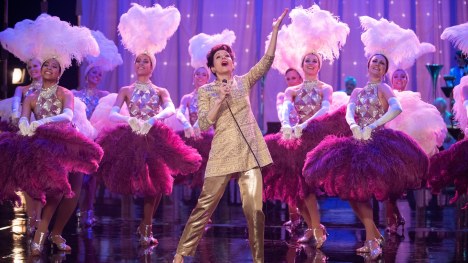
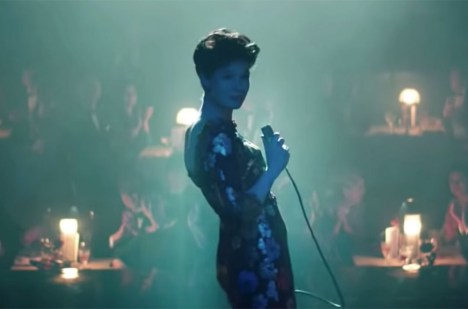
Judy is set primarily against the backdrop of Judy Garland’s time performing in London in the late sixties within the six months leading to her death.

As such, it’s no surprise that the film features more than a few sequences of the protagonist taking to the stage and performing to the sold out crowds. In fact, there are very few surprises in Judy at all. The film hits most of its marks and delivers pretty much everything that is expected of it. After all, what would be the point of a Judy Garland biography that didn’t include renditions of old favourites like Somewhere Over the Rainbow or even The Trolley Song? The film’s framing device allows director Rupert Goold to fold these classics in without having to embrace the musical sensibilities of something like Rocketman.

Let’s Judge Judy.

The most revealing and indicative of the performances peppered through the film is not the one where Garland falls to pieces, nor the one where she makes a triumphant return and pours her heart out to the audience. (Naturally, the film hits both of those marks.) The most compelling of these sing-on-stage sequences is the first. Having arrived in London, Garland has refused to rehearse. As opening night approaches, she sits in her bathroom drinking. She is micromanaged and guided to the stage, thrown out in front of the first crowd. She is palpably nervous. The audience is anxious. It could all fall apart.

And it… goes okay. It isn’t the best night ever, nor the worst. Garland’s voice cracks a little even when she finds the right tempo, her movements are slightly robotic rather than spontaneous or energised. However, despite these complaints, everything holds together long enough for Judy to finish the set. The crowd gets what they paid for, and Garland delivers what she promised. It plays almost as a microcosm of Judy as a whole.

A familiar song.

Continue reading