• Following Us

  • Categories

  • Check out the Archives


  • Awards & Nominations

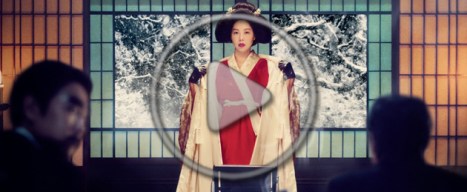
46. Ah-ga-ssi (The Handmaiden) – This Just In (#247)

Hosted by Andrew Quinn and Darren Mooney, and this week with special guests Grace Duffy and Graham Day, This Just In is a subset of The 250 podcast, looking at notable new arrivals on the list of the 250 best movies of all-time, as voted for by Internet Movie Database Users.

This time, Park Chan-Wook’s Ah-ga-ssi.

Continue reading

Non-Review Review: Their Finest

This film was seen as part of the Audi Dublin International Film Festival 2017.

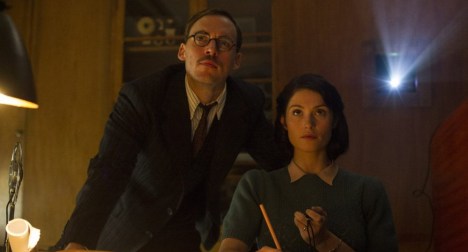
Their Finest is a charming, if somewhat overly schmaltzy, Second World War comedy drama.

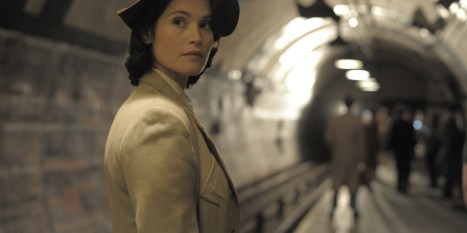
To be fair, the basic premise and setting do a lot to carry the film. The Second World still exerts a mythic power, particularly to the members of the United Kingdom that weathered the Blitz before marching (with American support) to victory. That moment is powerful and evocative, Britain serving as the “island fortress” holding Nazi German at bay. The imagery is striking, from the bombed out buildings to the rubble on the streets to the sounds of air raid sirens. It is a rich and evocative setting.

Projecting.

Projecting.

More than that, it is a setting that offers all manner of storytelling possibilities. As one of the defining moments of the twentieth century for Great Britain, it is the perfect fodder for telling smaller and more intimate tales. After all, everybody knows the basics of the Blitz, so there is more opportunity to explore the lives of those who exist at the fringe of the narrative. Those were extraordinary times, and so stories that might otherwise seem ordinary are elevated to be extraordinary by virtue of unfolding against those circumstances.

Their Finest is the tale of about one woman’s struggle to be heard and acknowledged as a writer against this backdrop, fighting the war at home in any number of ways. It is a fascinating premise, and one that feels relatively under-explored in the larger context of this defining historical moment. While Their Finest occasionally trips into cliché and melodrama, and occasionally even loses focus on the story that it is trying to tell. Still, a strong cast and a lot of charm carry Their Finest a long way.

Station keeping.

Station keeping.

Continue reading

Star Trek: Voyager – Favourite Son (Review)

Favourite Son feels like the culmination of something that has been festering across the third season of Star Trek: Voyager.

The Star Trek franchise is generally regarded as progressive and forward-thinking. There is some debate to be had about whether this is an accurate summary of the franchise, given some of the creative decisions made over the course of its half-century run. However, there are times at which the franchise feels particularly liberal and points at which it feels particularly reactionary. A product of the mid-nineties, running through to the turn of the millennium, Voyager tends to feel very conservative in places.

This is a little bit what watching the episode feels like.

This is a little bit what watching the episode feels like.

In the second season, this reactionary tendency played out through the treatment of the Kazon in episodes like Initiations and Alliances. In the third season, with the Kazon long gone, it seems that Voyager has turned its reactionary gaze upon its female cast members. To be fair, the show’s first two seasons had any number of unfortunate creative decisions when it came to various female characters. Most notably, the decision to turn Seska into a baby-crazed maniac in Manoeuvres did not bode for the first female-led Star Trek series.

Nevertheless, a misogynist streak has manifested itself across the third season as a whole. In some cases, this has been relatively subtle; like the awkward insistence upon sexualising three-year-old Kes in the eyes of her two mentor figures in Warlord and Darkling. In other cases, this has been the entire point of the plot; like the decision to have Q try to sleep with the franchise’s first female lead and introduce his shrewish wife in The Q and the Grey or to introduce a psycho stalker in Alter Ego.

The original red wedding.

The original red wedding.

Other times, this sexist attitude has bubbled through the background of various episodes to the point that it builds to critical mass. Torres is victimised by her male colleagues over the course of three straight episodes, and none of them are held accountable; she is sexually assaulted by Vorik in Blood Fever, stunned by Chakotay in Unity, and tortured by the evil!EMH in Darkling. In each of those cases, the show seems to shrug off the violence committed by male characters against one of the show’s female leads.

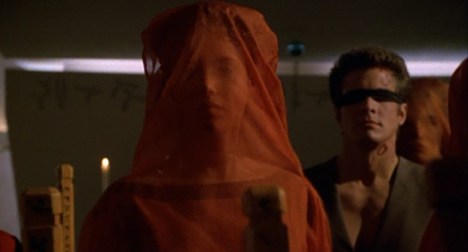
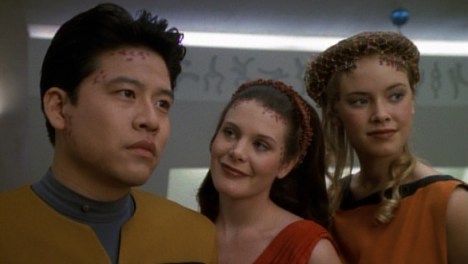
All of these elements come to the fore in Favourite Son, an episode that would have been painfully retrograde had it aired as part of the original series during the sixties. Favourite Son is that most uncomfortable myth dressed up in science-fiction drag, the tale of an island of beautiful women using their sexual prowess to lure men into their clutches to emasculate them. It is terrifying to think that this episode made it to air in the late nineties.

A beautiful dream.

A beautiful dream.

Continue reading

Star Trek – Is There in Truth No Beauty? (Review)

This July and August, we’re celebrating the release of Star Trek Beyond by taking a look back at the third season of the original Star Trek. Check back every Monday, Wednesday and Friday for the latest update.

The third season of Star Trek is very odd. It stands quite apart from the previous two seasons.

There are a lot of reasons for this; a new executive producer, the loss of veterans from the first two seasons, production limitations imposed by a slashed budget. Star Trek was never a lavish show, and it always faced production challenges, but those challenges were never more acute than during the third season. In a lot of cases, that oddness is not a good thing. And the Children Shall Lead and Spock’s Brain are very strange pieces of television, but not in a good way. They are clumsy, cheap, ill-judged and ill-advised.

Healthy green glow.

Healthy green glow.

At the same time, that strange vibe of the third season is not inherently bad. There are a number of episodes produced during the third season (particularly during this stretch of the third season) that feel weird and odd, but also refreshing and exciting. Episodes like Is There in Truth No Beauty?, The Empath and The Tholian Web have an eccentric and ethereal quality to them that feels quite removed from the first two seasons of the show. They are also three of the strongest episodes of the season, feeling adventurous and playful.

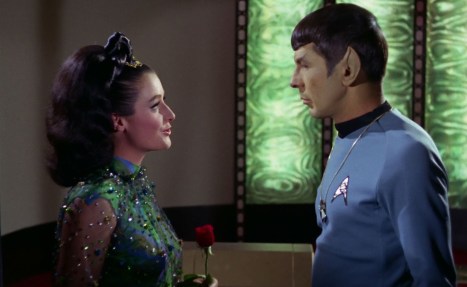
After all, for all that the third season is maligned, it is surprisingly influential. The third season of Star Trek contributes a great deal to the language and iconography of the franchise, perhaps as a result of the unusual constraints and production realities that inform it. Is There in Truth No Beauty? is an odd little tale, but it is also a clever and effective metaphor that explores grand ideas in the classic Star Trek tradition.

Jonesing for for some Diane Muldaur.

Jonesing for for some Diane Muldaur.

Continue reading

Star Trek – Spock’s Brain (Review)

This July and August, we’re celebrating the release of Star Trek Beyond by taking a look back at the third season of the original Star Trek. Check back every Monday, Wednesday and Friday for the latest update.

Spock’s Brain is not the worst episode of Star Trek ever produced.

Indeed, Spock’s Brain is not even the worst episode of the third season as a whole. More than that, Spock’s Brain is not even the worst episode of the third season to this point. Spock’s Brain is a pretty bad piece of television, but it seems difficult to argue that the episode is quantifiably worse than Elaan of TroyiusThe Paradise Syndrome or And the Children Shall Lead. However, the episode’s reputation looms large in the broader context of the Star Trek canon. Many would point to this as the worst episode that the show ever produced.

"Check out the big brain on Spock!"

“Check out the big brain on Spock!”

To be fair, Star Trek fandom has never been entirely consistent or even-handed when it comes to identifying the worst that the franchise has to offer. This is a fandom that decided that Star Trek Into Darkness was somehow a worse film than Star Trek V: The Final Frontier or Star Trek: Nemesis, and that Threshold was somehow the worst episode of Star Trek: Voyager despite sharing a season with episodes like Tattoo and Alliances. When dealing with consensus fan opinion, it is always interesting to wonder why such things matter over others.

Spock’s Brain is pretty dire. It is sexist, it is ill-judged, it looks cheap, and its underlying premise is beyond absurd. It was also the first episode of the third season to be broadcast. In a way, it seemed like the ultimate affront to fandom. After all, these fans had worked really hard to convince NBC to bring the show back for a third season. Having those same hardcore fans tune into the new time slot to catch Spock’s Brain must have seemed like the ultimate insult, a hokey sci-fi b-movie premise executed on a tiny budget from a show that normally did much better.
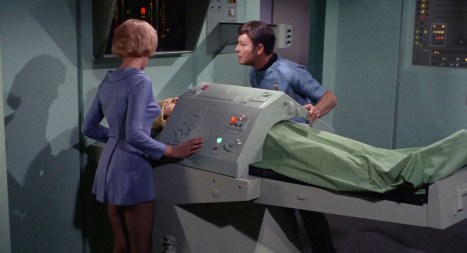
The brains of the operation.

The brains of the operation.

There is an element of nostalgia to this reading of Star Trek. The franchise has always had a goofy side, even beyond the necessity for science-bending budget-saving plot devices like warp drive or the transporter. The franchise has a long history of misunderstanding the concept of evolution (see GenesisThreshold or Dear Doctor) or embracing Erich von Däniken (see Return to TomorrowThe Paradise Syndrome or The Chase). Star Trek has always run on ridiculous ideas, opening with a story about how voyaging outside the universe turns a person into a god.

Indeed, goofiness is part of the joy of Star Trek, from the giant green space hand in Who Mourns for Adonais? through to the pleasures of space!Lincoln in The Savage Curtain. More than that, the goofiness can even lead to truly spectacular episodes and stories in its own right, as with the weird space!amoeba in The Immunity Syndrome or the “planet of the gangsters” in A Piece of the Action. (Similarly, the “planet of the Romans” in Bread and Circuses and “planet of the Nazis” in Patterns of Force are also underrated episodes.)
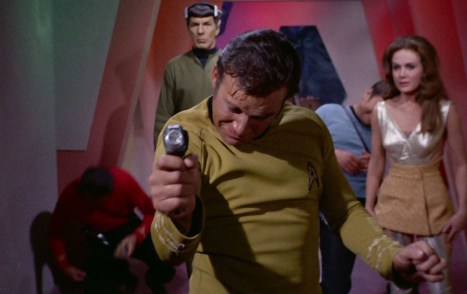
Okay, Kirk. It's not THAT painful.

Okay, Kirk. It’s not THAT painful.

It is perhaps a combination of factors that accounts for the hatred directed at Spock’s Brain. It is not just the goofy premise, because there have been goofier premises before. It is not just the sexism, because there has been more overt sexism before and there is more overt sexism to follow. It is not just the bad script, because there have been terrible scripts before. It is not just the cheapness of the episode, because the show’s ambition always outstripped its production budget.

It is a combination of these factors, culminating in the decision that Spock’s Brain should be the show to open the third season of Star Trek on television. This is the stalking horse for the disjointed and uneven third season, and it seems like it is the first show caught in the cross-hairs.

Matters come to a head.

Matters come to a head.

Continue reading

Jessica Jones – AKA Ladies’ Night (Review)

“New York may be the city that never sleeps, but it sure does sleep around,” explains grizzled private detective Jessica Jones, the first line of Jessica Jones.

The line establishes two key themes going forward, running through the first season of the show. The more subtle theme is that of New York itself. Like Daredevil before it, Jessica Jones is rooted in a particular vision of New York; in its imagery and iconography. While Daredevil was arguably rooted in a version of Hell’s Kitchen that no longer existed, Jessica Jones seems at least a little more modern and more relevant. In AKA Ladies’ Night, and across the season, street names serve as an emotional anchor to the eponymous private eye. They are real and tangible places.

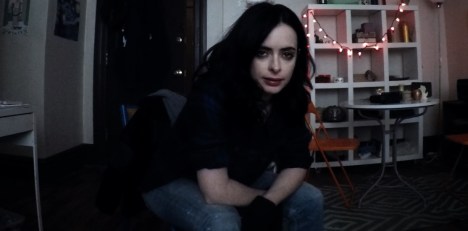
jessicajones-ladiesnight7

The second theme is more immediately pronounced. Jessica Jones might just be the most sex-positive aspect of the shared Marvel Universe. Although the usual limitations on nudity are in effect, Jessica Jones seems far more comfortable with human sexuality and sexual dynamics than any of the studio’s earlier output. AKA Ladies’ Night sets the tone for the season, opening with an awkward sequence of quick and grotty sex in (and around) a parked car. The show starts as it means to go on, embracing sex as a part of the human condition.

AKA Ladies’ Night does an effective job of setting the tone for what will follow. It is an effective introduction to the world of Jessica Jones.

jessicajones-ladiesnight12 Continue reading

The X-Files – Terms of Endearment (Review)

This July, we’re taking a trip back in time to review the sixth season of The X-Files and the third (and final) season of Millennium.

Terms of Endearment is perhaps the most conventional episode of The X-Files to air between Drive and Agua Mala.

The early sixth season was generally quite experimental and playful, and Terms of Endearment stands out in this stretch of the season as an episode that is very much structured like a horror story and which conforms to the expectations of an episode of The X-Files. A local law enforcement official brings a case to the attention of the FBI; Mulder and Scully trade theories; Mulder pursues his hunches, while Scully offers pseudo-scientific rationalisations. There is a crime; there is a paranormal element; there is a secret.

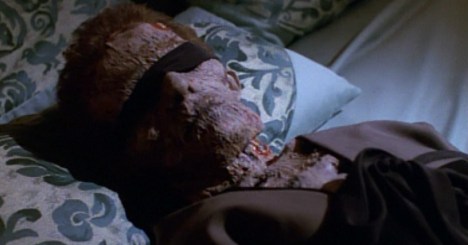
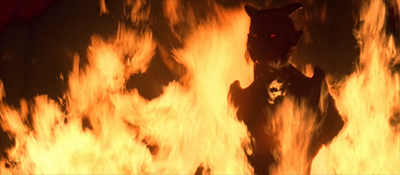
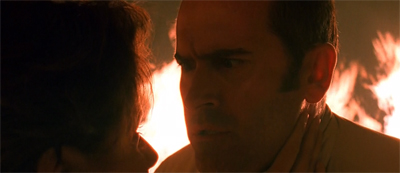
Who said their marriage is lacking some fire?

Who said their marriage is lacking some fire?

Terms of Endearment is an episode that could easily have been written into the fifth or seventh seasons of the show without any real difficulty. Barring the brief appearance of Spender at the start of the episode, and the occasional references to the fact that Mulder is not technically on the X-files anymore, this is business as usual. Indeed, the episode’s themes of reproductive horror might have fit quite comfortably with the recurring infant-related horror stories that populated the fifth season.

Still, Terms of Endearment works. In a way, its somewhat conventional nature serves it well. As with the stand-alone monster of the week stories scattered sparingly through the fifth season, it is easier to appreciate an episode like this when it feels exceptional rather than generic. Featuring an intriguing central metaphor, a great guest performance, and a number of memorable visuals, Terms of Endearment is a clever and powerful little script. It is not a bad début from writer David Amann.

"Who loves you, baby?"

“Who loves you, baby?”

Continue reading

Millennium – Anamnesis (Review)

This May and June, we’re taking a trip back in time to review the fifth season of The X-Files and the second season of Millennium.

In Arcadia Ego and Anamnesis form a strange late-season duology, exploring the roles of important female Christian icons.

In Arcadia Ego was the story of a (possibly) divine conception and birth, one evoking the story of the Virgin Mary. Initially, it seems like Anamnesis is another story about the Virgin Mary, when a bunch of high-school girls claim to have seen a religious apparition in their local church. However, after a bit of investigation, it quickly becomes clear that the religious figure at the centre of Anamnesis is not the Virgin Mary, but is instead the other major female character from the Gospels; it is Mary Magdalene.

Holy Mary...

Holy Mary…

Appropriately enough for an episode built around a female character who is often ignored and overlooked, Anamnesis is an episode largely driven by two of  the series’ three most prominent female characters. Anamnesis follows an investigation into this hysteria led by Catherine Black and assisted by Lara Means. As a matter of fact, Anamnesis is the only episode of Millennium that does not feature Frank Black. According to an interview with Back to Frank Black, writers Kay Reindl and Erin Maher had considered including him via phonecall, but quickly dropped that idea.

Anamnesis is a fascinating piece of television. It is a script written by two female writers, driven by two female regulars, investigating a case built around a mostly female guest cast. It is a testament to just how far Millennium has come in its second season that it can do a show like this. The first season had no female writers and had only Catherine Black as a prominent female character. It is the great that show can something like this, but do it so casually and effortlessly. Anamnesis is an underrated and overlooked second season script.

Going around in circles...

Going around in circles…

Continue reading

Millennium – In Arcadio Ego (Review)

This May and June, we’re taking a trip back in time to review the fifth season of The X-Files and the second season of Millennium.

A relatively recent study of teenage pregnancies accounted for forty-five virgin births in the United States, based on data from 1995, 2008 and 2009. Extrapolating from this data, the researchers estimate that almost 1% of births in the United States could be considered virgin births.

Of course, the researchers suggest a notable correlation between these self-described virgin births and other interesting social factors – virgin mothers are statistically quite likely to have low levels of sex education and are quite likely to have taken chastity vows. The myth of a virgin birth is powerful, and it is easy to understand in the context of contemporary attitudes about sex and sexuality that almost one in every hundred pregnant teenagers would rather claim a virgin birth than admit that they had sexual intercourse.

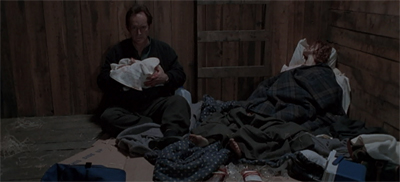
And Frank's left holding the baby...

And Frank’s left holding the baby…

In Arcadia Ego is not a particularly subtle script. Writer Chip Johannessen is quite candid about how he feels about all of this, telling a story about a modern-day immaculate conception featuring two escaped prisoners just looking for a reprieve from all the abuse and violence that they have encountered. In Arcadia Ego is a very socially-conscious piece of work, a rather pointed episode that pokes and prods at some the hypocrisies and inconsistencies in how we talk about sex and women in contemporary society. It is never too hard to tell how Johannessen feels on the matter.

At the same time, In Arcadia Ego is also a thoughtful and moving story about love, hope and faith. After a stretch of episodes that have seen Frank becoming more and more uncertain, In Arcadia Ego casts Frank as a pillar of moral certitude. While it might be a little clumsy in places, In Arcadia Ego is never less than well-intentioned.

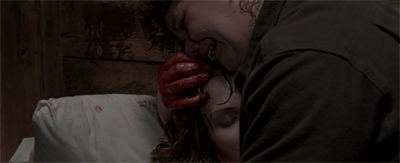
Bloody murder...

Bloody murder…

Continue reading

The X-Files – Christmas Carol (Review)

This May and June, we’re taking a trip back in time to review the fifth season of The X-Files and the second season of Millennium.

Part of the challenge of the fourth and fifth seasons is watching The X-Files adapt the speed of its mythology.

The mythology has a very clear momentum in the first three seasons. For all that Chris Carter and his writers loved teasing out new questions, there was a clear sense of momentum and movement. The show had gone from a series about an isolated alien abduction in The Pilot to a series with a date set for the alien colonisation of Earth in Talitha Cumi. For all that the series was accused of being ambiguous and mysterious, there was a sense that it was at least going somewhere.

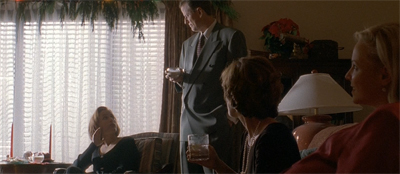
And so this is Christmas...

And so this is Christmas…

Things changed during the fourth season, most likely as the prospect of The X-Files: Fight the Future loomed in the future. It was clear that Fox would not allow Carter to set an end date on the television show before transitioning to feature films, and that the series would have to stretch beyond Carter’s original roadmap for it. All of a sudden, the mythology started stalling. The fourth season’s mythology had no clear direction in which to go, as evidenced by the fact that the decision to give Scully cancer in Leonard Betts was an eleventh hour decision with no long-term planning.

The fifth season’s mythology comes with its own particular set of problems. The movie had been written during the fourth season and filmed during the gap between the fourth and fifth seasons. This is quite evident in the way that the movie carries over abandoned elements of the fourth season mythology like the bees, who do not register at all in the fifth season. However, this also meant that the end point of the fifth season was essentially set in stone for the production team. The End would have to lead into Fight the Future, no matter what happened in the intervening nineteen episodes.

Picture perfect...

Picture perfect…

This means a lot of things for the fifth season. It means that the fifth season is stuck with the “Mulder as a skeptic… sort of” setup until Fight the Future, even if the show generally ignores it as much as it can. It also means that the mythology episodes probably should not contain any earth-shattering revelations or introduce any major character who were not already written into the film. Although Patient X and The Red and the Black effectively throw out these constraints almost completely, Christmas Carol and Emily try to adhere to them.

The result is a mythology episode that adheres rather closely to the successful approach adopted by Tempus Fugit and Max, a story that takes the backdrop of what the show has already revealed about the conspiracy and then uses that as a setting in which it can tell a decidedly more intimate and personal story.

It's a Scully family Christmas...

It’s a Scully family Christmas…

Continue reading