• Following Us

  • Categories

  • Check out the Archives


  • Awards & Nominations

Doctor Who: Lucky Day (Review)

“At least your special effects are improving.”

To be fair, a pretty solid run had to end at some point, and a Pete McTighe script is as good a place as any.

Lucky Day is an interesting episode. It solidifies the sense of this second Davies era as its own distinct object with its own distinct rhythms and structures. Just as one might pair Space Babies and The Robot Revolution, The Devil’s Chord and Lux, or Boom and The Well, Lucky Day is very obviously designed for the same slot as 73 Yards. This is another Doctor-lite episode built around Ruby Sunday, featuring U.N.I.T., set on contemporary Earth. It even brushes against rural folk horror, invoking The Wicker Man in its discussion of English villages.

Food for thought.

However, the episode takes a sharp and ambitious turn in its second half. As with a lot of recent Doctor WhoLucky Day is an episode engaged with the larger context of the show and its place in the popular discourse. It is obviously structured around things that matter to both Davies and McTighe. It is commendably self-aware and playful. There is, on paper, a lot to appreciate about Lucky Day.

The problem is the execution, as the episode’s themes break like waves against the actual narrative itself. Lucky Day only really makes sense as metatext, but cannot support the weight of its big ideas whether inside or outside the fictional universe. It’s an unlucky break.
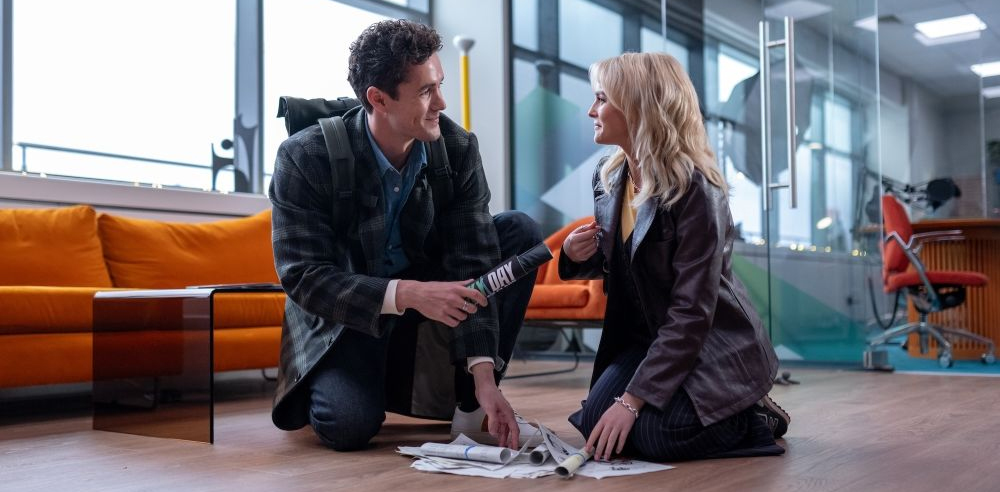
Absolutely floored.

Continue reading

404. Star Wars: Episode I – The Phantom Menace (#—)

Hosted by Andrew Quinn and Darren Mooney, this week with special guests Luke Dunne and Alex Towers, The 250 is a (mostly) weekly trip through some of the best (and worst) movies ever made, as voted for by Internet Movie Database Users. New episodes are released every second Saturday at 6pm GMT, with the occasional bonus episode between them.

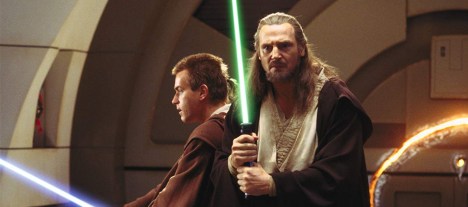
This week, George Lucas’ Star Wars: Episode I – The Phantom Menace.

A republic in decline finds itself slipping into fascism in the midst of a public dispute over trade tariffs. When Jedi Qui-Gon Jinn and Obi-Wan Kenobi are dispatched to resolve the Trade Federation blockade of the peaceful world of Naboo, they begin an epic adventure that will bring them to the sands of Tatooine, where Qui-Gon encounters a strange young boy that he is convinced as the power to bring balance to the force: Anakin Skywalker.

At time of recording, it was not ranked on the list of the best or worst movies of all time on the Internet Movie Database.

Continue reading

New Escapist Column! On How “Strange New Worlds” Performs “Star Trek”…

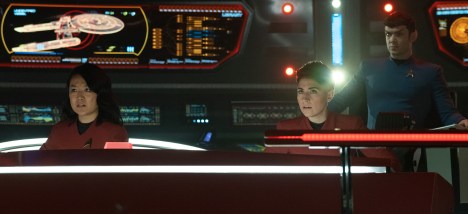
I published a new piece at The Escapist earlier this week. We’re doing a series of recaps and reviews of Star Trek: Strange New Worlds, which is streaming weekly on Paramount+. So we thought we’d take a look at the second season premiere.

There is a fascinating recurring emphasis on the idea of performance within Strange New Worlds. In particular, the idea of performing Star Trek. It is not enough for Strange New Worlds to be Star Trek, or even to engage in the familiar Star Trek tropes. The show has to constantly remind and reassure viewers that it is Star Trek. This is distracting and ultimately undermines the series, which seems to spend more time asserting that it is Star Trek than it does actually being Star Trek.

You can read the piece here, or click the picture below.

New Podcast! Enterprising Individuals – “Star Trek Into Darkness, Part 2”

I am always thrilled to get a chance to talk about Star Trek with other fans, so I was thrilled at the invitation to join the wonderful Aaron Coker on Enterprising Individuals to talk about Star Trek Into Darkness. We split the discussion into two parts, and this is the second.

It seems safe to describe Star Trek Into Darkness as perhaps the most polarising and divisive of the Star Trek movies. However, it’s also the most interesting. It represents the culmination of efforts to turn Star Trek into a populist and accessible blockbuster franchise, but it also remains true to the spirit of the franchise. Star Trek Into Darkness is undeniably a blockbuster of the late Obama era, one preoccupied with the legacy of the War on Terror and fascinated by the loss of utopian innocence that seemed promised with the election of Obama. It’s also just a thrilling action spectacle with a broad appeal.

You can listen to the episode here, the first part of the discussion here, back episodes of the podcast here, click the link below or even listen directly.

New Escapist Column! On How “She-Hulk” Relates To Its Audience…

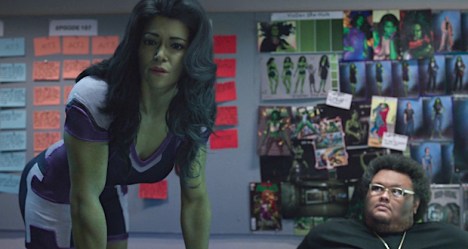
I published a new In the Frame piece at The Escapist yesterday. With the show wrapping up its first season this week, it seemed like a good opportunity to talk about She-Hulk, and the show’s interesting and provocative relationship with its audience.

Setting aside the fact that big villains of She-Hulk are arguably a bunch of internet trolls, She-Hulk is engaged in a literal and constant ongoing conversation with its audience. However, what’s fascinating about that dynamic is the tone of it. Jen often seems to feel trapped by the expectations of the audience for fan service and continuity references, and the need to shape her show in such a way as to hit all of the beats expected of a Marvel Studios project.

You can read the piece here, or click the picture below.

New Escapist Video! On “Andor” as a Show About Loving “Star Wars”…

We’re thrilled to be launching a fortnightly video companion piece to In the Frame at The Escapist. The video will typically launch every second Monday, and be released on the magazine’s YouTube channel. And the video will typically be separate from the written content. This is kinda cool, because we’re helping relaunch the magazine’s film content – so if you can throw a subscription our way, it would mean a lot.

This week, we took a look at Andor, the new Star Wars streaming show. There are a lot of interesting things about Andor, including how good it is. However, the show also feels like a meditation on Star Wars as a cultural phenomenon. Showrunner Tony Gilroy has talked candidly about how he was never a particular fan of Star Wars, and ended up working on the franchise almost by accident. As such, Andor feels like it is, in some small way, about learning to love Star Wars and to understand what Star Wars is capable of.

New Escapist Column! On the Appealing Fandom of “Star Trek: Lower Decks”…

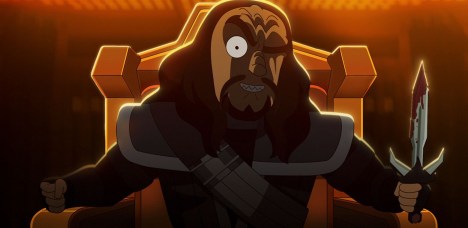
I published a new piece at The Escapist last week. We’re doing a series of recaps and reviews of Star Trek: Lower Decks, which is streaming weekly on Paramount+ in the States and on Amazon Prime in the United Kingdom. The second episode of the third season released last week, and it seemed like a good opportunity to take a look at the series.

It’s very obvious that Lower Decks is being written by Star Trek fans, andthe show operates in a fairly comfortable register of trusting that its writers and audience know (and care) enough about the franchise that it can effectively race through familiar Star Trek tropes, turning the standard conventions of the franchise into a loving joyride. The Least Dangerous Game is a light episode, but a fun one. It is fast on its feet, and moves with enough charm that it never collapses under its own weight.

You can read the piece here, or click the picture below.

New Escapist Video! On How Streaming and the Algorithm are Shaping Modern Franchises…

We’re thrilled to be launching a fortnightly video companion piece to In the Frame at The Escapist. The video will typically launch every second Monday, and be released on the magazine’s YouTube channel. And the video will be completely separate from the written content. This is kinda cool, because we’re helping relaunch the magazine’s film content – so if you can throw a subscription our way, it would mean a lot.

This week, we took a look at a broader cultural trend: the way in which streaming services and the algorithms that drive them are reshaping modern franchise media in a way that makes them more aesthetically conservative. When the algorithm drives studios to push towards recycling familiar ideas and iconography, it discourages any attempt to do something new or interesting with these long-lasting properties. As a result, many of the larger franchises have become hollowed versions of their past glories.

New Escapist Column! On the “The Book of Boba Fett”, “Now Way Home” and Nostalgia For Things That We Hate…

I published a new In the Frame piece at The Escapist this evening. With the most recent episode of The Book of Boba Fett leaning heard into nostalgia for Star Wars: Episode I – The Phantom Menace, and with Spider-Man: No Way Home bringing back Andrew Garfield from the Amazing Spider-Man movies, I tackled a question that has been bothering me for a while: why are fans nostalgic for things they hate?

Of course, there are fans out there who love The Phantom Menace and The Amazing Spider-Man movies, and more power to them. However, there is something interesting in how these nostalgic properties couch their nostalgia for these objects, layering it with distance and approaching it often indirectly – evoking not so much the object itself, but the faint fandom memory of the object. In many cases, it feels like such nostalgia is driven more by a sense of ownership and obligation than by any meaningful affection or appreciation.

You can read the piece here, or click the picture below.

271. Superman IV: The Quest for Peace (-#86)

Hosted by Andrew Quinn and Darren Mooney, and this week with special guests Graham Day and Niall Glynn, The 250 is a weekly trip through some of the best (and worst) movies ever made, as voted for by Internet Movie Database Users. New episodes are released Saturdays at 6pm GMT.

So this week, Sidney J. Furie’s Superman IV: The Quest for Peace.

It is a turbulant time in the life of Clark Kent. He finds himself considering selling the family farm. The Daily Planet has been brought out by an aggressive media conglomerate. A young boy has begun to question his faith in Superman, asking whether the Man of Steel can truly protect the world from the threat of nuclear annihilation. Tired of standing by as a passive observer, Superman decides to finally take action. However, an old enemy is lurking in the shadows, waiting to spring a trap of his own.

At time of recording, it was ranked 86th on the list of the worst movies of all time on the Internet Movie Database.

Continue reading