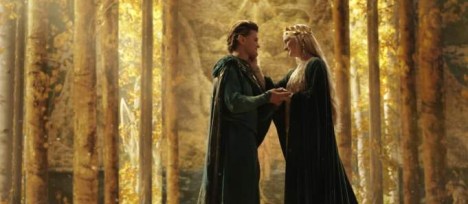
I published a new piece at The Escapist this week. With the recent release of The Witcher: Blood Origin on Netflix and the ongoing arguments about the perceived “faithfulness” around The Rings of Power, it seemed like a good time to explore how the quality of a work relates to its alleged faithfulness.
To put it simply, quality and fidelity are completely different metrics. It is entirely possible for a fiathful adaptation of source material to be terrible, for example the shot-for-shot remake of Psycho. It’s also possible for an adaptation that has nothing to do with even the tone and genre of the original property, such as 21 Jump Street, to be brilliant. Ultimately, The Witcher: Blood Origin and The Rings of Power are adaptations that fail on their own measure.
You can read the piece here, or click the picture below.
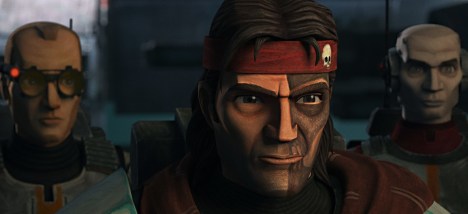
I published a new piece at The Escapist last week. With the release of the second season of The Bad Batch, it seemed like a good opportunity to review the series.
The Bad Batch is an interesting series. It is essentially a spin-off from The Clone Wars, but one that rejects the anthology nature of that show for a fixed central cast and a linear series of episodic adventures. This is somewhat frustrating, as it strips the most compelling part of The Clone Wars in favour of a generic riff on The A-Team or Kung Fu. Still, when the show gets out of its own way, The Bad Batch is a surprisingly compelling and thoughtful addition to the Star Wars universe, a meditation on what happens to soldiers at the end of a Forever War.
You can read the piece here, or click the picture below.
I am doing weekly reviews of Willow at The Escapist. They’ll be dropping every Wednesday evening while the show is on, looking at the legacy sequel as it progresses from one episode to the next.
The sixth episode of the season struggles to recover some of the ground lost during the season’s fifth episode. Wildwood slowed the series to a standstill in order to run through a checklist of serialised streaming television tropes, in a mechanical and unengaging fashion. Prisoners of Skellin has the burden of getting the show moving again, in a way that is often clumsy and inelegant. That said, Prisoners of Skellin is an episode that has some measure of charm to it, in large part due to a winning guest performance from Christian Slater.
You can read the piece here, or click the picture below.
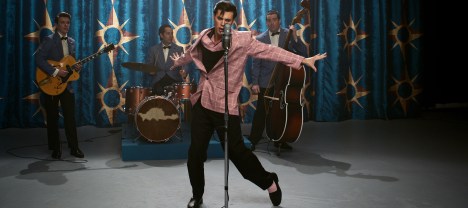
I published a new piece at The Escapist this evening. With the year wrapping up, it seemed like a good opportunity to take a look back at the year in cinema. In particular, one of the big unifying trends in the year’s blockbusters, which balanced a celebration and a fear of spectacle.
This was the year that “movies were back.” Many of the year’s biggest blockbusters were celebrations of blockbuster cinema in its purest form, from the IMAX cinematography of Top Gun: Maverick to the immersive 3D of Avatar: The Way of Water to the breakout international success of RRR. However, there was also an anxiety about the power of spectacle and the toll that it takes, whether on its audience or on its subject. This played out in movies like Nope or Elvis. There was also a clear worry that this might be the end of it all, playing out in movies like Babylon or even Blonde.
You can read the piece here, or click the picture below.
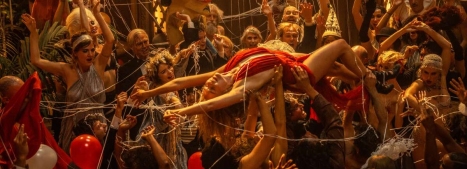
I published a new In the Frame piece at The Escapist earlier this week. With the release of Babylon over Christmas, it seemed like a good opportunity to take a look at Damien Chazelle’s latest feature film.
Babylon is a movie that obviously exists in the context of great Hollywood movies about Hollywood. In particular, Chazelle draws overtly and heavily from Singin’ in the Rain in this parable about Hollywood’s migration from silent films to talkies. However, Chazelle does something interesting, stripping out a lot of the romance of these narratives in favour of something approaching brutal honesty. Chazelle rejects a lot of the romantic nostalgia of these sorts of films, instead offering a much grittier take. At times Babylon feels like the coke-addled evil twin of something like Once Upon a Time… in Hollywood.
You can read the piece here, or click the picture below.
I am doing weekly reviews of Willow at The Escapist. They’ll be dropping every Wednesday evening while the show is on, looking at the legacy sequel as it progresses from one episode to the next.
With Willow officially past the midpoint of its first season, the show hits a sizable bump in the road. Wildwood is the first episode of the show that feels purely functional rather than narratively engaging on its own terms. It’s a very mechanical piece of television, with the plot grinding to a halt so the series can run down a checklist of character and plot beats that it needs to articulate for the audience before moving any further. It does a lot of necessary place-setting, but stalls the season and the show around it.
You can read the piece here, or click the picture below.
I’m thrilled to be launching movie and television reviews on The Escapist. Over the coming weeks and months, I will be joining a set of contributors in adding these reviews to the channel. For the moment, I’m honoured to contribute a five-minute film review Avatar: The Way of Water, which was released in cinemas this weekend.
I published a new piece at The Escapist earlier in the week, a review of the upcoming Netflix show, The Witcher: Blood Origin. It is a live action four-episode miniseries spinning directly out from the streaming service’s fantasy hit, The Witcher.
Blood Origin has had a famously troubled production, with the show being cut down from six episodes to four in the editing bay, and undergoing fairly involved reshoots to work around this truncation. The results are as muddling and disheartening as this back story suggests. Blood Origin is a show that is filled with lore and backstory, but with no interest in its characters or their motivations. It’s a frustrating mess, a show that has clearly been hacked apart and reconstructed to hit a pre-determined runtime.
You can read the piece here, or click the picture below.
I am doing weekly reviews of Willow at The Escapist. They’ll be dropping every Wednesday evening while the show is on, looking at the legacy sequel as it progresses from one episode to the next.
It is too much to call Willow a deconstruction or a subversion of classic fantasy tropes. Certainly, the show is often a celebration of the trappings of high fantasy, and a much more old-fashioned take on the genre than contemporary shows like The Lord of the Rings: The Rings of Power or House of the Dragon. At the same time, the series is written with an understanding of the tropes and conventions of the genre, and a willingness to play with those ideas in a way that deepens and explores its own themes. Given that this is a show about divorce, Willow eagerly dives into familiar fantasy tropes about blood and lineage.
You can read the piece here, or click the picture below.
I published a new In the Frame piece at The Escapist yesterday evening. With the release of The Fabelmans on streaming today, it seemed like a good opportunity to explore Steven Spielberg’s loosely autobiographical family drama.
Spielberg’s recent films are preoccupied with his legacy, and the way in which his work has altered the cultural landscape. The Fabelmans is a much more personal movie, one that is more preoccupied with the art of filmmaking. The Fabelmans is a story about the power of the camera, and its ability to see things that are hidden from the human eye. The camera captures dreams, but it also reveals truths. The Fabelmans doesn’t romanticise this, but approaches with a palpable fear and dread.
You can read the piece here, or click the picture below.


















 the m0vie blog