Hosted by Andrew Quinn and Darren Mooney and with special guest Andy Melhuish, The Bottom 100 is a subset of The 250. It is a journey through the worst 100 movies of all-time, as voted for by Internet Movie Database Users.
This time, Albert Pyun’s Captain America.
Polio sufferer Steve Rogers is selected for a dangerous experiment that could turn the tide of the Second World War, being reborn as Captain America. When a mission behind enemy lines throws him into conflict with the Italian supervillain the Red Skull, Steve Rogers ends up trapped in the ice. However, he awakens just as his country needs him most.
At time of recording, it was ranked the 65th worst movie of all time on the Internet Movie Database.
So, as I have mentioned before, I am launching a new video series as a companion piece to In the Frame at The Escapist. The video will typically launch with every second Monday’s article, and be released on the magazine’s YouTube channel the following week. This is kinda cool, because we’re helping relaunch the magazine’s film content – so if you can throw a subscription our way, it would mean a lot.
This month, with Aliens celebrating its thirty-fifth anniversary, it seemed like a good opportunity to take a look at the film. In particular, how James Cameron designed one of the great sequels by refusing to simply repeat what worked about the original Alien. Instead, Aliens works in large part because it actively responds to and engages with Alien, in a way that enriches both films.
The Escapist have launched a movie podcast, and I was thrilled to join Jack Packard and Richard Newby for the twenty-first episode of the year. With the release of Black Widow on streaming and in cinemas, there was only one movie to discuss. So we went for a deep dive into Marvel’s interquel, its character-centric movie for a dead Avenger.
I published a new In the Frame piece at The Escapist this evening. It seemed like a good opportunity to take a look at Demon Slayer: Mugen Train, which is both the highest grossing movie of 2020 at the global box office and the highest grossing film of all-time at the Japanese box office.
The success of Demon Slayer: Mugen Train is striking, because it is a very different sort of anime movie than the kind that normally breaks out. The Japanese box office has traditionally been dominated by anime films like Your Name, Spirited Away, Princess Mononoke, Howl’s Moving Castle and others. The anime films that have typically broken out global are movies like Akira or Neon Genesis Evangelion: The End of Evangelion. These are all films with a very strong artistic viewpoint and a very consciously artisanal approach to storytelling.
In contrast, Demon Slayer: Mugen Train is a much more conventional sort of blockbuster in a much more modern style. It is a film written by a group credited under the corporate brand “Ufotable” and adapted from a manga written by an unknown author. It picks up directly from a television series, serving as a bridge between two seasons, with little attempt to orient casual viewers as to the character or plot. It is difficult to discern what exactly Demon Slayer: Mugen Train is saying about the world or even just about Japan, except for the broadest sorts of platitudes about duty and service.
Demon Slayer: Mugen Train feels like a cultural shift, representing a transition within Japanese popular animation that arguably just reflects broader shifts within global culture over the past decade or so. You can read the piece here, or click the picture below.
Hosted by Andrew Quinn and Darren Mooney and with special guest Scott Mendelson, The Bottom 100 is a subset of The 250. It is a journey through the worst 100 movies of all-time, as voted for by Internet Movie Database Users.
This time, Albert Pyun’s Captain America.
Polio sufferer Steve Rogers is selected for a dangerous experiment that could turn the tide of the Second World War, being reborn as Captain America. When a mission behind enemy lines throws him into conflict with the Italian supervillain the Red Skull, Steve Rogers ends up trapped in the ice. However, he awakens just as his country needs him most.
At time of recording, it was ranked the 65th worst movie of all time on the Internet Movie Database.
Part of that is simply the luxury of being the second part of a larger series. Fear Street Part Two: 1978 has appreciably less table-setting to do than Fear Street Part One: 1994, as the earlier film did a lot of the hard work in terms of establishing rules and building a framework for the trilogy’s internal mythology. While Fear Street Part Two: 1978 obviously builds on the foundations established by Fear Street Part One: 1994, it also has the luxury of working within an established template that saves it the bother of having to unload a lot of exposition very quickly while also serving as a self-contained slasher tribute.
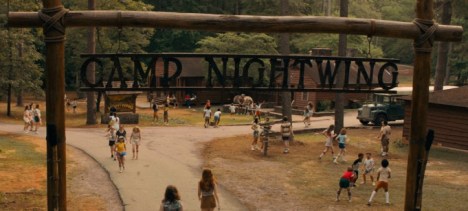
Camp Fear.
Part of it is also because Fear Street Part Two: 1978 is referencing a much less ambitious and self-aware set of movies. Fear Street Part One: 1994 was drawing from a pool of self-aware nineties horror movies like Scream, Urban Legends and I Know What You Did Last Summer, movies made by filmmakers who had grown up watching classic slasher movies on video cassettes and wanted to put their own self-aware spin on the genre and its conventions. So Fear Street Part One: 1994 was a self-aware riff on self-aware riffs on the genre. In contrast, Fear Street Part Two: 1978 draws from a purer sort of slasher movie.
These two factors mean that Fear Street Part Two: 1978 feels a lot less busy and cluttered than Fear Street Part One: 1994, if appreciably less ambitious. More than that, with a lot of the mythology building out of the way, Fear Street Part Two: 1978 is able to use its own narrative real estate to deepen and develop the core themes of the trilogy, foregrounding its big ideas with a little more finesse than the previous entry. The result is a movie that is perhaps less energised and less dynamic than its predecessor, but also a lot more comfortable and assured in what it is doing.
Black Widow was originally supposed to release in May 2020.
This would have marked as something of a “coda” movie to the main saga of the Marvel Cinematic Universe, a belated follow-up tidying away loose ends from Avengers: Endgame in much the same way as Spider-Man: Far From Home. Like a lot of the releases immediately following that massive cultural phenomenon, Black Widow feels like a bit of unfinished business. It is the first solo movie based around the only female founding member of The Avengers, a project that gestated in various forms over decades across multiple production companies.
A vicious cycle.
Of course, Black Widow would always have felt curiously out of step and out of time. Scarlett Johansson wrapped up her tenure as Natasha Romanoff in Endgame, with the superhero sacrificing her life in the quest to defeat Thanos. As a result, Black Widow has to position itself earlier in the timeline. It functions as something of an interquel between Captain America: Civil War and Avengers: Infinity War, following the title character as she desperately evades capture by United States Secretary of State Thaddeus “Thunderbolt” Ross.
Had Black Widow released on time, it still would have felt like a movie that arrived four years too late. After all, despite introducing Natasha Romanoff as early as Iron Man 2, the Marvel Cinematic Universe would not build a solo superhero film around a female character until Captain Marvel. For all the chaos unfolding behind the scenes, the DC Extended Universe managed to beat Marvel Studios to the punch with the release of Wonder Woman in May 2017. It’s interesting to wonder whether the decision to position Black Widow as a direct sequel to a May 2016 release is something of a retroactive grab at that title.
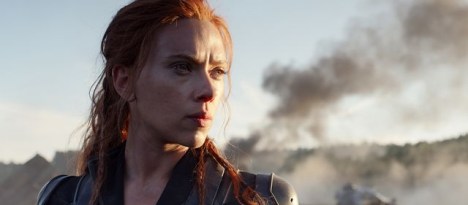
Widow maker.
Even aside from all of this baggage, Black Widow is a frustrating film. It is a movie that feels only a draft or two (or an editting pass or two) away from greatness. The film grapples with big themes and bold character work in interesting ways that occasionally verge on confrontational. After all, Natasha Romanoff has consistently been portrayed as a complicated and ambiguous figure within this world of gods and legends, an international assassin whose moral and bodily autonomy was violated in the most grotesque ways, and who responded to this by trying to reinvent herself as a superhero.
There’s a fascinating story there, and Black Widow intermittently acknowledges as much. However, when the film gets close to hitting on any nerves, it immediately retreats into snarky irony and wry one-liners that rob the story of any real weight and the characters of any real agency. Black Widow is supposed to be a story about a character asserting her own agency in the face of an uncaring machine. Instead, it feels like a film where the machine always wins.
I’m thrilled to be launching movie reviews on The Escapist. Over the coming weeks and months, I will be joining a set of contributors in adding these reviews to the channel. For the moment, I’m honoured to contribute a three-minute film review of Black Widow, which is releasing theatrically and on Disney+ Premier Access this weekend.