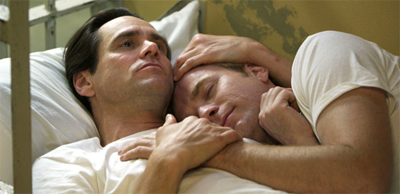
I Love You, Phillip Morris has ‘niche’ just oozing from every pore. Although it’s obviously comedic, there’s more than a hint of Carrey’s dramatic aspirations in the air. Cynical film viewers will suggest that this movie, with two recognisable actors in a gay romance, has missed Oscar season by a few months. It’s based on a true story, which rarely bodes well for a comedy. It’s a movie that’s it’s very easy to by smug and cynical about. Which is a shame, because it’s really a very charming and effective romantic comedy drama.
The Internet has given everybody in America a voice. For some reason, everybody decides to use that voice to bitch about movies.
– Holden McNeill, Jay and Silent Bob Strike Back
There’s been a lot said about new media. Blogging and twitter and facebook and so on, this modern age of new media we live in. I took up blogging as a hobby fairly recently (just under a year), so I’m rather late to the party. There’s a whole host of stuff written about how social networking and the internet have drastically altered civilisation as we know it, so I thought I’d just ponder about cinema and the old, established media.
The University Philosophical Society of Trinity College Dublin hosted an interview with David Cronenberg, the self-proclaimed “baron of blood” last night. I was honoured to be invited to attend (one of the perks of being an old hack, I suppose – I even got to dine with him beforehand) and it was a great informative evening for my inner film buff, as well as anybody with an interest in cinema. I’m sure they’ll have photos or recordings of the night up soon, but I thought I’d give my own impressions.
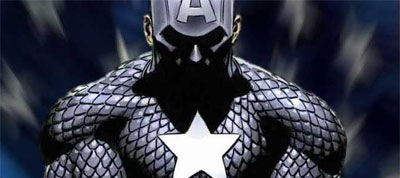
It’s official. Chris Evans is Captain America. I’m sure the internet is on fire with people complaining and yelling and shouting – like they were when John Krasinski was the front runner. But I’m actually quite happy. He seems like a great fit for the role and – with a bit of luck – I can see the role doing for him what Tony Stark re-did for Robert Downey Jnr. It could be a star-making role. And I think he deserves that. But I also think there are other reasons he’s a great fit for the role.
Jennifer Aniston’s romantic comedy The Bounty Hunter may not have quite set the US box office alight last weekend (coming third behind Alice in Wonderland and some film even I’ve never heard of), but she’s still one of Hollywood’s biggest name leading ladies currently on film – and I don’t see that changing. And she’s 41 years old. Sandra Bullock, that darling of the nineties romantic comedy, spent last year reaffirming her golden touch, with the surprising-even-by-the-standards-of-the-genre romantic comedy The Proposal and an Oscar-winning role in The Blind Side. There was also a Razzie-winning role in All About Steve, but she even managed to use that to demonstrate that she is still one of the queens of Hollywood. And she’s 45 years old. Are the attitudes towards women – particularly leading women – changing in Hollywood?
Francis McDormand and John Malkovich have been cast in Transformers 3. Both are fantastic actors. In fairness, Malkovich has fairly low standards when it comes to choosing his movies – he was linked to Spider-Man 4 as the Vulture before it all fell apart and managed to be the best thing about Con Air (okay, second best – but Steve Buscemi is just awesome anyway) – but McDormand is an actress known for being relatively choosy about her roles. She isn’t exactly matinee idol fare. But, as I read the story, I couldn’t help wondering: why does Michael Bay even need actors for Transformers?
I still stand by my assessment of Daredevil as the most consistently well-written comic book of the past decade. Sure, there have arguably been smaller runs that have been more experimental (Grant Morrison’s New X-Men), slightly more easily accessible (Mark Millar’s Ultimates), or more important for the medium as a whole (Geoff Johns’ Green Lantern is perhaps most responsible for general trends in the medium), but none is as consistently satisfying as the relaunched Daredevil title, in particular the two runs by Bendis and Brubaker. Here we have the second half of Bendis’ iconic run collected (along with some Daredevil-related miscellany). It’s a great collection that might not be as breathtakingly incredible as the first half of his run, but it certainly delivers on what was promised.
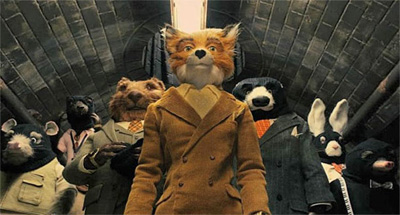
The Fantastic Mr. Fox isn’t a movie for everyone. It’s decidedly quirkily a Wes Anderson film above all else – above being an animated or stop motion film or a Roald Dahl adaptation. There’s the same dialogue and awkward poses and eccentric misunderstood characters at its core. It’s decidedly retro and it won’t win any awards for visual innovation. But – somewhat fittingly for a movie with a moral about being yourself – it is very much its own movie. Still, the suggestion that this isn’t a movie for kids is a little disingenuous. There are, I reckon, a lot of children who will enjoy the movie’s style and story and beauty. However, there will be a quite a few who won’t. But I reckon the same will be true of an adults as well. This is a movie for Wes Anderson fans, of all ages – even those who have never seen a Wes Anderson film before in their lives. But it’s also a film for those who can appreciate cinema in all its forms and with all its different trappings and styles. Those looking for a conventional animated children’s tale, or particularly light entertainment, will likely leave disappointed – but those looking for something with a bit more soul than usual will be right at home.
I know this has been going around for ages, but I figured I’d just post it. It’s from Britanick, two young comedians with a lot of skill and hopefully some good stuff in their future. Well worth a look.
There was (as ever) a rather interesting piece in the Guardian a few weeks back which suggested – what with Alice in Wonderland and Shutter Island coming out within weeks of each other and dominating film discussion in March – perhaps we tend to focus too much on established directors like Burton and Scorsese.
Because it’s one thing for a studio to take a project and market it with such frenzied hyperbole that for a week or two seeing it becomes all but obligatory for anyone wanting to remain a la mode. It’s quite another for film-goers to convince ourselves we need to see that same project through an increasingly forlorn belief in its director as a still-vital and relevant force. Whatever the implications of Burton’s Alice may be for exhibitors and all that newly-installed 3D technology, the nuts-and-bolts issue here is surely the length of time any once-great film-maker is given in the cinephile heart purely on the basis of dusty triumphs a decade or more in the past.
I thought it only fair to wait until I had seen bother of those big films to comment. Being entirely honest, I don’t think it’s entirely reasonable to lump Burton and Scorsese together as some sort joint proof of that assertion. In fact, I’d argue the two are very different sides to the same coin.





















 the m0vie blog