• Following Us

  • Categories

  • Check out the Archives


  • Awards & Nominations

New Escapist Column! On “The Wrath of Khan” and “The Voyage Home”, and the Soul of “Star Trek” in “First Contact”…

I published a new In the Frame piece at The Escapist this evening. Given that this month marks the 35th anniversary of Star Trek IV: The Voyage Home and the 25th anniversary of Star Trek: First Contact, it seemed like a good opportunity to take a look at their relationship within the Star Trek franchise – and how they connect to Star Trek II: The Wrath of Khan.

For many Star Trek fans, The Wrath of Khan remains the most beloved and most brilliant entire in the franchise’s cinematic canon. However, it’s notable that The Voyage Home was a much more populist hit, resonating with general audiences. For a decade following the release of The Voyage Home, it provided a template for the franchise for a decade. However, with the release of First Contact, the balance of power shifted. Suddenly, the franchise found itself caught in the gravity of The Wrath of Khan, which exerted a powerful gravity on the franchise’s direction and development.

You can read the piece here, or click the picture below.

Doctor Who: Flux – Chapter Two: War of the Sontarans (Review)

“I have Queen and Country on my side. That is all that I need.”

“She here with you right now, the Queen?”

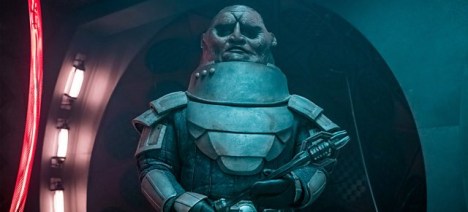
War of the Sontarans is a basically functional episode of Doctor Who, even if it feels like a rough draft of a more interesting premise that moves quickly enough to dance over the more obvious cracks.

In some ways, War of the Sontarans feels very much like a proof of concept for Doctor Who: Flux, a demonstration of how exactly Chibnall is going to turn that frantic season-opener into a sustainable six-episode miniseries. War of the Sontarans settles down, severely trimming down the number of plot threads in play at the end of The Halloween Apocalypse. Diane and Claire are nowhere to be found. The Weeping Angels are entirely absent. Joseph Williamson only makes a minor appearance, serving primarily to remind audience members that he still exists.

“Queuing for petrol,
Queuing for petrol.
Queuing for petrol.
And I’m on a horse.”

So War of the Sontarans feels very much like a conventional episode of Doctor Who, albeit with considerably more plot crammed into comparatively less space, and with a secondary subplot that more directly ties into the larger arc. It’s not the most elegant way of structuring an event story like this, but it is a more workable model for six weeks of Doctor Who. This is an episode of television that will be easy enough for casual audience members to follow, even if they haven’t seen The Halloween Apocalypse. Indeed, it’s possible to argue that this is easier to follow than The Halloween Apocalypse.

For all the plot and narrative hijinks at work in War of the Sontarans, the episode is remarkably straightforward. This is both its greatest strength and its greatest weakness. War of the Sontarans touches on a variety of interesting ideas, but never lingering on any of them or pushing them too far into their more compelling implications.

Sontaring into battle.

Continue reading

258. Dune – This Just In (#127)

Hosted by Andrew Quinn and Darren Mooney, and this week with special guests Jenn Gannon and Deirdre Molumby, The 250 is a weekly trip through some of the best (and worst) movies ever made, as voted for by Internet Movie Database Users. New episodes are released Saturdays at 6pm GMT.

So this week, Denis Villeneuve’s Dune.

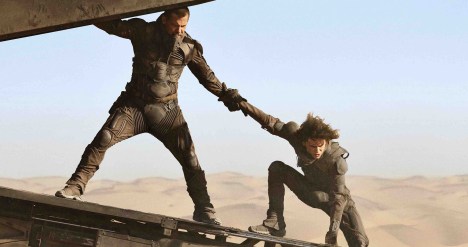
The galaxy is in turmoil. Rumours swirl of a plot against House Atreides. As Duke Leto Atreides takes control of the desert planet of Dune, he tries to track down the traitors in his midst. Meanwhile, his son Paul finds himself on the verge of an awakening that will have a profound impact on the future of mankind.

At time of recording, it was ranked 127th on the list of the best movies of all time on the Internet Movie Database.

Continue reading

New Escapist Column! On the Coolness of Boba Fett…

I published a new In the Frame piece at The Escapist this evening. With the recent trailer for the upcoming Book of Boba Fett, it seemed like a good opportunity to reflect on the character of Boba Fett.

Boba Fett is an interesting character, in large part because there has always been a huge dissonance between how cool he looks and how cool he acts. This is the more compelling facet of the character, the dissonance between the characters as a cool action figure and his general uselessness within the larger narrative of the saga. George Lucas seemed to play with this idea very pointedly and purposefully, and it’s a nuance that many subsequent takes on the character have tended to ignore or overlook.

You can read the piece here, or click the picture below.

Non-Review Review: Spencer

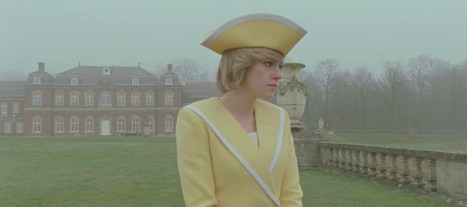
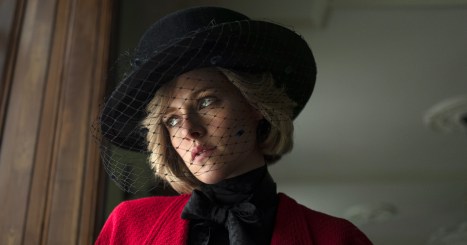
Spencer introduces itself as “a fable based on a true tragedy.” The official synopsis describes the movie as “an imagining of what might have happened.”

The obvious point of comparison is Jackie. Both are movies directed by Pablo Larraín, offering a tightly-focused profile of their young, famous, female subjects. However, while Jackie is very much about a character who is cannily and carefully cultivating a mythology out of tragedy, Spencer is perhaps about a character failing to do just that. Jackie Kennedy was able to build the myth of “Camelot” in the wake of her husband’s death, a monument that would last generations. Spencer imagines its female protagonist crushed beneath the weight of a national myth, learning that “no one is above tradition.”

A sorry estate of affairs…

Diana Spencer remains a fascinating figure. She has a strong hold on popular culture. Her narrative is a driving force in the second half of The Crown. There was a spectacularly ill-judged attempt at a more conventional biopic with Oliver Hirschbiegel’s Diana. Her ghost haunted The Queen. Diana is often described as “the people’s princess”, but there’s something unsettling even in that affectionate appelation. It is, after all, possessive. It opens up the question of whether Diana was every truly allowed to be herself, or was instead beholden to everybody else – the royals, the public, the ghosts of royal consorts past.

Spencer is very much a companion piece to Jackie, but it feels more like a ghost story. It is haunting and ethereal, its subject flinching even from Larraín’s gaze. The result is enchanting, but also deliberately and effectively frustrating. Spencer is a fable, complete with all the echoing space that such stories usually contain.

Christmas Mourning.

Continue reading

New Escapist Video! On the Myth of a Grim and Gritty Batman…

So, as I have mentioned before, I am launching a new video series as a companion piece to In the Frame at The Escapist. The video will typically launch with every second Monday’s article, and be released on the magazine’s YouTube channel the following week. This is kinda cool, because we’re helping relaunch the magazine’s film content – so if you can throw a subscription our way, it would mean a lot.

With the release of the latest trailer for The Batman, it seemed like a good time to delve into a recurring debate among Batman fans, the argument over whether portrayals of the character are too dark and gritty. It’s a strange argument, given that the only solo Batman movie in the past decade has been The LEGO Batman Movie, so it’s worth unpacking.

Non-Review Review: Eternals

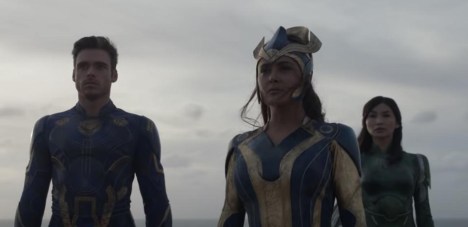
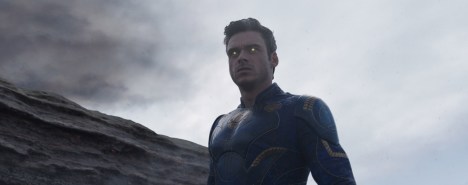
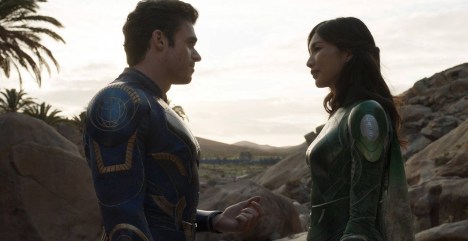
Chloé Zhao’s Eternals is a small, but necessary, step forward for the Marvel Cinematic Universe.

There has been a lot of pre-publicity around Eternals, most of it centring on Zhao as an auteur. Zhao has given interviews insisting that she directed all of the film’s action. Kevin Feige has talked about how her work convinced Disney executives to shoot in real locations rather than simply rendering a lot of the movie in post-production. As such, Eternals has become a weird battleground for the idea of authorship within the confines of the Marvel Cinematic Universe.

When Marvel saw the breadth of its domain…

It is easy to understand why this is. There have been Marvel Studios movies directed by Oscar-winners before; Joe Johnson won an Academy Award for visual effects on Raiders of the Lost Ark and Taika Waititi recently won a Best Adapted Screenplay award for JoJo Rabbit. However, there is something tangibly different about seeing a big budget blockbuster coming from an artist who won both Best Picture and Best Director at that year’s Academy Awards.

It also makes sense in the context of the Marvel Cinematic Universe. There have undoubtedly been Marvel Studios films with strong senses of authorship: Shane Black’s Iron Man 3, Taika Waititi’s Thor: Ragnarok, James Gunn’s Guardians of the Galaxy and Guardians of the Galaxy, Vol. 2, and Ryan Coogler’s Black Panther. However, those movies all feel quite a long time ago. Although one can perhaps pick up traces of Cate Shortland’s personality in Black Widow or Daniel Destin Cretton’s interests in Shang-Chi and the Legend of the Ten Rings, those films feel very familiar and very rote.

Red eyes in the morning…

There is tangible sense of opportunism at play in way that Marvel Studios has positioned Eternals as an auteur-driven project. After all, the studio has a long and complicated history with directors who have distinct visions; Patty Jenkins, Edgar Wright and Ava DuVernay have all suggested that the company’s culture is not particularly welcoming to creatives. In particular, Zhao’s assertion that she oversaw the movie’s action sequences exists in the context of Argentine director Lucrecia Martel, who recalls being told that if she chose to direct Black Widow, she would not be allowed to direct the action scenes.

Again, context is important here. Eternals is really the company’s first director-driven project since Black Panther, which is a big deal given the studio’s history of beginning pre-visualization of scenes and special effects “before the cinematographer or director has signed on to the project.” While movies like Avengers: Infinity War, Captain Marvel, Ant Man and the Wasp, Avengers: Endgame and Spider-Man: Far From Home are all varying degrees of entertaining, none of them feel like the work of a filmmaker who has something particularly pressing to say about the modern world.

Superfriends.

All this tension plays through Eternals, the fine balancing act between a director with a very distinctive artistic sensibility working with a studio that appears eager to launder its reputation by association, while also being anxious that this auteur doesn’t get to go too far. In some ways, Eternals feels like a limit case for the Marvel Cinematic Universe, an example of just how far the studio will allow a creative talent to stretch a rubber band before aggressively snapping it back into the default position.

This is the challenge facing Eternals. It goes further than any Marvel Studios film in recent memory, but that’s still not far enough.

Continue reading

New Escapist Column! On the Size and Spectacle of “Dune”…

I published a new In the Frame piece at The Escapist this evening. With Dune continuing its dominance at the global box office, it seemed like a good opportunity to take a look at the movie’s size and scale.

It is stating the obvious to describe Dune as “big.” However, the description is accurate. Still, what’s notable about Dune is how Denis Villeneuve uses that sense of scale and spectacle. Dune is so large that it often threatens to burst out of the IMAX frame, to break the confines of the generous format. Villeneuve uses that size to underscore the core theme of the book, the question of how small these individuals can seem when confronted with systems and forces that operate on unimaginable scales.

You can read the piece here, or click the picture below.

Doctor Who: Flux – Chapter One: The Halloween Apocalypse (Review)

“You know, Yaz. I can’t help but feel like some of this is my fault.”

In the lead-up to the broadcast of Doctor Who: Flux, there was some debate about the marketting of the series.

After all, it seemed like fans knew more about the distant fourteenth season of the revival than they did about the looming thirteenth season. Information about Chibnall’s third season tended to escape into the wild rather than derive from a single coherent source. Former showrunner Steven Moffat seemed to (accidentally) confirm that the Weeping Angels were appearing. Part of the publicity campaign for Flux involved deleting the show’s social media presence. The first trailer was released only three weeks before the premiere. In interviews, Chibnall openly worried about “giving too much away.”
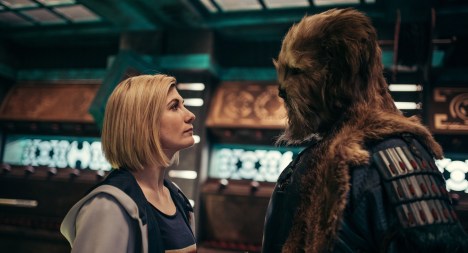
Dogged pursuit.

In some ways, this is typical of the larger Chibnall era. After all, Chibnall took great pride in seeding the phrase “the Timeless Child” in The Ghost Monument, only to eventually pay it off with twenty minutes of expository flashbacks in The Timeless Children. The Chibnall era is very plot-focused, which means that it is paranoid of potential spoilers, and it is reasonable to wonder whether that paranoia makes it harder to sell the show to the general public. For a sprawling six-part epic built around one of the BBC’s flagship properties, Flux seemed to fly in under the radar.

Then again, this makes a certain amount of sense watching The Halloween Apocalypse. The season premiere doesn’t really feel like an episode of television, at least not in the traditional sense. There is a relatively minor self-contained plot within the episode focusing on Karvanista and Dan, which is neatly wrapped up within the episode proper. However, that is just one thread of a story that cuts frantically from one thread to another, introducing a host of set-ups that promise the possibility and the potential of chaos.

Tracing an outline of the season ahead.

This is itself pure and unfiltered Chris Chibnall. It is the ultimate acceleration and culmination of the style that he adopted in The Woman Who Fell to Earth. Inheriting the series from Russell T. Davies and Steven Moffat, Chibnall was a writer who lacked his predecessors’ skill with character and dialogue. Watching The Woman Who Fell to Earth, it seemed like Chibnall’s solution to this problem was to ensure that there was always something to cut away to – that he could get into and out of scenes quickly, to distract from the fact that his dialogue and characters felt rather generic.

The Halloween Apocalypse takes that idea to its logical extreme. It introduces a variety of disparate and disconnected elements that are presented as a series of mystery boxes, hoping that the audience will be enticed enough to keep watching – the Swarm and his history with the Doctor, the transformed Azure, the mysterious Vinder, Claire who appears to be from the Doctor’s past and/or future, the Sontaran invasion fleet, the mysterious excavations in 1820. None of these elements get any pay-off, or even development. Instead, they are simply spinning plates positioned for the rest of the six-episode arc.

With that in mind, the marketting strategy makes a great deal more sense. Why would Flux need heavy advertising, if the first episode was essentially a fifty-minute trailer?
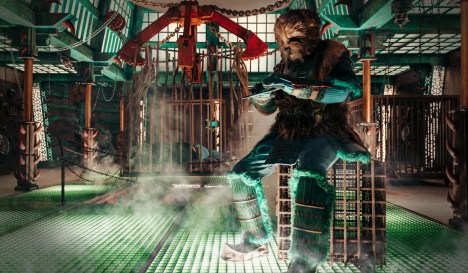
Being a little cagey about spoilers.

Continue reading

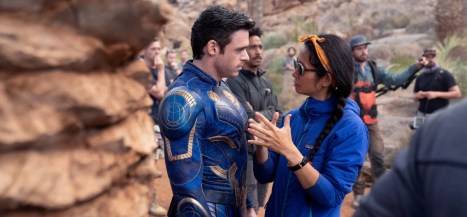
New Escapist Column! On Chloé Zhao’s “Eternals” and Marvel Studios Auteurship…

I published a new column at The Escapist today. With the upcoming release of Chloé Zhao’s Eternals, and the ongoing debate around it, it seemed like a good opportunity to take a look at the narrative around the film.

Publicity around Eternals has made a big deal of the extent to which Zhao is the author of the film. Zhao has made it clear that she directed all the film’s action, and Kevin Feige has talked about how hard she fought to use real locations rather than simply green-screen effects. This is interesting, because these two very basic accomplishments are being treated as a big deal, as a revolutionary amount of freedom being afforded to a creative talent. It’s an interesting snapshot of modern blockbuster filmmaking, where these freedoms are considered exceptional and newsworthy.

You can read the piece here, or click the picture below.