• Following Us

  • Categories

  • Check out the Archives


  • Awards & Nominations

New Escapist Column! On the Pre-Packaged Cult Appeal of “Cocaine Bear”…

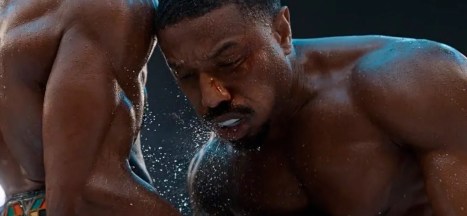
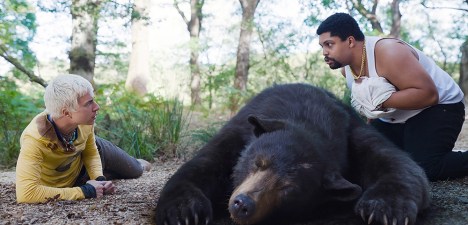
We’re launching a new column at The Escapist, called Out of Focus. It will publish every Wednesday, and the plan is to use it to look at some film and television that would maybe fall outside the remit of In the Frame, more marginal titles or objects of cult interest. This week, we took a look at the release of Cocaine Bear, which is an obvious attempt to manufacture a cult hit.

On one level, it seems like a fool’s errand to try to build a movie with the express purpose of making a cult hit. After all, cult hits only grow organically, often over years and through home media or television. However, changes to the industry – including the collapse of home media and the decline of linear television – make it very difficult for movies to find that sort of niche. Cocaine Bear feels like a movie designed with that understanding in mind, a film very consciously pitched towards streaming virality as much as theatrical box office.

You can read the piece here, or click the picture below.

New Escapist Column! On How “The Last of Us” Shifts from Joel to Ellie…

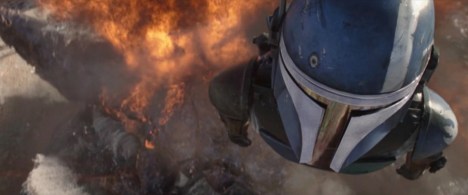
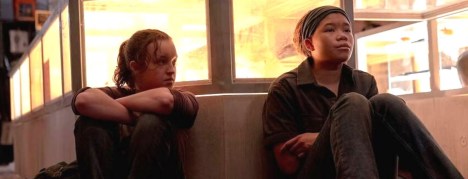
I am doing weekly reviews of The Last of Us at The Escapist. They’ll be dropping every Sunday evening while the show is on, looking at the video game adaptation as the show progresses. This week, the show’s seventh episode.

It’s an interesting proposition, adapting a serialised narrative after it has already been completed. In some ways, any serialised narrative is a first draft, a creative team making it up – to one degree or another – as they go along. As such, there is something very interesting in any subsequent adaptation of the work, as the adaptation has the luxury of a vantage point that can take in the completed work as a holistic entity. Left Behind was an add-on to the original video game version of The Last of Us, but the television series has the luxury of folding it into its ongoing narrative in real-time, as it were.

You can read the piece here, or click the picture below.

New Escapist Column! On How “The Fallen Sun” Puts “Luther” in “Skyfall”…

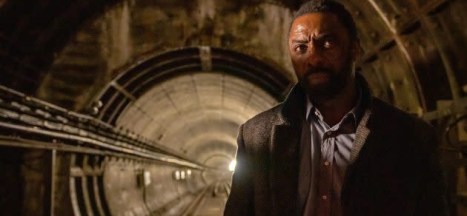
I published a new In the Frame piece at The Escapist this evening. With the release of Luther: The Fallen Sun in theatres this weekend, it seemed like a good opportunity to discuss the feature film adaptation of Britain’s favourite trenchcoated detective.

For over a decade, there have been rumours that Idris Elba was a prime candidate to take over the role of James Bond from Daniel Craig, to the point that the actor has spent years talking about his shifting attitude towards the possibility in the press. Part of what’s so interesting about The Fallen Sun is that the movie feels like Neil Cross’ attempt to construct a James Bond movie around his leading man. More than that, to build a very specific James Bond movie: Skyfall, starring John Luther.

You can read the piece here, or click the picture below.

New Escapist Video! On Why Faithfulness is Not a Measure of Quality in Adaptation…

We’re thrilled to be launching a fortnightly video companion piece to In the Frame at The Escapist. The video will typically launch every second Monday, and be released on the magazine’s YouTube channel. And the video will typically be separate from the written content. This is kinda cool, because we’re helping relaunch the magazine’s film content – so if you can throw a subscription our way, it would mean a lot.

This week, with ongoing debates about the fidelity of shows like The Rings of Power, The Witcher: Blood Origin and The Last of Us, it seemed like a good opportunity to discuss the art of adaption. In particular, the question of whether faithfulness and quality are in any way related to one another.

New Podcast! The X-Cast – Season 9, Episode 2 (“Nothing Important Happened Today II”)

The X-Cast is covering the ninth season of The X-Files, which is – to put it generously – an interesting and uneven season of television in which the show seems uncertain of its own identity and purpose. The second half of the season premiere, Nothing Important Happened Today II, is an exemplar of that, and I was delighted to joing Carl Sweeney to talk about it on the podcast.

By all accounts, The X-Files probably should have ended with Existence, if not Requiem. However, the logic of television production made it very difficult for a network show at that time to gracefully bow out. The eight season had been a success, even though it felt like an ending. So a ninth season was commissioned, arriving into a world that had radically changed before the premiere was broadcast and without any clear sense of purpose or meaning. The results are uninspiring, but often fun to unpack.

You can listen to the episode here, or click the link below.

Continue reading

New Escapist Column! On Hitting “Peak Marvel”…

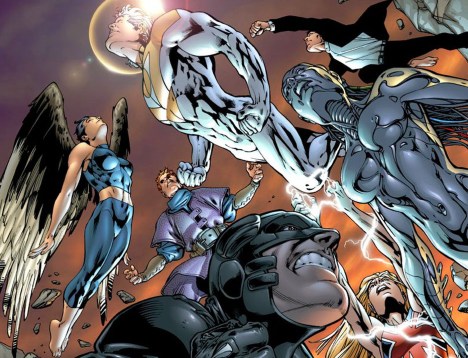
I published a new In the Frame piece at The Escapist this evening. With the reports that Disney+ will only be streaming two Marvel shows this year and the decision to move The Marvels out of summer and into November, it’s interesting to contemplate whether we’re already past “Peak Marvel.”

“Peak Marvel” is a reference to “peak oil”, referring to the point at which production reaches its apotheosis, where there is so much content being produced that it is unsustainable for any number of reasons. The Marvel Cinematic Universe remains one of the most successful multimedia franchises ever, but it has been flooding the market for the better part of two years. There are signs, both in the wider industry and within the brand itself, that this model is not sustainable. The question is what comes next.

You can read the piece here, or click the picture below.

New Escapist Column! On The Third Season of “Star Trek: Picard” as a Choice Between Tired Clichés and Poor Writing…

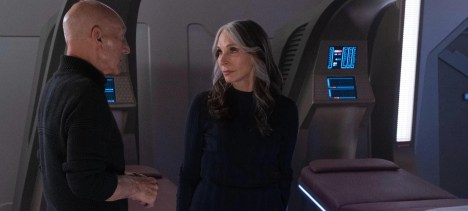
I am doing weekly reviews of Star Trek: Picard at The Escapist. They’ll be dropping every Thursday morning while the show is on, looking at the third season as the show progresses. This week, the season’s second episode.

Writing about the third season of Picard is difficult, largely because it’s a show that doesn’t really offer anything new on a week-to-week basis. Indeed, the season’s interesting episode is an interesting study on its limitations. The primary plot thread is just a collection of reheated familiar elements, references to pre-existing Star Trek stories thrown into a blender and served a room temperature. The subplot involving the show’s last surviving original character, Raffi, is a bit more interesting, but is ultimately undone by the show’s lack of interest in it.

You can read the piece here, or click the picture below.

New Escapist Column! On Colin Farrell and the Shifting Definition of Movie Stardom…

We’re launching a new column at The Escapist, called Out of Focus. It will publish every Wednesday, and the plan is to use it to look at some film and television that would maybe fall outside the remit of In the Frame, more marginal titles or objects of cult interest. This week, we took a look at the fascinating career of Colin Farrell.

Farrell is in many ways the perfect encapsulation of an interesting trend in post-movie-star Hollywood: a character actor trapped in a leading man’s body. Farrell is an incredibly handsome and charismatic performer, but he seems particularly liberated in smaller projects and stranger roles. He tends towards larger performances and physical transformation, often playing with and subverting his movie star presence to do something more interesting. Farrell is one of the finest examples of a larger movement in modern Hollywood that includes actors as diverse as Jon Hamm, Chris Hemsworth and James Franco.

You can read the piece here, or click the picture below.


New Escapist Column! On “The Last of Us” As A Study of Evolving Masculinity…

I am doing weekly reviews of The Last of Us at The Escapist. They’ll be dropping every Sunday evening while the show is on, looking at the video game adaptation as the show progresses. This week, the show’s sixth episode.

The sixth episode of The Last of Us, Kin, is steeped in the iconography of the western: there’s a frontier town, two indigenous characters, and even a horse on the railroad tracks. However, there’s also a sense that Joel and Ellie have reached the end of their push westward, their journey from Boston to Jackson. In that sense then, the show explores the legacy of the western in American consciousness, particularly the genre’s archetypal portrayal of masculinity. What does it mean or Joel to be a man or a father? How does that reconcile with the image he has cast for himself as a cynical and weary outlaw? Can he move past that?

You can read the piece here, or click the picture below.

New Escapist Column! On How “Ant-Man and the Wasp: Quantumania” Fails as an Introduction to Kang the Conqueror…

I published a new In the Frame piece at The Escapist this evening. With the release of Ant-Man and the Wasp: Quantumania this weekend, and how much of that movie is predicated on the introduction of Kang the Conqueror as the new “big bad” of the shared universe, it seemed like a good opportunity to take a look at whether the film accomplished this.

Quantumania fails to establish Kang as a credible threat, in large part because the movie is afraid of upsetting its audience. There are no stakes in Quantumania, no losses and no sense of ambiguity or compromise. The heroes survive their confrontation with Kang handily, easily overwhelming the villainous invader and even laughing at the idea of there being long-term consequences for their actions. Quantumania is so worried about potentially alienating fans of Ant-Man that it undersells its supposed big bad.

You can read the piece here, or click the picture below.