• Following Us

  • Categories

  • Check out the Archives


  • Awards & Nominations

187. Catch Me If You Can (#194)

Hosted by Andrew Quinn and Darren Mooney, and this week with special guests Luke Dunne and Jess Dunne from The Breakout Role Podcast, The 250 is a (mostly) weekly trip through some of the best (and worst) movies ever made, as voted for by Internet Movie Database Users.

This time, Steven Spielberg’s Catch Me If You Can.

When his parents announce their divorce, high school student Frank Abagnale runs away home. He never stops running. The enterprising young man reinvents himself as a dashing airline pilot, a debonair doctor and a diligent lawyer. However, Frank can only stay ahead of the long arm of the law for so long. As the ground starts shrinking out from him, as FBI Agent Carl Hanratty closes in, Frank wonders if he’ll ever be able to stop running.

At time of recording, it was ranked 194th on the list of the best movies of all time on the Internet Movie Database.

Continue reading

New Escapist Column! On “Batman Begins” as the Perfect Superhero Origin Story…

I published a new In the Frame piece at Escapist Magazine this evening. It’s the fifteenth anniversary of the release of Batman Begins, so it felt appropriate to look back on the film as the perfect superhero origin story.

Christopher Nolan dedicates Batman Begins to getting inside the head of Bruce Wayne, to the point that the villainous Ra’s Al Ghul and Scarecrow are defined almost entirely as counterpoints to the Caped Crusader. Nolan builds the character from the ground up, explaining everything about the character’s perspective and psychology – why he says what he says, why he acts like he does, why he thinks what he thinks. Most impressively, Nolan provides a meaningful answer to a question the character’s mythology long glossed over. “Why bats, Master Wayne?”

You can read the piece here, or click the picture below.

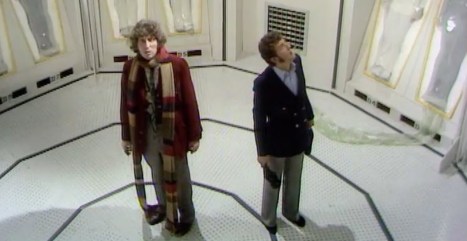
“I Deny This Reality”: On the Broken Reality of Philip Hinchcliffe and Robert Holmes’ “Doctor Who”….

The fourteenth season of the classic Doctor Who was recently released on blu ray. In an unprecedented movie, there is a reissue of the blu ray box set coming in July. With the twelfth and fourteenth seasons available on blu ray, the bulk of the era overseen by producer Philip Hinchcliffe has been packaged on the latest home media format. As such, I thought it might be worth taking a moment to reflect on the era, and its subtext – which is eerily resonant on contemporary rewatch.

For an entire generation, Tom Baker will always be the star of Doctor Who. There is a reason, after all, why Baker was the only previous lead actor to get a major role in The Day of the Doctor, as opposed to being shunted off into specials or shorts or other supplemental material. There’s a number of reasons for this. Part of it is simple math, with Baker spending more time in the role than any other actors. Part of it is simply that Baker’s performance is iconic. Part of it is that Baker was the actor who tended to be featured on airings of the show on PBS in the United States.

However, there’s also the simple fact that Tom Baker had a pretty good run – at least at first. While there are certainly defenders of Baker’s final four seasons in the role, Baker’s first three years headlining Doctor Who count among the most consistently satisfying periods in the history of the show. From his admittedly rough around the edges introduction in Robot to his third season finale in The Talons of Weng-Chiang, there is a remarkable consistency to Doctor Who. Arguably it is the longest such period of consistency until Peter Capaldi was cast nearly four decades later.

These three seasons were overseen by producer Philip Hinchcliffe and script editor Robert Holmes. Hinchcliffe and Holmes were lucky to be inheriting the show from a successful pairing of producer Barry Letts and script editor Terrance Dicks, which gave them a solid springboard from which they might launch themselves. Hinchcliffe and Holmes immediately veered the show towards horror, with stories like The Ark in Space or The Sontaran Experiment. It was a radical departure from the action adventure that defined the previous era, but was just what the show needed.

Hinchcliffe and Holmes codified a certain aesthetic of Doctor Who. Indeed, within the revival, there’s about a fifty-fifty chance that any historical episode is going to play like an homage to their work, with examples like The Unquiet Dead or Tooth and Claw coming to mind. This was the era that attracted the ire of Mary Whitehouse, who famously described it as “teatime brutality for tots.” It codified the idea of watching Doctor Who from “behind the sofa.” When writer Peter Harness was commissioned to write Kill the Moon, he was directed to “Hinchcliffe the sh!t” out of the first half.

Rewatching these stories today, it’s interesting how much they resonate and how much the horror at their core still works. This era of Doctor Who has its fair share of iconic monsters like the Wirrn from The Ark in Space, but a lot of the horror is abstract. The Hinchcliffe era is firmly anchored in classic horror stories, with Pyramids of Mars and Brain of Morbius most overtly evoking Hammer Horror and stories like Planet of Evil drawing from stories like The Strange Case of Doctor Jekyll and Mister Hyde, but its horror is more existential than that.

The Hinchcliffe era is preoccupied with the notion of long-dormant threats resurfacing and threatening the established order of the universe, long-vanquished foes reviving themselves and causing existential crises. More than that, these three seasons are particularly preoccupied with the anxiety about a fracturing and warping reality, in a way that feels strangely prescient and probably resonates even more strongly these days than it did on original broadcast.

Continue reading

New Podcast! The Time is Now – Season 2, Episode 21 (“Somehow, Satan Got Behind Me…”)

I’m thrilled to appear on another episode of The Time is Now, discussing the second season of Millennium, which remains one of my favourite seasons of television ever. It’s a huge pleasure to have been asked back to discuss the last standalone episode of the season, Darin Morgan’s superb Somehow, Satan Got Behind Me, with the wonderful duo of Kurt North and Michael John Petty.

Somehow, Satan Got Behind me is a fascinating piece of television. It is effectively a miniature anthology episode, a collection of short stories, in which Frank Black doesn’t play a major role. Instead, Somehow, Satan Got Behind Me offers a decidedly off-kilter meditation on some of the core themes of Millennium in general and the second season in particular. These are stories about evil, but in its most petty and mundane forms. Four demons trade stories over coffee and pastry, reflecting on what mankind has made of the world that they were given.

As ever, you can listen directly to the episode here, subscribe to the podcast here, or click the link below.

Continue reading

“… is Ra’s Al Ghul immortal?” Denny O’Neil, and Reflecting on a Bronze Age Batman Villain…

Denny O’Neil passed away last week, at the age of 81.

Many more informed and articulate individuals have written at length about the writer and editor’s contribution to comic books as a medium. In practical terms, Denny O’Neil was a crucial figure in the evolution of Batman, one of the medium’s most enduring characters. During the seventies, he served as a stepping stone between the bright and chirpy “New Look” of the sixties and Frank Miller’s gritty reinvention of the eighties. He also served as editor of the line during the nineties, overseeing beloved events like Knightfall and No Man’s Land.

This is to say nothing of O’Neil’s larger contributions to comic books. During the seventies, he served as the conscience of mainstream comics, reinjecting the sort of politics that had been largely missing since the earliest days of Action Comics and Superman. With runs on Justice League and Green Lantern/Green Arrow, O’Neil sought to engage the iconic DC superheroes with contemporary America. It was often clumsy, but it was always powerful. This is without getting into O’Neil’s hugely influential runs on books like Iron Man or The Question.

However, this week was also the fifteenth anniversary of the release of Batman Begins. This was a hugely influential superhero film, kicking off what might be considered the genre’s crowning accomplishment. Christopher Nolan’s film is heavily indebted to O’Neil, with O’Neil’s comic The Man Who Falls serving as a touchstone for the film’s approach to Bruce Wayne. However, the film was also notable for offering the first live action interpretation of one of O’Neil’s most sizable additions to the Batman mythos: Ra’s Al Ghul.

Batman has one of the most crowded and iconic rogues’ galleries in comics, packed to the brim with recognisable faces: the Joker, the Penguin, the Riddler, Catwoman, Two-Face, Poison Ivy, the Mad Hatter, the Scarecrow, Mister Freeze, Clayface. It’s a crowded field. Writers and artists are constantly trying to add to that, to add their own new characters to the mix. Very few actually catch on, with arguably only Bane and Harley Quinn managing to reach the top tier within the last thirty years. This makes Ra’s Al Ghul all the more impressive.

In the past few years, Ra’s Al Ghul has been cemented as an essential part of the Batman mythos. Both Arrow and Gotham featured the character as a major antagonist, anchoring season-long arcs, played by Mathew Nable and Alexander Siddig. (Liam Neeson reportedly even considered reprising the role for Arrow, even if he couldn’t make the schedule work.) The character has also been a staple of animated adaptations, going back to Batman: The Animated Series and continuing through Batman: The Brave and the Bold, Young Justice and Beware the Batman.

Ra’s Al Ghul has become such a fundamental part of the larger Batman universe that it is hard to imagine it ever existed without him. Nevertheless, he stands as one of the enduring creative legacies of writer Denny O’Neil and artist Neal Adams, who first introduced him to the Caped Crusader in the early seventies. In hindsight, as with Bane, it’s easy to see why Ra’s Al Ghul has endured in the way that he has. He fills an important gap in the larger Batman mythos. However, it was the genius of O’Neil and Adams to recognise that gap in the first place.

That’s what makes the character so fantastic. Despite being a relatively late addition to the Dark Knight’s collection of foes, he seems like he always belonged there.

Continue reading

New Escapist Column! On Jennifer Kent’s “The Nightingale” and the Frontier as a Prison…

I published a new In the Frame piece at Escapist Magazine this evening. This week, we’re trying something a little outside the usual remit of the column, with a huge thanks to editor Nick Calandra for encouraging it.

Jennifer Kent’s The Nightingale remains one of the most harrowing and uncomfortable films that I ever seen. It’s brutal and horrifying, but in a way that is very deliberate and very pointed. Kent is effectively playing off the tropes and conventions of the western, but playing with the way in which these stories are told. Kent imagines the frontier not as the embodiment of freedom or potential, but instead as a prison in which all of its characters are trapped.

You can read the piece here, or click the picture below.

186. Det Sjunde inseglet (The Seventh Seal) – World Tour 2020 (#155)

Hosted by Andrew Quinn and Darren Mooney, and this week with special guest Phil Bagnall, The 250 is a (mostly) weekly trip through some of the best (and worst) movies ever made, as voted for by Internet Movie Database Users.

This time, Ingmar Bergman’s Det Sjunde inseglet.

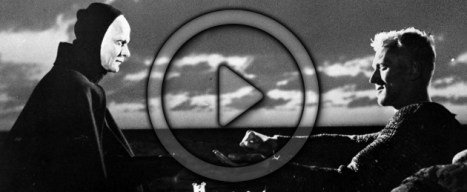
Death stalks the countryside of medieval Sweden. Antonius Block is a knight returning home after a long crusade to the Middle East, and horrified to find that the black death is ravaging his homeland. On the beach, Block is confronted by the spectral figure of the Grim Reaper himself. Block challenges Death to a game of chess, hoping that he might escape his opponents glare. As Block continues his journey home, he tries to make sense the fleeting nature of human existence and seeks desperate reassurance that something – anything – lies waiting beyond.

At time of recording, it was ranked 155th on the list of the best movies of all time on the Internet Movie Database.

Continue reading

New Escapist Column! On Spike Lee’s Cinema of Empathy and Allyship in “BlacKkKlansman” and “Da 5 Bloods”…

I published a new In the Frame piece at Escapist Magazine this evening. There’s actually a glut of new releases this week, but the one that felt most deserving of attention was Spike Lee’s Da 5 Bloods, which is premiering on Netflix.

Early in his career, Lee developed a reputation as a filmmaker defined by his frustration with the way that things were, his films tapping into a real sense of righteous anger about the status quo. However, Lee’s films have always been defined by a strong sense of  understanding and compassion. This is true of both BlacKkKlansman and Da 5 Bloods, which are films that are largely about the need to come together and build coalitions in order to move forward. At their core, they are films about empathy and allyship. More than that, they are films about the power of cinema.

You can read the piece here, or click the picture below.

Non-Review Review: Artemis Fowl

Artemis Fowl is only ninety-three minutes long, but it feels much longer. In more ways than one.

As with Scoob! or Trolls World Tour, there’s something slightly cynical in releasing Artemis Fowl direct to streaming. The film feels like it might have wallowed in a theatrical release, with little to distinguish it from other young adult adaptations like The Maze Runner or The Mortal Engines. Although derived from a series of beloved children’s books, the cinematic adaptation of Artemis Fowl was never going to be this generation’s answer to Harry Potter and the Philosopher’s Stone or The Hunger Games – despite the belaboured sequel hooks.

Fowl play.

The most interesting question that occurs when watching Artemis Fowl is at what point this became clear to the production team. Artemis Fowl has the look and feel of a movie that has been fed through a meat grinder. It is appreciably shorter than most would-be tentpoles, even though there is a seemingly continuous voice-over delivering reams of exposition. The plotting is haphazard. The character arcs are broad. There is a palpable sense that something happened in getting from page to screen, and the real mystery is where in the process things went so wrong.

Watching Artemis Fowl becomes almost an interactive mystery of itself. Was the project always this disjointed and chaotic, or was that something that happened in postproduction? More than that, was that process something that happened before or after Artemis Fowl was earmarked for a streaming release? When exactly on the creative process did everybody working on Artemis Fowl just give up completely?

A flying finish.

Continue reading

New Podcast! The Time is Now – Season 2, Episode 20 (“A Room With No View”)

I have been lucky enough to appear quite frequently on the second season of The Time is Now, discussing the second season of Millennium, which remains one of my favourite seasons of television ever. So I was flattered to get asked back to join Tony Black to discuss the second season’s big Lucy Butler episode, A Room With No View.

A Room With No View is an interesting episode in a number of ways. Most obviously, it forms part of an arc that nominally connects the three otherwise disjointed seasons of Millennium, focusing on demonic forces at work in the world. However, it is also an episode that feels like it belongs to the second season specifically. It is a tale about the banality of evil and the intimacy of apocalypse, which are themes that play across the season. The result is something of a strange hybrid, and an episode of television that feels very distinct.

As ever, you can listen directly to the episode here, subscribe to the podcast here, or click the link below.

Continue reading