• Following Us

  • Categories

  • Check out the Archives


  • Awards & Nominations

New Escapist Column! On the Horror of Joss Whedon’s “Justice League”…

I published a new column at The Escapist this evening. With the release of Zack Snyder’s Justice League this week, it seemed like an appropriate opportunity to take a look at the original theatrical cut of Justice League, which remains one of the worst blockbusters of the past decade.

What makes the theatrical cut of Justice League such an insidious film isn’t just what it is, although it is terrible on its own terms. It’s what the film represents. It’s a very conscious and very deliberate erasure of a distinct vision of an expensive creative project, in the hope of serving reheated nostalgic leftovers that fans might gorge themselves upon. It’s pure, empty, vacuous content – a pale imitation of what other companies do better, without a single unique perspective of its own.

You can read the piece here, or click the picture below.

New Escapist Column! On the “Superman II” as the Rosetta Stone of Zack Snyder’s DCEU…

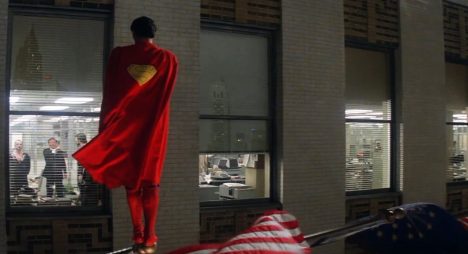
I published a new column at The Escapist this evening. With the release of Zack Snyder’s Justice League this week, it seemed like an appropriate opportunity to take a look at the strange and enduring influence of Superman II on the DCEU, from Man of Steel forward.

Superman II is one of the cornerstones of the superhero genre. It was the first big superhero blockbuster sequel, setting the stage for the franchises that would follow. It was the first depiction of the urban devastation that has become a fixture of the modern superhero spectacle. However, what makes movies like Man of Steel and Zack Snyder’s Justice League so interesting is the extent to which they interrogate and explore the fantasy presented in Superman II.

You can read the piece here, or click the picture below.

New Escapist Video! On the Paranoid Claustrophobia of “10 Cloverfield Lane”…

So, as I have mentioned before, I am launching a new video series as a companion piece to In the Frame at The Escapist. The video will typically launch with the Monday article, and be released on the magazine’s YouTube channel the following week. This is kinda cool, because we’re helping relaunch the magazine’s film channel – so if you can throw a subscription our way, it would mean a lot.

This week, to mark the fifth anniversary of 10 Cloverfield Lane, I took a look back at one of the most underrated paranoid thrillers of the decade, arriving on the crest of a wave that included similar films like Room, Green Room, The Hateful Eight and even Carol. It’s a timely, even prescient, snapshot of a cultural moment – and a very well-made film.

New Podcast! The Escapist Movie Podcast – “Stop the Oscar, I Wanna Get Out”

The Escapist have launched a movie podcast, and I was thrilled to join Jack Packard for the tenth episode of the year, with a special guest Raymond Creamer, to talk about the Oscar nominees.

You can listen to back episodes of the podcast here, click the link below or even listen directly.

New Escapist Video! “Zack Snyder’s Justice League – Review in 3 Minutes +”

I’m thrilled to be launching 3-Minute Reviews on Escapist Movies. Over the coming weeks and months, I will be joining a set of contributors in adding these reviews to the channel. For the moment, I’m honoured to contribute a three-minute feature film review to the channel, discussing Zack Snyder’s Justice League.

New Escapist Column! On “WandaVision” and the Death of Ambiguity…

I published a new In the Frame piece at The Escapist this evening. With WandaVision ending just over a week ago, I had some thoughts about art, ambiguity and meaning. You know, small things.

One of the more interesting aspects of WandaVision was the way in which it presented itself, and was received as, a “mystery box” show. It was framed and treated as a puzzle to be solved. What’s interesting about this is the care that the finale took to carefully explain and confront each possible fan theory and speculation, to communicate very simply and very straightforwardly not only what its audience was supposed to take from this story, but also how they were supposed to feel in response to certain key plot beats.

This is arguably a reflection of a larger trend in pop culture, in which there’s a strong rejection of the idea of ambiguity and an embrace of the idea that everything has a fixed meaning that can be clearly determined and objectively derived. This ignores the reality that art exists in ambiguity, that there’s no simple, single decoder ring and that meaning is often something derived from conversation between the art and the audience consuming it.

You can read the piece here, or click the picture below.

New Escapist Column! On the “Avatar” as a PG-13 “Aliens”…

I published a new column at The Escapist this evening. With the re-release of Avatar in China this weekend, it seemed like an opportunity to take a look at Jameson Cameron’s blockbuster.

Avatar is often discussed in terms of its relationship to nineties films like Dances With Wolves, Pocahontas and even Fern Gully. However, Avatar is also notable in its similarities to James Cameron’s first proper blockbuster. Avatar often feels like a reworking of Aliens, albeit one aimed at a much broader audience. This is interesting, positioning Avatar as part of a wave of similarly four-quadrant-pleasing reboots and remakes of classic R-rated eighties properties.

You can read the piece here, or click the picture below.

New Escapist Column! On “Raya and the Last Dragon” and the New Cinema of Reconciliation…

I published a new In the Frame piece at The Escapist this evening. Given the release of Raya and the Last Dragon last week, it seemed like an appropriate time to discuss an interesting and emerging trend, what I call “the New Cinema of Reconciliation.”

The past five years have been extremely turbulent and difficult for the United States and the wider world, and so there is an understandable yearning for a return to normality, a palpable desire to believe that things could go back to normal and that the damage down to the social fabric could be repaired. This is a major recurring motif in films aimed at younger audiences, from Trolls World Tour through to Wonder Woman 1984. However, Raya and the Last Dragon illustrates how complicated this can be.

You can read the piece here, or click the picture below.

New Escapist Video! On “Mad Max: Fury Road” and the Arbitrary Lines Between High and Low Culture…

So, as I have mentioned before, I am launching a new video series as a companion piece to In the Frame at The Escapist. The video will typically launch with the Monday article, and be released on the magazine’s YouTube channel the following week. This is kinda cool, because we’re helping relaunch the magazine’s film channel – so if you can throw a subscription our way, it would mean a lot.

This week, with the renewed and ongoing debate between “high” and “low” culture, between “art” and “content”, it seemed like a good time to take a look at one of the more fascinating films to straddle that line. Mad Max: Fury Road is the fourth entry in a long-running franchise, a film essentially built around a long car chase and explosions. However it’s also as pure a piece of cinema that has ever been made. It demonstrates the fungibility of those perceived boundaries.

New Escapist Column! On the Fifth Anniversary of “10 Cloverfield Lane”…

I published a new In the Frame piece at The Escapist this evening. Because it’s the fifth anniversary of 10 Cloverfield Lane, it seemed like a good opportunity to take a look back at the paranoid and claustrophobic thriller. In particular, 10 Cloverfield Lane arrived on the cusp of a wave of similar movies about characters trapped and suffocated in claustrophobic horror: films as diverse as Quentin Tarantino’s The Hateful Eight, Lenny Abrahamson’s Room, Jeremy Saulnier’s Green Room and even Todd Haynes’ Carol.

Looking at these wave of films in hindsight, they suggest something simmering beneath the surface of American consciousness, a nightmare about characters who find themselves in hostile and oppressive environments and forced to survive as best they can. 10 Cloverfield Lane was perhaps the culmination of this cinematic trend, and galvanises many of those themes into a potent allegory for abuse and survival, ending with the revelation that not all of this monstrosity is trapped behind locked doors.

You can read the piece here, or click the picture below.