• Following Us

  • Categories

  • Check out the Archives


  • Awards & Nominations

Non-Review Review: News of the World

News of the World is a gentle and sweet modern western, albeit more than a little disjointed.

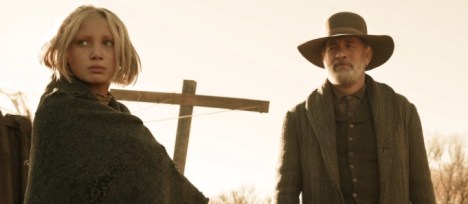
Adapted from Paulette Jiles’ novel of the same name, News of the World is essentially an update on the classic western template exemplified by The Searchers. Captain Jefferson Kyle Kidd is a veteran of the Civil War who makes his living travelling through the Southern United States, reading the news to assembled crowds. On one journey, Kidd comes across a carriage that has been destroyed. Its driver has been killed, and its sole occupant – a young girl – abandoned.
“Jo, hanna! Time to go!”

Kidd determines that the young girl is named Johanna. She was taken from her parents when she was very young and raised by the Kiowa tribe. She was recently recovered, and the army is attempting to send her back to her last surviving relatives. Of course, with her escort killed and the Union forces scattered trying to manage Reconstruction, Kidd finds himself tasked with caring for the young woman and ferrying her across the nation to reunite her with her mother’s extended family.

There’s a surprising and endearing warmth to News of the World, which largely comes from casting Tom Hanks in the lead role. In some ways, this feels like the movie’s most telling update to that classic western formula, replacing John Wayne’s true grit with Tom Hanks’ hanksian decency. News of the World is perhaps a little too episodic and too uneven for its own good, occasionally feeling like a more mainstream counterpart to something like The Sisters Brothers, but it works largely thanks to the central performances of Tom Hanks and his co-star Helena Zengel.
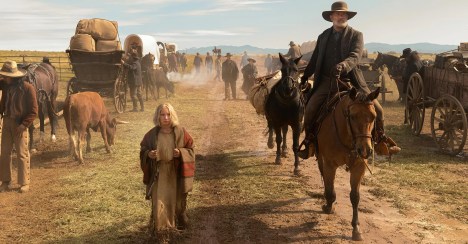
Horsing around.

Continue reading

Non-Review Review: Soul

Soul is ambitious and well-crafted.

If Onward had been positioned as the populist Pixar film this year, then Soul is a counterproint. It is a prestige piece for the company, something similar to Inside Out or Wall-E. After all, Soul is the latest project from Pete Docter. Docter has been part of the Pixar brain trust since its earliest days, even working on the stories for Toy Story and Toy Story 2. However, Docter’s most recent high-profile work has been his scripting and directing duties on Up and Inside Out, two Pixar films to have been nominated for Best Picture and to win Best Animated Feature.

The afterlife and all that jazz.

The premise of Soul is suitably abstract. Joe Gardner is a music teacher who always dreamed of being a successful stage musician. One day, a former student gets in contact with him, offering a gig with jazz legend Dorethea Williams. Joe manages to land the gig, and is convinced that his fortunes are about to change for good. Naturally, dramatic irony strikes, and Joe finds himself sent to the afterlife. Refusing to accept that his life is over, Joe commits to doing whatever it takes to get back to Earth and live his dream. “I’m not dying today,” he vows. “Not when my life just started.”

Soul deals with very big ideas in a remarkably clever way. The film creates a compelling and fascinating imaginary world that recalls both Riley’s internal life from Inside Out and even the afterlife depicted in Coco. Docter also uses the story as a meditation on weighty subject matter like death, dreams and disillusionment. It’s bold and striking, and the film largely works as a showcase for the company’s imagination. However, Soul does stumble slightly in its final act, pulling its punches ever so slightly as the film reaches its denouement.

Continue reading

New Escapist Video! On “Kong: Skull Island” as a Metaphor for War…

So, as I have mentioned before, I am launching a new video series as a companion piece to In the Frame at The Escapist. The video will typically launch with the Monday article, and be released on the magazine’s YouTube channel the following week. This is kinda cool, because we’re helping relaunch the magazine’s film channel – so if you can throw a subscription our way, it would mean a lot.

Given that Godzilla vs. Kong is going straight to HBO Max, we thought it might be looking back at Kong: Skull Island. In particular, what made the movie such a delight in contrast to Godzilla and Godzilla: King of the Monsters. Indeed, part of the genius of Skull Island is the way in which it positions its monster as a metaphor similar to that of the Japanese Godzilla, but from a distinctly American perspective.

New Escapist Column! On How “The Force Awakens” Killed the Unlikely Adult-Oriented Christmas Blockbuster…

I published a new In the Frame piece at The Escapist this evening. It has been five years since the release of Star Wars: Episode VII – The Force Awakens. While this anniversary has been discussed and dissected from countless directions over the past few weeks, there is one under-explored aspect of it.

In the early 2010s, as blockbuster cinema came to dominate the cultural landscape, something interesting happened in the Christmas release window. Movies like The Girl With the Dragon Tattoo, Django Unchained and The Wolf of Wall Street somehow managed to thrive in the Christmas corridor, by offering reasonably-budgeted adult-skewing movies that could draw crowds over the holiday season, safe from the blockbuster pile-up over the summer. Sadly, The Force Awakens signalled the end of this.

You can read the piece here, or click the picture below.

New Podcast! The Escapist Movie Podcast – “An Ever-Escalating Series of Star Wars”

The Escapist have launched a movie podcast, and I was thrilled to join Jack Packard and Elijah Beahm for the sixteenth episode. Obviously, the big news is the slate of announcements from Disney’s Investor Day, including plenty of Star Wars and Marvel announcements, more news about Zack Snyder’s Justice League, and reports about Tom Cruise’s rant on the set of the new Mission: Impossible movie.

You can listen to the episode here, back episodes of the podcast here, click the link below or even listen directly.

New Escapist Video! “The Mandalorian – Chapter 16: The Rescue”

I’m thrilled to be launching 3-Minute Reviews on Escapist Movies. Over the coming weeks and months, I will be joining a set of contributors in adding these reviews to the channel. For the moment, I’ll be doing weekly reviews of The Mandalorian.

The review of the finale episode of the second season, The Rescue, is available below.

213. Black Christmas – Christmas 2020 (-#75)

Hosted by Andrew Quinn and Darren Mooney, and this week with special guests Doctor Bernice Murphy and Joey Keogh, The 250 is a weekly trip through some of the best (and worst) movies ever made, as voted for by Internet Movie Database Users. New episodes are released Saturdays at 6pm GMT.

So this week, Sophia Takal’s Black Christmas.

As Christmas settles on Hawthorne College, something more unpleasant is in the air. A series of attacks on female students suggests that a killer is loose on campus, but the young members of the Mu Kappa Epsilon sorority begin to suspect that there is something far more toxic at work.

At time of recording, it was ranked 75th on the list of the worst movies of all time on the Internet Movie Database.

Continue reading

New Escapist Video! “Ma Rainey’s Black Bottom – Review in 3 Minutes”

I’m thrilled to be launching 3-Minute Reviews on Escapist Movies. Over the coming weeks and months, I will be joining a set of contributors in adding these reviews to the channel. For the moment, I’m honoured to contribute a three-minute feature film review to the channel, discussing Ma Rainey’s Black Bottom, which features the last major live-action performance from Chadwick Boseman.

New Escapist Column! Twenty Years Later, “Battle Royale” Still Stands Apart…

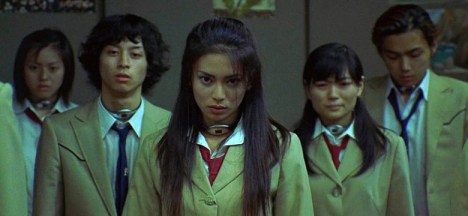
I published a new In the Frame piece at The Escapist this evening. Because Battle Royale is twenty years old this month, it seemed like a good opportunity to take a look back at the iconic Japanese film.

In the years since the release of Battle Royale, there has been an explosion of dystopian young adult fiction based around similar premises: the idea of children forced to kill other children to survive. There are plenty of examples of this subgenre, most notably The Hunger Games, Divergent and The Maze Runner. However, Battle Royale has aged better than these other films for two core reasons. First of all, it acknowledges the horror of its premise, rather than sanitising it. Second of all, it understands that this social decay is perhaps more mundane than sensationalist.

You can read the piece here, or click the picture below.

Luke Inside Yourself: The Self-Help Philosophy of “Return of the Jedi”…

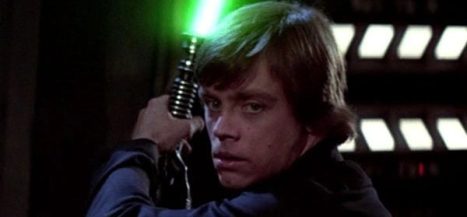
The podcast that I co-host, The 250, has a tradition of covering Star Wars films at Christmas. Last weekend, we covered the last of the films on the list, Star Wars: Episode VI – Return of the Jedi. It’s a fun, broad discussion. However, watching the film and talking about the film got me thinking about the film as a cultural snapshot of 1983.

Every generation gets the Star Wars movie that they deserve.

The original film was intended as George Lucas’ statement on Vietnam. Lucas had originally planned to make Apocalypse Now, and it is possible to see shades of that in his existential parable about a plucky band of rebels facing a technologically superior evil empire. Star Wars: Episode V – The Empire Strikes Back was perhaps one of the first true blockbusters of the eighties, and also helped to further codify the future of mainstream cinema as the New Hollywood movement endured its death throes with failures like Heaven’s Gate.

As such, it makes sense that Star Wars: Episode VI – Return of the Jedi was the perfect film for 1983. It was a much less creative sequel, one that reduced the franchise down to a set of easily repeatable iconography while also maximising its toyetic potential. However, there is more to it than that. Return of the Jedi arguably marked the end of a journey that began with Star Wars. After all, the original Star Wars was in many ways a radical allegory for late seventies America, bristling with anger and rage at a broken world.

In contrast, Return of the Jedi is essentially a self-help movie, where the fate of the galaxy matters much less than how Luke Skywalker chooses to think about his father.

Continue reading