• Following Us

  • Categories

  • Check out the Archives


  • Awards & Nominations

New Podcast! The Pensky File – Star Trek: Deep Space Nine, Season 7, Episode 16 (“Inter Arma Enim Silent Leges”)

I was thrilled to be asked back to join The Pensky Podcast to for one last conversation about Star Trek: Deep Space Nine. I joined Wes and Clay as their coverage of the seventh season winds down, as the pair prepare to jump into the so-called “Final Chapter.”

I got to talk about Inter Arma Enim Silent Leges, which is one of my favourite Deep Space Nine episodes ever produced. Arma Enim Silent Leges is the last episode to air before the multipart closing epic that launches with Penumbra, and feels like as worthy a capstone to Deep Space Nine as its companion piece Badda-Bing, Badda-Bang. It’s an exploration of moral compromise and realpolitick, but also about the practicalities of planning for a postwar status quo. It is a clever, ambitious and effective episode of Deep Space Nine, a thoughtful exploration of the show’s core themes.

We also had a lot of fun saying the title out loud multiple times.

You can find more from The Pensky Podcast here, and listen to the podcast by clicking the link or just listening below.

Continue reading

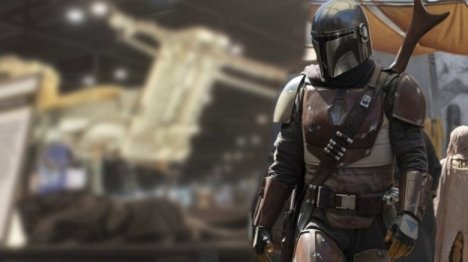
New Escapist Column! On the Cautious Conservatism of the Mandalorian…

I published a new In the Frame piece at Escapist Magazine late last week. This one looking at the big streaming news of the week, the release of The Mandalorian.

I have very mixed feelings about The Mandalorian. There are parts of the show that I enjoyed, like its obvious debts to samurai cinema or its exploration of the aftermath of Pax Imperiosa as a way of anchoring the franchise in the present moment. However, I was much less convinced of how decidedly retrograde it felt. So much of The Mandalorian seems designed to assure viewers that “this is Star Wars“, retreating away from the relative ambition of projects like Star Wars: Episode VIII – The Last Jedi or even Rogue One: A Star Wars Story for the safe and the familiar.

You can read the piece here, or click the picture below.

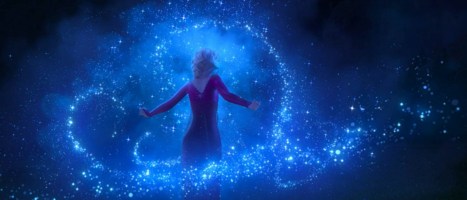
Can’t Let It Go: “Frozen II” and Grappling With the Past…

As far as animated sequels go, Frozen II works well. For better or for worse, it goes bigger and grander, sacrificing a little focus for a larger story.

However, the most striking aspect of Frozen II is the way in which it seems to grapple with one of the big existential anxieties of the modern era. Frozen II spends a lot of time and energy delving into the histories of Anna and Elsa, opening with a mythology-building flashback and offering a few tantalising hints about the source of Elsa’s power. However, this is part of a larger conversation that unfolds across the film’s runtime. Frozen II isn’t just about grappling with Anna and Elsa’s personal history, it is asking more ambitious questions about how the past shapes the present.

Of course, Frozen II is the story of two sisters embarking on an epic quest with an adorable snowman. However, it is also a story about the legacy of colonial exploitation of indigenous populations by nominally more advanced societies, and about coming to terms with the consequences of those historical injustices in the modern era. It isn’t always elegant or perfect. Indeed, Frozen II occasionally seems quite candid that it doesn’t know the answers to the questions that it is broaching.

Nevertheless, it’s fascinating to see these topics permeating popular culture, with shows like Watchmen and films like Thor: Ragnarok grappling with questions of what it means to live in a society built on historical injustice.

Note: This piece contains spoilers for Frozen II.

Continue reading

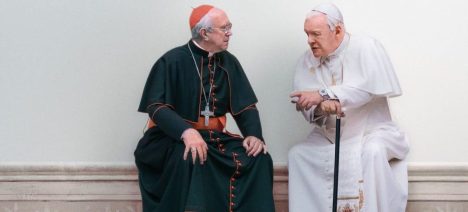
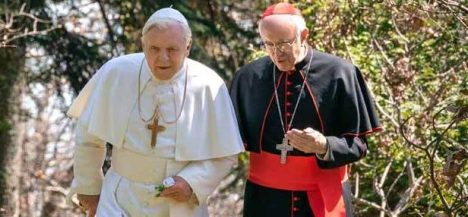
Non-Review Review: The Two Popes

Very few movie disintegrate so completely and thoroughly across their runtime as The Two Popes.

The Two Popes feels like two different movies, both tonally opposed to one another and both bleeding relentlessly into one another. The first is a delightfully surreal Odd Couple riff (The Odd Pope-le? Vicious in the Vatican?) that finds two men who would be pope forced to interact with one another, their mutual unease inevitably transforming to a gentle understanding and even compassion. The second is a more earnest historical biography, a film that aims to properly contextualise the life and times of Cardinal Jorge Mario Bergoglio, the man who would be Pope Francis.

The robe less travelled.

Both of these premises are workable on their own. Of course, the first premise has a bit of an advantage in that “throw two great British actors into scenes together” tends to result in highly watchable material, and “… also, they’re both popes” is a pretty impressive chaser to that. In contrast, the historical biography section of the film is a bit more generic and familiar, even if there’s potential here. After all, this ground has been explored in films as compelling as The Secrets in Their Eyes.

The problem is that the two films don’t mix, at all. Every attempt to combine them hurts the film as a whole, both stopping the narrative dead and representing a jarring transition from one type of film into another and back again. It isn’t that The Two Popes allows these stories to collide, it instead tries to run them in parallel. The result is a narrative traffic jam, and a film in which each half hour is appreciably weaker than the one leading into it.

Good faith arguments.

Continue reading

New Escapist Column! On the Computer-Generated James Dean and the Collapse of Movie Stardom into Intellectual Property…

I published a new In the Frame piece at Escapist Magazine yesterday evening. This one covered the news that a computer-generated James Dean would be starring in a significant secondary role in the upcoming Finding Jack.

It’s an interesting precedent, the resurrection of a dead star to appear in a work completely unrelated to their previous commitments or roles. In some senses, although this particular case is very odd, it feels like a trial balloon for a larger shift happening behind the scenes. Over the past couple of decades, Hollywood has been moving closer and closer to intellectual property as a driving force behind its movie-making. The idea that movies could be populated with computer facsimiles of recognisable stars represents an attempt to collapse movie stardom into that intellectual propertisation.

You can read the piece here, or click the picture below.

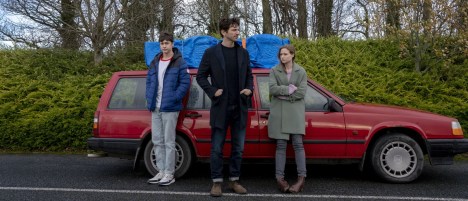
Non-Review Review: The Last Right

The Last Right is perhaps a little too driven by cliché and a little too heavy handed in its emotional beats, but it’s genuinely charming and benefits from a clever concept and an endearing cast.

To be fair, The Last Right runs into its problems in its first and third acts, in setting up and resolving its central dynamics. These problems flow largely from the fact that so many of details around the edge of the central premise of the film feel lifted from a collection of stock eighties American dramedies. Certain key elements of The Last Right feel like they came packed in an IKEA box ready for assembly, and so the movie’s introduction of and conclusion for those elements tends to feel rather rote.

Carry on…

However, The Last Right really kicks into gear once it has done that initial set-up, allowing its characters room to breath and interact with one another within the relatively safe but also free-form template of the classic road movies. Road movies largely live or die based on the chemistry of the cast and strength of the humour, and The Last Right works well on both counts. There’s a relaxed ease to The Last Right, a willingness to trust the actors and the characters to carry the bulk of the film.

The result of a trip with a few bumps along the way, particularly at either end of the journey. However, for most of the adventure, The Last Right is a pretty enjoyable ride.

Death drive.

Continue reading

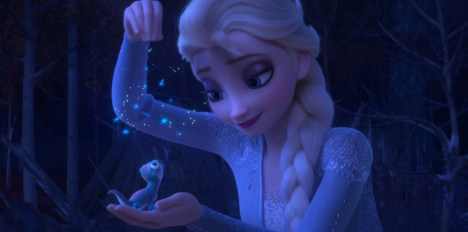
Non-Review Review: Frozen II

Frozen II is solid.

In fact, it might even be a little stronger than Frozen, on the whole. Of course, Frozen was the breakout Disney animated hit of the decade, crossing the one billion mark and turning Let It Go into a genuine pop phenomenon. However, Frozen always felt a little rough around the edges when compared to Disney’s other animated princess-centric movies of the decade; The Princess and the Frog, Tangled, Moana and maybe even Brave.

Pretty cool.

Frozen II arrives with a lot of the familiar problems of sequels. The original film was populated by characters who filled a story function, whereas sequels often have to create story functions to accommodate characters who are surplus to requirement. Kristof felt largely unnecessary in Frozen, but he feels particularly unnecessary in Frozen II. Similarly, the success of the original film often encourages sequels to dive deep into a conjured mythology, to over-explain something that requires no explanation. Frozen II does this with Elsa herself, trying too hard to explain her.

As a result, Frozen II suffers from some awkward pacing. It stutters and starts. It often gets slowed down checking in on familiar characters, or delivering reams of exposition for unnecessary back story. However, the irony of all this is that Frozen II has much more interesting things to say than Frozen, and is much more confident about saying them. Frozen II retreats from the logical conclusions of its strongest arguments, but it is still a surprisingly bold film for a sequel to one of the most successful children’s films ever made.

Lighten up.

Continue reading

156. House of the Dead (-#8)

Hosted by Andrew Quinn and Darren Mooney, and this week with special guests Ethan Shattock and Gerard Rooney from Disconnected Talk, The 250 is a (mostly) weekly trip through some of the best (and worst) movies ever made, as voted for by Internet Movie Database Users.

This time, Uwe Boll’s House of the Dead.

In this adaptation of the beloved arcade shooter game, a rave on a remote island goes horribly wrong. A small group of friends arrive late to the party of a lifetime, only to find it has become a literal dead zone.

At time of recording, it was ranked 8th on the list of the worst movies of all time on the Internet Movie Database.

Continue reading

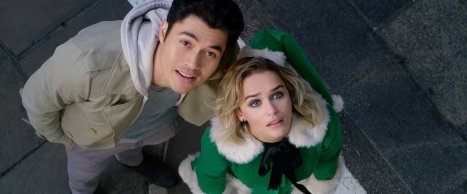
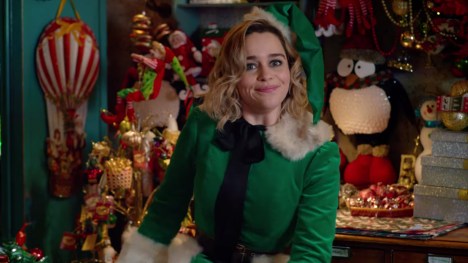
Non-Review Review: Last Christmas

Last Christmas certainly has its heart in the right place.

On paper, there’s a lot to recommend Last Christmas. Paul Feig is one of the most reliable comedic directors working today, and his work on films like Spy and A Simple Favour deserve consideration among the best comedies of the decade. Emilia Clarke is coming off an extended run as one of the two primary stars of genuine cultural phenomenon Game of Thrones, and has proven herself a likable romantic lead even in solid-if-unremarkable projects like Me Before You. Tony Golding has charisma to burn, as demonstrated by his supporting turn in Crazy Rich Asians.

Things are looking up.

Unfortunately, none of this really coheres as well as it should. Given the talent involved, this comedy should go down a festive treat. While it’s hardly a lump of coal, it is decidedly underwhelming. The problem isn’t a lack of surprises. After all, Last Christmas aspires to comfort rather than novelty. The problem is that Last Christmas is built around the assumption that it has the perfect festive surprise waiting for its eager and bright-eyed audience members to unwrap. Unfortunately, it vastly over-estimates how much some wrapping paper and bow can disguise a familiar outline.

Last Christmas feels far too pedestrian and far too predictable for what it is trying to do. There’s a potentially interesting premise here, but Last Christmas never really tries. It gives up the ghost too early.

Elf help.

Continue reading

Non-Review Review: I Lost My Body

I Lost My Body is a stunning piece of animation.

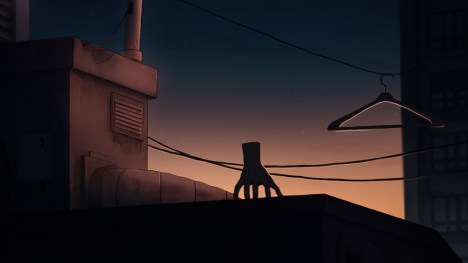
In a Parisien hospital, a dismembered hand comes to life. Distracted and disoriented by memories of its previous life, it scrambles out of the fridge and out into the world. Making a daring escape from the inevitable fate of medical waste, this detached hand embarks on a journey across Paris. This adventure takes the body part from the roofs to the underground, through the gutters and into the air vents. It confronts rats and pigeons, but also encounters rare beauty and intimate insight. All of this is part of a primal urge to return to the body from which it was so cruelly severed.

Taking the matter in hand…

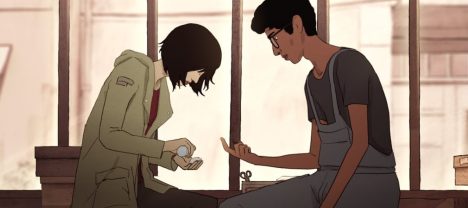
It is certainly an interesting and intriguing premise, and I Lost My Body lives up to the absurdity of that set-up. Jérémy Clapin’s animated film runs a tight eighty-one minutes, which means that it never overstays its welcome and that the central hook never has the opportunity to become distracting. I Lost My Body uses this absurd premise as a prism through which it might explore ideas of human connection, of the unlikely ways in which lives intersect and collide within the modern world. Some of its choices are inelegant and clumsy, but it never lacks ambition or insight.

I Lost My Body is a moving tale of what it’s like to feel truly disconnected.

Naofel me.

Continue reading