• Following Us

  • Categories

  • Check out the Archives


  • Awards & Nominations

158. The Wizard of Oz – w/ The Movie Palace – Winter of ’39 (#–)

Hosted by Andrew Quinn and Darren Mooney, The 250 is a fortnightly trip through some of the best (and worst) movies ever made, as voted for by Internet Movie Database Users. New episodes are released Saturdays at 6pm GMT.

This week, a special crossover episode with The Movie Palace Podcast, a film podcast hosted by Carl Sweeney taking a look at the classics of Hollywood’s golden age. Carl suggested a crossover episode taking a look at the list, and particularly some of the classic movies listed on it.

So this week, Victor Fleming, George Cukor, Mervyn LeRoy, Norman Taurog, Richard Thorpe and King Vidor’s The Wizard of Oz.

After a freak hurricane scoops her home off the ground and deposits her in a vibrant magical land occupied by talking scarecrows and wicked witches, Dorothy Gale must confront a shocking reality: she’s not in Kansas anymore.

At time of recording, it was not ranked on the list of the best movie of all time on the Internet Movie Database.

Continue reading

Non-Review Review: Ordinary Love

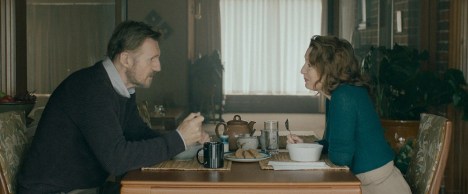
Ordinary Love offers a charming and affecting glimpse inside a marriage.

Liam Neeson and Lesley Manville play Tom and Joan, an ageing couple enjoying their autumn years together. One evening, Joan discovers a lump in her left breast. As a result, the couple find themselves navigating a precarious emotional rollercoaster as Joan deals with the resulting diagnosis and Tom struggles to hold it all together long enough that he might be his wife’s rock. Along the way, the couple try to find some balance in their lives, to maintain a delicate equilibrium inside a marriage that has already been strained by trauma unimaginable.

Food for love.
And also just food.

The “cancer” subgenre is a strange thing, encompassing movies such as Me and Earl and the Dying Girl or My Sister’s Keeper. These sorts of movies, and others about terminal diseases or afflictions, have to walk a fine line. Cancer is so common an ailment that such loss and such trauma is almost a universal experience. Movies like Me and Earl and the Dying Girl and My Sister’s Keeper can often struggle to capture the depth of emotion associated with such a diagnosis without slipping into cynical exploitation.

Ordinary Love works so well because of the humanity and empathy at its core. As the title implies, and as Tom outlines during one of the film’s most moving scenes, Ordinary Love understands that this sort of trauma is so horrifying because of the way it intrudes into the familiar and the safe. Cancer is a disease that turns a body against itself, spreading and growing inside the body that a person has known since birth. Ordinary Love captures that intrusion of the unknown into the familiar, offering a beautiful and moving sketch of a marriage that feels lived-in.

A couple of delights.

Continue reading

Non-Review Review: JoJo Rabbit

JoJo Rabbit is a sincere and sweet movie, but also a hopelessly misguided one.

There’s a lot of warm humanism underpinning Taika Waititi’s adaptation of the novel Caged Skies, about the eponymous young boy who finds himself wrapped up in the propaganda of Nazi Germany. Johannes Betzler is a ten year old boy with who fixates upon being “the bestest, most loyal little Nazi [Hitler will have] ever known.” He has even fashioned his imaginary friend in the form of Adolf Hitler. However, his life is turned upside down when he discovers a Jewish girl living in the crawl space in his dead sister’s bedroom.

He’s going to be Fuhrer-ious.

Waititi’s film has a surprisingly solid grasp of tone, given the material in play. JoJo Rabbit is sweet and sincere, pointed and humane. It is as playful as Waititi’s work on The Hunt for the Wilderpeople or even Thor: Ragnarok, but also appreciates the need to handle certain topis with care and consideration. There’s a warm empathy that radiates from the film, particularly in the dynamic between Jojo and his mother Rosie, who is doing everything she can to protect her son even as she watches his radicalisation.

However, despite all of this, JoJo Rabbit hinges on a fatal miscalculation. It is a story that makes a conscious effort to humanise its Nazi subjects. It is a film so rigourously invested in affirming JoJo’s humanity that it never quite confronts the audience with the horror of his denial of that humanity to others. JoJo Rabbit is a film that suggests the greatest human tragedy in the Second World War is the poor little Nazi boy, and can barely bring itself to look at the actual horrors that he inflicted.

He ain’t Hitler, he’s my buddy.

Continue reading

Non-Review Review: Colour Out of Space

Colour Out of Space is a visceral, haunting, beautiful nightmare.

H.P. Lovecraft is a notoriously difficult writer to adapt for film. It’s arguably that the best adaptations of his work have been spiritual companion pieces like John Carpenter’s The Thing or In the Mouth of Madness. There are any number of reasons for this, such as the uncomfortable racism that unpins his recurring fear of “the other.” However, there is also the obvious challenge of trying to craft cinematic adaptations of a horror often rooted in monstrosity beyond the human capacity for comprehension.

The family that stays together…

Colour Out of Space works reasonably well as an adaptation of the Lovecraft story of almost the same name. Indeed, the film is bookended by extended quotes from the source material. Director Richard Stanley’s adaptation is surprisingly faithful to that story, even if there are obviously lots of adjustments that have to made in shifting the action to the twenty-first century in both setting and production. It helps that Stanley has a great deal of experience in body horror, and clearly appreciates Lovecraft’s influence on that school of cinematic horror.

However, the real beauty of Colour Out of Space lies in the way in which if feels like a Lovecraftian adaptation of a Lovecraft text. It represents a cold and cynical nightmare of curdled and metastasised sixties psychedelia, playing as a riff on Lovecraft’s resurgence within sixties counterculture. Colour Out of Space is the story of how the sixties kids who rebelled against adult authority have so readily allowed themselves to acclimatise to it. Colour Out of Space is a story about how children become their parents, albeit perhaps more literally that the phrase suggests.

Purple haze…

Continue reading

Non-Review Review: Motherless Brooklyn

Motherless Brooklyn is a profoundly odd film.

On the surface, it looks like another one of those “movies they don’t really make anymore” that tend to get a small release around awards season, like Bad Times at the El Royale or Widows. It is an old-fashioned private detective story that starts with something relatively small before pulling back to reveal a vast and insidious conspiracy at work. It is a movie that is both a genre piece and a statement, and so seems an appropriate release for this late in the calendar.

Railing against the system.

However, on closer inspection, Motherless Brooklyn is much more surreal piece of work. The film was a passion project for writer, director and star Edward Norton. Norton had been struggling to bring the film to screen for the better part of two decades. It is a period piece in more than just its fifties New York setting. It feels like a time capsule. Although Motherless Brooklyn is only Norton’s second theatrical film as director, it arguably feels much more tailored to Norton’s style and interests than his actual directorial debut Keeping the Faith.

However, Motherless Brooklyn feels like it is lost in more than just time. The film is meandering, indulgent and unfocused. It has moments of incredible beauty and surprising power, but lacks the discipline to streamline everything else around those elements. Motherless Brooklyn is not a great film, but it is a strange one.

Evil plans.

Continue reading

157. Ford v. Ferrari (Le Mans ’66) – This Just In (#156)

Hosted by Andrew Quinn and Darren Mooney, The 250 is a (mostly) weekly trip through some of the best (and worst) movies ever made, as voted for by Internet Movie Database Users. New episodes are released every Saturday at 6pm GMT.

This time, James Mangold’s Ford v. Ferrari.

In response to the worst sales slump in American history, the Ford Motor Company embraces a radical idea: it will build a car to beat Ferrari at the 24 Hours of Le Mans. However, in order to do that, it needs to recruit and work with two radicals who have their own unique approach to engineering and racing, Carroll Shelby and Ken Miles. These two mavericks soon discover that their allies in Ford might be as dangerous as their enemies at Ferrari.

At time of recording, it was ranked 156th on the Internet Movie Database’s list of the best movies of all-time.

Continue reading

Non-Review Review: Knives Out

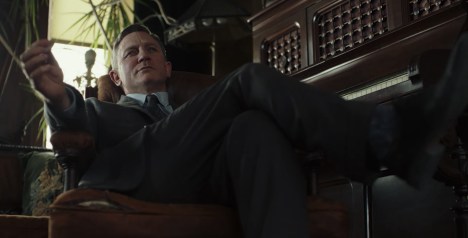
Knives Out is a sharp and point “whodunnit” for the post-truth era.

The most obvious point of reference for Knives Out is the work of Agatha Christie, although the film itself includes allusions to CSI, Murder, She Wrote and other generic procedural television show. There is a mysterious death inside a luxurious mansion, with a wealthy family who seemed ready to tear themselves apart even before the loss of their patriarch. An outside investigator finds himself drawn to the case, which begins to unravel as he follows each of threads back towards something resembling the truth.

Drawing a Blanc.

The beauty of Knives Out lies in the way in which writer and director Rian Johnson takes the familiar framework of a mystery story and allows it to descend into anarchy. Knives Out is constantly twisting and turning, zigging and zagging. Nothing is ever what it appears to be, and as more evidence comes to light it seems like nobody has any real idea of where the truth actual lies – including both the dogged private investigator trying to fashion order from chaos and even the killer themselves. Knives Out often feels like a wry, clever thriller about how nobody knows nothing.

In other words, Knives Out is the perfect murder mystery for this particular moment, in every possible way. This extends beyond the films obvious topical allusions and central themes, and is even woven into the manner in which the story unfolds.

To coin a phrase…

Note: This review will contain (or even allude to) very basic spoilers for Knives Out. Nothing too big or too specific. However, if you don’t want to be spoiled and are just here for the headline: Go see it. Then come back and read the review, if you want. Continue reading

Non-Review Review: Charlie’s Angels (2019)

Charlie’s Angels is a fascinating tonal mess. It doesn’t work at all, but the ways in which it doesn’t work are fascinating.

Charlie’s Angels feels like something of a hybrid. It combines several different styles of blockbuster into a single film. It pitches itself as a campy and goofy stupid 1990s blockbuster, but inflected with a veneer of 2000s self-seriousness and filtered through the lens of 2010s ironic self-awareness. However, these elements do not compliment one another, and Charlie’s Angels is never particularly interested in either smoothing over the gaps or exploring the dissonance. The result is an aesthetic that is probably best described as “comedically sociopathic.

Three of a kind.

It’s a shame, because there is some interesting stuff here. Writer and director Elizabeth Banks plays with ideas like the female gaze, and trying to reappropriate the franchise’s iconography and history for the twenty-first century. However, Charlie’s Angels lacks the clean focus that is necessary for a project like this to work, it cannot even figure out whether it wants to be a ground-up rebuild of the classic model or a nostalgic tweak upon it, and so seems to wander the gulf between those two extremes.

Charlie’s Angels is a strangely lifeless blockbuster, for a film that tries to cram so much in.

Solid as a rock?

Continue reading

New Podcast! The X-Cast – Season 5, Episode 1 (“Redux I”)

The X-Cast just kicked off its season coverage, and I’m back with Tony Black to discuss the first part of the fifth season premiere Redux I.

Redux I was famously the second-most watched episode of The X-Files, behind Leonard Betts. It’s easy to see why. Not only was the episode following on from an edge-of-the-seat cliffhanger involving the supposed suicide of the male lead on one of the buzziest shows of the decade, but it was also the launch of the season that would lead into the feature film adaptation, The X-Files: Fight the Future. As such, it was a pretty daring move on the part of Chris Carter to devote so much of the premiere to purple prose monologues playing over Mulder walking down grey corridors.

I think this is a pretty fun and interesting discussion. Redux I is always an episode that I’ve have complicated and conflicted feelings about, and the podcast was a nice opportunity to work through some of those strange emotions. Anyway, I hope there’s something worthwhile in here.

You can listen to the episode here, or click the link below.

Continue reading

Non-Review Review: 21 Bridges

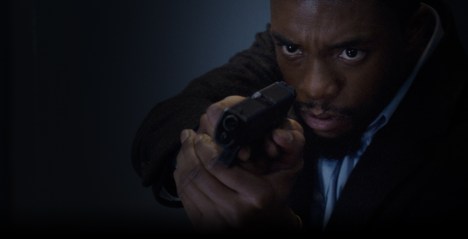
21 Bridges is a solid, sturdy old-fashioned thriller.

This is both faint praise and gentle criticism. 21 Bridges offers a familiar set-up and premise, as a dogged detective hunts two suspects through the night. Although the film makes solid use of Chadwick Boseman as its lead, it is not impossible to imagine an alternate version starring Liam Neeson. It would arguably make a perfectly fine counterpart to Run All Night. The plot of the film involves a manhunt for two criminals who murdered several police officers during a botched heist, which gradually escalates into a full-blown conspiracy.

He needs more cop on.

It is all pretty paint-by-numbers. There is not a lot in 21 Bridges that surprises. More than that, there is very little in 21 Bridges that pops, that distinguishes it from other entries in the subgenre. This is both a blessing and curse. There is something comforting in the familiarity of 21 Bridges, in the way that movie never demands or expects more of its audience or itself than it promises to deliver. It largely succeeds at what it sets out to do, with minimal flourish or clutter. It moves through its plot with the same sense of purpose and focus as its protagonist.

21 Bridges knows exactly what it is doing, and mostly succeeds at doing it.

“Tonight, this island is Manhunttan.”

Continue reading