• Following Us

  • Categories

  • Check out the Archives


  • Awards & Nominations

Non-Review Review: Once Upon a Time… In Hollywood

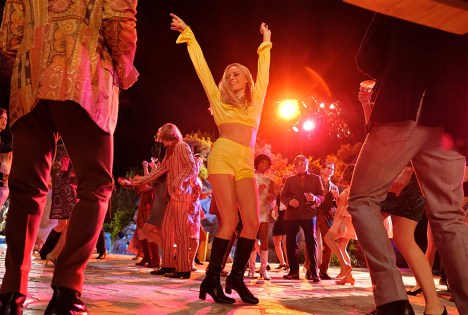
Once Upon a Time… in Hollywood is a fairy tale, for better and for ill.

Continue reading

140. Sanjuro – This Just In (#–)

Hosted by Andrew Quinn and Darren Mooney, and with special guest Chris Lavery, This Just In is a subset of The 250 podcast, looking at notable new arrivals on the list of the 250 best movies of all-time, as voted for by Internet Movie Database Users.

This time, Akira Kurusawa’s Sanjuro.

At time of recording, it was not ranked on the list of the best movies of all time on the Internet Movie Database.

Continue reading

Non-Review Review: The Angry Birds Movie 2

The Angry Birds Movie 2 is a mess, a film that seems uncertain of its own target audience.

Like the original Angry Birds Movie, the sequel feels like something a throwback, an animated film that evolutionary leap that Pixar brought to computer-generated animation during their peak in the middle of the first decade of the twenty-first century. Other animated studios have come to embrace the sort of sophisticated storytelling that elevated those iconic and beloved Pixar films, most notably Dreamworks in projects like Kung-Fu Panda or How to Train Your Dragon.
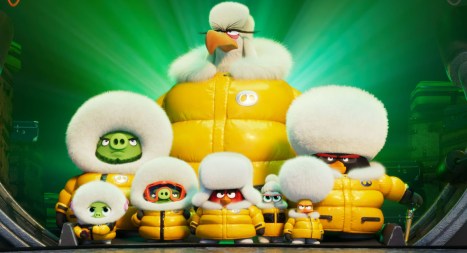
Cool customers.

In contrast, both The Angry Birds Movie and The Angry Birds Movie 2 feel displaced in time, or perhaps even a glimpse sideways into a world where Wall-E and Up never happened, so Shrek and its sequels still provide a template for storytelling in computer-generated animation. The Angry Birds Movie arguably made a better deal of this than one could expect, with an approach that harked back to the cartoonish sociopathy that defined so much of twentieth-century American animation, a particularly crass and crude spin on the Tex Avery template.

There are moments in The Angry Birds Movie 2 were that retrograde influence clearly shines through. In fact, The Angry Birds Movie 2 is at its strongest when it feels more like a collection of Looney Tunes sketches than an actually narrative. Unfortunately, all of this gets muddle; the eggs that were such an important plot point in The Angry Birds Movie get scrambled, as the film jumps from extremes; broad pop culture parodies, nineties nostalgia, absurd cartoonish violence, pseudo-feminism, a jilted lover plot, commentary on modern dating.

The se-squeal.

Maybe some of these elements could work in isolation, if the production team found an interesting angle into. Maybe some of these elements could work in unison, if they were combined in small doses and with a clear over-arching design in mind. However, The Angry Birds Movie 2 never seems sure of what it wants to be or who it wants to be for, creating a strange cocktail that doesn’t serve any of its audience particularly well.

The result is something of a curate’s egg.
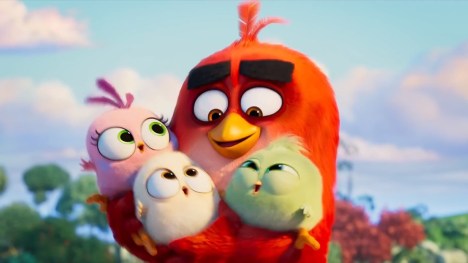
Birds of a feather.

Continue reading

Non-Review Review: The Intruder

The Intruder aims for “pulpy delight” and ends up in “trashy mess.”

The biggest issue with The Intruder is the fact that no two people involved in the film seem to have a firm idea of what exactly they are working on. This is no surprise. Director Deon Taylor doesn’t seem entirely sure what exactly the film is from one scene to another. The Intruder is formally a fairly standard horror movie, a home invasion thriller anchored in social anxieties. It is part of a rich vein of cinematic horror that can trace its development through films like Pacific Heights. It is that classic nightmare of a house guest who just won’t leave.

Fatal A-tractor.

The issue is that The Intruder tries to inflect that standard genre set-up with contemporary anxieties about race, gender and class divisions in contemporary America. The Intruder is the story of a wealthy black family that moves from the city into a spacious rural home, displacing the red-blooded middle-aged white guy who has lived in that house for his entire life. Simmering resentments bubble beneath the surface, with an escalating sense of threat and uncertainty as the conflict between these two sides (and these two perspectives) builds to a head.

The biggest problem with The Intruder is that it has no idea what to do with any of these elements, and no idea how to integrate them into a convincing or engaging horror film. Instead, the movie becomes a tonal car crash, packed full of strange choices that never add up to anything especially compelling or exciting. The Intruder pitches itself as a biting social commentary in one scene, a goofy self-aware horror spoof in another, a clumsy domestic drama in another. None of these elements fit together, creating a movie that feels less comfortable in its own surroundings than any of the protagonists.

Dennis the Menace.

Continue reading

Star Trek: Voyager – Natural Law (Review)

Natural Law represents another vaguely nostalgic entry in the final season of Star Trek: Voyager.

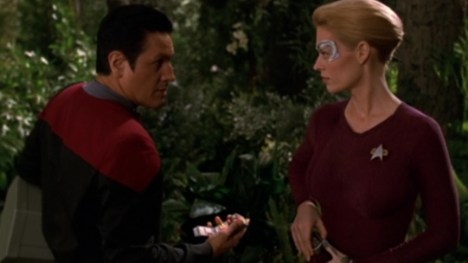
Most superficially, Natural Law evokes the vague New Age sentiment that defined a lot of the early episodes focusing on Chakotay – episodes like The Cloud or Tattoo. It feels entirely appropriate that Chakotay should be part of the away team to encounter the Ventu, as the presentation of the Ventu evokes a lot of the early approach to Chakotay’s own Native American heritage; a romanticised ideal of a more primitive culture. In fact, it seems entirely plausible that the aliens who build the shield to protect the Ventu – the mysterious “Species 312” – might in fact be the same white-skinned aliens encountered in Tattoo.

“I can see what’s happening, and they don’t have a clue…”

More specifically, though, Natural Law represents a familiar archetypal Star Trek episodes. Although the words are not actually spoken within the episode itself, Natural Law is pretty much a textbook “Prime Directive” episode. It belongs to that familiar subset of stories about the crew encountering a group of primitive aliens affected by a piece of outside technology, and trying to weigh their obligation to help that society with their desire not to directly intervene. The Ventu are a familiar native archetype, albeit one handled with a little more grace and dignity than the inhabitants of Gamma Trianguli VI in The Apple.

There is something very interesting in Natural Law, particularly in the context of the seventh season’s recurring fascination with tying Voyager back to the roots of the Star Trek franchise with references to Kirk in episodes like Q2 and Friendship One. Ironically, Natural Law only underscores how far removed Voyager is from the original Star Trek. Kirk often struggled to justify bending the Prime Directive to liberate societies trapped in oppressive circumstances and kept in arrested development. In contrast, Natural Law strains to justify the washing of the crew’s hands. More than that, Natural Law reveals the true purpose of the Prime Directive has nothing to do with primitive cultures.

The rise and falls…

Continue reading

New Podcast! The Time is Now – Season 1, Episode 13 (“Force Majeure”)

It was a delight to stop by The Time is Now podcast again, particularly so soon after my last appearance on The X-Cast.

This week, I’m joining host and showrunner Kurt North to talk about one of my favourite episodes of the first season and a definite turning point in the evolution of Millennium. Force Majeure is one of the first times in the season that Millennium really lets its freak flag fly high. It is an episode that feels very different and distinct from what came before, eschewing the conventional “serial killer of the week” format in favour of something more abstract and eschatological.

This was a fun, broad discussion. As ever, you can listen to the episode here, subscribe to the podcast here, or click the link below.

Continue reading

Torchwood: Miracle Day – Rendition (Review)

Rendition serves as a demonstration of the flaws with Torchwood: Miracle Day. While some of those flaws – the flaws inherent to the production between the BBC and Starz, the difficulty with scale – were built into The New World, Rendition hits upon quite a few more. Most obviously, it’s an entire episode dedicated to filler. Pretty much the only plot line that advances in a meaningful way is that involving Oswald Danes. Otherwise, Rendition feels like a bit of a holding pattern, a time-wasting exercise designed to pad out the season to ten episodes.

Dead on arrival?

Dead on arrival?

Continue reading

139. The Lion King (#45)

Hosted by Andrew Quinn and Darren Mooney, and this week with special guests Phil Bagnall and Graham Day, The 250 is a (mostly) weekly trip through some of the best (and worst) movies ever made, as voted for by Internet Movie Database Users. New episodes are released every Saturday at 6pm GMT.

This time, Rob Minkoff and Roger Allers’ The Lion King.

The Pridelands have enjoyed a period of sustained peace under the stewardship of the proud king Mustafa. However, Mustafa’s young son Simba finds himself embarking upon a journey of self-discovery and adventure as he learns just how fragile happiness can be and just how heavy responsibilities can weigh upon a king.

At time of recording, it was ranked 45th on the Internet Movie Database‘s list of the best movies of all-time.

Continue reading

New Podcast! The X-Cast – Season 4, Episode 13 (“Never Again”)

I had the pleasure of popping by The X-Cast again, this time to discuss Never Again with the wonderful Deana Ferrer.

Long-time readers of the blog will know (or at least suspect) that Never Again stands out as one of my favourite episodes of The X-Files. Most days, it’s a toss up between that and One Breath. There are a lot of reasons for that, but I think the most obvious is that – as I’ve gotten older – I’ve found myself identifying more with Scully than with Mulder. Scully’s anxieties and uncertainties here, her self-doubt and her insecurity, all resonate with me more and more as I get older. More than any other X-Files episode, I understand the feelings that drive Never Again.

Of course, there’s more to it than that. It is also a fantastically constructed episode of television, an interesting illustration of how continuity is an external construct in long-form narratives, and something that pushes very strongly at certain ideas of what The X-Files is and what The X-Files is about. So it was a pleasure to join Deana to discuss the episode, to break it down and to try to make sense of it all. I know it’s a controversial episode, so I simply hope that we make a relatively coherent argument for it.

As ever, you can listen to the episode here, or click the link below.

Continue reading

Non-Review Review: Horrible Histories – The Movie: Rotten Romans

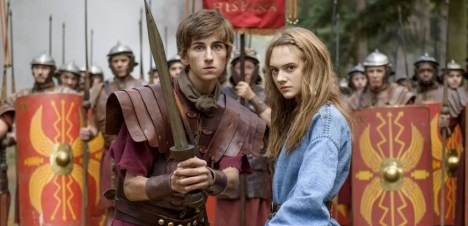
Horrible Histories – The Movie: Rotten Romans is essentially a feature-length pantomime, and works best on those terms.

Horrible Histories is an adaptation of a popular series of children’s (teenager’s) books that aim to explore history through an unconventional lens, providing a somewhat grittier and more tongue-in-cheek accounting of the historical record than those found in school books. They are immensely popular, and have existed long enough to have a cross-generational appeal. It is entirely possible that many parents bringing their children to see Horrible Histories will themselves have read one or two of the source books.

Sharp satire?

Naturally, Horrible Histories is not the first attempt to adapt the books for a broader audience. The BBC adapted the series to television a decade ago, attracting a wide range of comedic talent to bring the show’s unique perspective to life; the series included figures like Alice Lowe, Simon Farnaby, Al Murray, Mark Gattiss, David Badiel and Chris Addison. The series was beloved, even featuring satirical musical numbers. Its influence lived on in specials like the BBC’s centenary rap battle marking the start of the First World War.

Horrible Histories largely eschews a lot of the talent responsible for the television series, although it does make room for a few cameos. However, the film is at its strongest when it embraces the source material’s irreverent playfulness. Ironically, the film suffers when it tries to weave a conventional narrative into this structure.

“Our problems are legion.”

Continue reading