• Following Us

  • Categories

  • Check out the Archives


  • Awards & Nominations

New Podcast! Scannain Podcast (2019) #27!

It’s time for the Scannain podcast!

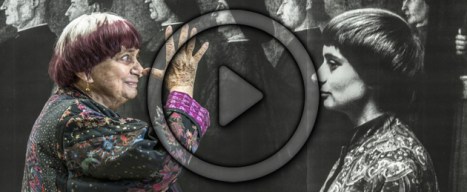
This week I join Ronan Doyle and Roisín Geraghty, both fresh back from the Galway Film Fleadh. The pair talk through what they saw there, including a slate of really exciting short films (Irish and international) and the retrospective of Agnès Varda.

The big film news of the week is that Roisín has joined us to discuss the slate at this year’s GAZE Film Festival, which will be running over the August Bank Holiday Weekend in both the Lighthouse and the Irish Film Institute. It’s a pack slate, with a host of really great material – both new and old. In other news, the Dublin Feminist Film Festival announced their own slate, George R.R. Martin is coming to the Irish Film Institute as part of WorldCon, and independent Irish horror The Perished is premiering at FrightFest later this year.

The top ten:

  1. Anna
  2. Rocketman
  3. The Queen’s Corgi
  4. The Secret Lives of Pets II
  5. Aladdin
  6. Midsommar
  7. Westlife – The Twenty Tour Live
  8. Yesterday
  9. Toy Story 4
  10. Spider-Man: Far From Home

New releases:

You can listen to the podcast directly here.

Note: This will be be the last Scannain podcast I’m hosting for a little while. I’m taking a break to concentrate on some other commitments.

138. Trois Couleurs: Rouge (Three Colours: Red) – Bastille Day 2019 (#246)

Hosted by Andrew Quinn and Darren Mooney, and this week with special guest Phil Bagnall, The 250 is a (mostly) weekly trip through some of the best (and worst) movies ever made, as voted for by Internet Movie Database Users. New episodes are released every Saturday at 6pm GMT.

This time, Krzysztof Kieślowski’s Three Colours: Red.

The third installment in the landmark Three Colours trilogy focuses on a strange relationship in mid-nineties Geneva. Valentine is a young student model trying to find direction in her life, who stumbles into the life of a voyeuristic retired judge. The two strike up a strange relationship, discovering just how interconnected their lives are despite the gulf that seems to exist between them.

At time of recording, it was ranked 246th on the Internet Movie Database‘s list of the best movies of all-time.

Continue reading

Non-Review Review: The Lion King (2019)

It’s a very strange comparison to make, but the film that most obviously comes to mind when watching Jon Favreau’s The Lion King is Gus Van Sant’s infamous nineties remake of Psycho.

This is Favreau’s second “live action” adaptation of a classic Disney animated film, even if that descriptor is somewhat misleading. It might be more accurate to describe The Lion King (which was shot entirely in virtual reality) as “verisimilitudinous.” It is designed to approximate “live action”, rather than being live action itself. On that note, the film is a technical triumph. On the level of pure craft, The Lion King is a staggering accomplishment. It is a virtual reality film that is in many ways indistinguishable from reality itself. However, the onion has even more layers to it. It is a virtual reality film approximating the reality while meticulously and faithful reproducing a beloved animated film.

Join the cub.

As such, and much like Van Sant’s Psycho, there is an element of reflexive postmodernism to The Lion King. Both the Psycho and Lion King remakes feel more like conceptual art installations than movies in their own right. They are certainly more interesting as abstract objects than as actual stories. After all, the stories in question were so closely wedded to form and context the first time around that the idea of remaking them so literally and so faithfully seems absurd from a creative point of view. As such, the process of replication becomes intriguing of itself. Both Psycho and The Lion King are incredibly faithful copies that consciously lean into their uncanniness.

Favreau’s Lion King looks beautiful, but largely feels like a limit case. It is a certain approach to modern filmmaking taken to – and perhaps pushed beyond – its farthest extreme.

Pride of the Pridelands.

Continue reading

Non-Review Review: Blinded by the Light

If the type of jukebox musical codified by the success of Bohemian Rhapsody, Mamma Mia and Rocketman is to become a fixture of the pop cultural landscape, there are certainly worse ways to approach the template than Blinded by the Light.

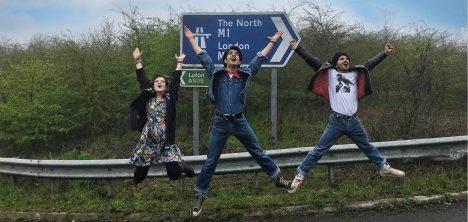
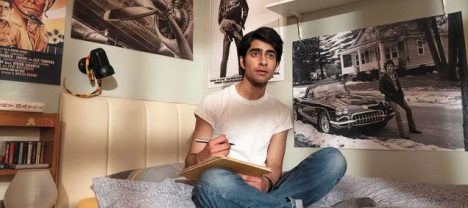
Many of the beats and structures of Blinded by the Light will be familiar to audiences. Blinded by the Light is a variety of familiar genres blended together; a nostalgic pop period piece rooted in the late eighties, a coming of age story about an insecure teen, a culture clash dramedy about an immigrant family in turbulent times. On top of all that, it is a loving ode to the music of Bruce Springsteen in particular, and more broadly to the power of musical fandom in the life of a wayward teenager.

“Stay on the streets of this town, and they’ll be carvin’ you up all night.”

Blinded by the Light knows the track relatively well. It hits most of its marks. There are few surprises nestled within the run-time of this life affirming story of a young man treating the music of Bruce Springsteen as a spiritual guide. Indeed, there is even a little clumsiness on display. Blinded by the Light makes a strong thematic argument for the importance of family and friends, particularly those around frustrated teenager Javed. However, those characters tend to drop into and out of the narrative, disappearing for extended periods.

However, Blinded by the Light is elevated by infectious enthusiasm. Blinded by the Light – for better and for worse – captures that teenage intoxication of excitement and interest, with a compelling vulnerability and with all the energy of youth. Blinded by the Light is cringy and silly and goofy, but knowingly so. It doesn’t just capture the awkwardness of teenage fantasy, but embraces it. There is a sense that Blinded by the Light is aware of the embarrassment and the stupidity obscured by teenage enthusiasm, and refuses to look away. There’s something joyous in that.

“In Candy’s room, there are pictures of her heroes on the wall,
but to get to Candy’s room, you gotta walk the darkness of Candy’s hall.”

Continue reading

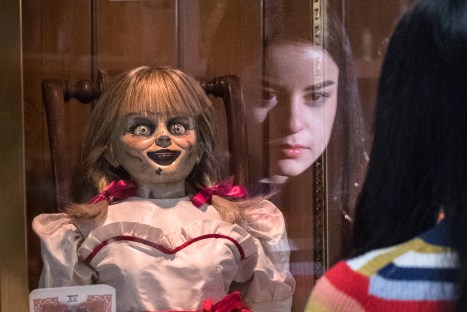
A Doll’s Place is in the Home: The Sly, Semi-Subversive Domestic Politics of “Annabelle Comes Home”…

Annabelle Comes Home is an intriguing film. It’s arguably more intriguing than it is successful.

A large part of that is down to the way in which it very much basks in its position as an unlikely lynch pin of a horror shared universe populated by a variety of ghosts and ghouls that seem to be clamouring for their own spin-off movies like Annabelle or The Nun as the eponymous demonic doll just sits back and watches. It’s a surreal spectacle, particularly for a horror movie. Annabelle herself often feels like something of a passenger in her own movie, instead a tether for a variety of episodic horror adventures.
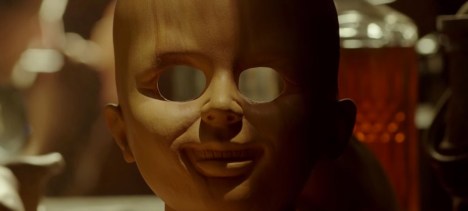
However, there is something more subversive and intriguing happening beneath the surface of the film. As the title implies Annabelle Comes Home is a story centred on the domestic environment, on a suburban family home menaced by a sinister supernatural threat. This is a standard horror movie set-up. A lot of horror movies focus on the idea of evil within the family environment, whether coming from within or without. Annabelle Comes Home borrows a number of cues from The Shining, including the bass on the soundtrack and a possessed typewriter, but it runs much deeper than that.

A lot of horror films focus on the nuclear family placed under siege, often as a metaphor for the pressures at work in the real world. Stephen King has pointed to movies like The Amityville Horror as examples as “economic horror”, reflecting the anxieties of families sinking into debt in their family homes during the seventies. (As if to underscore the point, the real life case that inspire the film was a fraud to help the family get out of debt.) Similarly, the liberal single-parent household in The Exorcist turns back to the Church, perhaps expressing deep-seated anxieties about liberalisation or shifting cultural norms.
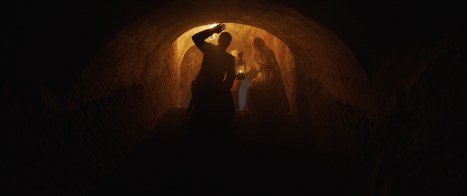
There is often a strongly reactionary subtext to these sorts of horror stories. It is not always a conscious choice on the part of the production team, but it is rooted in the fact that change is scary and that subversions of conventional conservative dynamics are unsettling in large part because those conventional conservative dynamics are so ubiquitous. In short, audiences tend to see conventional family units as the default, so anything that attacks or erodes that is potentially uncanny and unsettling, and so many horror movies play on that instinctive reaction.

There are any number of obvious examples of how this approach can lead to very uncomfortable and unsettling implications. The Curse of La Llorona is perhaps an obvious (and easy) contemporary example. The basic set up of the movie finds a single (widowed) mother struggling to provide for her children; she has to leave them for extended periods to work at her job, but is also held back at that job because she is a single mother. Meanwhile, a Mexican spirit invades the family home and attaches itself to her children. The result is a film that seems to be about a single mother who leaves her children open to a foreign threat.
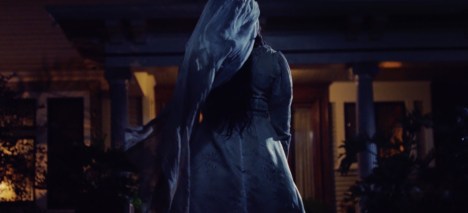
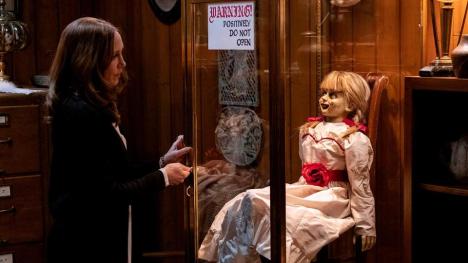
Part of what makes Annabelle Comes Home so interesting is the way in which it seems to play with this central dynamic, how it teases out and subverts some of the central subtext of the larger horror genre to which it belongs. Annabelle Comes Home is not so much a story about outside forces menacing a conventional family within the seeming comfort of their home, but is instead a story about two young women who end up trapped inside a suburban home and attacked by the monstrous forces that the family have consciously placed there and even folded built into the structure.

Annabelle Comes Home offers a slyly feminist twist on the familiar domestic horror.
Continue reading

New Podcast! Scannain Podcast (2019) #26!

It’s time for the Scannain podcast!

We’ve got four of a kind this week, as I join Jay Coyle, Grace Duffy and Ronan Doyle to discuss the week in cinema. This week, Jay has watched Experiment in Terror, Booksmart, Metal Heart and Hotel Monterey. Grace has watched Stoker, Night Moves, The Cabinet of Dr. Caligari and Spider-Man: Homecoming. Ronan has watched The Front Page, Night and Fog, Ricky and Lemonade. Jay and Ronan have also both watched the latest installment in the Up series. I have watched Anima, Shaft and the entire Toy Story franchise.

In film news, it’s a packed July at the Irish Film Institute, the Lighthouse has a special screening of Crouching Tiger, Hidden Dragon, Phantom Islands released on Vimeo on Demand, a list of industry experts announced as speaking at the Galway Film Fleadh, and the casting of Halle Bailey as Ariel in the upcoming live action remake of The Little Mermaid.

The top ten:

  1. Child’s Play
  2. Apollo 11
  3. Avengers: Endgame
  4. The Queen’s Corgi
  5. Rocketman
  6. The Secret Lives of Pets II
  7. Men in Black International
  8. Aladdin
  9. Yesterday
  10. Toy Story 4

New releases:

You can listen to the podcast directly here.

Note: Podcast contains spoilers for both Yesterday and Spider-Man: Far From Home.

137. Toy Story 4 – This Just In (#116)

Hosted by Andrew Quinn and Darren Mooney, This Just In is a subset of The 250 podcast, looking at notable new arrivals on the list of the 250 best movies of all-time, as voted for by Internet Movie Database Users.

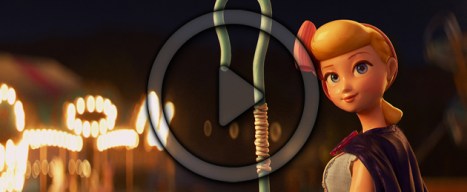
This time, Josh Cooley’s Toy Story 4.

At time of recording, it was ranked 116th on the list of the best movies of all time on the Internet Movie Database.

Continue reading

Non-Review Review: Annabelle Comes Home

At its core, Annabelle Comes Home is the Captain America: Civil War of the Conjuring Shared Universe.

That is a very strange sentence to type, and more than likely a very strange sentence to read. However, it speaks to very strange times. It seemed highly unlikely that The Conjuring would spawn Hollywood’s second most successful cinematic universe, despite efforts by various other studios to emulate the success of the Marvel Cinematic Universe. However, even the Warner Brothers trailers before Annabelle Come Home reinforce how dramatically the franchise has moved the needle. Blockbuster franchise horror cinema is a thriving market even outside these films. Later this year, Warners have IT: Chapter 2 and Doctor Sleep.

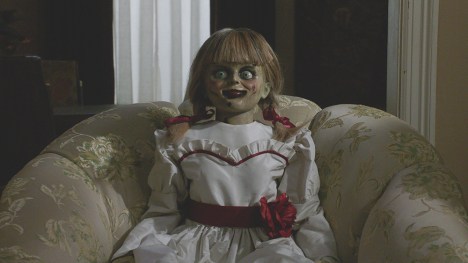
Hello dolly.

However, even the mere existence of Annabelle Comes Home is an illustration of the success of this particular horror franchise. This is a major cinematic release at the height of summer. It is not even counter-programming like, for example, Midsommar. This is event cinema. As with The Conjuring 2, this is also very clearly designed in the language of blockbuster cinema. Like Civil War, this is nominally the third film in its franchise; although the nature of that franchise has changed dramatically with each film. As with Civil War, the production team have tethered this sequel to the heart of the shared universe.

Annabelle Comes Home is a fascinating, if not entirely successful, slice of blockbuster horror that seems to exist primarily as a showcase for the success of its own franchise. It’s sturdily and reliably constructed, if a little lacking in its craft and technique. It balances this lack of finesse against a playful sense of humour and a slyly subversive sensibility, resulting a solid addition to the shared universe.

Nobody ever asks the killer doll their side of the story.

Continue reading

Non-Review Review: Pavarotti

Pavarotti is pretty much exactly what one might expect from a Ron Howard documentary looking at the life of Luciano Pavarotti.

Howard is often overlooked or dismissed as a filmmaker, in large part because he never cultivated the same sort of auteur persona associated with other great American directors like Steven Spielberg or Robert Zemeckis. Indeed, it’s often quite difficult to pin down what exactly makes a Ron Howard film distinctly his own, which is something of a compliment. Howard has a versatility and adaptability that makes him one of the most enduring and successful major American film directors, with his filmography including films as diverse as Splash, Willow, Ransom, A Beautiful Mind and The DaVinci Code.

Nailing the high note.

However, there are certain recurring motifs that can be spotted in his work. In particular, Howard has something of a minor fascination with competence, returning time and time again to the idea of people who are very good at doing what they do. Some of Howard’s best films read as odes to competence, simply watching highly capable people in tense situations, demonstrating their skill and craft; Apollo 13, Rush and even Frost/Nixon. It is tempting to read far too much into this, to ask whether Howard sees something of himself in his subjects, the skilled craftsman who delivers exactly what’s needed more times than not.

This perhaps explains the shape of Pavarotti, Howard’s latest effort. It is a film that is very much interested in the how of its subject, more than the why. The film largely avoids trying to explain the eponymous tenor, and comes alive when discussing the maestro‘s technique, craft and organisation. There is a genuine appreciation of the skill and technique on display in Pavarotti, which is very engaged in the mechanics of how the singer accomplished so much of what he did – both in terms of actual performance, but also in terms of business management. The only problem is that this doesn’t leave much room for Pavarotti as a man.

Scoring highly.

Continue reading

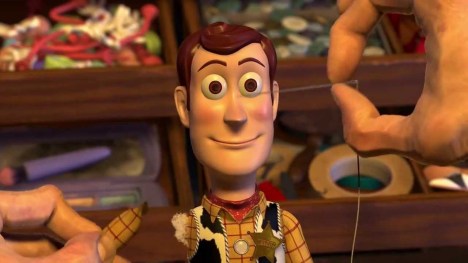
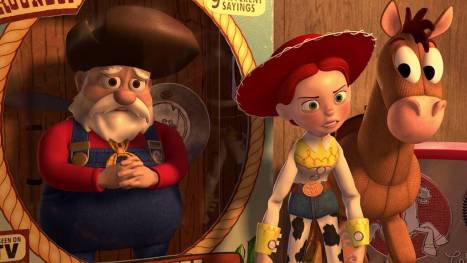
“For Infinity… and Beyond…”: In Praise of “Toy Story 2” as the Perfect Sequel…

Ranking films is often a fool’s errand.

I make this argument with no small amount of hypocrisy. Most obviously, I co-host a weekly podcast called The 250, which is dedicated to exploring the Internet Movie Database’s Top 250 Movies of All-Time. Even beyond that, I am guilty of participating in that periodic pleasure of pundits everywhere; the top ten… or forty… or fifty. At the end of every year, I produce a list of my favourite films of the year, whether on the Scannain podcast, on my personal Twitter, or even occasionally on this blog. In my defense, I rationalise that through a desire to draw attention to good films, and accept we can quibble on the order of said film.

At the same time, these lists can often be illuminating in terms of contextualising affection for a particular film, or for gauging the general mood. So when a film appears on a single list, it might be worth checking out if you trust the author. If it appears on multiple lists, it is probably a much stronger recommendation. (The Scannain annual top ten is an eclectic list, but it disparate viewpoints often settle on at least one consensus pick: You Were Never Really Here, Moonlight, Hell or High Water.) It helps to set a level of a particular film’s relative appeal and popularity.

By that measure, Toy Story 2 is generally considered the weakest film its franchise. At time of writing, Toy Story, Toy Story 3 and Toy Story 4 all feature on the Internet Movie Database’s Top 250 Movies of All-Time. Toy Story 2 is the lowest ranked entry in the franchise on lists compiled by Variety, Business Insider and The Ringer. It is the ranked as the weakest of the original trilogy on lists compiled by Slant Magazine, Collider and Polygon. None of this amounts to anything that can quantifiably be described as a “backlash.” After all, to be the worst Toy Story movie, a film still has to be pretty good.

However, there is a sense in which Toy Story 2 gets overlooked. There are any number of structural reasons for that. The middle part of a trilogy, picking up immediately after Toy Story but without offering the resolution expected of Toy Story 3, the film is neither a beginning nor an end. It is not an introduction to these characters, and it does not really function as a farewell either. More than that, the film may also be somewhat tarnished by its production history, originally mooted as a straight-to-video release before entering an insanely fast turnaround as a theatrical feature; it is partly why Disney owns Pixar.

Still, this tends to look past what makes Toy Story 2 such a delight. It is in many ways the perfect sequel.

Continue reading