• Following Us

  • Categories

  • Check out the Archives


  • Awards & Nominations

Star Trek: Voyager – Alice (Review)

Alice is a misfire.

To be fair, the episode seemed doomed from its original set of premises. Star Trek: Voyager has never been particularly good at capturing the sense of Tom Paris as a restless unreliable rebel. The episodes of Voyager focusing on the character’s rebellious tendencies tend to be spectacular misfires; Ex Post Facto, Investigations, Vis à Vis, Thirty Days. These stories do not play to the strengths of either the writing staff or Robert Duncan McNeill, feeling largely incompatible with the character of Tom Paris as he developed in the wake of Caretaker.

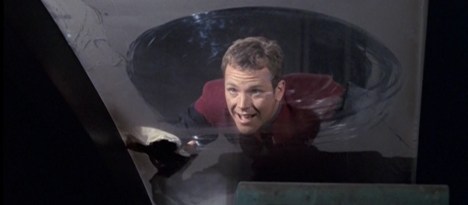
I’ll never get used to not living inside of Alice.

However, Alice literally weds this familiar and unsuccessful premise to another recurring Voyager trope with a less-than-impressive rate of success. It is not enough for Alice to be another story about Tom Paris proving that he has a rebellious streak, that premise has to be woven into a broad science-fiction gothic horror in the style of Threshold or Macrocosm. Indeed, Alice is explicitly a psycho-sexual horror in the mode of Blood Fever or Darkling, inevitably butting up against the difficulties of constructing an episode that is about sex but can never discuss sex.

Alice is flawed from the ground-up, but those flaws are only further revealed in the clumsy execution and the disappointing storytelling. Alice is a very bad piece of television.

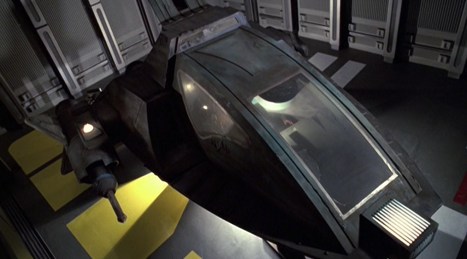
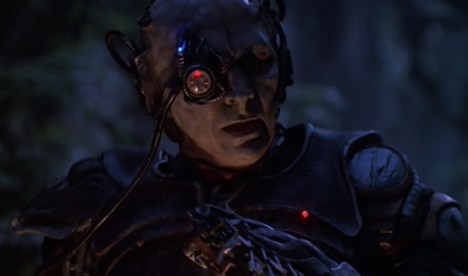
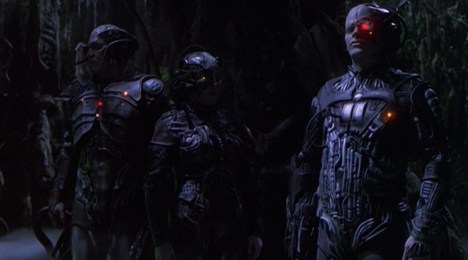
A deep-space dust-up.

Continue reading

Non-Review Review: Den of Thieves

Heat was not the first cops and robbers film to parallel the opposite sides playing for control of the board, suggesting lives on a collision course inside a gritty crime epic.

However, Heat did it better than most. Heat inspired an entire generation of film fans, and arguably an entire subgenre of heist movie. Los Angeles had always lent itself to operatic crime sagas, with triumph and tragedy playing off against one another in the City of Angels, but Heat redefined the game. The movie developed a style of storytelling, both in terms of actual technical craft and in terms of storytelling construction.

Mann of Today.

Success breeds imitation, and there have been far too many crime films inspired by Michael Mann’s classic, to the point that many film fans were disappointed to discover that Mann himself had not adhered to the template in making Public Enemies. Almost every year, there seems to be another example of a movie constructed in the image of Heat, from Takers to The Town. The quality varies from film to film, as does the level of innovation and inspiration.

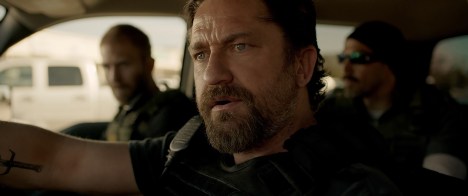
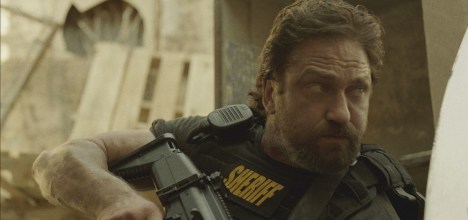
Den of Thieves is rather brazen in how much it takes from Heat, lifting both the crime classic’s cinematic language and even direct scenes. The result is a lukewarm reHeat of an exquisite meal, something to which the movie cheekily alludes towards the end of its climactic heist when one character literally serves up days-old leftovers. It isn’t anywhere near as filling or satisfying as the original meal, but it can satisfy a craving.

You definitely feel the Heat around the corner.

Continue reading

63. Coco – This Just In (#37)

Hosted by Andrew Quinn and Darren Mooney, This Just In is a subset of The 250 podcast, looking at notable new arrivals on the list of the 250 best movies of all-time, as voted for by Internet Movie Database Users.

This time, Lee Unkrich and Adrian Molina’s Coco.

Continue reading

Star Trek: Voyager – Tinker, Tenor, Doctor, Spy (Review)

With Tinker, Tenor, Doctor, Spy, Star Trek: Voyager is back to business as usual.

The first episode produced after the departure of Ronald D. Moore, Tinker, Tenor, Doctor, Spy is in many ways an archetypal Voyager story. Equinox, Part II was the second part of a season-bridging two-parter; Survival Instinct was a dark fable about consequences and trauma that was the last script credited to on the franchise’s most beloved writers; Barge of the Dead was a surreal and ambiguous adventure into the Klingon afterlife. As such, it is strange that an episode that opens with a playful operatic number about Tuvok’s pon farr should mark a return to normality.
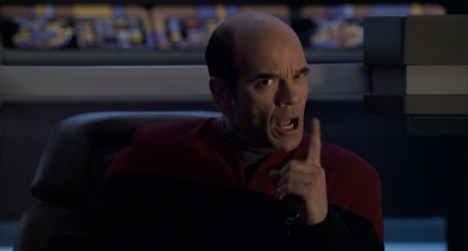
“My Delta Quadrant TripAdvisor review is going to be scathing!”

Nevertheless, Tinker, Tenor, Doctor, Spy is a very neat standalone episode with a clear beginning, middle and end. It is built around the character of the EMH, leaning into actor Robert Picardo’s comedic chops. It is very much in keeping with Voyager‘s recurring fascination with the notion of fractured reality as expressed in Projections or Deadlock or Retrospect, and also in using a technologically-derived character to literalise the process of a psychological breakdown as in Darkling, Infinite Regress or Latent Image.

Tinker, Tenor, Doctor, Spy story has its own themes and ideas, and everything is neatly resolved by the closing credits. It is a reminder that the serialisation that defined Star Trek: Deep Space Nine would remain the exception, rather than the rule, that it would not be inherited by its surviving sibling. Tinker, Tenor, Doctor, Spy could almost be watched at any point in the show’s run, although the involvement of Seven of Nine would suggest the final four seasons. Nevertheless, the episode never feels particularly tethered to this moment or this season.
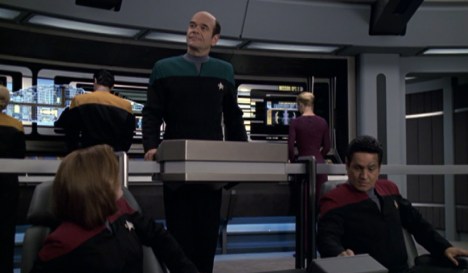
Fantasy figure.

However, Tinker, Tenor, Doctor, Spy is also an example of how this approach can work. Voyager received (and deserves) a lot of criticism for failing to evolve with the times, for allowing the Star Trek franchise to fall behind the curve of contemporary television science fiction. However, the series was occasionally capable of demonstrating the merits of standalone episodes, the appeal of being able to transition from one self-contained story to another twenty-six times in the course of a season.

Of course, the issue was that a lot of Voyager episodes were bland and forgettable. However, every once in a while the series would produce a self-contained episode that demonstrated the appeal of this narrative model; Remember, Distant Origin, Concerning Flight, Living WitnessSomeone to Watch Over Me. Appropriately enough, coming after another turbulent period in the history of the show, Tinker, Tenor, Doctor, Spy is another fine example of this capacity to construct satisfying and engaging stand-alone narratives.
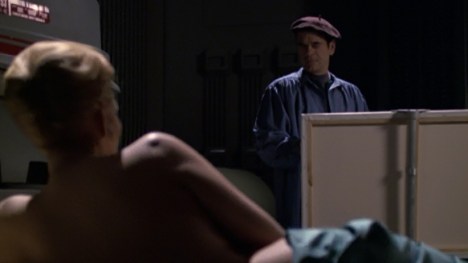
Painting a pretty picture.

Continue reading

New Podcast! Scannain Podcast (2018) #2!

And we’re back to doing it almost weekly!

The new and improved Scannain podcast continues. A one-stop shop to talk about the week that has been in Irish and world cinema, the Scannain podcast features a rotating pool of guests discussing the week in film – what we watched, film news, the top ten and new releases. This week we’re celebrating both the Oscar nominations and the announcement of the line-up for this year’s Audi Dublin Internation Film Festival.

I’m thrilled to be part of a panel including Phil Bagnall, Jay Coyle, Ronan Doyle and Stacy Grouden. Give it a listen below.

Non-Review Review: Maze Runner – The Death Cure

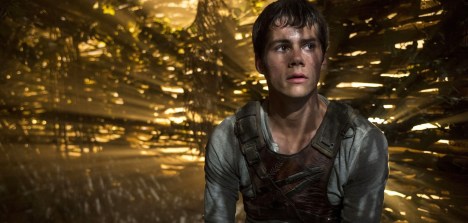
Maze Runner: The Death Cure feels like a movie that has arrived several years too late, a belated epilogue to the young adult boom.

The Death Cure is the last in the trilogy, the culmination of a journey that began with The Maze Runner in 2014. By that point, the young adult adaptation boom was already winding down. The Twilight Saga – Breaking Dawn, Part II had been released two years earlier, and Harry Potter and the Deathly Hallows, Part II had been released the year before that. There was a clear sense that The Maze Runner was starting when everybody else was ending.

“So, it turns out that the Death Cure is… not dying. Whudda thunk it?”

Of course, there were still faint signs of life in the genre when the series began, but those sparks have largely been extinguished. The Hunger Games: Mockingjay, Part II was released the year after The Maze Runner. One year later, The Divergent Series: Allegiant underperformed to such a degree that it has been suggested that the series might be resolved on television. Even in the context of The Death Cure, there is a sense that the production team understand the fatigue; there is no over-extended duology to bring the series to a close; no lingering Part II.

The Death Cure is mostly an efficient film, one that keeps moving well enough for the bulk of its two-hour-and-twenty-two-minute runtime, although the bloat eventually becomes too much in the final act. There is something very functional about The Death Cure, a sense that everybody involved the film – and every character within the film – has adopted a “let’s get stuff done” attitude towards the production. There is all the expected angst, betrayal, insecurity and hesitation expected of a young adult novel, but surprisingly little wallowing in those emotions.

After initial trials proved unsuccessful and disappointing third quarter returns, WCKD moved on to producing “The Death Treatment.”

The result is something of a mixed blessing. Very few young adult adaptations had the benefits and strengths that defined the Harry Potter or Hunger Games franchises. Those two heavy-weight franchises had the luxury of several built-in advantages denied to many of their imitators; the strong ensemble cast, the compelling source material and the distinctive-within-limits voice. The Death Cure seems cognisant of its limitations, and so structures itself in a way to avoid exposing them too readily and too often.

However, this efficiency hinders The Death Cure. The film only rarely stumbles, and never falls flat on its face. However, it never manages to soar either.

Runner, runner.

Continue reading

New Podcast! Scannain Podcast (2018) #1!

New year, new Scannain podcast!

The wonderful folk over at Scannain, spearheaded by the fantastic Niall Murphy, are relaunching the Scannain podcast. I was lucky enough to appear as a guest and panelist on some of the older episodes, and was thrilled to be invited back for the launch of the new and improved Scannain podcast that will see a rotating pool of guests discussing the week in film – what we watched, film news, the top ten and new releases.

I’m thrilled to be part of a panel including Niall Murphy, Jay Coyle and Grace Duffy. Give it a listen below.

Star Trek: Voyager – Barge of the Dead (Review)

There is some small symmetry in Barge of the Dead.

When Bryan Fuller first pitched to Star Trek, he pitched to Star Trek: Deep Space Nine. The first idea that he sold was The Darkness and the Light, which felt like something approaching a gothic serial killer horror about a deformed killer stalking his victims using the franchise’s hyper-advanced technology. That original idea was heavily re-written by franchise veteran Ronald D. Moore, who also brought a more substantial thematic weight to the story by focusing on themes of violence and retribution.

Barging in.

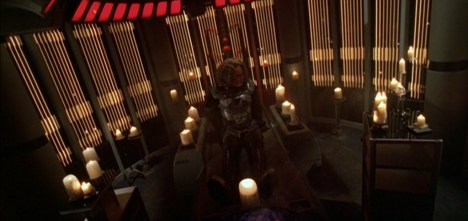
In contrast, Barge of the Dead is the last television story that Ronald D. Moore would pitch for the franchise, coming at the very end of his time on Star Trek: Voyager. The episode has its roots in an earlier pitch by the writer, the original idea for Soldiers of the Empire. However, Moore would depart the franchise before he could finish work on Barge of the Dead, and so the writing of the script fell to Bryan Fuller. Much like Moore had subtly shifted the emphasis of The Darkness and the Light to his own thematic interests, Fuller embraces his own sensibilities in reworking Barge of the Dead.

Moore had re-written Fuller’s last story, and Fuller would re-write Moore’s last story. There is some sense of poetry in this.

Tom’s idea of a romantic evening certainly needed some work.

Continue reading

62. Call Me By Your Name – This Just In (#175)

Hosted by Andrew Quinn and Darren Mooney, This Just In is a subset of The 250 podcast, looking at notable new arrivals on the list of the 250 best movies of all-time, as voted for by Internet Movie Database Users.

This time, Luca Guadagnino’s Call Me By Your Name.

Continue reading

Star Trek: Voyager – Survival Instinct (Review)

Survival Instinct marks the beginning and the end of Ronald D. Moore’s involvement with Star Trek: Voyager.

Moore had been one of the most influential writers on Star Trek: The Next Generation and Star Trek: Deep Space Nine. Moore had famously been drafted into the Star Trek franchise with no outside experience; The Bonding was based upon a speculative script that he wrote, and he had been invited to join the staff when The Defector proved that he was not a one-script wonder. Moore had inspired producer Michael Piller to open the franchise to speculative scripts, a decision which led to the recruitment of writers like Bryan Fuller and Rene Echevarria.

Drone warfare.

Moore had consistently pushed the envelope in terms of what Star Trek could be. Several of Moore’s scripts feel like trailblazers, expanding the storytelling language of an established science-fiction franchise; the Klingon-centric script for Sins of the Father, the quieter character drama of Family, the epic scale of Redemption, Part I and Redemption, Part II. Paired with Ira Steven Behr on Deep Space Nine, Moore really pushed the boundaries of what Star Trek could be; Soldiers of the Empire looked at life on a Klingon ship, In the Pale Moonlight stretched (and maybe broke) Star Trek morality.

All of the other writers on Deep Space Nine chose to bow out gracefully with What You Leave Behind, to part ways with the franchise having provided their own unique take on the Star Trek mythos. However, Moore was convinced to migrate across from Deep Space Nine to Voyager. There are any number of reasons why Moore might have chosen to stay when writers like Behr and Echevarria chose to take their exit; Moore was the longest continuous-serving writer on the Star Trek franchise to that point. In terms of second-generation Star Trek, only Rick Berman could have claimed to have a deeper impression.

Armed and dangerous.

Moore arrived on the sixth season of Voyager and immediately looked to make his mark. Like Brannon Braga, Moore had always been an extremely productive Star Trek writer. He was typically credited on six or seven scripts in a season of The Next Generation and Voyager, while also scripting Star Trek: Generations and Star Trek: First Contact. Although not credited on the script, Moore was actively involved in the back-and-forth over the script to Equinox, Part II. He scripted the second episode, Survival Instinct. He was working on the story to third, Barge of the Dead.

And then the unthinkable happened. Like so much of Voyager, Moore’s arrival proved to be something of a false dawn. In early July 1999, Ronald D. Moore left Star Trek. This was within a month of the broadcast of What You Leave Behind, and nearly three months before the premier of the sixth season of Voyager. Even before Moore and Braga elaborated upon the particulars of what had happened, it was clear that something had gone disastrously wrong.

What We Left Behind.

Continue reading