• Following Us

  • Categories

  • Check out the Archives


  • Awards & Nominations

Harsh Realm – Pilot (Review)

This November, we’re taking a trip back in time to review the seventh season of The X-Files and the first (and only) season of Harsh Realm.

Hereby it is manifest, that during the time men live without a common Power to keep them all in awe, they are in that conditions called Warre; and such a warre, as is of every man, against every man.

– Thomas Hobbes, Leviathan, The First Part, Chapter XIII

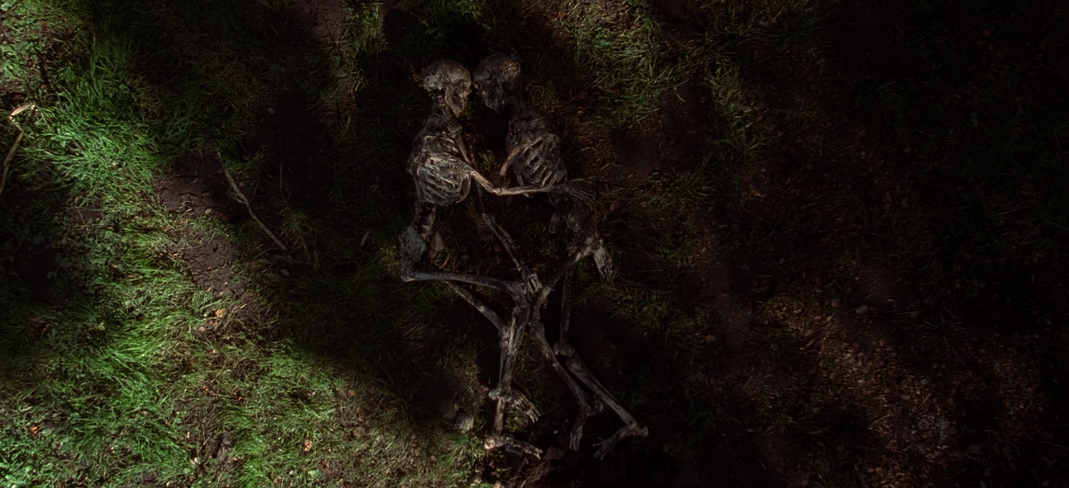
Harsh Realm is essentially a war story, or a collection of war stories.

To be fair, there are other themes that bleed through the show’s short nine-episode run; a critique of late-stage capitalism, a healthy dose of Chris Carter’s patented nineties existential spirituality, an exploration of American masculinity. The show plays on all sorts of genres across its short lifespan, from horror story to western to modern noir film. However, all of these unfold against the backdrop of a world locked in total warfare. The opening scenes of The Pilot unfold against the Siege of Sarajevo, setting the tone for the rest of the series.
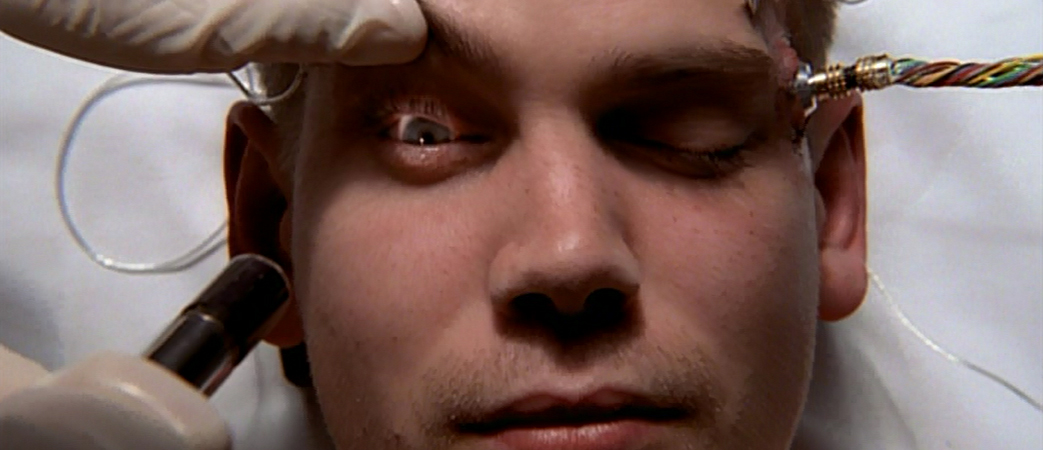
Tom's not here, man...

Tom’s not here, man…

Carter tends to wear his cinematic and televisual influences on his sleeves. The X-Files was a spiritual successor to Kolchak: The Night Stalker, with a little bit of The Parallax View and The Silence of the Lambs thrown in for good measure. Millennium launched in 1996 and owed a lot to the look and feel of David Fincher’s work on se7en. Harsh Realm owes a lot to the resurgence in war movies towards the end of the twentieth century, coming less than a year after Saving Private Ryan and The Thin Red Line both scored Best Picture nominations.

On the commentary for The Pilot, Chris Carter notes that the show’s protagonist was named for the philosopher Thomas Hobbes. Carter cites that Hobbes’ most famous observation is that life is “solitary, poor, nasty, brutish, and short.” The same might be said of the life of Harsh Realm.
Fading out...

Fading out…

Continue reading

The X-Files – Season 6 (Review)

This July, we’re taking a trip back in time to review the sixth season of The X-Files and the third (and final) season of Millennium.

The sixth season of The X-Files is notable for many different reasons. It was the first season after the release of The X-Files: Fight the Future. It was the first season following the move to Los Angeles. It saw the “end” (at least nominally) of the show’s conspiracy mythology in the massive Two Fathers and One Son two-parter. It was the first season to begin closer to the end of the show’s nine-year run than to the beginning. It was also the first season to open past the hundred-episode mark.

That last landmark is important, because it marks the point at which The X-Files could effectively be sold into syndication. One hundred episodes meant that a network could air the show five nights a week for twenty weeks, filling up almost half a year’s worth of broadcasting slots. Reaching the one hundred episode mark meant that a show was a bona fides success, and that anything else was really just gravy on top. The bulk of the work had been done. The X-Files would be a rare prime-time drama to pass two hundred episodes.

xfiles-howtheghostsstolechristmas2a

Of course, times have changed. By 2011, the number of episodes required for a syndication deal had slipped from one hundred to a mere eighty-eight, with the goal being four seasons of twenty-two episodes. (This trend happened while The X-Files was on the air, with the show dropping from twenty-four or twenty-five episodes in a season at the start of its run to twenty-two or twenty towards the end.) Even then, streaming has changed the media landscape, making it more possible than ever to syndicate show with shorter runs, like Community.

So syndication beckoned for The X-Files. In fact, syndication would pose no shortage of trouble for the show in the years ahead. During the seventh season, David Duchovny would file a lawsuit against Fox alleging that the company’s syndication policy had cost him financially. After the show went off the air, Carter would find himself embroiled in a similar lawsuit over syndication rights, delaying production of The X-Files: I Want to Believe. There are worse ways to argue that The X-Files was a victim of its own success than to look at the syndication of the show.

xfiles-arcadia7

Nevertheless, it was clear that The X-Files had accomplished everything that it could ever want by the start of the sixth season. Chris Carter had his five seasons and a movie. Fox had a show they could syndicate. David Duchovny had forced the production to move to Los Angeles so that he could spend time with his family. Although nobody knew it at the time, the fifth season secured the highest rankings that a season of The X-Files would enjoy in the Nielsen Ratings. So going into the sixth season of The X-Files, there was only one question hanging in the air.

What now?

xfiles-therainking25

Continue reading

The X-Files – Biogenesis (Review)

This July, we’re taking a trip back in time to review the sixth season of The X-Files and the third (and final) season of Millennium.

‘When Alexan­der saw the breadth of his domain, he wept for there were no more worlds to con­quer.’ Ben­e­fits of a clas­si­cal education.

– Hans Gruber, Die Hard

In hindsight, “ending” the mythology with a two-parter in the middle of the season was always a risky proposition.

Airing Two Fathers and One Son during February Sweeps was a logical decision. Ending the mythology that had been running through the show for five-and-a-half seasons was certain to grab the attention of casual viewers, reeling them in to boast up ratings. The X-Files had always aired mythology two-parters during Sweeps, putting them forward as examples of the best that the series could do and cementing the show’s claim to be “blockbuster television.” Choosing to wrap up the mythology during February Sweeps was just an extension of that approach.

Look what just washed up...

Look what just washed up…

And it worked. Two Fathers earned the second highest Nielsen score of the sixth season, landing just behind The Rain King. Two Fathers was the last time that The X-Files would rate so highly. As such, the decision to “close off” the mythology in the middle of the season was a very shrewd decision. However, it did raise questions about what the show would do at the very end of season. After all, The X-Files liked to bookend its seasons with mythology episodes, counting on a mythology cliffhanger to carry viewers across the long gap between seasons.

How do you tell a mythology story when you’ve just worked so hard to tidy it all away?

Behind the curtain...

Behind the curtain…

Continue reading

The X-Files – Field Trip (Review)

This July, we’re taking a trip back in time to review the sixth season of The X-Files and the third (and final) season of Millennium.

Field Trip works well as the penultimate episode of the sixth season.

It returns to a lot of big ideas threaded through the sixth season, particularly as they relate to endings and mortality. It also pushes the bond between Mulder and Scully to the fore; it feels like something of a spiritual successor to both Bad Blood and Folie á Deux in its portrayal of the dynamic between Mulder and Scully, charting a rough arc in how Mulder and Scully come to see themselves and each other. Even beyond all that, it contains another surrogate romantic relationship for Mulder and Scully, this time in Wallace and Angela Schiff.

A lot to digest...

A lot to digest…

More to the point, Field Trip seems to hit on the core anxieties at the heart of the sixth season. It is a meditation on the show’s success and the status quo that has to be so careful maintained to keep the show from tipping over. As with TriangleDreamland IDreamland II, How the Ghosts Stole Christmas and Monday, our heroes find themselves trapped in something of a weird alternate reality. The climax of Field Trip hinges on both Mulder and Scully deducing that their world operates according to the logic of a television show.

However, Field Trip is perhaps most intriguing in the way that it proposes two separate endings to The X-Files. The humongous fungus at the heart of Field Trip offers both Mulder and Scully a conclusion to their six-year journey, an opportunity for closure and satisfaction. In doing so, Field Trip suggests that it is the central tension at the heart of The X-Files that keeps the show young. There is no way to end the show without absolutely and definitively declaring that one of the characters is right and the other is wrong.

Down the rabbit hole...

Down the rabbit hole…

As such, the endings seem mutually exclusive. Field Trip suggests that endings designed to satisfy Mulder and Scully and mutually exclusive and irreconcilable – recalling the implication in Bad Blood that both Mulder and Scully filter the same events through different lenses. However, Field Trip is rather more optimistic in its assessment of the dynamic between Mulder and Scully. While it might not be able to provide an ending to the show that satisfies both, Field Trip suggests that the duo have reconciled themselves to each other.

Whereas Bad Blood seemed to state that Mulder and Scully would never share the same perspective, Field Trip suggests that both characters have evolved and matured to the point where they can see the world through the eyes of the other. Bad Blood featured the two characters positing wildly different accounts of the same event, but Field Trip only resolves when Mulder and Scully come to share each other’s perspective. It feels entirely appropriate to close out the sixth season suggesting a new harmony between the two leads.

It's a dirty job...

It’s a dirty job…

Continue reading

The X-Files – Three of a Kind (Review)

This July, we’re taking a trip back in time to review the sixth season of The X-Files and the third (and final) season of Millennium.

Unusual Suspects is perhaps an underrated episode.

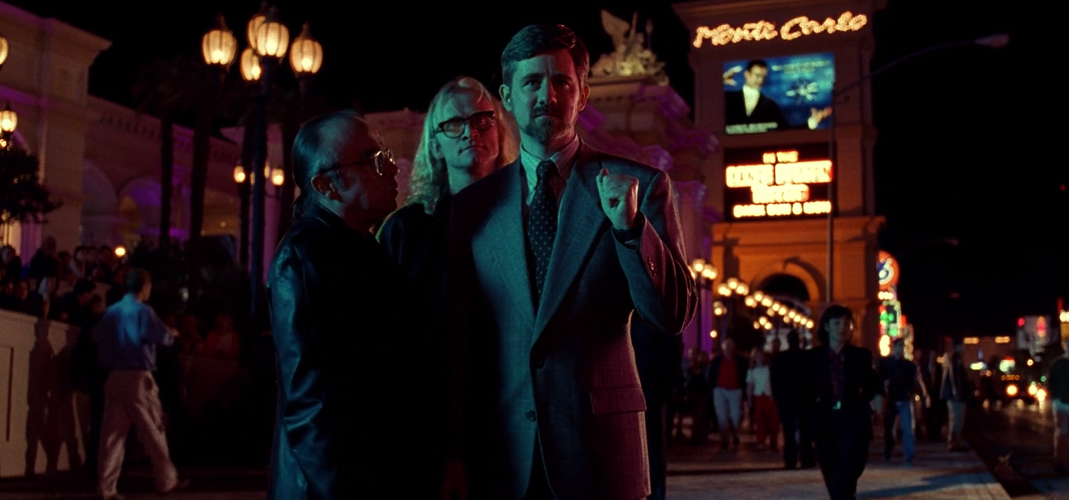
The third episode broadcast of the fifth season is a light adventure that offers viewers an origin story of the Lone Gunman. Byers, Langley and Frohike have been around since E.B.E. towards the end of the first season, and have become an integral part of the show’s ensemble cast. Unusual Suspects is frequently written off as a piece of fluff designed to work around the limited availability of David Duchovny and Gillian Anderson due to on-going production work on The X-Files: Fight the Future.

Viva Las Vegas...

Viva Las Vegas…

This seems dismissive of Vince Gilligan’s paranoid origin story, which is one of the few times that Gilligan engages directly with the themes that underpin the sprawling mythology at the heart of the show. Unusual Suspects is not a “mythology episode” in the way that gets episodes repackaged on DVD collections, but it does explore the idea of conspiracy and paranoia as a personal narrative. Unusual Suspects is a very sweet story about a lost and heartbroken man who builds a conspiracy mythology around himself because he has nothing else to do.

Three of a Kind is very much a sequel episode to Unusual Suspects, focusing again on the Lone Gunmen and bringing back Susanne Modeski. However, it is a much lighter and more disposable story. Barring the beautifully crafted prologue, Three of a Kind is an entirely disposable episode of television. It feels like filler. It is neither a beginning nor an end to the story of Byers or the Lone Gunmen. It is just a long middle, with the characters ending up back where they began. In a way, this makes it feel very much like a standard sixth season episode.

A man alone...

A man alone…

Continue reading

The X-Files – The Unnatural (Review)

This July, we’re taking a trip back in time to review the sixth season of The X-Files and the third (and final) season of Millennium.

Let me get this straight: a free-spirited alien fell in love with baseball and ran away from the other non-fun-having aliens and made himself black, because that would prevent him from getting to the majors where his unspeakable secret might be discovered by an intrusive press and public and you’re also implying that…

You certainly have a knack for turning chicken salad into chicken spit.

– Fox Mulder and Arthur Dales discuss the merits of The Unnatural

Swing and a hit...

Swing and a hit…

Continue reading

The X-Files – Milagro (Review)

This July, we’re taking a trip back in time to review the sixth season of The X-Files and the third (and final) season of Millennium.

The teaser establishes the mood quite quickly. It is a rather striking opening sequence for an episode of The X-Files, focusing on a writer staring at a blank page. The sequence cuts through time as the writer searches for inspiration, trying to take his cue from the index cards helpfully arranged on the wall. Eventually, the writer makes a grand gesture. He reaches into his chest, and pulls out his heart. It is a very effective opening sequence, one that makes it clear that Milagro will not be a normal episode of The X-Files.

The sequence also makes it clear that Milagro will not will it be a subtle piece of television. The teaser is not a particularly elegant metaphor, but it is an effective one. What is writing but tearing out a piece of yourself? Sometimes you have to wear your heart on your sleeve; sometimes you have to put it on the page. The teaser to Milagro is a very earnest piece of work from Chris Carter, a clear acknowledgement that what follows is a deeply personal piece of work.

Burning heart...

Burning heart…

Continue reading

The X-Files – Trevor (Review)

This July, we’re taking a trip back in time to review the sixth season of The X-Files and the third (and final) season of Millennium.

Trevor is a perfectly solid monster of the week episode of The X-Files.

In many respects, it feels like the episode that Alpha desperately wanted to be. It is very much a traditional story in a season that has been relatively untraditional in its structure and format. Mulder and Scully are assigned to a case that is explicitly paranormal and set about investigating it to the best of their ability. Along the way, Mulder and Scully become passengers in a story that involves the guest cast. Trevor is not as sly or self-aware as something like Monday, Arcadia or Milagro. It is a straightforward case of the week.

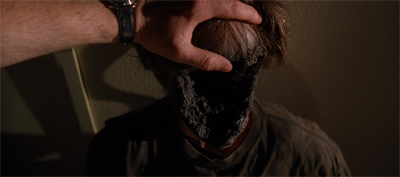
"I wanna take his face... off..."

“I wanna take his face… off…”

There are other similarities between Trevor and Alpha. Alpha was an episode that really wanted to tackle a very traditional monster in a very traditional way – it was a very disappointing attempt at a werewolf episode, following on from Shapes in the first season. In a way, Trevor alludes to a more classical monster story than most X-files. Wilson “Pinker” Rawls is effectively a wraith avenging himself upon those who did him wrong, the embodiment of past mistakes returned to haunt the living. He is a ghost, even beyond his ability to walk through walls.

Of course, Trevor provides a suitably pseudo-scientific explanation for what Rawls does, and the climax builds to an intimate family tragedy. However, Trevor feels very much like a classic ghost story about a man returned from the dead to visit retribution upon the living.

Diehl it back...

Diehl it back…

Continue reading

The X-Files – Arcadia (Review)

This July, we’re taking a trip back in time to review the sixth season of The X-Files and the third (and final) season of Millennium.

Arcadia was originally produced directly after Two Fathers and One Son. It was moved later in the broadcast cycle because it needed more post-production work than Agua Mala or Monday. Looking at the finished product, one suspects that the garbage monster posed no shortage of problems for the production team. Whatever the reason, Arcadia was shifted down two slots in the broadcast order. This is a shame on multiple levels. Most obviously, “Mulder and Scully go undercover as a suburban couple” would have been a great sweeps episode.

More than that, though, there is something delightfully subversive in the idea that Arcadia is the first case that Mulder and Scully are assigned after reclaiming their iconic basement office at the end of One Son. The decision to reassign Mulder and Scully to the X-files would seem to promised a return to the status quo after a weird stretch earlier in the season (from Triangle to The Rain King) where The X-Files turned into a weird paranormal romantic comedy. Fan reaction to this stretch of the show was (and still is) polarised.

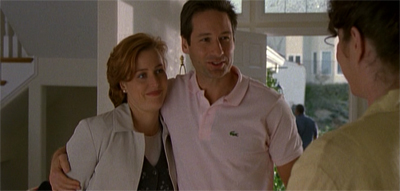
So happy together...

So happy together…

However, instead of reassuring those fans wanting a return to more traditional X-Files aesthetic, Arcadia reasserts the “quirky domestic comedy” tone of shows like Dreamland I, Dreamland II or How the Ghosts Stole Christmas. In fact, it’s telling how completely disinterested Arcadia is in the fact that Mulder and Scully are back on the X-files for the first time since the end of the fifth season. There’s a quick exchange referencing their reassignment, but no examination of the fallout of One Son. There is not even a single scene set in the familiar basement set.

As such, Arcadia seems quite cheeky. It celebrates the return to the show’s classic status quo by ignoring it almost completely. Arcadia is a silly little relationship comedy that could easily have aired in the first stretch of the season, its positioning here feeling like a playful tease of those fans clamouring for the return of a classical approach to the series. Unfortunately, a lot of that gets lost in the shuffling of the episode around in the broadcast schedule. Using Agua Mala and Monday to insulate Arcadia from Two Fathers and One Son undercuts its cheeky charm.

There goes the neighbourhood...

There goes the neighbourhood…

The post-production delay on Arcadia hurts the episode. Instead of a cheeky tweaking of fandom’s nose, Arcadia becomes a fairly middling mid to late season instalment. It is not as limp and lifeless as Agua Mala or Alpha, but not as insightful and fun as Monday. In fact, while Arcadia contains a few chuckles, the episode lacks the charm of something like Triangle or How the Ghosts Stole Christmas (or even The Rain King). Arcadia feels like it takes the cheesy teasing of a Mulder/Scully relationship just a little too far.

In many ways, The Rain King represented the point at which the show should have pressed forward with a romantic relationship between Mulder and Scully; regardless of whether the viewer is a shipper or a noromo, the teasing had reached critical mass, and it was time to commit one way or another. Arcadia instead insists that the show remains decidedly noncommittal, trying to have the best of all possible worlds. There comes a point where the show feels like it is just “trolling.”

"Well, this is easy enough..."

“Well, this is easy enough…”

Continue reading

The X-Files – Monday (Review)

This July, we’re taking a trip back in time to review the sixth season of The X-Files and the third (and final) season of Millennium.

It always ends the same way. As is appropriate for a story about a time loop, Monday begins with an ending. The teaser catches the last few minutes of one of the episode’s repeating time loops. It is a striking image. Everybody dies – including Mulder and Scully. How could the episode possibly continue past that point? It is simple. Time resets. The universe snaps back into shape around Mulder and Scully, much like it did at the climax of Dreamland II. Everybody gets another chance to set things right. The show bounces back to its status quo, as it did with One Son.

Time for a do-over. Revise it until it’s right.

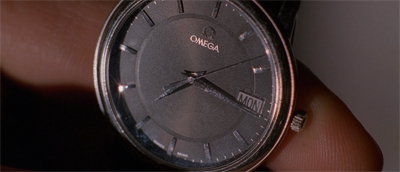
A ticking clock...

A ticking clock…

Continue reading