Posted on February 5, 2023 by Darren
I published a new piece at The Escapist during the week. With the release of Knock at the Cabin this weekend, it seemed worth taking a look at the latest movie from M. Night Shyamalan.
Knock at the Cabin is by turns fascinating and frustrating. It is a movie that works really well as a claustrophic and ambiguous thriller, a home invasion movie that is essentially a battle of wills over belief. However, it suffers somewhat from the fact that Shyamalan can’t stay within the cabin. At various points, the narrative has to become bigger and more epic, and in doing so, it unravels the tension that makes the best scenes in the movie so compelling.
You can read the piece here, or click the picture below.

Filed under: Movies | Tagged: belief, faith, horror, knock at the cabin, M. Night Shyamalan, review, suspense, tension, the escapist | Leave a comment »
Posted on February 3, 2023 by Darren
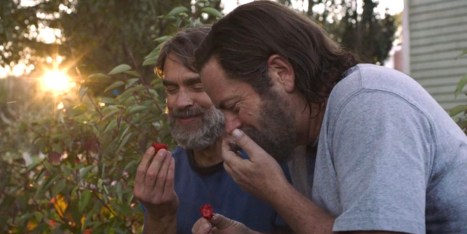
I published a new In the Frame piece at The Escapist this evening. This week saw the broadcast of Long Long Time, a spectacular episode of The Last of Us. While the episode was almost universally praise, there was some criticism that it was “filler.”
This is an interesting argument, in what it reveals about modern pop culture and what it misses about the art of storytelling. Long Long Time is thematically essential to The Last of Us. It’s an episode that establishes the actual meaningful stakes of the story, beyond the plot mechanics that spur the narrative forward. It’s easy to miss in an era where spoilers are considered a huge issue, where media is designed to be consumed at multiples of its intended speed, and where recap culture has reduced storytelling to lists of plot points. Nevertheless, it’s important.
You can read the piece here, or click the picture below.
Filed under: Television | Tagged: filler, in the frame, long long time, media literacy, storytelling, Television, the escapist | Leave a comment »
Posted on February 2, 2023 by Darren
I published a new piece at The Escapist this evening. With the looming release of Knock at the Cabin in theatres, it seemed like a good time to consider the films of director M. Night Shyamalan, and the director’s interesting redemption arc following his descent into a laughing stock during the 2000s and 2010s.
Since the turn of the millennium, the assumption has always been that directors scale upwards, that filmmakers tend to movie from low-budget projects to big-budget blockbusters, a career arc typified by directors like Christopher Nolan or Ryan Coogler. Part of what is so fascinating about Shyamalan is that his career rejects this logic. Shyamalan had that arc, launching with a series of impressive low- and mid-budget films like The Sixth Sense and Unbreakable, but floundering with bigger projects like The Last Airbender or After Earth. He’s instead found redemption working at a smaller scale on movies like The Visitors or Old.
You can read the piece here, or click the picture below.

Filed under: Movies | Tagged: blockbusters, budget, escapist, hollywood, knock at the cabin, scale, scope, the escapist | Leave a comment »
Posted on February 1, 2023 by Darren
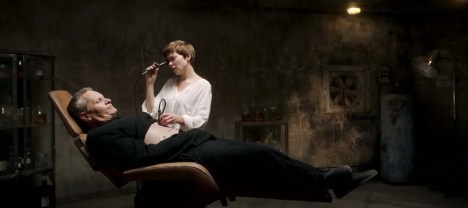
We’re launching a new column at The Escapist, called Out of Focus. It will publish every Wednesday, and the plan is to use it to look at some film and television that would maybe fall outside the remit of In the Frame, more marginal titles or objects of cult interest. This week, we took a look at David Cronenberg’s Crimes of the Future.
This past year saw an explosion in movies by auteur directors exploring their childhood and their relationship to their art: The Fabelmans, Empire of Light, Armageddon Time, and so on. What is really interesting about Crimes of the Future is that arguably fits that template for director David Cronenberg. Cronenberg is a director known for his depictions of body horror and transformation, a unique filmmaker with a very distinctive style. Crimes of the Future feels at times like an attempt by Cronenberg to express where his art comes from: inside.
You can read the piece here, or click the picture below.
Filed under: Movies | Tagged: art, body horror, crimes of the future, david cronenberg, ideas, manifestation, out of focus, the escapist, transformation | Leave a comment »
Posted on January 31, 2023 by Darren
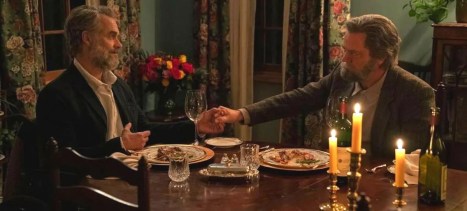
I am doing weekly reviews of The Last of Us at The Escapist. They’ll be dropping every Sunday evening while the show is on, looking at the video game adaptation as the show progresses. This week, the show’s third episode.
The first two episodes of The Last of Us were pretty good, doing a lot of worldbuilding and rule-setting for the series, while also working hard to court fans of the games with very knowing and loving recreations of key sequences and dynamics. However, the show really came into its own in its third episode, Long Long Time. Taking a break away from its central characters, The Last of Us played out a beautiful love story that effectively sets up the show’s emotional stakes.
You can read the piece here, or click the picture below.
Filed under: Television | Tagged: escapist, long long time, love story, romance, the escapist, the last of us | Leave a comment »
Posted on January 30, 2023 by Darren
I published a new In the Frame piece at The Escapist this evening. With Avatar: The Way of Water continuing to push its way up the list of highest-grossing movies of all-time, it is interesting that James Cameron’s sequel hasn’t dominated the discourse to the same extent as comparable blockbusters like Avengers: Infinity War or Avengers: Endgame.
Truth be told, there is something innately charming about that. It’s fun to have a big and bombastic blockbuster that hasn’t become an online shouting match, a film that audiences have just turned out to see and then gone back to their lives without making the film’s performance or reception a key part of their identity. Whatever problems there may be with The Way of Water, there is something to be said for a film that manages to entertain that many people without causing too many ripples.
You can read the piece here, or click the picture below.

Filed under: Movies | Tagged: avatar: the way of water, box office, culture, debate, discourse, in the frame, pop culture, social media, the escapist, whales | Leave a comment »
Posted on January 29, 2023 by Darren
I published a new piece at The Escapist during the week. With the recent release of the first four episodes of Poker Face on Peacock, it seemed like a good opportunity to discuss the show’s central thematic and narrative preoccupations: the importance of both empathy and action in response to injustice.
Poker Face exists as part of Rian Johnson’s filmography, and is an obvious companion piece to Knives Out and Glass Onion. However, it fits alongside those stories in more than just its genre. Johnson is a filmmaker fascinated by the power of empathy, and the importance of understanding other human beings on a personal level. Poker Face is the story of a character so good at listening that she can instinctively spot a lie. However, in this world, empathy is not enough of itself. Poker Face is a show about the need for action in support of empathy.
You can read the piece here, or click the picture below.

Filed under: Television | Tagged: action, empathy, glass onion, knives out, phones, poker face, Rian Johnson, social media, the escapist | Leave a comment »
Posted on January 28, 2023 by Darren
I published a new piece at The Escapist during the week. With the recent release of the first four episodes of Poker Face on Peacock, it seemed like a good opportunity to consider the show as a rare example of high-profile and prestigious episodic television.
For decades, episodic storytelling was the default model for American television. Around the millennium, mainstream shows started to shift toward serialisation, a trend accelerated by the arrival of streaming. Most modern prestige shows are heavily serialised, effectively telling a single narrative over the course of an entire season. Poker Face rejects this structure, embracing a “case of the week” format. However, the show is more than just an example of the potential of episodic storytelling. It’s very much an affirmative case for it.
You can read the piece here, or click the picture below.

Filed under: Television | Tagged: adventure, arcs, curiosity, exploration, natasha lyonne, poker face, serialisation, storytelling, Television, the escapist | Leave a comment »
Posted on January 27, 2023 by Darren
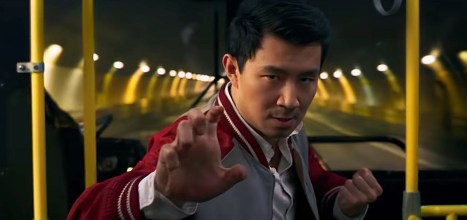
I published a new In the Frame piece at The Escapist this evening. Last week, Marvel Studios President Kevin Feige made an argument that he could never understand the idea of “superhero fatigue”, referencing the diversity of genres and stories in superhero comics.
Feige’s response was interesting for a number of reasons. Most obviously, it was technically correct. Comic books are incredibly flexible in the kind of stories they tell and the way that they tell them. However, Feige’s answer sidestepped the obvious problem. In recent years, the superhero movie has grown more conservative and more conventional, becoming less likely to embrace different tones and styles, or to tell different kinds of stories. In the past fifteen years, the entire comic book adaptation genre has been flattened down to “Marvel movies”, and that is a very real problem.
You can read the piece here, or click the picture below.
Filed under: Movies | Tagged: comic book movies, in the frame, kevin feige, marvel, Marvel Studios, superhero fatigue, superheroes, the escapist | Leave a comment »
Posted on January 24, 2023 by Darren
I am doing weekly reviews of The Last of Us at The Escapist. They’ll be dropping every Sunday evening while the show is on, looking at the video game adaptation as the show progresses. This week, the show’s second episode.
The Last of Us is an interesting piece of adaptation. It comes with a weight of expectation. There’s a sense in which the show needs to proves its adaptational bona fides to fans, by proving that it can faithfully adapt both the world and the internal logic of the source material. So the show’s second episode is an interesting fusion, a clear attempt to directly translate the experience of playing the source video game to a television series.
You can read the piece here, or click the picture below.

Filed under: Television | Tagged: adaptation, horror, infected, logic, story, the escapist, the last of us, Video game | Leave a comment »
















 the m0vie blog