• Following Us

  • Categories

  • Check out the Archives


  • Awards & Nominations

Non-Review Review: The A-Team

The A-Team is the latest in a long line of attempts to adapt successful television series (preferably from years or decades past) to the big screen. It essentially suffers from the same weaknesses as other adaptations – it struggles with tone. Much as attempting to remake Miami Vice as a dry and overly self-important drug movie was a mistake, or making Starsky & Hutch as a full-blown comedy misunderstood the appeal of the original series, The A-Team feels too much like it’s working with a premise that it isn’t overly familiar with, trying to fit it into the blockbuster mold – it’s essentially trying to cram a round peg into a square hole. The film does have its charms, but it feels distinctly uncomfortable and more than a little uneven.
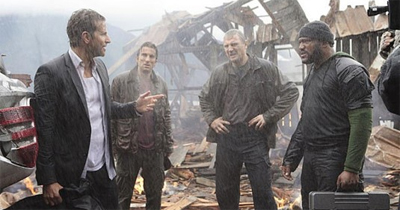
"'old on lad's, I've... oh, wait, wrong remake..."

Continue reading

Justice League Unlimited – Flash and Substance (Review)

This post is part of the DCAU fortnight, a series of articles looking at the Warner Brothers animations featuring DC’s iconic selection of characters. To tie into the review of Green Lantern: First Flight today, we thought we’d take a look at an episode centred on that other iconic Silver Age DC hero, the Flash.

Justice League and its spin-off Justice League Unlimited were two very strange shows, at least from a structural perspective. They both featured expansive casts (the latter more than the former, admittedly) – most of which were crammed full of characters new to the DC animated universe. Batman: The Animated Series and Superman: The Animated Series had done a great job establishing the two biggest names, but the bulk of the characters were pretty much blank slates heading into the crossover series. So characters like the Martian Manhunter and Green Lantern relied on episodes centring on them to grow and develop character – although the focus was very much on the ensemble cast. However, my own favourite episode of the show is a more intimate character profile of a character frequently overlooked: the Flash.

Frenemies…

Continue reading

The New Batman Adventures – Over The Edge (Review)

This post is part of the DCAU fortnight, a series of articles looking at the Warner Brothers animations featuring DC’s iconic selection of characters. I’ll be looking at movies and episodes and even some of the related comic books. To tie into this morning’s review of Under the Red Hood, I thought I’d take a look at what might happen to Batman if he lost a partner.

Following the success of Superman: The Animated Series, a new bunch of Batman episodes were commissioned by Warner Brothers to compliment Batman: The Animated Series. However, this new series would be animated in the style of the Superman series – typically meaning a lighter animation and fewer lines. The transition was jarring, to say the least. Indeed, many commentators make the observation (whether fair or not) that The New Batman Adventures offered a “lighter and softer” approach to the Caped Crusader and his universe. Though I think that’s not an unfair description, it is also worth conceding that the season also gave us quite possibly the single darkest half-hour in the entire history of the DC animated universe. I refer to Over the Edge.

Those expecting a light story might want to look elsewhere…

Continue reading

Batman: The Animated Series – The Demon’s Quest (Parts I & II)

This post is part of the DCAU fortnight, a series of articles looking at the Warner Brothers animations featuring DC’s iconic selection of characters. I’ll be looking at movies and episodes and even some of the related comic books. To tie into tomorrow’s review of Under the Red Hood, I thought I’d take a look at the episode which introduced Ra’s Al Ghul to the animated DC universe (and represented the character’s first appearance outside comic books).

If Heart of Ice – perhaps one of the best pieces of Western Animation produced during the nineties – illustrated just how good the creative minds behind Batman: The Animated Series where at innovation (updating and adding depth to previously shallow characters), then The Demon’s Quest perhaps reflects their skill at adaptation. Adapted from Denny O’Neill’s seventies story arc introducing Ra’s Al Ghul as an adversary of the Dark Knight, by the author himself, it’s also a testament to the show’s diversity. This isn’t exactly a conventional Batman story, and certainly not one conforming to the gothic or noir conventions which seemed to grip the character during the nineties. 

"We'll always have your father's desert stronghold..."

Continue reading

Batman: The Animated Series – Heart of Ice (Review)

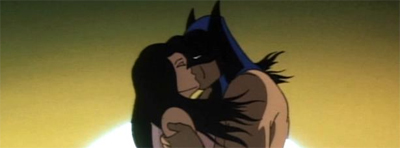
This post is part of the DCAU fortnight, a series of articles looking at the Warner Brothers animations featuring DC’s iconic selection of characters. I’ll be looking at movies and episodes and even some of the related comic books. While most of the episodes and comics I look at will tie into the feature-length animated movies, I thought I’d start with perhaps the most beloved piece of animation that the studio produced using DC characters.

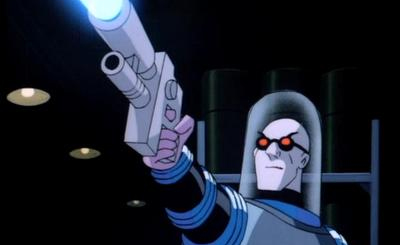
I believe that Batman: The Animated Series sorely deserves a place on list compiled of the “best animated series of all time”. It’s certainly perhaps the single best distillation of the Batman mythos into one pure form (although Christopher Nolan’s film series – and especially The Dark Knight – also deserve some acknowledgement). What made the series unique was that, instead of simply borrowing from the comic books, it also actively contributed to them – and not just in a “we need to tie into a popular adaptation” sort of way. Lasting changes to the Batman mythos can be traced back to this particular animated series – the fan-favourite character of Harley Quinn, for example, or several sympathetic origins to well-established characters. Heart of Ice is perhaps the most successful and well-executed of these revisionist takes on Batman’s iconic selection of bad guys – offering as it does an origin for Mr. Freeze.

Dude needs to chill out…

Continue reading

Banksy’s Simpsons Couch Gag…

I know the conventional wisdom is that The Simpsons aren’t as funny as they once were, but this opening couch gag is pretty… out there. I know the show has gotten progressively darker over the last decade or so (and competing with Family Guy hasn’t helped), but this intro really manages to cross the line twice. It’s fairly dark (particularly since the show does outsource its animation), but it becomes gradually darkly humourous towards the end of it. It’s the “biting the hand that feeds” aspect which appeals to me – I can’t believe Fox let them do this. Maybe the old dog has some life in it yet.

Wall Street Guy

What with my review of Wall Street going up today and the release of Wall Street: Money Never Sleeps, I thought I’d post this quick bit of marketing genius from the guys over at Fox. Basically, somebody in the marketing department must have discovered that they were releasing a Family Guy DVD boxset on the same day as the 20th anniversary edition of Wall Street, and though it would be hilarious to mash-up Gordon Gekko and Stewie Griffin. It’s a fun little clip, and it shows that the marketing at the studio doesn’t exactly take itself too seriously (after all, I doubt there was too much overlap between the two fandoms), but it works.

Edge of Darkness (BBC)

Keeping with the theme of nuclear annihilation that began with Doctor Strangelove yesterday, I’m taking a look at Edge of Darkness, the BBC serial which was recently remade into a (reportedly disappointing) Mel Gibson film. Directed by Martin Campbell, who would go on to save Bond twice (with GoldenEye and Casino Royale) and is directing the upcoming Green Lantern, Edge of Darkness was something of a phenomenon in British television during the eighties. Originally broadcast on BBC 2, it was popular enough that it garnered a repeat on the parent station (BBC 1) within days. That’s something practically unheard of. And, yes, it’s just that good.

How does Detective Craven bear the loss of his child?

Continue reading

Blueprint for Success: Is The Dark Tower The Future of Multi-Media Experience?

Perhaps it’s down to the fact that movies have always been inherently distrustful of other forms of media (particularly newer modes like television or the internet), as reflected in the constant battle with them (with movies seeking an edge – like 3D – that other media can’t quickly ape) – but I’m surprised that an idea like this hasn’t been tried before. After quite a long period of speculation, it has been confirmed that Stephen King’s The Dark Tower is coming to the big screen. But it’s also coming to the little screen, at the same time. In fact, the not-at-all unambitious plan for the franchise can be laid out as follows:  

Step 1: They’ll kick it off with a movie, presumably the movie will tell the story of the first book, The Gunslinger which is a shorter book and extremely cinematic. They could also maybe fit in The Drawing of the Three in which the Gunslinger Roland meets his companions.  

Step 2: That movie will be immediately followed by a TV series which will pick up where the movie leaves off. A TV series is the ideal format to tackle some of the longer, more episodic stories.  

Step 3: The TV series will then lead into a second feature film.  

Step 4: After that second feature film, a TV series will then cover the events of the book Wizard and Glass in which the story of Roland’s youth is retold.  

Step 5: That will then launch into a third feature film… perhaps to wrap the story up or maybe simply to take the next step. Whether they end it there or plan more movies and more television presumably depends on audience response.  

That’s certainly one heck of a roadmap for a franchise, right there.  

Towering ambition...

Continue reading

Non-Review Review: Futurama – Into the Wild Green Yonder

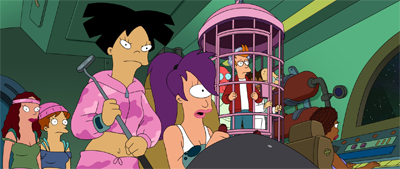
Interesting. It seems that Futurama has somehow (presumably unconsciously) incorporated one of the central features from its key sources, the Star Trek franchise. It’s frequently asserted by fans of that series that the television show spawned a rather inconsistent movies series. Some, such as Star Trek II: The Wrath of Khan, could stand tall and be measured along the best movies that science-fiction could offer; while others, notable Star Trek V: The Final Frontier (in which Kirk kills God in a story pitched and directed by William Shatner), were actually terrible. The consensus emerged that the even numbered sequels were great and the odd numbered movies were terrible. This is just a run of thumb, and it’s possible it has been reversed (the tenth movie, Star Trek: Nemesis, was pretty disappointing; the eleventh, Star Trek, was a blast of fresh air) or even completely deconstructed. While none of the four Futurama movies are “terrible” or even “bad”, the distinction between the “okay” and the “great” seems to fall on similar lines. The first and third, Bender’s Big Score and Bender’s Game, weren’t great, while the second and fourth, The Beast With A Billion Backs and Into the Wild Green Yonder, perfectly capture all that was great about the show.

Here we go-go again...

Continue reading