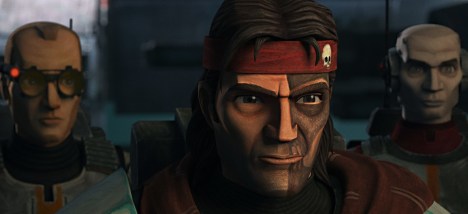
I published a new piece at The Escapist last week. With the release of the second season of The Bad Batch, it seemed like a good opportunity to review the series.
The Bad Batch is an interesting series. It is essentially a spin-off from The Clone Wars, but one that rejects the anthology nature of that show for a fixed central cast and a linear series of episodic adventures. This is somewhat frustrating, as it strips the most compelling part of The Clone Wars in favour of a generic riff on The A-Team or Kung Fu. Still, when the show gets out of its own way, The Bad Batch is a surprisingly compelling and thoughtful addition to the Star Wars universe, a meditation on what happens to soldiers at the end of a Forever War.
You can read the piece here, or click the picture below.
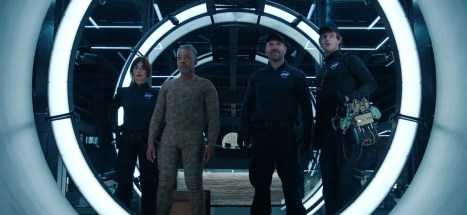
I published a new In the Frame piece at The Escapist this evening. This weekend saw the release of Kaleidoscope, Netflix’s big interactive heist drama. The hook is that the viewer’s experience of the show is randomized, with different viewers watching in different orders.
It is a very modest experiment, particularly when compared to something like Bandersnatch from a few years back. Kaleidoscope is much more interesting on paper than it is in execution, a high concept that feels somewhat half-executed. There is something about streaming as a medium that lends itself to experiments like this, to viewing experiences that are truly singular and unique, where each viewer ultimately consumes their own version of the media in their own way, in a way that challenges the idea of mass media as a communal experience. Kaleidoscope isn’t quite that, but it hints at the possibility.
You can read the piece here, or click the picture below.
I published a new piece at The Escapist last week. With the recent chaos at HBO Max and the removal of content from the service, it seemed like a good time to discuss of film and television have suddenly become ephemeral again.
One of the big selling points of the streaming age was that everything would be immediately available to audience members at the click of a mouse; vast libraries of content would be made available to stream via these services, representing a boon for conservationists and archivists everywhere. Nothing would be lost, because everything would be at hand. However, the removal of entire shows from HBO Max illustrates that these projects are as intangible as they have ever been, and that they can removed and even destroyed without any warning whatsoever.
You can read the piece here, or click the picture below.
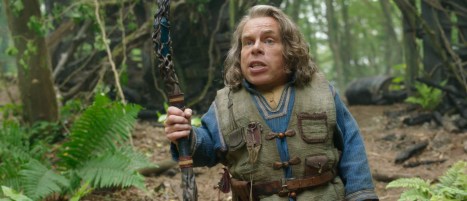
I am doing weekly reviews of Willow at The Escapist. They’ll be dropping every Wednesday evening while the show is on, looking at the legacy sequel as it progresses from one episode to the next.
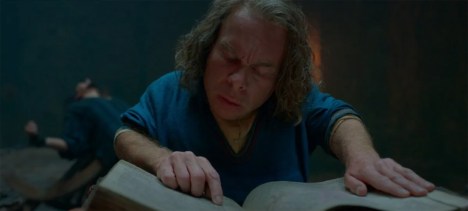
With Willow officially past the midpoint of its first season, the show hits a sizable bump in the road. Wildwood is the first episode of the show that feels purely functional rather than narratively engaging on its own terms. It’s a very mechanical piece of television, with the plot grinding to a halt so the series can run down a checklist of character and plot beats that it needs to articulate for the audience before moving any further. It does a lot of necessary place-setting, but stalls the season and the show around it.
You can read the piece here, or click the picture below.
I published a new piece at The Escapist earlier in the week, a review of the upcoming Netflix show, The Witcher: Blood Origin. It is a live action four-episode miniseries spinning directly out from the streaming service’s fantasy hit, The Witcher.
Blood Origin has had a famously troubled production, with the show being cut down from six episodes to four in the editing bay, and undergoing fairly involved reshoots to work around this truncation. The results are as muddling and disheartening as this back story suggests. Blood Origin is a show that is filled with lore and backstory, but with no interest in its characters or their motivations. It’s a frustrating mess, a show that has clearly been hacked apart and reconstructed to hit a pre-determined runtime.
You can read the piece here, or click the picture below.
I am doing weekly reviews of Willow at The Escapist. They’ll be dropping every Wednesday evening while the show is on, looking at the legacy sequel as it progresses from one episode to the next.
It is too much to call Willow a deconstruction or a subversion of classic fantasy tropes. Certainly, the show is often a celebration of the trappings of high fantasy, and a much more old-fashioned take on the genre than contemporary shows like The Lord of the Rings: The Rings of Power or House of the Dragon. At the same time, the series is written with an understanding of the tropes and conventions of the genre, and a willingness to play with those ideas in a way that deepens and explores its own themes. Given that this is a show about divorce, Willow eagerly dives into familiar fantasy tropes about blood and lineage.
You can read the piece here, or click the picture below.
We’re thrilled to be launching a fortnightly video companion piece to In the Frame at The Escapist. The video will typically launch every second Monday, and be released on the magazine’s YouTube channel. And the video will typically be separate from the written content. This is kinda cool, because we’re helping relaunch the magazine’s film content – so if you can throw a subscription our way, it would mean a lot.
This week, with cinemas in something of a fallow period between with releases of Black Panther: Wakanda Forever and Avatar: The Way of Water, it seemed like a good time to take a look at the complicated relationship within Hollywood, between streaming and theatrical releases. It has become increasing clear in recent years that streaming is not a viable replacement for the theatrical release model, but is instead largely dependent on it.
I published a new piece at The Escapist over the weekend. With Andor winding down its first season, it seemed like as good an opportunity to take a look at what Disney could and should learn from the best of their franchise streaming show.
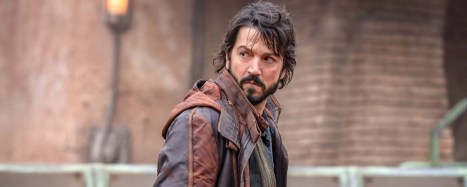
While there is some suggestion that Andor might be less popular on initial release than other Star Wars streaming shows like The Mandalorian or The Book of Boba Fett, there is some sense that Disney recognises that they have created something very special and unique. So what is it that makes Andor so compelling? More than that, what can Disney do to capitalise on that success and replicate it?
You can read the piece here, or click the picture below.
I published a new piece at The Irish Independent this evening. With the release of Willow on Disney+ this week, it seemed like a good opportunity to take a look at what the show means for the Disney brand, and why it is so important to the company going forward.
The past couple of decades have seen an explosion in fantasy film and television: Harry Potter, Lord of the Rings, Game of Thrones. However, studios have quickly discovered that audiences aren’t necessarily enthusiastically engaged with fantasy, struggling to connect with the genres. Studios like Disney have invested millions trying to tap into that audience, with numerous high-profile failures. Willow represents the latest attempt by Disney to craft a live action fantasy universe with a built-in fanbase, and the company is using the same playbook that it did with Star Wars.
You can read the piece here, or click the picture below.
I published a new In the Frame piece at The Escapist this evening. With the recent launch of Netflix’s ad-supported tier, it seemed as good a time as any to take a look at the larger trends in contemporary streaming.
Streaming services have moved away from the binge model. They have become more transparent in their ratings. They have begun scheduling the release of particular episodes across various days of the week. They have even begun releasing some episodes in prime time. The plotting on these shows has become a lot more reminiscent of turn of the millennium zeitgeisty mystery box shows than early streaming stories. All of this is to suggest that the future of streaming seems to look a lot like old-fashioned television.
You can read the piece here, or click the picture below.



















 the m0vie blog