• Following Us

  • Categories

  • Check out the Archives


  • Awards & Nominations

Non-Review Review: Maleficent

As portrayed in the classic 1959 version of Sleeping Beauty, Maleficent is an absolutely fascinating character. Like so much in that film, she is woefully under-developed, but brilliant character design by Marc Davis and sterling voice work from Eleanor Audley helped to fashion an iconic characters. In spite (or perhaps because) of the fact that Sleeping Beauty establishes so little about her, Maleficent endures one of the most recognisable and memorable characters in the Disney animated canon.

So, if a live-action villain-centric feature film was going to tackle one of the classic villains from the studio’s rich history, it makes sense that Maleficent would be chosen. Angelina Jolie seems almost born to play the role, carrying herself with a regal grace, an icy detachment, an impeccable sense of comic timing and spot-on vocal impersonation of Eleanor Audley. The production design on Maleficent is absolutely stunning, with the movie occasionally seeming like an animated classic brought to life.

If only the same amount of enthusiasm had been invested in the script.

All fired up...

All fired up…

Continue reading

Non-Review Review: Sleeping Beauty (1959)

Sleeping Beauty is very much a product of the fifties, with the movie’s production spanning most of the decade. The story work commenced in 1951, with vocal performances recorded the following year. The movie was eventually released in 1959, to lukewarm critical and commercial success.

However, Sleeping Beauty reflects the fifties in other ways. The story about a young woman who needs to learn to do as her guardians instruct her, how marriage is really the ideal prospect for a woman of sixteen, and about how people we label as “evil” are unquestionably beyond redemption, Sleeping Beauty really plays to a very fifties mindset.

(Appropriately enough, the high budget and lacklustre box office performance of Sleeping Beauty would be a major part of the reason that Walt Disney would post its first annual loss in 1960.)

Sleep well...

Sleep well…

Continue reading

Non-Review Review: 300 – Rise of an Empire

It is almost immediately apparent that 300: Rise of an Empire was not directed by Zack Snyder. Snyder is credited on the inter-quel’s screenplay, but Rise of an Empire is directed by Noam Murro. Murro’s only other feature-length directorial credit is the forgotten indie movie Smart People, which would hardly make a case for Murro as an obvious choice to succeed Snyder in the director’s chair.

300 was a lavish and rich (and surprisingly shrewd) visual feast – packed with iconic imagery and memorable mosaics, treating it’s muscle-bound stars as props for epic spectacle while casting a knowing look out at the audience. Rise of an Empire feels like an attempt at imitation rather than innovation – with a sense that Murro isn’t bold enough to put his own stamp on the film, instead trying to channel one of the most unique voices currently working in action movies.

Slice o' life...

Slice o’ life…

Continue reading

Star Trek: The Next Generation – Season 3 (Review)

This January and February, we’ll be finishing up our look at the second season of Star Trek: The Next Generation and moving on to the third year of the show, both recently and lovingly remastered for high definition. Check back daily for the latest review.

The third season is on a very short list of contenders for “the best season of Star Trek ever produced.” Maybe one or two other Star Trek: The Next Generation seasons make the list, maybe the first two seasons of the original Star Trek and maybe two seasons of Star Trek: Deep Space Nine. From beginning to end, the third season of The Next Generation hangs together remarkably well, churning out consistently entertaining adventures and several runs of truly classic episodes.

There are two main stretches in the season where the show produces episodes that could legitimately be ranked as the best of The Next Generation. The first comes around the midpoint of the season, from Yesterday’s Enterprise through to Sins of the Father, all episodes that would not look out of place on a “top ten episodes of The Next Generation” list. The second runs from Tin Man through to Sarek. And that’s ignoring the wonderful gems scattered throughout the season, from The Defector and The Hunted through to The Best of Both Worlds.

Of course, one of the most impressive aspects of the third season is the fact that the consistent quality visible on the television screen belies the chaos unfolding behind the scenes. The third season was a deeply troubled year of television, with plenty of unfortunate conflicts and moments of sheer desperation from the creative team. Perhaps the most wonderful demonstration of how far the show has come is obvious in the consistent professional quality of the output.

tng-bestofbothworlds1n

Continue reading

Star Trek: Deep Space Nine – Progress (Review)

Star Trek: Deep Space Nine is twenty years old this year. To celebrate, I’m taking a look at the first season. Check back daily for the latest review or retrospective.

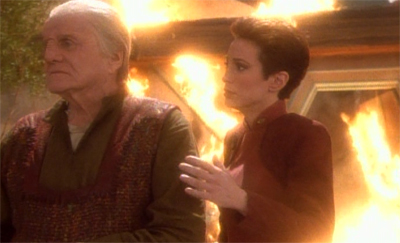
Progress is the best episode of Star Trek: Deep Space Nine‘s first season to date. Of course, there are better episodes ahead – two of them clustered at the end of the show’s truncated first year – but Progress still represents a considerable improvement over anything that has come before. It isn’t quite perfect, but it does have a nice character focus and takes advantage of the show’s unique perspective and position. It’s evidence that the writing staff were at least engaging with the show’s status quo and trying to work with it to tell interesting stories, with Progress offering an early pure example of what Deep Space Nine story should probably look like.

While the first season has been quite bumpy (although notably less bumpy than any of the opening seasons of the other three Star Trek spin-offs), Progress offers a demonstration that we are getting somewhere. The title might apply as much to the status of the show itself as to the themes of the episode.

Burning down the house...

Burning down the house…

Continue reading

Paul Cornell’s Run on Batman & Robin – The Sum of Her Parts (Review)

To celebrate the release of The Dark Knight Rises, July is “Batman month” here at the m0vie blog. Check back daily for comics, movies and television reviews and discussion of the Caped Crusader.

Today we’re taking a look at three of the authors who followed Grant Morrison’s groundbreaking Batman & Robin run. We’ll start with Paul Cornell.

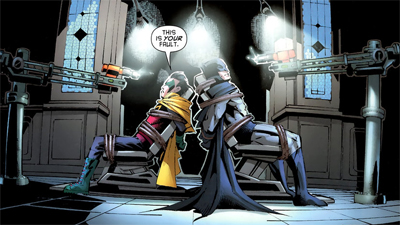
I’m going to be entirely honest here. I am very disappointed that Paul Cornell hasn’t really got a shot at an on-going Batman book. The author has been something of a rising star at DC comics for what seems like years, and recently provided the best Superman run in recent memory with his wonderful Lex Luthor story in Action Comics. He’s a writer who is astutely aware of the genre conventions, while being shrewd enough to exploit them to his advantage. He writes distinctly “comic book!” comic books, but without following the standard plot patterns just for the sake of adhering to formula. His three-issue Batman & Robin fill-in arc might not be his best work, or the best work on the title, but I do admire Cornell’s willingness to provide a compelling criticism of the Batman mythos instead of merely offering a generic paint-by-numbers treading-water adventure. Even if it doesn’t quite stick the landing, Cornell’s story is certainly ambitious.

Drilling it into them…

Continue reading

It’s a Wonder They Stay On: Thoughts on Wonder Woman’s Wardrobe…

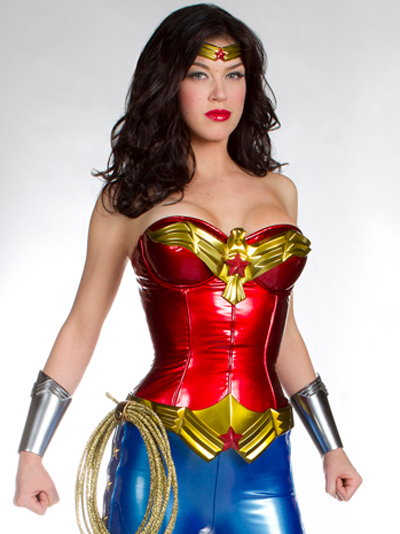
Well, the first pictures of David E. Kelley’s upcoming Wonder Woman adaptation have hit the web. Lynda Carter loves it and everyone else seems to hate it. Me, I really couldn’t care too much about the costume – I’m just worried about the very idea of a Wonder Woman television show from the creator of Ally McBeal. That’s not a putdown – well, it kinda is – but it’s a more fundamental problem than the outfit she wears (which will likely get retooled repeatedly over the course of the show – assuming the show has a course). Anyway, the outfit gives me an opportunity to wonder about Wonder Woman’s outfit. Is there something wrong with her traditional Lynda Carter look, and is this update an improvement?

Is it any wonder?

Continue reading

Putting the “-ess” in “Sexist”: Why Do We Have a Best Actress Award?

The fact that no woman was nominated for Best Director (after Kathryn Bigelow became the first female to win last year) has caused a stir at this year’s Oscars. I’m not an excessively politically correct individual (just read the blog), but I like to think I’m sensitive to issues like that. Presumably the presumptive female directing nominees would have been either Debra Granik for Winter’s Bone or Lisa Cholodenko for The Kids Are All Right, and – to be honest – I don’t think either was better than any of the five existing nominees. The continued snubbing of Christopher Nolan bothers me far more.

As I thought about the complaint more and more, part of me wondered when the gender of an individual becomes important for awards like this – my gut feeling is “never.” The best is the best, why should we handicap or install quotas? Except for the fact that we do have gender quotas for certain awards. This train of thought led me wonder why we still have a Best Actress and a Best Supporting Actress category… And, to cut a long story short, I really couldn’t think of a good reason.

Are we kidding ourselves?

Continue reading

The Walking Dead, Vol. 2 (Hardcover)

Welcome to the m0vie blog’s zombie week! It’s a week of zombie-related movie discussions and reviews as we come up to Halloween, to celebrate the launch of Frank Darbont’s The Walking Dead on AMC on Halloween night. So be sure to check back all week, as we’ll be running posts on the living dead.

I want to like Robert Kirkman’s The Walking Dead. I really do. I love zombies. I love it when writers use horror to explore socially relevent issues. I totally dig the black-and-white style which is clearly intended to evoke the vibe of George Romero horror films. I love that it’s a mainstream comic book property that has broken into popular culture despite not featuring muscle-bound guys and gals with impossible physiques in ridiculous spandex – proof to the masses that comic books can be about more than superheroes. However, as much as I may want to embrace and love The Walking Dead, I just can’t bring myself to.

Grimes and punishment...

Continue reading

Putting the “Man” in Romance: Deconstructing The “Gerard Butler” Romantic Comedies

I had the misfortune of watching The Bounty Hunter last week. It was horrible, really. In fairness, I tend to have a problem with the conventional romantic comedy as it’s mass produced and shipped out to cinemas at least once a month like clockwork. A string of movies which are based on the principle that all men and women (whether they know it or not) want to settle down and get married, argue over stupid things about three quarters of the way through the film and get together again in time for the end credits. Not only are the morals of such films highly dubious, the delivery is generally just excruciating. However, something has changed within the genre in the past couple of years… and not necessarily for the better. I’ll let The Guardian sum up my position:  

I realise it’s high time we refreshed the tired tics and tropes of the kissy-kissy no-boys-allowed modern women’s picture, I just didn’t think the solution would be to take the suppressed homoeroticism of the punchy-punchy male buddy flick then slather it over the vaguely virginal values associated with most Sandra Bullock and Amanda Bynes movies.  

That about sums it up nicely, don’t you think?  

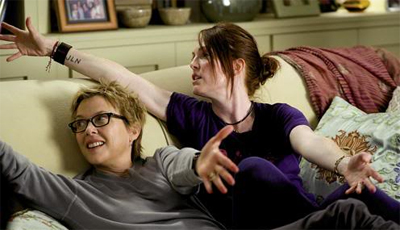
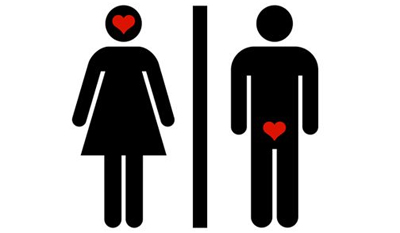
The figure on the left indicates where good ideas come from... the figure on the right indicates where most romantic comedy ideas come from... by the way, he has his back to us...

Continue reading