• Following Us

  • Categories

  • Check out the Archives


  • Awards & Nominations

Non-Review Review: The Penguins of Madagascar

The Penguins of Madagascar is solid family entertainment. It does not rank among the best of Dreamworks’ animated output, nor among the year’s best animated films. However it is a fun adventure movie that moves along at just the right pace – allowing a number of action set-pieces and a solid cast carry most of the weight. The Penguins of Madagascar is fun and solid; it is arguably more fun and more solid than any of the three Madagascar movies that spawned this spin-off.

The Penguins of Madagascar is just what the doctor ordered with the holiday season approaching. It is a film that makes for a solid family diversion, a movie that will appeal to kids without pandering too heavily, and will acknowledge the adults in the audience without losing focus. It is an enjoyable romp, one that delivers almost perfectly on what it sets out to do. It isn’t transcendental or brilliant in the way that The Lego Movie was, but it is more than merely functional.
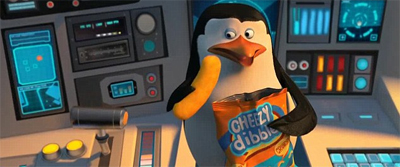
Cheesy? Sure.

Cheesy? Sure.

Continue reading

Non-Review Review: Wild

Wild is adapted from Wild: From Lost to Found, Cheryl Strayed’s autobiographical account of her spiritual 1,100 mile trek across the California Pacific Trail. The bulk of the movie features Reese Witherspoon carrying a gigantic backpack stuffed with the essentials – described accurately, and perhaps affectionately, by some observers as a “monster.” This image adorns the posters and publicity materials, and feels strangely appropriate. Cheryl may have carried a gigantic back upon her back, but Reese Witherspoon carries the entire movie.

To be fair, Wild is not a bad film on its own merits. It is perfectly functional, if a little familiar in places. However, it is Reese Witherspoon’s performance that sets the film apart. It is a powerful and naked lead performance which counts among the best work in the actress’ career. The plot and character beats may feel like they have been inherited from countless other “find yourself in nature” films, it is Witherspoon who imbues Cheryl (and, by extension, the film) with a warm humanity.

Into the wild...

Into the wild…

Witherspoon a momentous performance, and Wild seems keenly aware of this. The film knows it has a gifted performer at its core giving one of the most memorable performances of the year. So Nick Hornby’s screenplay and Jean-Marc Vallée are clever enough to stand back; the bulk of the film seems built around Witherspoon, a showcase for the performer. That is a lot of weight; even more than the hefty backpack that Strayed carried with her across California. Witherspoon is more than up to the task.

Wild is a movie that lives or dies on the strength of its lead performance. Luckily, Witherspoon is tremendous.

A long walk home...

A long walk home…

Continue reading

Space: Above and Beyond – Toy Soldiers (Review)

This November (and a little of December), we’re taking a trip back in time to review the third season of The X-Files and the first (and only) season of Space: Above and Beyond.

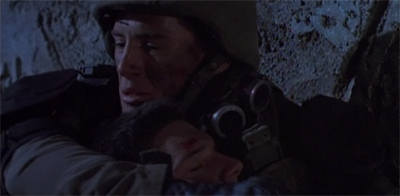
The Never No More and The Angriest Angel two-parter represented a moment when Space: Above and Beyond seemed to gel, when the show seemed to realise what it wanted to be and how it wanted to be about it. Written by showrunners Glen Morgan and James Wong, they presented a demonstration of just how well the show could work, and why it had been an absolutely ingenious idea to do the premise of “World War II… IN SPACE!”

So, naturally, Toy Soldiers shows up to demonstrate that we have yet to reach a point where we can do this consistently.

Oh, brother...

Oh, brother…

Continue reading

Non-Review Review: Horrible Bosses 2

Horrible Bosses 2 is a cluttered film. In many ways, it is handicapped by a reluctance to let go of what worked the first time around. As a result, the film seems to bring back just about every cast member it can, ensuring that everybody gets their own little arc and their own pay-offs. Two of the three original horrible bosses get extended subplots in the sequel, with an expanded role for another side character.

This leaves the film feeling a little crowded. The new additions to the cast seldom get room to breath. Horrible Bosses 2 brings in a rake of superb talent to fill out the supporting cast, but doesn’t have the time to do anything particularly interesting with them. Chris Pine makes the most significant impression, but Horrible Bosses 2 wastes  talent like Christoph Waltz and Jonathan Banks in fairly bland roles.

"I spot a sequel..."

“I spot a sequel…”

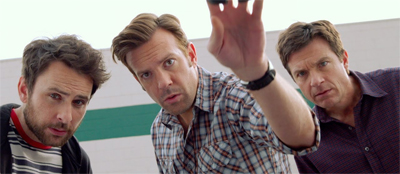
And yet, despite its problems managing space, Horrible Bosses 2 holds itself together. It’s a clumsy film, one that feels like it could have done with a script polish and some judicious editing at an early story phase, but it manages to hang a lot on the chemistry of its three leads. Even more than in the original film, Bateman, Sudeikis and Day find themselves playing archetypes rather than characters – but the fit rather comfortably into those archetypes.

Bateman, Sudeikis and Day spend a lot of Horrible Bosses 2 talking over one another – something that more than one character acknowledges over the course of the film. The result is a lot like the film itself; it’s often difficult to separate the important material from the background noise, but there’s also an underlying sense of fun that just about keeps everything ticking over.

"We've all seen Reservoir Dogs, right?"

“We’ve all seen Reservoir Dogs, right?”

Continue reading

Non-Review Review: Woman in Black – Angel of Death

Horror sequels are notoriously difficult beasts. Much like comedy sequels, there’s the inevitable conflict between what the audience wants and what the audience has seen before. If you plan on replicating the jump scares too faithfully, why not watch the original? If you want to do something fresh, why bother sticking the name on the front? It is an interesting challenge facing film makers, and it’s something that shows. It is very hard to think of a horror sequel that competes on the same level as the original, let alone surpasses it.

Woman in Black: Angel of Death finds itself stuck in that trap. The original Woman in Black was very much a classic Hammer Horror film, a movie more about suggestion and scale than blood and guts. Never afraid to reinforce a jump scare with an orchestra string section, there was something quite endearing and old-fashioned about the way that Woman in Black conducted itself. It was an affectionate throwback to a style of horror largely forgotten in this day and age.

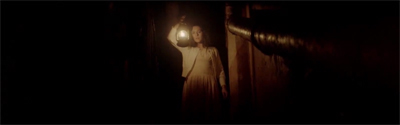
"Gee... I wonder what could possibly be in this creepy basement at this hour of the night..."

“Gee… I wonder what could possibly be in this creepy basement at this hour of the night…”

Given the success of Woman in Black, a sequel was inevitable. However, Angel of Death faces a lot of the issues that tend to plague horror sequels – cast attrition, a sense of familiarity, a sense that most of the best tricks have already been used. To be fair, Angel of Death holds itself together reasonably well for its first two acts. There are creaky moments, and a sense that the movie is trying to hit too many familiar notes. However, the script comes off the rails in the third act, as the film stops trying to imitate its predecessor and attempts to offer something new.

Sadly, the third act simply doesn’t work, bouncing between an air field and a supernatural hostage crisis. The result is that Angel of Death collapses in on itself – leading to the sense that this is a rather disappointing sequel.

Sadly, Chris deBurgh has yet to provide a theme song for the series. Maybe next time?

Sadly, Chris deBurgh has yet to provide a theme song for the series. Maybe next time?

Continue reading

The X-Files – Piper Maru (Review)

This November (and a little of December), we’re taking a trip back in time to review the third season of The X-Files and the first (and only) season of Space: Above and Beyond.

Piper Maru and Apocrypha continue a pretty clear thematic throughline for the show’s third season mythology episodes.

As with The Blessing Way/Paper Clip and Nisei/731, Piper Maru and Apocrypha tell a story about how we relate to the past. In particular, in keeping with the rest of the third season mythology, it is a show about the legacy of the Second World War. The X-Files is a show that is sceptical of the decisions made by the American government towards the end of the Second World War, particularly as those decisions shaped and moulded the present. In many ways, The X-Files is a show about history and legacy, trauma and consequence.

A fish out of water...

A fish out of water…

Piper Maru and Apocrypha are less direct about this connection than the earlier mythology episodes. They aren’t about the war criminals given safe habour after the Second World War in return for scientific knowledge or tactical advantages. Instead, Piper Maru and Apocrypha are shows about dredging up the past and confronting the consequences of past actions. These two episodes are not only steeped in American popular history, but also in the show’s internal continuity. The majority of what happens here is driven by events we’ve seen in the show.

At the same time, Piper Maru and Apocrypha represent an attempt to boldly expand and push the mythos forward in the same way that Colony and End Game did at this point in the second season. The result is an intriguing two-parter that feels a little muddled and messy, an example of the show stumbling slightly as it tries to grow outwards. Although the mythology is still working a lot more efficiently than it would in later seasons, there is a sense of clutter beginning to filter in.

The eyes have it...

The eyes have it…

Continue reading

Non-Review Review: Whiplash

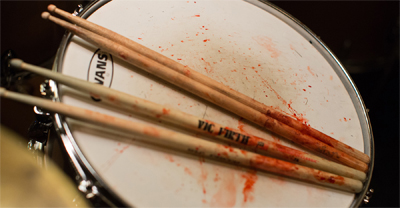
The joy of Whiplash is in how the film subverts so many of the conventions of the “unconventional teacher pushes promising young student” subgenre. A one-sentence plot summary for the film suggest an inspirational and life-affirming tale. Andrew heads to a prestigious music school to hone his skills on the drums, and encounters an obnoxious and confrontational teacher who pushed him to his limits. One can already hear the applause, see the inevitable hug, feel the radiating mutual respect.

Whiplash carefully and meticulously subverts these expectations, avoiding many of the familiar plot beats that one might expect from a story like this. There’s a raw, gruelling honesty to the story – Whiplash is not a story calibrated or tailored to make the audience feel particularly comfortable or happy. Indeed, it addresses its central themes with a refreshing candidness. It asks some very tough questions about honing talent and the responsibilities of a teacher. It doesn’t offer any easy answers.

Anchored in two compelling central performances and a beautiful soundtrack, Whiplash builds to a beautifully cathartic climax, one that refuses to wrap too tight a bow around an intriguing little film.

Stick around...

Stick around…

Continue reading

Space: Above and Beyond – Mutiny (Review)

This November (and a little of December), we’re taking a trip back in time to review the third season of The X-Files and the first (and only) season of Space: Above and Beyond.

Nothing says “this is a militaristic science-fiction show!” quite like a mutiny episode.

When producing a show like Space: Above and Beyond, doing a show based around a mutiny in wartime is a given. It’s no surprise that Mutiny is the third regular episode of the show. Indeed, when Battlestar Galactica – a show that owes a sizeable debt to Space: Above and Beyond – wanted to establish its own militaristic science-fiction credentials, it produced Bastille Day as the third episode of its first season – another story about an uprising on a spaceship in a time of crisis.

His sister's keeper...

His sister’s keeper…

Mutiny is also notable as the first episode of the season not credited to the creative team of Glen Morgan and James Wong. Of course, as executive producers, Morgan and Wong would have had a massive impact on the development and the writing of Mutiny. Stephen Zito is credited as the writer on the show. Zito is a veteran television writer and producer, working in the industry since the late eighties. He departed Space: Above and Beyond halfway through the first season, moving on to a long run on J.A.G.

Mutiny is far from perfect – indeed, it is often quite clunky in places. At the same time, it is a lot more comfortable in its skin than The Dark Side of the Sun was.

Watching like a Hawkes...

Watching like a Hawkes…

Continue reading

Star Trek: Voyager – Twisted (Review)

This September and October, we’re taking a look at the jam-packed 1994 to 1995 season of Star Trek, including Star Trek: Deep Space Nine and Star Trek: Voyager. Check back daily for the latest review.

It’s easy to see why the decision was made to bury Twisted as deep into the second season of Star Trek: Voyager as possible. The third of four episodes carried over from the end of the show’s first production year, it was the sixth episode of the show’s second broadcast season. Not only did it air behind the last episode produced as part of that first year, it also aired behind the first two episodes produced during the second season.

To be fair, Twisted isn’t a bad episode. It has a whole host of problems, but the most fundamental issue with Twisted is that it is incredibly dull. It’s the most pointless sort of story imaginable, where a bunch of weird stuff happens to our characters and there’s no way to save the day so they just sit around and wait patiently until it stops. While the script to Twisted is comprised of irritating moments, they don’t add up to anything substantial.

Twisted is very much the equivalent of forty-five minutes of Star Trek themed dead air.

"Why, hello there..."

“Why, hello there…”

Continue reading

Non-Review Review: The Drop

It is suggested that hell is other people. Perhaps not so much. Perhaps hell is the absence of other people. Towards the end of The Drop, a character ruminates on the idea of eternal damnation – suggesting that hell is nothing but eternal emptiness, a cosmic echo chamber where the damned are left with nothing but their own sense of isolation. Maybe that is what damnation is, nothing but an individual’s own loathing and self-doubt reflected back them, amplified through the darkness.

The Drop is a tense and claustrophobic thriller. The bulk of the action unfolds around the small world as Bob knows it. Bob is a simple man. He works at a small dive, “Cousin Marv’s Place.” When asked tough questions, he simply answers, “I just tend bar.” As Bob explains, the dive bar occasionally serves as a “drop” for all the money laundered through local crime. Bob doesn’t know where it comes from or where it goes. He is only aware of it when it comes into his care and when it leaves.

It's a dog's life...

It’s a dog’s life…

The Drop is a story about isolation and loneliness. Characters reflect on their place in the world, trying to make sense of what unfolds around them. Most are unknowable to each other, mysteries and enigmas. Asked a personal question, Bob replies, “That’s my business.” When his friend Nadia asks why Bob never inquired about her own very obvious scars, Bob simply answers, “I figure that’s your business.” The world as Bob knows it is a small place. Maybe it’s constantly getting smaller.

Adapted by Dennis Lehane from his own short story Animal Rescue, The Drop wallows in its own sense of lost direction and impending doom. Michaël R. Roskam’s direction never rushes the story or the actors, allowing the film time to take in the emptiness and hollowness in this small world that briefly intersects with something much bigger and more unpleasant. Perhaps a little too stately and relaxed in places, The Drop is nevertheless an atmospheric delight.

Just Cous...

Just Cous…

Continue reading