• Following Us

  • Categories

  • Check out the Archives


  • Awards & Nominations

Non-Review Review: 21 Bridges

21 Bridges is a solid, sturdy old-fashioned thriller.

This is both faint praise and gentle criticism. 21 Bridges offers a familiar set-up and premise, as a dogged detective hunts two suspects through the night. Although the film makes solid use of Chadwick Boseman as its lead, it is not impossible to imagine an alternate version starring Liam Neeson. It would arguably make a perfectly fine counterpart to Run All Night. The plot of the film involves a manhunt for two criminals who murdered several police officers during a botched heist, which gradually escalates into a full-blown conspiracy.

He needs more cop on.

It is all pretty paint-by-numbers. There is not a lot in 21 Bridges that surprises. More than that, there is very little in 21 Bridges that pops, that distinguishes it from other entries in the subgenre. This is both a blessing and curse. There is something comforting in the familiarity of 21 Bridges, in the way that movie never demands or expects more of its audience or itself than it promises to deliver. It largely succeeds at what it sets out to do, with minimal flourish or clutter. It moves through its plot with the same sense of purpose and focus as its protagonist.

21 Bridges knows exactly what it is doing, and mostly succeeds at doing it.
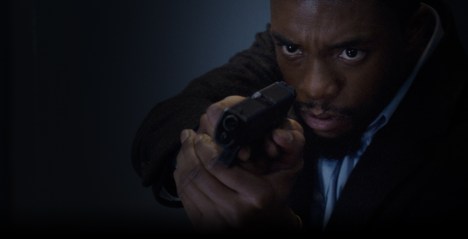
“Tonight, this island is Manhunttan.”

Continue reading

Non-Review Review: The Two Popes

Very few movie disintegrate so completely and thoroughly across their runtime as The Two Popes.

The Two Popes feels like two different movies, both tonally opposed to one another and both bleeding relentlessly into one another. The first is a delightfully surreal Odd Couple riff (The Odd Pope-le? Vicious in the Vatican?) that finds two men who would be pope forced to interact with one another, their mutual unease inevitably transforming to a gentle understanding and even compassion. The second is a more earnest historical biography, a film that aims to properly contextualise the life and times of Cardinal Jorge Mario Bergoglio, the man who would be Pope Francis.

The robe less travelled.

Both of these premises are workable on their own. Of course, the first premise has a bit of an advantage in that “throw two great British actors into scenes together” tends to result in highly watchable material, and “… also, they’re both popes” is a pretty impressive chaser to that. In contrast, the historical biography section of the film is a bit more generic and familiar, even if there’s potential here. After all, this ground has been explored in films as compelling as The Secrets in Their Eyes.

The problem is that the two films don’t mix, at all. Every attempt to combine them hurts the film as a whole, both stopping the narrative dead and representing a jarring transition from one type of film into another and back again. It isn’t that The Two Popes allows these stories to collide, it instead tries to run them in parallel. The result is a narrative traffic jam, and a film in which each half hour is appreciably weaker than the one leading into it.

Good faith arguments.

Continue reading

Non-Review Review: The Last Right

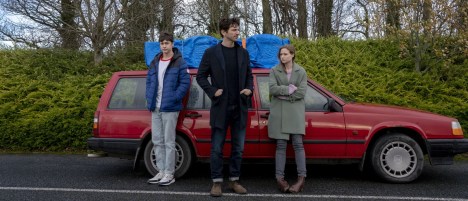
The Last Right is perhaps a little too driven by cliché and a little too heavy handed in its emotional beats, but it’s genuinely charming and benefits from a clever concept and an endearing cast.

To be fair, The Last Right runs into its problems in its first and third acts, in setting up and resolving its central dynamics. These problems flow largely from the fact that so many of details around the edge of the central premise of the film feel lifted from a collection of stock eighties American dramedies. Certain key elements of The Last Right feel like they came packed in an IKEA box ready for assembly, and so the movie’s introduction of and conclusion for those elements tends to feel rather rote.

Carry on…

However, The Last Right really kicks into gear once it has done that initial set-up, allowing its characters room to breath and interact with one another within the relatively safe but also free-form template of the classic road movies. Road movies largely live or die based on the chemistry of the cast and strength of the humour, and The Last Right works well on both counts. There’s a relaxed ease to The Last Right, a willingness to trust the actors and the characters to carry the bulk of the film.

The result of a trip with a few bumps along the way, particularly at either end of the journey. However, for most of the adventure, The Last Right is a pretty enjoyable ride.

Death drive.

Continue reading

Non-Review Review: Frozen II

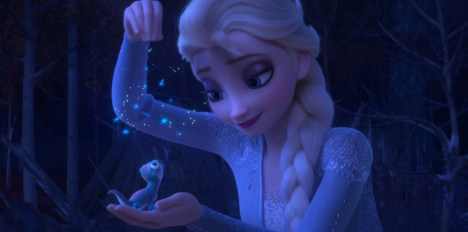
Frozen II is solid.

In fact, it might even be a little stronger than Frozen, on the whole. Of course, Frozen was the breakout Disney animated hit of the decade, crossing the one billion mark and turning Let It Go into a genuine pop phenomenon. However, Frozen always felt a little rough around the edges when compared to Disney’s other animated princess-centric movies of the decade; The Princess and the Frog, Tangled, Moana and maybe even Brave.

Pretty cool.

Frozen II arrives with a lot of the familiar problems of sequels. The original film was populated by characters who filled a story function, whereas sequels often have to create story functions to accommodate characters who are surplus to requirement. Kristof felt largely unnecessary in Frozen, but he feels particularly unnecessary in Frozen II. Similarly, the success of the original film often encourages sequels to dive deep into a conjured mythology, to over-explain something that requires no explanation. Frozen II does this with Elsa herself, trying too hard to explain her.

As a result, Frozen II suffers from some awkward pacing. It stutters and starts. It often gets slowed down checking in on familiar characters, or delivering reams of exposition for unnecessary back story. However, the irony of all this is that Frozen II has much more interesting things to say than Frozen, and is much more confident about saying them. Frozen II retreats from the logical conclusions of its strongest arguments, but it is still a surprisingly bold film for a sequel to one of the most successful children’s films ever made.

Lighten up.

Continue reading

Non-Review Review: I Lost My Body

I Lost My Body is a stunning piece of animation.

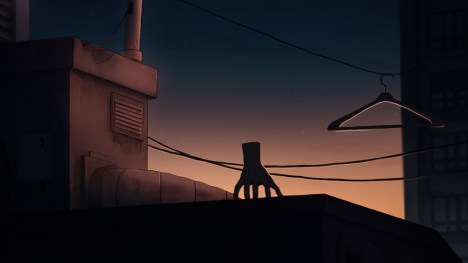
In a Parisien hospital, a dismembered hand comes to life. Distracted and disoriented by memories of its previous life, it scrambles out of the fridge and out into the world. Making a daring escape from the inevitable fate of medical waste, this detached hand embarks on a journey across Paris. This adventure takes the body part from the roofs to the underground, through the gutters and into the air vents. It confronts rats and pigeons, but also encounters rare beauty and intimate insight. All of this is part of a primal urge to return to the body from which it was so cruelly severed.

Taking the matter in hand…

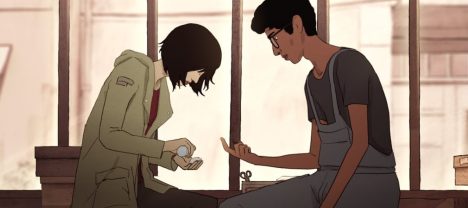
It is certainly an interesting and intriguing premise, and I Lost My Body lives up to the absurdity of that set-up. Jérémy Clapin’s animated film runs a tight eighty-one minutes, which means that it never overstays its welcome and that the central hook never has the opportunity to become distracting. I Lost My Body uses this absurd premise as a prism through which it might explore ideas of human connection, of the unlikely ways in which lives intersect and collide within the modern world. Some of its choices are inelegant and clumsy, but it never lacks ambition or insight.

I Lost My Body is a moving tale of what it’s like to feel truly disconnected.

Naofel me.

Continue reading

Non-Review Review: The Nightingale

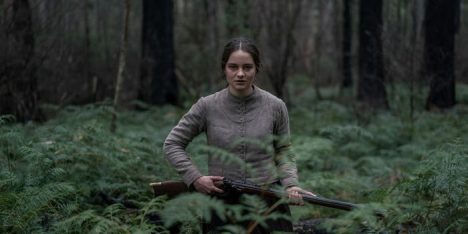
The Nightingale arrives as Jennifer Kent’s follow-up to The Babadook, and represents a slightly different sort of horror.

The Babadook was one of the best horror films of the decade, a creeping and unsettling look at a mother’s depression as she tried to work through her complicated feelings towards her own son. The Nightingale is something quite different, essentially a frontier western about a woman who sets out to avenge herself upon the British soldiers who inflicted a terrible suffering upon her and her family. As Clare tracks these men through the wilderness with an aboriginal guide named Billy, she finds herself confronted with the true nightmares of colonial Australia.

Eyes frontier.

The Nightingale belongs to a rich tradition of Australian westerns including modern classics like The Proposal, stories that play on the frontier myth and explore the country’s deeply troubled and unsettled history. Kent’s direction is tense and claustrophobic, refusing to ever let the audience look away from the horrors inflicted upon the continent by the European settlers who presumed to claim it as their own. The Nightingale is a bleak and cynical piece of film, one that is occasionally suffocating and dizzying in its portrayal of man’s capacity for inhumanity.

However, perhaps the most striking aspect of The Nightingale is how – for all its unflinching brutality and refusal to offer trite sentimentality – the film advances an argument for intersectionalism. As Clare journeys deeper and deeper into the heart of darkness, she discovers that the suffering inflicted upon her and her family is just one expression of a more primal and insidious violence, and that perhaps she has more in common with Billy than she might originally think.

Not so hot to trot.

Continue reading

Non-Review Review: The Aeronauts

At one point in The Aeronauts, reluctant partners Amelia Wren and James Glaisher open up to one another. High above the clouds, separated from the world below, Wren talks a little bit about her own departed husband and how she has struggled to come to terms with his absence. It isn’t a particularly in-depth conversation, coming about thirty minutes into a hundred-minute movie, so she stops rather abruptly. She is grateful for the tact and restraint of her conversational partner, the socially-awkward Glaisher. “Thank you,” she tells him. “Another would have pushed me further.”

This is more than just a small and inevitable moment of character development awkwardly signposted, a gesture that Wren and Glaisher are not as incompatible and oppositional as even they have come to believe. It is also a statement of purpose for Tom Harper’s The Aeronauts. It is a promise to the audience that The Aeronauts will never push its viewers or its characters in particularly uncomfortable or unconventional directions. Instead, it will offer a much gentler type of story that moves at its own pace and deals with various obstacles and developments well within its comfort zone.

On top of the world…

The Aeronauts is a clean, old-fashioned awards season drama. Two talented young actors are locked together in a confined space, playing characters who see the world in what initially appear to be two very different ways that gradually align over the course of the movie’s runtime. The costumes are spectacular. The music is triumphant. The special effects are impressive. There is tragedy, but it is overcome. There are complications, but they are handled. The Aeronauts is surprisingly conventional for a film that can be described as “the Victorian hot air balloon adventure starring Felicity Jones and Eddie Redmayne.

This isn’t a criticism. At least, not a particularly biting one. The Aeronauts understands it is pitching itself as broad crowd-pleasing entertainment, so never pushes too hard in any direction that might possibly jeopardise that. Anything that might possible put that at risk is hastily thrown overboard. This is at once the best and worst thing about The Aeronauts. “Your husband pushed too far,” Glaisher warns Wren at one point, both an example of the film’s complete aversion to subtext and an in-text justification for its careful moderation. The Aeronauts is aiming at “charming.” It lands squarely on target.

A triumph of scale.

Continue reading

Non-Review Review: Doctor Sleep

Doctor Sleep finds itself caught between a rock and a hard place, between Stephen King and The Shining.

Of course, Stephen King wrote The Shining. The book belongs to King. It is a profoundly personal work, dealing with his own feelings of inadequacy as a young writer and father, and documenting his own struggles with addiction. Indeed, a large part of the tension between Stephen King and Stanley Kubrick over the cinematic adaptation of The Shining was the way in which it largely eschewed any interiority in its handling of Jack Torrance. In some ways, King has been awkwardly trying to reassert his authorship of The Shining for decades, through works like the television miniseries and the sequel Doctor Sleep.

It’s a hungry world…

Perhaps the most interesting aspect of Doctor Sleep is that it has found a director half way between the sensibilities of King and Kubrick. Flanagan is a very precise visual director, with an eye for compositions and an understanding of slow methodical build which makes him a good choice as a director to follow Kubrick’s work on The Shining. However, Flanagan is also a writer who is much more interested in the literary themes of King’s novel than Kubrick was, with Flanagan’s filmography dedicated to exploring the themes of trauma and addiction that wed King’s work on The Shining and Doctor Sleep.

The resulting film still occasionally feels caught between two masters, struggling to satisfy both King and Kubrick’s version of The Shining. It’s to Flanagan’s credit that the film strikes as effective a balance as it does, resulting in a film that manages to work both as a reasonably satisfying sequel to one of the best horror films ever made and as an engaging movie it its own right. Doctor Sleep has some minor problems, but succeeds make an impossible mandate look like child’s play.

Corridors of power…

Continue reading

Non-Review Review: Countdown

Countdown is a spectacular mess of a film, but also a surprisingly fun one.

Superficially, Countdown belongs to the modern school of low-budget high-concept horrors. It is build around an admittedly rather goofy premise, devotes considerable time to exploring and articulating its own internal logic, and is just flippant enough that it never entirely collapses under its weight. In terms of basic structures, Countdown is of a piece with films like Happy Death Day or Scary Stories to Tell in the Dark. It is preoccupied with the protagonists’ desire to figure out the rules of the macabre trap in which they have found themselves.

A killer app.

However, Countdown is so committed to that template that something interesting happens. Countdown never quite settles on a particular mode or genre, instead relying on the propulsive momentum of that central quest to hold the film together. So Countdown transitions wildly between various styles of horror films. It features a monster who looks like it just missed out on lead roles in The Curse of La Llorona or The Nun, leans into the fear of technology and identity that defined Cam or Unfriended, and even takes a late turn into the sort of gender-war tinged serial killer mayhem of a Halloween sequel.

None of these elements cohere. At all. However, there’s an infectious sense of fun to Countdown. It rarely feels like Countdown is motivated by anything more than the urge to get to the next scene or the next scare, which results in a very haphazard and uneven film, but also a delightfully surreal cocktail. Countdown might be pretty far from a good horror movie, but it’s an endearingly engaging one.

Nursing some legitimate fears.

Continue reading

Non-Review Review: Terminator – Dark Fate

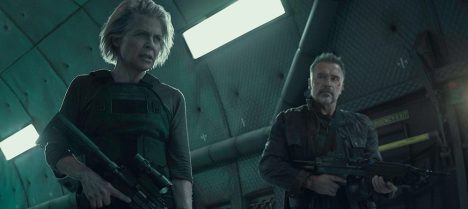
Terminator: Dark Fate is perhaps the second-best of the four attempts to make a third Terminator movie.

To be fair, the previous three efforts have all been exercises in figuring out how close or how far to hew to Terminator 2: Judgment Day. There has been a sense of watching various chefs trying awkwardly to replicate a signature dish. Does a Terminator sequel need Sarah Connor? Does Sarah Connor have to be played by Linda Hamilton? Is Arnold Schwarzenegger essential, and to what degree? James Cameron isn’t going to direct because he has his own projects, but what level of involvement is “just right”? Is it enough for him to do some press, to be a producer, or does he need a story credit?

Fight and flight.

The results have been as interesting as they have been frustrating. Few film franchises has branched quite as dramatically as the Terminator franchise, perhaps reflecting the series’ own preoccupation with time travel. Terminator 3: Rise of the Machines, Terminator: Salvation and Terminator: Genisys have all tried to figure out a way to make a sequel to Judgment Day, and have only really managed to agree that each of the others adopted the wrong approach. Dark Fate at least seems like the right Terminator sequel for its own time and place, tapping into a wave of nineties anxiety and franchise dominance.

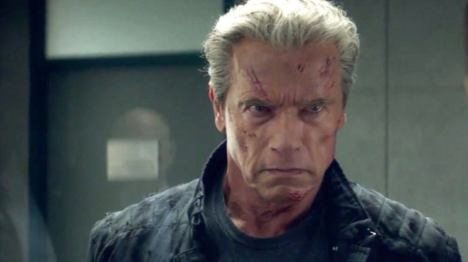
Dark Fate is only moderately successful as a film in its own right, and as a follow on to one of the most beloved blockbusters of all-time. It says much more about the larger Terminator franchise than about Dark Fate that it counts as one of the best sequels to Judgment Day.

Hes back.

Continue reading