• Following Us

  • Categories

  • Check out the Archives


  • Awards & Nominations

“No one trusts each other anymore.” Brian Michael Bendis’ “Avengers” and the War on Terror

One of the great things about long-running pop art, whether television shows, film franchises or comic books, is the sense in which they can serve as a reflection of shifting cultural concerns.

The Marvel Universe spans more than six decades of continuity. It is perhaps too much to call it a single story, even if comic book continuity is held together by that fiction. It is the work of countless writers and artists, working under different editorial regimes with different creative and commercial constraints. The visual language of the medium has shifted over decades, along with its target audience, not to mention its relationship with the mainstream culture.

Still, while monthly superhero comics are rarely considered high or important art, they are an interesting window into their particular cultural moment. These characters and archetypes are constantly changing and evolving, being reworked and recontextualised to fit the perpetual present. Rereading old comic books can feel like stepping inside a time machine, taking the reader back to not just a particular moment in comics continuity, but a funhouse mirror of the larger culture.

Brian Michael Bendis stewarded the Avengers titles for eight years, from 2004 to 2012. He managed the brand across multiple titles starting with Avengers Disassembled into New Avengers and Mighty Avengers, and through a host of epic status quo-altering events. Some of those events, like House of M, Secret Invasion and Siege, Bendis wrote himself. Other events, like Civil War, he simply tied into from the sidelines.

Still, that initial run of comics from Avengers Disassembled to Siege remains hugely important. Bendis restructured the Marvel Universe to place the Avengers franchise at its core, displacing the X-Men as the company’s flagship brand. Coinciding with the launch of Marvel Studios, that run is an obvious and ongoing touchstone for the Marvel Cinematic Universe, which has directly adapted segments of this run into films like Captain America: Civil War and shows like Secret Invasion.
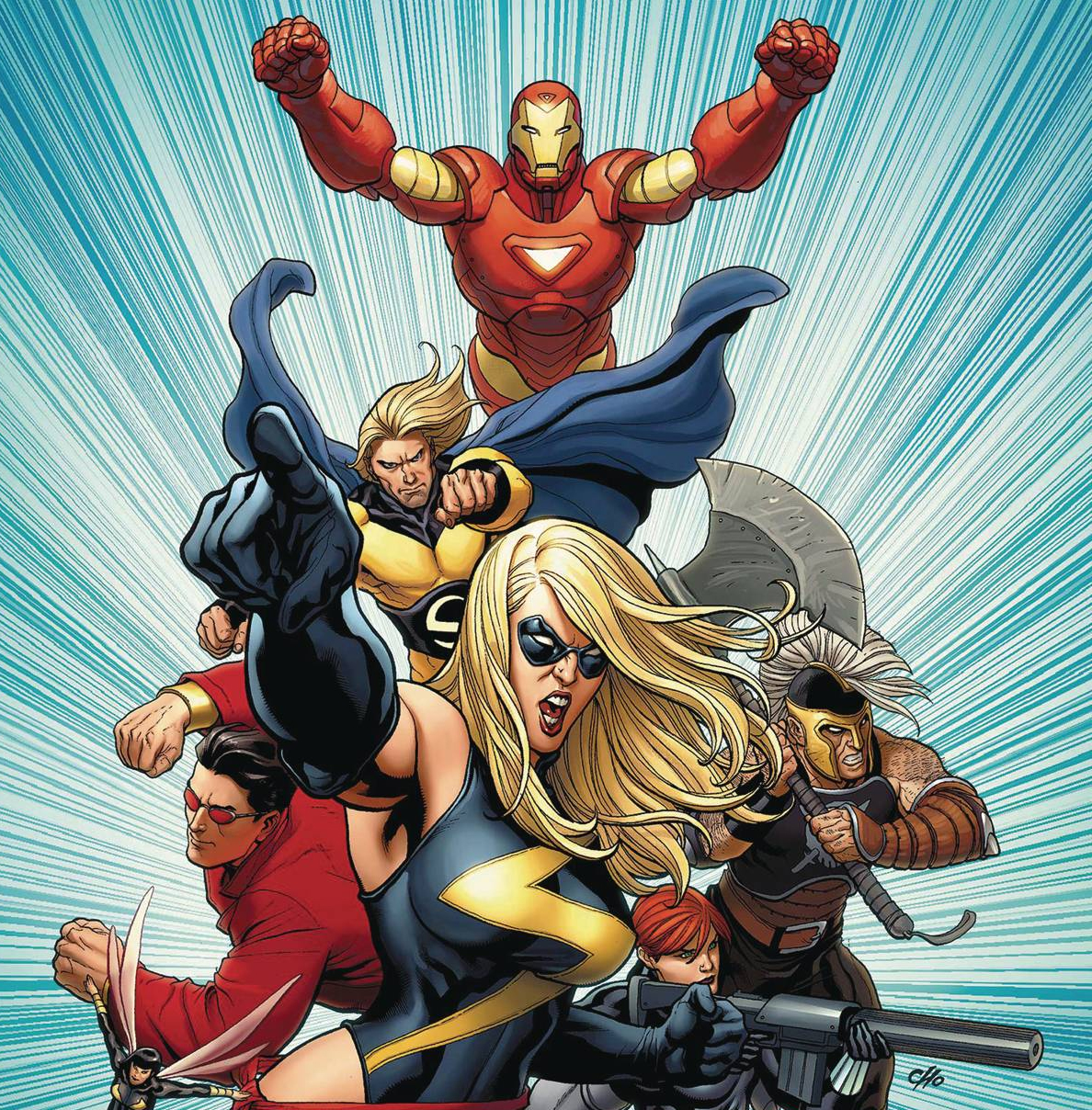
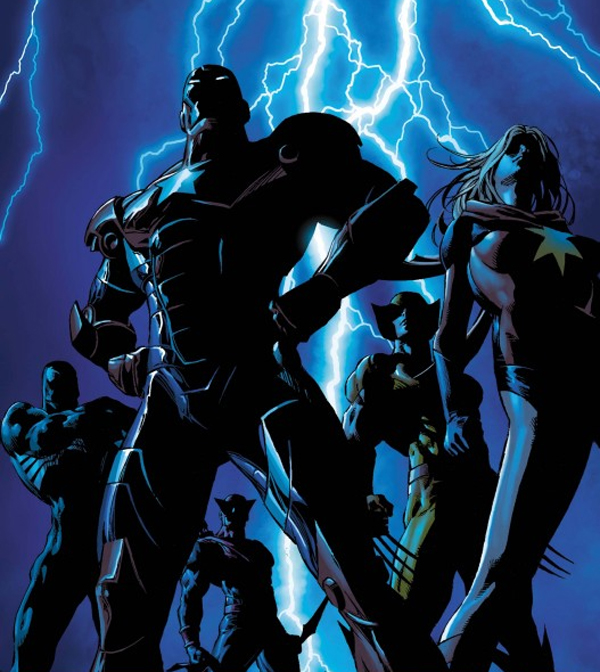
Even as the big crossover events like Avengers: Infinity War or Avengers: Secret Wars draw more heavily from the work of Bendis’ successor on the Avengers titles, Jonathan Hickman, Bendis’ Avengers remains a key influence. Thunderbolts*, for example, feels heavily indebted conceptually to Bendis’ Dark Avengers and even leans heavily on the character of Sentry, a continuity curiosity who became central to Bendis’ larger arcs.

However, even outside of its obvious cultural footprint, the remains one of the definitive explorations of the War on Terror in popular American culture, elevating the emotional and symbolic response to the 9/11 terrorist attacks into a sort of pop mythology, playing out the country’s psychodrama in costumes and capes. Bendis’ Avengers run is messy and uneven, occasionally downright clumsy in its execution. It is also a snapshot of a moment.
Continue reading

New Escapist Column! On Letting Daredevil be Daredevil…

I published a new In the Frame piece at The Escapist this evening. With the upcoming release of She-Hulk, and news that the show will be responsible for folding Matt Murdock into the larger Marvel Cinematic Universe, it seemed like a good opportunity to talk about what makes Daredevil unique.

The production team on She-Hulk have talked about how the series will showcase the “lighter side” of the Man Without Fear. This is somewhat worrying, given that part of what makes Daredevil relatively unique among the major Marvel superheroes is the fact that his stories are appreciably darker in terms of tone and content. Part of the appeal of Daredevil is the way in which the character allows the publisher to explore themes that it never could with more mainstream characters. It would be a shame to lose that while transitioning the hero into the Marvel Cinematic Universe.

You can read the piece here, or click the picture below.

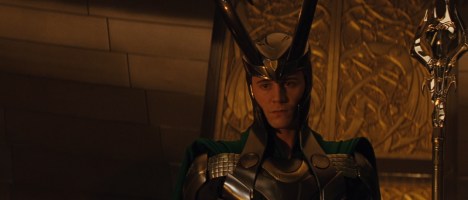
New Escapist Column! On How Loki Twists the Campbellian Archetype…

I published a new In the Frame piece at The Escapist this evening. With Loki arriving on Disney+ on Wednesday, it seemed like the perfect opportunity to take a look at the Marvel Cinematic Universe’s God of Mischief and what makes Loki such a compelling character.

There are lots of reasons why Loki has succeeded where other Marvel Studios villains have failed. Part of this is undoubtedly the casting of Tom Hiddleston. However, part of it is also down to the way in which Loki offers an interesting twist on the classic Campbellian archetype. Arguably more than any other character in the MCU, including his own brother, Loki is defined by has complicated and contradictory relationship with his father.

You can read the piece here, or click the picture below.

New Escapist Video! “A Marvelous Escape” – “M.O.D.O.K. Full Series Review”…

With a slew of Marvel Studios productions coming to Disney+ over the next six months, The Escapist has launched a weekly show discussing these series

This week, in the gap between The Falcon and the Winter Soldier and Loki, KC Nwosu and I take a look at a rather unconventional entry in the Marvel television canon: M.O.D.O.K., the half-hour sitcom from Patton Oswalt and Jordan Blum about the maniacal supervillain trying to strike a work/life balance.

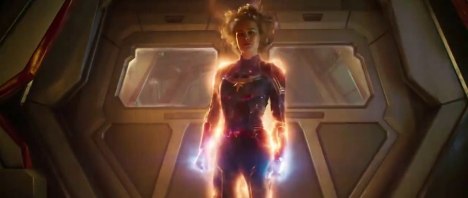
Non-Review Review: Captain Marvel

The biggest problem with Captain Marvel is one of spoiler culture.

“Spoiler culture” is a fascinating cultural phenomenon, and one that is interesting as a facet of cultural consumption that arose parallel with the internet. It is perhaps a logical extension of the manner in which information flows these days. Information travels instantly and in all directions, quickly consumed and quick disseminated. In the nineties, it was easy (or easier) to avoid spoilers to films like The Usual Suspects or The Sixth Sense. After all, there was no Twitter or Facebook to share information. If somebody had already seen the film, they had to be physically talking to somebody else to discuss it, and it was posisble to establish the ground rules for the flows of information before the conversation progressed.

In an era where simply being on the internet exposes a person to torrents of information, the advent of “spoiler culture” seems logical and rational. People want to be surprised. People don’t want to know the finer points of a story before witnessing it first hand. People do not want the easter eggs given out or the finer details dissected. This is an understandable response. Having an experience described is no match for actually having that experience first-hand. So a culture has grown up online about preserving surprise and controlling the flow of information. This is fine. This is healthy. This is good. Mostly “spoiler culture” is just common courtesy and common sense. A reviewer should not reveal anything to a reader that they themselves would not want to know.

As with any philosophy, there is a tendency to take things too far. Sometimes “spoiler culture” descends into self-parody. Reviewers were famously told not to reveal any information about the plot of Blade Runner 2049, which ironically made it very hard to sell the movie to a potential audience. Some more extreme adherents felt betrayed when Sony released a trailer for Spider-Man: Far From Home before Avengers: Endgame, as if the fact that Sony was making another Spider-Man movie would give away the resolution to the cliffhanger from Avengers: Infinity War. Naturally, Infinity War came with its own massive spoiler-warning from the studio, with reviewers told that “Thanos demands [their] silence.” This despite the fact the ending was lifted directly from a comic.

Captain Marvel embodies the worst impulses of “spoiler culture” because it confuses a logical and organic narrative development for a big twist. There is a reveal that comes around the half-way mark of the two-hour film which fundamentally changes the nature of the story being told. It plays against the story that had been set up to that point, and is positioned as a game-changer. It is a “twist.” It is a “big” moment. It is the kind of development for which Thanos would demand silence. Except it’s not really. It is not an actual twist. It is a plot point. It is a story beat. It is a part of the story that makes a great deal of sense in the context of the story as it is being told. However, Captain Marvel decides to play this game-changing story beat as a revelation.

There are a couple of big issues here. Most obviously, the actual narrative development is quite literally the only way that Captain Marvel could go without becoming something completely and irredeemably monstrous, so it is entirely predictable. (The twist is only a surprise to audience members who genuinely believe that Marvel’s first female-led superhero movie is likely to play out as extreme white nationalist propaganda.) More than that, though, it creates a larger problem with the flow of the story. The decision to play this story beat as a twist means the film has to conceal its hand for the first hour and fifteen minutes. This means that Captain Marvel is almost half-way over before any member of the cast gets any real character development.

Continue reading

36. Spider-Man: Homecoming – This Just In (#–)

Andrew Quinn and Darren Mooney host This Just In, a subset of the fortnightly The 250 podcast looking at notable new arrivals on the list of the 250 best movies of all-time as voted for by Internet Movie Database Users.

This time, Jon Watts’ Spider-Man: Homecoming.

Continue reading

Star Trek (Marvel Comics, 1979) #1-3 – The Motion Picture (Review)

This June, we’re taking a look at some classic Star Trek movie tie-ins and other interesting objects. Check back daily for the latest reviews and retrospectives.

What better way to announce the arrival of Star Trek at Marvel Comics than with an adaptation of Star Trek: The Motion Picture? Initially published as a giant Marvel Super-Size issue, the adaptation was subsequently split across the opening three issues of Marvel’s ill-fated Star Trek monthly.

It is worth noting that the franchise’s initial association with Marvel was relatively brief, with the Star Trek monthly series only lasting eighteen issues from 1979 through to 1982. In 1982, the Star Trek comic book franchise moved to DC Comics, where it remained until the nineties. Things became a bit more complicated at that stage, but it was a long-term relationship.

Still, in 1979, Marvel became the second company to publish monthly comics based around the Star Trek license. However, they were a substantially more impressive operation than Gold Key Comics, the previous license-holder. For example, this adaptation of The Motion Picture comes from some very talented creators, and its publication was treated as something of an event.

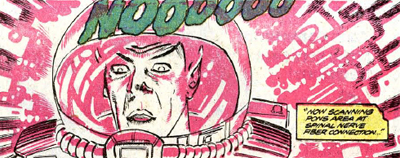
The light at the end of the tunnel...

The light at the end of the tunnel…

Continue reading

An Interview with Chris Claremont, Part IV (of V)

All this week, to celebrate the release of X-Men: Days of Future Past, we’re publishing a serialised interview that we conducted with the wonderful Chris Claremont back in February for publication in a British comic book magazine. Many thanks to Mr. Claremont for taking the time to talk to us, and also to Adam Walsh for allowing us to publish this.

Seventeen years is a long time in real life. It’s an eternity in comic book publishing.

Chris Claremont remained on Uncanny X-Men for seventeen years non-stop from 1975 through to 1991. Even Stan Lee only wrote The Amazing Spider-Man for a decade. It’s a phenomenal accomplishment, particularly in an industry where that sort of creative stability is uncommon.

Did Claremont have any idea at the time that he would be working on the title for that long? “I never thought I would stay on for seventeen years,” he freely admits. “I just never ran out of ideas. It was too much fun. They were my friends, I didn’t want to dump them and run away.

xmen-claremont2

Continue reading

Astonishing Spider-Man and Wolverine by Jason Aaron and Adam Kubert (Review/Retrospective)

This May, to celebrate the release of X-Men: Days of Future Past, we’re taking a look at some classic and modern X-Men (and X-Men-related) comics. Check back daily for the latest review.

Astonishing Spider-Man and Wolverine is a beautifully absurd comic book. Writer Jason Aaron and artist Adam Kubert keep the comic moving at a frantic pace, twisting and turning as they introduce crazy concept after crazy concept. There are enough brilliant over-the-top ideas in Astonish Spider-Man and Wolverine to sustain an on-going for years – and yet the duo tear through them with a speed that makes all of Astonishing Spider-Man and Wolverine seem like a delirious blur.

And yet, despite that, Astonishing Spider-Man and Wolverine reads like a tribute to the glorious ridiculousness possible within the confines of mainstream comic books – giant metal-faced sentient planets! robotic dinosaurs! guns that fire the energy of creation! a diamond-encrusted baseball bat as a means of time travel! There’s a surreal magic to Astonishing Spider-Man and Wolverine that marks it as one of the highpoints of Jason Aaron’s work on Wolverine. It’s funny, awe-inspiring and even occasionally moving.

Blood brothers...

Blood brothers…

Continue reading

X-Men – Days of Future Past (Review/Retrospective)

This May, to celebrate the release of X-Men: Days of Future Past, we’re taking a look at some classic and modern X-Men (and X-Men-related) comics. Check back daily for the latest review.

What’s striking about Days of Future Past is how incredibly short it is.

That’s not to suggest that the comic “feels” small or has a shortage of ideas or anything like that. In Days of Future Past, writer Chris Claremont and artist John Byrne toss out a whole host of ideas that shape and define the entire X-Men mythos. These issues continue to inspire the X-Men comic book line. Without Days of Future Past, there would be no Age of Apocalypse. The franchise’s fiftieth anniversary “event”Battle of the Atom – is essentially a gigantic tribute to Days of Future Past.

Everything burns...

Everything burns…

In fact, the influence of this story extends beyond the X-Men as a comic book franchise. “Bad alternate future” may be a trope favoured by the X-Men comics, but it’s a staple of the genre and – arguably – the medium. There’s a reason that the iconic cover to the first issue of this story arc has been emulated so often, or that Alan Moore planned to riff on the story’s central idea for his proposed Twilight of the Superheroes. Days of Future Past is just a great story hook.

However, reading it today, it’s striking how short it is. All of this come from two issues.

The poster child for this sort of story...

The poster child for this sort of story…

Continue reading