• Following Us

  • Categories

  • Check out the Archives


  • Awards & Nominations

The X-Files – Three of a Kind (Review)

This July, we’re taking a trip back in time to review the sixth season of The X-Files and the third (and final) season of Millennium.

Unusual Suspects is perhaps an underrated episode.

The third episode broadcast of the fifth season is a light adventure that offers viewers an origin story of the Lone Gunman. Byers, Langley and Frohike have been around since E.B.E. towards the end of the first season, and have become an integral part of the show’s ensemble cast. Unusual Suspects is frequently written off as a piece of fluff designed to work around the limited availability of David Duchovny and Gillian Anderson due to on-going production work on The X-Files: Fight the Future.
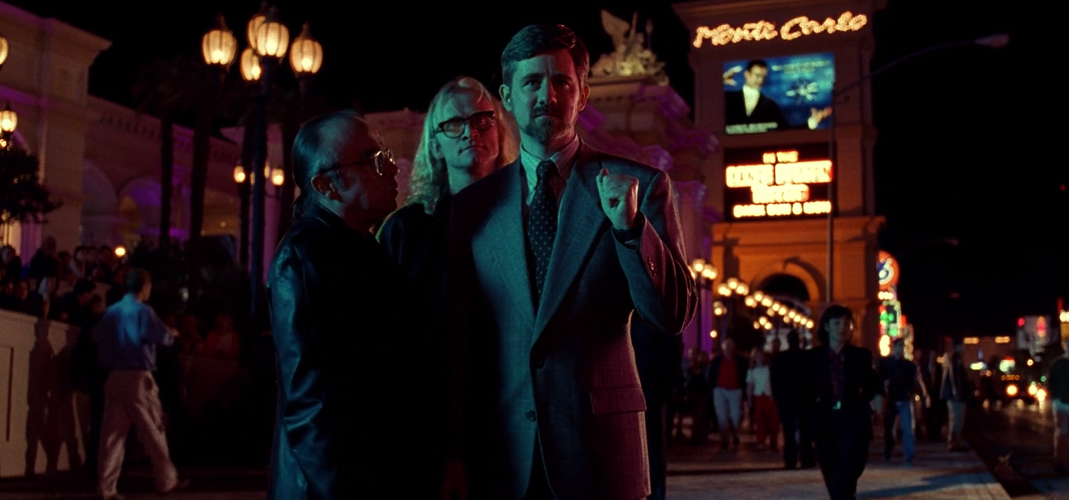
Viva Las Vegas...

Viva Las Vegas…

This seems dismissive of Vince Gilligan’s paranoid origin story, which is one of the few times that Gilligan engages directly with the themes that underpin the sprawling mythology at the heart of the show. Unusual Suspects is not a “mythology episode” in the way that gets episodes repackaged on DVD collections, but it does explore the idea of conspiracy and paranoia as a personal narrative. Unusual Suspects is a very sweet story about a lost and heartbroken man who builds a conspiracy mythology around himself because he has nothing else to do.

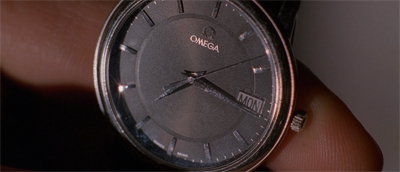
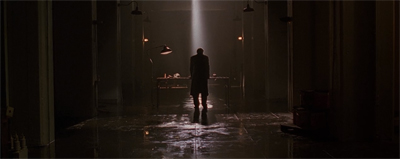
Three of a Kind is very much a sequel episode to Unusual Suspects, focusing again on the Lone Gunmen and bringing back Susanne Modeski. However, it is a much lighter and more disposable story. Barring the beautifully crafted prologue, Three of a Kind is an entirely disposable episode of television. It feels like filler. It is neither a beginning nor an end to the story of Byers or the Lone Gunmen. It is just a long middle, with the characters ending up back where they began. In a way, this makes it feel very much like a standard sixth season episode.

A man alone...

A man alone…

Continue reading

The X-Files – Monday (Review)

This July, we’re taking a trip back in time to review the sixth season of The X-Files and the third (and final) season of Millennium.

It always ends the same way. As is appropriate for a story about a time loop, Monday begins with an ending. The teaser catches the last few minutes of one of the episode’s repeating time loops. It is a striking image. Everybody dies – including Mulder and Scully. How could the episode possibly continue past that point? It is simple. Time resets. The universe snaps back into shape around Mulder and Scully, much like it did at the climax of Dreamland II. Everybody gets another chance to set things right. The show bounces back to its status quo, as it did with One Son.

Time for a do-over. Revise it until it’s right.

A ticking clock...

A ticking clock…

Continue reading

The X-Files – S.R. 819 (Review)

This July, we’re taking a trip back in time to review the sixth season of The X-Files and the third (and final) season of Millennium.

And we’re back on familiar ground.

The first half of sixth season of The X-Files is perhaps the weirdest that the show ever really became. It seemed like the series transformed into a goofy workplace romantic comedy, as Mulder and Scully worked at boring desk jobs during the day before investigating paranormal activity together in their spare time. It was utterly unlike anything that the show had done before or anything that it would do after. It is very strange to see so many oddities packed together so tightly.

He survived by the Skin(ner) of his teeth...

He survived by the Skin(ner) of his teeth…

Triangle, Dreamland I, Dreamland II, How the Ghosts Stole Christmas and The Rain King have enough surreal content to sustain two or three seasons of The X-Files. Broadcasting them almost back-to-back left some fans a little shell-shocked. At the time, it must have seemed like The X-Files had become a completely different television show than it had been only five or six months earlier. However, with the benefit of hindsight, it becomes clear that those episodes were just a very strange blip in the larger context of the series.

S.R. 819 is the episode that marks the clear return to the classic “tried and tested” model of The X-Files. It has everything from ambiguous conspiracies to body horror to car park confrontations. It is very much business as usual. Which is both the best and worst thing about it.

Do the Mathes, son...

Do the Mathes, son…

Continue reading

The X-Files – Dreamland II (Review)

This July, we’re taking a trip back in time to review the sixth season of The X-Files and the third (and final) season of Millennium.

Morris Fletcher is (and remains) one of the more interesting aspects of the Dreamland two-parter.

Fletcher would go on to become perhaps the most unlikely recurring character in the history of The X-Files. Michael McKean would reprise the role for a brief cameo in Three of a Kind at the end of the season. As with Kersh, he would disappear from the show’s world for the troubled seventh season, but would return the following year. He made a guest appearance in All About Yves, the finalé of The Lone Gunmen. Fletcher would then follow the Lone Gunmen back to The X-Files, appearing in Jump the Shark during the final season.

And the shippers went wild...

And the shippers went wild…

A large part of what makes Fletcher work is the wonderful guest performance of Michael McKean. McKean is a veteran actor with a long history of great work, dating back to his breakout role as Lenny (and Squiggy) on the sitcom Laverne and Shirley. Along with the move to Los Angeles, the sixth season of The X-Files began to drift away from Chris Carter’s initial reluctance to cast recognisable actors in significant roles. The X-Files: Fight the Future had featured guest appearances from Martin Landau, Blythe Danner, Armin Muller-Stahl and Glenne Headly.

The two-parter built around Michael McKean paves the way for appearances from Ed Asner, Lily Tomlin and Bruce Campbell. These are all superb guest performances, and consciously play into the idea that the sixth season of The X-Files has taken on a more playful or vaudevillian style. It is too much to describe these guest roles as “stunt casting” in the same way that putting Jerry Springer in The Post-Modern Prometheus or Burt Reynolds in Improbable was stunt casting, but the casting decisions are part of a broader change in the show.

Our man Morris...

Our man Morris…

On paper, Morris Fletcher could easily come off as a one-note creep. After all, he is a character who thinks nothing of using his body swap with Fox Mulder to cheat on his wife of twenty years. There is a creepy and pervy banality to his evil, one that mirrors that of Eddie Van Blundht in Small Potatoes. However, while Small Potatoes felt a little too sympathetic to pathetic Eddie Van Blundht, Dreamland strikes a better balance in its portrayal of Morris Fletcher. McKean plays Fletcher as a very human character, but one who is no less creepy for his well-practiced charm.

It goes almost without saying that Michael McKean’s guest performance is a major reason why Dreamland (mostly) works.

Not particularly reflective...

Not particularly reflective…

Continue reading

The X-Files – Dreamland I (Review)

This July, we’re taking a trip back in time to review the sixth season of The X-Files and the third (and final) season of Millennium.

It occasionally seems like the sixth season of The X-Files is having something approaching a midlife crisis.

It has gone through a fairly massive change in routine and lifestyle; the show recently pulled up sticks and moved to Los Angeles. It has gotten a lot more ostentatious; it looks to be spending a lot more money than it was before, and it is hanging around with a whole new caliber of guest star. It has reinvented itself completely; no longer the brooding and atmospheric show it once was, it is now downright goofy and silly. Old acquaintances would be forgiven if they had trouble recognising the show. And it’s perfectly understandable.

Back to back...

Back to back…

This is the sixth season. Dreamland I is the one-hundred-and-twenty-first episode of The X-Files. The show is well past what Chris Carter had originally planned, and well past just about any measure of success. Most shows are lucky to reach a sixth season, let alone come into the sixth season off the back of a summer film and with a great deal of security about the future. David Duchovny, Gillian Anderson and Chris Carter were all committed through to the end of the seventh season. There was even talk of a sequel to The X-Files: Fight the Future being released in 2000.

Dreamland I and Dreamland II just externalise that midlife crisis, using the classic “freaky friday” body swap set up putting Fox Mulder in a dead-end job with a family that hates him as Morris Fletcher tries to help the FBI agent grow up just a little bit.

"Yep. It's a little... out there."

“Yep. It’s a little… out there.”

Continue reading

The X-Files – The Pine Bluff Variant (Review)

This May and June, we’re taking a trip back in time to review the fifth season of The X-Files and the second season of Millennium.

The Pine Bluff Variant is probably John Shiban’s best solo script for The X-Files.

It is the kind of story that the show does very well, a taut conspiracy thriller packed with sharp twists and turns. Not all of those twists and turns make a great deal of sense, but there is an incredible momentum to the episode that keeps it moving forward. John Shiban’s script is beautifully brought to life by Rob Bowman’s direction, with Bowman demonstrating once again why he was the perfect choice to direct The X-Files: Fight the Future. The Pine Bluff Variant is a well-constructed piece of television.

He who hunts monsters...

He who hunts monsters…

It also fits quite comfortably in the context of where the show is at this point in time. The fourth and fifth seasons of The X-Files saw the show really engaging with the dark underbelly of conspiracy culture just as Mulder when through his own dark midnight of the soul. After three seasons of endorsing paranoia and skepticism, The X-Files was ready to deal with the sorts of organised groups that believed in such conspiracies. The Pine Bluff Variant has Mulder infiltrating a militia a few months before the release of Fight the Future would recreate the Oklahoma City Bombing.

It is a thread with which the show had been playing since The Field Where I Died early in the fourth season. The Pine Bluff Variant is the last time that the series pushes these sorts of militia groups to the fore, with Mulder reaffirming and regaining his faith at the climax of Fight the Future. It is a suitably satisfying farewell to this recurring thematic motif.

Fleshing out the threat...

Fleshing out the threat…

Continue reading

The X-Files – All Souls (Review)

This May and June, we’re taking a trip back in time to review the fifth season of The X-Files and the second season of Millennium.

There are a lot of aspects of The X-Files that mark it as an artifact of the nineties.

It is easy to point to all the visual cues and indicators – the mobile phones, the suits, the cars. The political elements are all in play as well – the unquestioned assumption that the United States is the global superpower, the indulgence in a paranoia that exists in sharp contrast to the material prosperity surrounding it. There are even any number of pop cultural references buried within episodes themselves – from Byers and Frohike joking about Bill Clinton’s haircut in Fearful Symmetry to Scully quoting Babe in Home.

Angels in America...

Angels in America…

However, perhaps the most obvious indicator of the nineties is the way that The X-Files seems to fetishise absolute and unquestioning faith. Through episodes like Miracle Man, RevelationsAll Souls and Signs and Wonders, there is the recurring sense that giving oneself over absolutely and completely to religious faith is a sign of strength and certainty. At times, it seems like the writers are almost envious of those who have unwavering conviction in their beliefs amid the wry cynicism of the nineties.

The X-Files finds something romantic in such pure and uncompromised faith. After all, Gethsemane had proved that even Mulder has his doubts. This fixation on unquestioning religious belief made a great deal of sense against the backdrop of nineties disillusionment, but it a lot more uncomfortable when examined in hindsight through the prism of the early twenty-first century.

Scully has seen the light...

Scully has seen the light…

Continue reading

The X-Files – Emily (Review)

This May and June, we’re taking a trip back in time to review the fifth season of The X-Files and the second season of Millennium.

The biggest problems with Emily can be summed up in five words:

“… and then Mulder showed up.”

Sorry, Mulder.

Sorry, Mulder.

Continue reading

The X-Files – Christmas Carol (Review)

This May and June, we’re taking a trip back in time to review the fifth season of The X-Files and the second season of Millennium.

Part of the challenge of the fourth and fifth seasons is watching The X-Files adapt the speed of its mythology.

The mythology has a very clear momentum in the first three seasons. For all that Chris Carter and his writers loved teasing out new questions, there was a clear sense of momentum and movement. The show had gone from a series about an isolated alien abduction in The Pilot to a series with a date set for the alien colonisation of Earth in Talitha Cumi. For all that the series was accused of being ambiguous and mysterious, there was a sense that it was at least going somewhere.

And so this is Christmas...

And so this is Christmas…

Things changed during the fourth season, most likely as the prospect of The X-Files: Fight the Future loomed in the future. It was clear that Fox would not allow Carter to set an end date on the television show before transitioning to feature films, and that the series would have to stretch beyond Carter’s original roadmap for it. All of a sudden, the mythology started stalling. The fourth season’s mythology had no clear direction in which to go, as evidenced by the fact that the decision to give Scully cancer in Leonard Betts was an eleventh hour decision with no long-term planning.

The fifth season’s mythology comes with its own particular set of problems. The movie had been written during the fourth season and filmed during the gap between the fourth and fifth seasons. This is quite evident in the way that the movie carries over abandoned elements of the fourth season mythology like the bees, who do not register at all in the fifth season. However, this also meant that the end point of the fifth season was essentially set in stone for the production team. The End would have to lead into Fight the Future, no matter what happened in the intervening nineteen episodes.

Picture perfect...

Picture perfect…

This means a lot of things for the fifth season. It means that the fifth season is stuck with the “Mulder as a skeptic… sort of” setup until Fight the Future, even if the show generally ignores it as much as it can. It also means that the mythology episodes probably should not contain any earth-shattering revelations or introduce any major character who were not already written into the film. Although Patient X and The Red and the Black effectively throw out these constraints almost completely, Christmas Carol and Emily try to adhere to them.

The result is a mythology episode that adheres rather closely to the successful approach adopted by Tempus Fugit and Max, a story that takes the backdrop of what the show has already revealed about the conspiracy and then uses that as a setting in which it can tell a decidedly more intimate and personal story.

It's a Scully family Christmas...

It’s a Scully family Christmas…

Continue reading

Star Trek: Enterprise – First Flight (Review)

Next year, Star Trek is fifty years old. We have some special stuff planned for that, but – in the meantime – we’re reviewing all of Star Trek: Enterprise this year as something of a prequel to that anniversary. This April, we’re doing the second season. Check back daily for the latest review.

First Flight is a prequel to a prequel.

First Flight unfolds before the events of Broken Bow, providing something of a belated origin story for Captain Jonathan Archer. The tail end of the second season feels like an odd place for such a story. The decision to air First Flight and Bounty as a double feature meant that First Flight premiered only a week before The Expanse, an episode that changed everything that fans thought they knew about Star Trek: Enterprise. Then again, perhaps this is the perfect place for an episode like this.

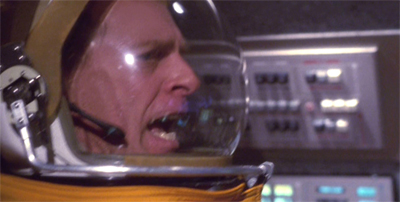
Ground Control to Commander Robinson... Ground Control to Commander Robinson...

Ground Control to Commander Robinson… Ground Control to Commander Robinson…

Much of the final stretch of the second season of Enterprise is introspective and reflective. The show seems aware that a big change is coming, and takes the opportunity of these last few episodes to look back on a classic model of Star Trek. Judgment puts Archer on trial; Cogenitor wonders whether old-fashioned Star Trek morality plays can still work in the twenty-first century; Regeneration finds the Borg lying among the (literal) wreckage of Star Trek: The Next Generation. First Flight opens with the death of Captain A.G. Robinson, a character we never met before.

More to the point, First Flight opens with the death of the man who was almost the captain of the Enterprise. On the cusp of a creative change in direction that effectively kills the show as it existed in the first two seasons, First Flight is pretty heavy on the symbolism.

... Take your protein pill and put your helmet on...

… Take your protein pill and put your helmet on…

Continue reading