• Following Us

  • Categories

  • Check out the Archives


  • Awards & Nominations

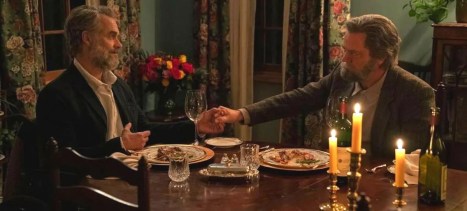
New Escapist Column! On “I Think You Should Leave” as Peak Internet Comedy…

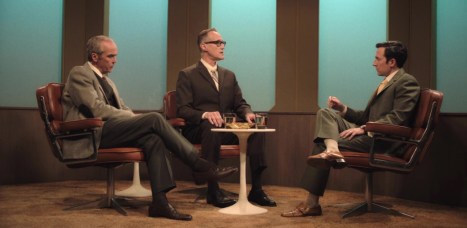
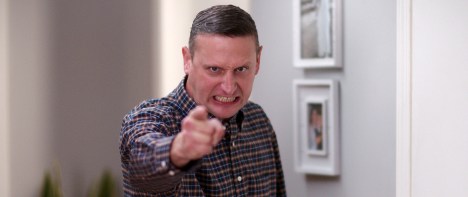
We’re launching a new column at The Escapist, called Out of Focus. It will publish every Wednesday, and the plan is to use it to look at some film and television that would maybe fall outside the remit of In the Frame, more marginal titles or objects of cult interest. With the release of the third season of I Think You Should Leave this week, it seemed like a good opportunity to take a look the show.

It is ultimately reductive to try to boil a sketch comedy show down to a single thematic idea. However, there is something fascinating in how I Think You Should Leave operates as a sketch show that isn’t just perfectly suited to internet distribution – short clips, memes, absurdist gags – but also how it feels like a show that is in some ways about the internet. Obviously, not in a literal sense, in that I Think You Should Leave is about awkward social situations. However, it captures the sense in which online spaces can truly break social interactions.

You can read the piece here, or click the picture below.
New Escapist Video! “Shazam! Fury of the Gods Proves that Lightning Doesn’t Always Strike Twice”

I’m thrilled to be launching movie and television reviews on The Escapist. Over the coming weeks and months, I will be joining a set of contributors in adding these reviews to the channel. For the moment, I’m honoured to contribute a five-minute film review of Shazam! Fury of the Gods, which was released in cinemas this weekend.

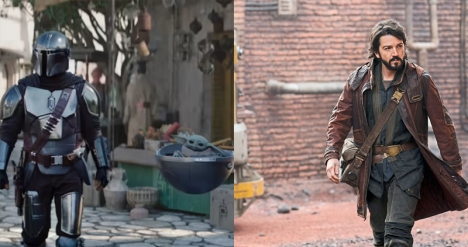
New Escapist Column! On What Links “Andor” and “The Mandolorian”…

I published a new In the Frame piece at The Escapist yesterday evening. With the new season premiere of The Mandolorian, it seemed like a good opportunity to look at the thematic ties that bind the series to Andor.

Much of the discussion around Andor has focused on how the show is fundamentally different from so much modern Star Wars. However, it’s also worth acknowledging the overlap that exists between Andor and The Mandolorian. Both shows are built around similar thematic ideas, the exploration of what it means to resist the emergence of fascism. In particular, both shows explore the idea that the biggest challenge facing those who would challenge fascism is factionalism and internal division.

You can read the piece here, or click the picture below.

New Escapist Video! “Scream VI is a Safe but Sturdy Slasher”

I’m thrilled to be launching movie and television reviews on The Escapist. Over the coming weeks and months, I will be joining a set of contributors in adding these reviews to the channel. For the moment, I’m honoured to contribute a five-minute film review of Scream VI, which was released in cinemas this weekend.

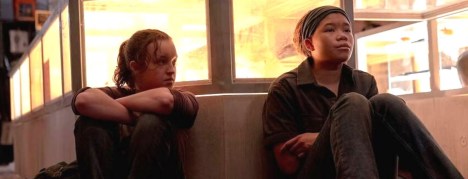
New Escapist Column! On How “The Last of Us” Shifts from Joel to Ellie…

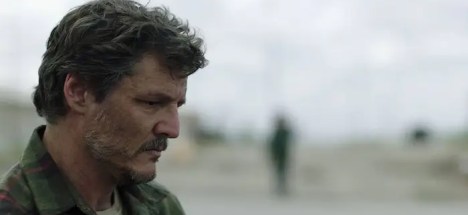
I am doing weekly reviews of The Last of Us at The Escapist. They’ll be dropping every Sunday evening while the show is on, looking at the video game adaptation as the show progresses. This week, the show’s seventh episode.

It’s an interesting proposition, adapting a serialised narrative after it has already been completed. In some ways, any serialised narrative is a first draft, a creative team making it up – to one degree or another – as they go along. As such, there is something very interesting in any subsequent adaptation of the work, as the adaptation has the luxury of a vantage point that can take in the completed work as a holistic entity. Left Behind was an add-on to the original video game version of The Last of Us, but the television series has the luxury of folding it into its ongoing narrative in real-time, as it were.

You can read the piece here, or click the picture below.

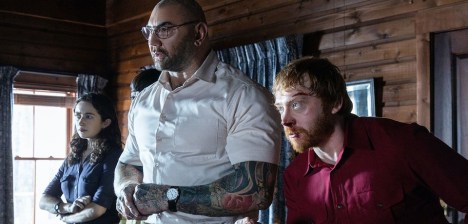
New Escapist Column! On How M. Night Shyamalan Proves Bigger Isn’t Always Better…

I published a new piece at The Escapist this evening. With the looming release of Knock at the Cabin in theatres, it seemed like a good time to consider the films of director M. Night Shyamalan, and the director’s interesting redemption arc following his descent into a laughing stock during the 2000s and 2010s.

Since the turn of the millennium, the assumption has always been that directors scale upwards, that filmmakers tend to movie from low-budget projects to big-budget blockbusters, a career arc typified by directors like Christopher Nolan or Ryan Coogler. Part of what is so fascinating about Shyamalan is that his career rejects this logic. Shyamalan had that arc, launching with a series of impressive low- and mid-budget films like The Sixth Sense and Unbreakable, but floundering with bigger projects like The Last Airbender or After Earth. He’s instead found redemption working at a smaller scale on movies like The Visitors or Old.

You can read the piece here, or click the picture below.

New Escapist Column! On How This Week’s “The Last of Us” is a Masterpiece of Television…

I am doing weekly reviews of The Last of Us at The Escapist. They’ll be dropping every Sunday evening while the show is on, looking at the video game adaptation as the show progresses. This week, the show’s third episode.

The first two episodes of The Last of Us were pretty good, doing a lot of worldbuilding and rule-setting for the series, while also working hard to court fans of the games with very knowing and loving recreations of key sequences and dynamics. However, the show really came into its own in its third episode, Long Long Time. Taking a break away from its central characters, The Last of Us played out a beautiful love story that effectively sets up the show’s emotional stakes.

You can read the piece here, or click the picture below.

New Escapist Column! On How the Fungus at the Heart of “The Last of Us” is a Monstrous Metaphor…

I am doing weekly reviews of The Last of Us at The Escapist. They’ll be dropping every Sunday evening while the show is on, looking at the video game adaptation as the show progresses. To start with, though, a look at the season premiere.

The Last of Us is effectively a survival horror show. It’s very clearly riffing on archetypal zombie apocalypse narratives. The show’s opening scene evokes I Am Legend. Its depiction of the collapse of civilisation recalls everything from Night of the Living Dead to Shaun of the Dead. However, what makes this particular show interesting is the way that its central apocalyptic force, a infectuous fungus, ties into the show’s core themes of co-dependence and mutual support. The fungus at the heart of the show is a monstrous parasite, but The Last of Us argues that the only way human beings can survive is together.

You can read the piece here, or click the picture below.

New Escapist Column! On M3GAN’s Monstrous Motherhood…

I published a new piece at The Escapist this evening. With the recent release of M3GAN in theatres, it seemed like a good opportunity to delve into the breakout horror success.

Like most stories about artificial intelligence, M3GAN is ultimately a story about parenthood. In particular, it’s a very modern story about parental anxieties, concerning how modern technology has in some ways usurped or replaced the role that parents place in shaping the lives of their children. Central to M3GAN is the idea that the eponymous doll serves as a parental surrogate for its companion, and in doing so makes life easier for parents. However, M3GAN itself is a child without a parent, left to educate and raise itself, with potentially horrifying results. What is M3GAN but a child of the internet?

You can read the piece here, or click the picture below.

New Escapist Column! On “The Last of Us” as a Character-Driven Apocalyptic Narrative…

I am doing weekly reviews of The Last of Us at The Escapist. They’ll be dropping every Sunday evening while the show is on, looking at the video game adaptation as the show progresses. To start with, though, a look at the series as a whole.

Although it takes a little while to get going, with its first two episodes largely given over to exposition and worldbuilding, The Last of Us is an incredible accomplishment from HBO. The show is clearly the result of a great deal of care and attention, and a substantial investment from the service. It’s a show that benefits from the best possible talent and from the freedom afforded to that talent, to find a distinct angle on the end of the world. It’s a charming, emotional and deeply moving character study at the end of the world.

You can read the piece here, or click the picture below.