• Following Us

  • Categories

  • Check out the Archives


  • Awards & Nominations

437. Predator: Badlands – All-ien 2025 (#—)

Hosted by Andrew Quinn, Darren Mooney and Jess Dunne, this week with special guest Emma Keily, The 250 is a (mostly) weekly trip through some of the best (and worst) movies ever made, as voted for by Internet Movie Database Users. New episodes are released every second Saturday at 6pm GMT, with the occasional bonus episode between them.

This week, Dan Trachtenberg’s Predator: Badlands.

And alien hunter named Dek is given an opportunity to prove himself by travelling to the hostile world of Genna and hunting the deadly kalisk, a beast so fearsome that the legends say it cannot be killed. In the hostile jungle, Dek finds unlikely allies and unexpected enemies.

At time of recording, it was not ranked on the list of the best movies of all time on the Internet Movie Database.

Continue reading

411. Prey – All-ien 2024 (#—)

Hosted by Andrew Quinn, Darren Mooney and Jess Dunne, this week with special guest Joey Keogh, The 250 is a (mostly) weekly trip through some of the best (and worst) movies ever made, as voted for by Internet Movie Database Users. New episodes are released every second Saturday at 6pm GMT, with the occasional bonus episode between them.

This week, Dan Trachtenberg’s Prey.

It is 1719. Naru is a young member of a Commanche tribe, trying to prove her value to the community extends beyond her knowledge of medicine and cooking, and so sets out into the wilderness to hunt a lion that has been stalking the woods. However, Naru quickly discovers that there is something far larger and more dangerous waiting out there in the darkness.

At time of recording, it was not ranked on the list of the best movies of all time on the Internet Movie Database.

Continue reading

405. King Kong (#—)

Hosted by Andrew Quinn and Darren Mooney, this week with special guest David Monaghan and Grace Duffy, The 250 is a (mostly) weekly trip through some of the best (and worst) movies ever made, as voted for by Internet Movie Database Users. New episodes are released every second Saturday at 6pm GMT, with the occasional bonus episode between them.

This week, Peter Jackson’s King Kong.

Vaudeville performer Ann Darrow has just lost her steady gig. A chance encounter with veteran filmmaker Carl Denham presents a unique opportunity. If Denham can stay one step ahead of his investors, he might just make the greatest motion picture that the world has ever seen. Tricking his cast and crew on to a boat, Denham sets sail for adventure, charting a course to the most dangerous location shoot in the history of cinema, a mythical locale described in whispers as “Skull Island.” Denham plans to make a star of the island’s more iconic inhabitant: the King that they call Kong.

At time of recording, it was not ranked on the list of the best or worst movies of all time on the Internet Movie Database.

Continue reading

394. Predator – All-ien 2024 (#—)

Hosted by Andrew Quinn, Darren Mooney and Jess Dunne, this week with special guests Joe Griffin and Alice Griffin, The 250 is a (mostly) weekly trip through some of the best (and worst) movies ever made, as voted for by Internet Movie Database Users. New episodes are released every Saturday at 6pm GMT.

This season, the podcast is taking a look at the Alien and Predator franchises. This time, John McTiernan’s Predator.

Major “Dutch” Schaeffer leads an elite squad of commandos on a rescue mission behind enemy lines in Central America. These American troops are crossing borders that they are not supposed to cross, and very quickly find themselves embroiled in a life-and-death struggle against a creature from far outside their frame of reference.

At time of recording, it was not ranked on the list of the best movies of all time on the Internet Movie Database.

Continue reading

New Escapist Column! On “Black Panther: Wakanda Forever” and Complicated Postcolonial Politics…

I published a new piece at The Escapist this evening. This week marks the release of Black Panther: Wakanda Forever, and so it seemed like a good opportunity to take a look at the movie’s complicated postcolonial politics.

Wakanda Forever is a movie fascinated by the consequences of colonialism. Wakanda is defined by the fact that it has never experienced colonialism or imperialism, and Wakanda Forever throws the nation state into conflict with Talokan, a nation with an entire history shaped and defined by colonial violence. This gets at one of the central tensions of Wakanda Forever, in that it is a movie fascinated by the violence commited by victims of colonialism, rather than the violence inflicted by colonial powers.

You can read the piece here, or click the picture below.

New Escapist Column! On “Dune” and What It Means to Be Human…

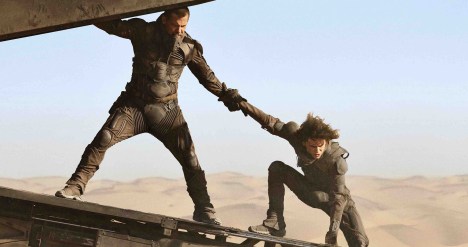
I published a new In the Frame piece at The Escapist this evening. With the release of Dune, it seemed like a good opportunity to take a look at the new film.

Dune is an epic science-fiction story. It is a classic of the genre. One of the reasons that it has held up for so any decades is because its themes remain universal. Dune is essentially a story about what it means to be human. In particular, it interrogates that question through a postcolonial lens. The default logic of these sorts of narratives asks the oppressed to assert their dignity and humanity. (Even Denis Villeneuve’s last film, Blade Runner 2049, is about a synthetic human proving his humanity.) In contrast, Dune inverts this by directing challenging the humanity of those who would indulge in colonialism and imperialism.

You can read the piece here, or click the picture below.

245. Tumbbad – This Just In (#250)

Hosted by Andrew Quinn and Darren Mooney, with special guest Joey Keogh, The 250 is a (mostly) weekly trip through some of the best (and worst) movies ever made, as voted for by Internet Movie Database Users. New episodes are released every Saturday at 6pm GMT.

This time, Anand Gandhi, Rahi Anil Barve and Adesh Prasad’s Tumbbad.

In a remote Indian village, something ancient and evil is lurking beneath the surface. As the country moves towards independence, Vinayak Rao finds a way to exploit the mysteries of Tumbbad to his own advantage. However, nothing comes without a price.

At time of recording, it was ranked 250th on the list of the best movies of all time on the Internet Movie Database.

Continue reading

Can’t Let It Go: “Frozen II” and Grappling With the Past…

As far as animated sequels go, Frozen II works well. For better or for worse, it goes bigger and grander, sacrificing a little focus for a larger story.

However, the most striking aspect of Frozen II is the way in which it seems to grapple with one of the big existential anxieties of the modern era. Frozen II spends a lot of time and energy delving into the histories of Anna and Elsa, opening with a mythology-building flashback and offering a few tantalising hints about the source of Elsa’s power. However, this is part of a larger conversation that unfolds across the film’s runtime. Frozen II isn’t just about grappling with Anna and Elsa’s personal history, it is asking more ambitious questions about how the past shapes the present.

Of course, Frozen II is the story of two sisters embarking on an epic quest with an adorable snowman. However, it is also a story about the legacy of colonial exploitation of indigenous populations by nominally more advanced societies, and about coming to terms with the consequences of those historical injustices in the modern era. It isn’t always elegant or perfect. Indeed, Frozen II occasionally seems quite candid that it doesn’t know the answers to the questions that it is broaching.

Nevertheless, it’s fascinating to see these topics permeating popular culture, with shows like Watchmen and films like Thor: Ragnarok grappling with questions of what it means to live in a society built on historical injustice.

Note: This piece contains spoilers for Frozen II.

Continue reading

To Catch a Predator: Why Is It So Hard to Franchise the Predator?

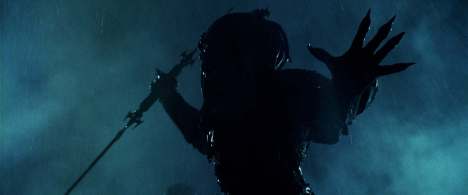
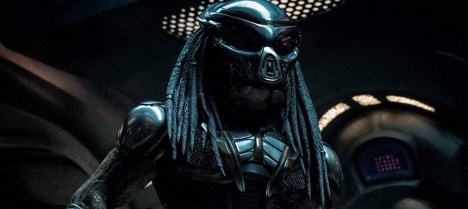
The Predator is one of the most iconic creations of the past thirty-odd years.

The creature created by Stan Winston for John McTiernan’s 1987 action blockbuster is instantly recognisable. It is striking and distinctive. Even people who have never sat down and watched a movie featuring the creature are familiar with the design. This is especially notable given that it could have been a disaster. The original design for the creature is something of an internet urban legend, part of the pop cultural folklore. Predator narrowly averted disaster when Stan Winston redesigned the monster from scratch, so it is all the more impressive that it became such a classic.
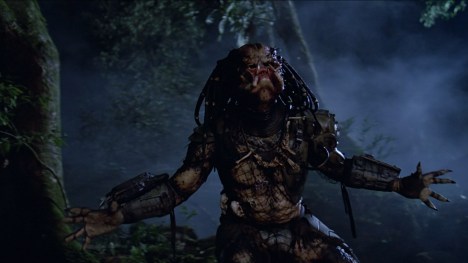
It is no surprise that the Predator was quickly franchised. After all, that is how the film industry works. Although modern prognosticators decry the modern era as one defined by sequels and remakes and reboots, but they have always been a feature of the landscape. So the Predator became the cornerstone of an impressive multimedia franchise; even outside of games and comic books, the creature anchored Predator 2, Alien vs. Predator, Aliens vs. Predator: Requiem, Predators and The Predator. That’s an impressive list, in terms of quantity and variety.

However, it is decidedly less impressive in terms of quality. Of those five sequels, Predators is the only one with a positive score on Rotten Tomatoes. Similarly, Predators is the only sequel with a vaguely positive rating on MetaCritic, scraping just over fifty percent. This is the kind of showing that audiences and critics expect from low-rent horror sequels like those starring Freddie Kreuger or Jason Voorhees. (Indeed, the latest sequel starring Michael Myers is critically outpacing The Predator.) It is not exactly an impressive track record for a reasonably big budget mainstream high-profile science-fiction franchise.
Indeed, the stock comparison for the Predator is the Alien franchise, and for good reason. The xenomorph from Alien is another iconic late twentieth-century alien design housed within an R-rated science-fiction action-horror franchise. Both properties are owned by Twentieth Century Fox, allowing them to intersect and crossover within a shared universe. Both have spawned a variety of sequels, and are loosely linked in the popular mind in the way that the Universal Studios films linked Dracula and Frankenstein’s monster with the Mummy or the Invisible Man.

However, this stock comparison does not flatter the Predator. After all, the xenomorph has been at the centre of a franchise that is consistently interesting and at best innovative. There are sequels to Alien that are rightly regarded as classics such as Aliens, while other have launched great careers such as Alien³, and some still cause fierce debates. For all the criticism of films like Prometheus and Alien: Covenant, they at least engender passion in their audiences, in a way that the sequels to Predator do not. Why is it so hard to make a good Predator sequel?
Continue reading

Non-Review Review: China Salesman

China Salesman is fascinating disaster.

China Salesman is not a good film by any measure, but it is strangely compelling. There is something intoxicating about the film, in spite of its myriad flaws – the awful script, the atrocious dubbing, the clumsy editing, the terrible performances, the muddled storyline, the abundance of nonsensical technobabble. Part of this is down to the sheer abundance of energy that director Tan Bing brings to proceedings. China Salesman whips and whirls, cranks and zooms, pans and swirls with a kinetic energy that renders these flaws almost bedazzling, offering an effect that in some ways evokes a bad trip.

The gun show.

However, China Salesman is perhaps most interesting as a mirror and a prism. It is, like Wolf Warrior II, very much the Chinese equivalent to those old patriotic eighties American action movies like Delta Force or Iron Eagle, the kind of populist nationalist cinema that is currently channeled through franchises like Transformers. As such, there is something intriguing in seeing the image that China Salesman projects into the world, as an assertion of multinational intent to the rest of the world and as a statement of patriotic self-image to the country itself.

China Salesman is terrible. It is also terribly interesting.

The old man and the Seagal.

Continue reading