• Following Us

  • Categories

  • Check out the Archives


  • Awards & Nominations

New Escapist Column! On “The Best of Both Worlds” as the Moment that “The Next Generation” Came of Age…

I published a new In the Frame piece at The Escapist yesterday evening. Because The Best of Both Worlds, Part II aired thirty years ago on Thursday, it seemed only right to take a look back at one of the most beloved stories in the Star Trek franchise.

The Best of Both Worlds, Part I is widely accepted as one of the best cliffhangers in television history. However, the episode is really the culmination of the growth and development of Star Trek: The Next Generation. The spin-off had a rocky first couple of seasons, but really came into its own during a much more ambitious and consistent third year. That third year built inexorably towards that cliffhanger, demonstrating the effectiveness of that approach to storytelling.

You can read the piece here, or click the picture below.

Non-Review Review: The Boys in the Band

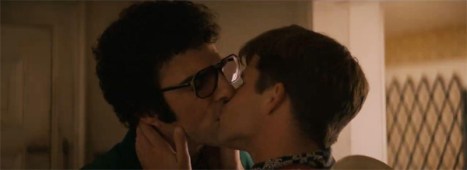
The Boys in the Band is not only a cinematic adaptation of a classic play, it is a cinematic adaptation of a particular staging of a classic play.

The Boys in the Band is a film designed to capture a snapshot of the 2018 Broadway run of Mart Crowley’s iconic 1968 off-Broadway play. It is directed by Joe Mantello, who is perhaps best know for his theatre work including Wicked and the fiftieth anniversary revival of The Boys in the Band that forms the basis of this filmed version. The film reunites the entire ensemble of that staging, including actors like Jim Parsons, Zachary Quinto and Matt Bomer.

Banding together.

In some ways, Hamilton feels like the obvious point of comparison here. The goal is not just to bring a beloved play to the screen, but to capture the particular energy of a particular staging of that beloved play. However, while Hamilton leaned into its attempts to recreate the Broadway experience for an audience watching at home, The Boys in the Band is a much more traditional cinematic adaptation of a theatrical staging. It is a film, but it is a film that feels particularly “stagey.” It recalls a particular brand of awards fare, like Doubt or Fences.

This is perhaps the biggest issue with this adaptation of The Boys in the Band. With the exception of a few framing scenes set outside the apartment at the beginning and the end of the story, The Boys in the Band doesn’t feel like a reimagining so much as a restaging. Then again, it’s debatable to what extent this is a problem. Mantello’s approach to the material is straightforward rather than showy, putting his faith in the script – which was reworked by Crowley shortly before his death with writer Ned Martel – and in the cast, trusting them to carry the film.

Not-so-midnight-cowboy.

This largely works. The Boys in the Band is a fascinating snapshot of a cultural moment. Crowley’s play was famously one of the first pieces of mainstream pop art to focus on a large a diverse cast of gay characters, arriving before the AIDS crisis and before Stonewall. While the play has remained constant in all of those years, the world around it has changed. Its fortunes have ebbed and flowed, while the text seems to remain vital and relevant – it always seemed to say something to the moment, even if that something made critics uneasy.

The Boys in the Band is a welcome reminder that there is nothing inherently wrong with a theatrical approach to cinematic stagings of beloved plays. The Boys in the Band may not pop off the screen in the way that Hamilton does, engaging as much with the audience’s experience of the show as with the content of the show itself. Instead, The Boys in the Band serves largely as a showcase for its actors and for its source material, proof that there is a lot to be said for locking a bunch of talented cast in a confined space with a good script.

Drinking it all in…

Continue reading

Non-Review Review: The Trial of the Chicago 7

The Trial of the Chicago 7 is Aaron Sorkin’s second feature film as director, following on from Molly’s Game.

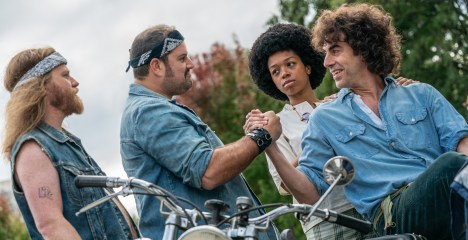
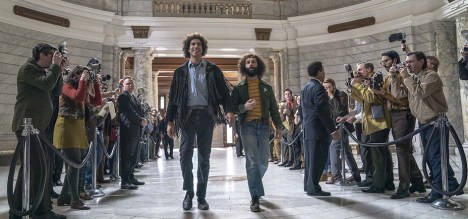
However, the project originated with Steven Spielberg. The finished film includes the Dreamworks logo. Watching the movie, it feels like Sorkin is channeling Spielberg, particularly with the film’s delicate balance of historical accuracy and its relatively heartening final act. Indeed, The Trial of the Chicago 7 feels like something of a companion piece to Spielberg’s most recent film, The Post. It is another movie about the troubled transition from the flawed utopian idealism of the sixties to the brutal political cynicism of the seventies.

Cycles of mistrust.

In many ways, The Trial of the Chicago 7 appeals to Sorkin’s strengths as a writer. After all, Sorkin rose to prominence as the writer of A Few Good Men, another court room drama. The basic premise of The Trial of the Chicago 7 involves placing a bunch of similar-but-distinct characters in a locked room together and focusing on the group dynamics, which provides a lot of space for Sorkin to demonstrate his skill with dialogue and characterisation. There’s a lot of clever detail and definition between the protagonists in The Trial of the Chicago 7.

To be fair, The Trial of the Chicago 7 suffers slightly from being a little heavy-handed in places. As with Spielberg and The Post, Sorkin is very much aware of the movie’s contemporary resonance and occasionally leans into it a little too eagerly. Beyond that, the depiction of events from the eponymous trial can occasionally seem a little episodic and haphazard. Still, there’s a lot to recommend The Trial of the Chicago 7, particular as an old-fashioned example of an ensemble historical drama.

Courting controversy.

Continue reading

New Article! On the Hidden World of “John Wick”…

I was thrilled to contribute to the latest issue of Pretty Deadly Films, the new online film magazine being published by Film in Dublin. This third edition of the magazine is dedicated to John Wick, so I thought it might be interesting to look at the hidden world of John Wick.

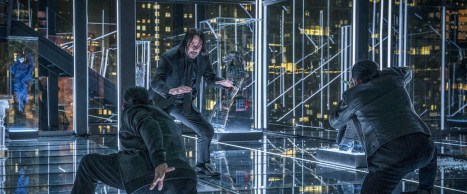
In some ways, John Wick positions itself as a successor to The Matrix. It is directed by two stuntmen who worked on the series and stars Keanu Reeves. Laurence Fishburne joined the ensemble in the second film. It is also a film about hidden subcultures and secret worlds, which positions it as a successor to similar films from the late nineties in which the real world is an illusion – Dark City, The Truman Show, The Thirteenth Floor. However, what distinguishes the hidden world of John Wick from those earlier films is a profound cynicism. To know the truth is to be trapped by it.

You can read the issue here, browse back issues of the magazine here or click the picture below.

“I Never Kid About Money”: Marty Goes Mainstream With “The Colour of Money”…

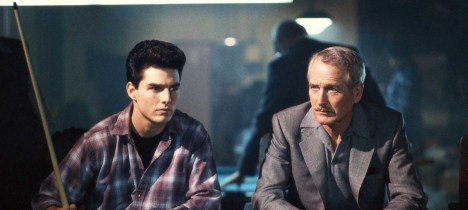
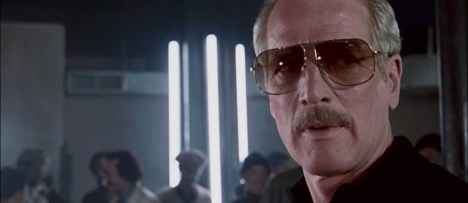
The podcast that I co-host, The 250, continued our belated Summer of Scorsese last week with a look at Goodfellas. Next week, we’ll looking at Casino. It is a fun and broad discussion that is well worth your time, but the season ends up largely avoiding Scorsese’s output during the 1980s. So I thought it might be worth taking a look back at The Colour of Money.

For Martin Scorsese, the eighties come sandwiched between two masterpieces: Raging Bull and Goodfellas.

These are two of the quintessential Martin Scorsese movies. They are frequently ranked among the best movies that Scorsese has made, and often included in lists of the best movies ever made. Indeed, there’s a famous Hollywood myth that director Brian de Palma reacted to a screening of Goodfellas by involking Raging Bull, proclaiming, “You made the best movie of the eighties and, God damn it, we’re barely into the nineties and you’ve already made the best movie of this decade, too!”

With that in mind, there’s a tendency of overlook Scorsese’s work during the eighties – to treat it as something equivalent to a cinematic lost decade largely defined by the failure of King of Comedy and the controversy over The Last Temptation of Christ. This is understandable, but it is also unfair. Indeed, recent years have seen a welcome push to reassess Martin Scorsese’s tumultuous journey through the era of excess.

Scorsese’s eighties might not have been the best decade or most productive decade in his filmography, but they were instructive. They were a time of growth and evolution for the filmmaker, a point at which the director seemed to finally figure out how to reconcile the movies that he wanted to make with movies that studios wanted to finance. Although often overlooked and ignored in this context, The Colour of Money is perhaps the most instructive of Scorsese’s films from this period.

Continue reading

New Escapist Video! On the Childish Wonder of “Black Panther”…

So, as I have mentioned before, I am launching a new video series as a companion piece to In the Frame at The Escapist. The video will typically launch with the Monday article, and be released on the magazine’s YouTube channel the following week.

With that in mind, here is last week’s episode, covering Ryan Coogler’s use of childish wonder in Black Panther. You can watch the pilot video here, and read the companion article here.

New Escapist Column! On the Planning of Disney’s “Star Wars” Sequel Trilogy…

I published a new In the Frame piece at The Escapist this evening. Because the news cycle around Star Wars: Episode IX – The Rise of Skywalker never dies, it seemed like an appropriate time to look at the famous refrain that Disney needed a “plan” for their Star Wars sequel trilogy.

In truth, this is at best a simple solution to a complex problem. After all, fans have hardly proven themselves willing to offer movies the benefit of the doubt because they were “planned” in advance. The Star Wars prequel trilogy was not greeted with any greater warmth or understanding because George Lucas knew where he was going. Instead, the problem is that The Rise of Skywalker needed a strong vision of what it wanted to be and what it wanted to say.

You can read the piece here, or click the picture below.

Holy Camp, Batman: The Redemptive Queerness of “Batman & Robin”…

The podcast that I co-host, The 250, will be looking at Batman and Robin this weekend. It is a fun discussion, well worth a listen, and I hope you enjoy. However, I had some thoughts that I wanted to get down before specifically about the film.

Batman and Robin is not a good movie, by any stretch of the imagination.

However, it is somewhat unfairly vilified. This is particularly true in comparison to its direct predecessor, Batman Forever. Very few people would attempt to argue that either Batman Forever or Batman and Robin were good films on their own terms, but the consensus seems to have formed around the idea that – to paraphrase Edward Nygma – Batman Forever was bad, Batman and Robin was worse. This calcified into the idea that Batman and Robin is among the very worst comic book movies ever, and Batman Forever is not.

It is interesting to speculate on why this might be. Batman Forever and Batman and Robin are both cynically constructed blockbusters aimed at the youngest and least discerning audiences, eschewing concepts like plot and characterisation in favour of cheap thrills and terrible jokes. Both films offer incredibly condescending exposition, betraying the sense in which they have been constructed for audiences with the shortest possible attention span. However, while Batman and Robin embraces this cynicism, Batman Forever clumsily tries to disguise it.

Much has been made of the fact that director Joel Schumacher wanted to make a better movie than Batman Forever. He singled out Batman: Year One as the Batman movie that he wanted to make. Traces of this better movie occasionally surface in discussions of Batman Forever and are often framed in reference to the film’s admittedly darker and more artistic deleted scenes. There is a clear sense that Batman Forever harboured something resembling ambition before it was brutally bent and broken into its final released form.

However, Batman Forever also offers its audience condescending and trite pop psychology. The result is a veneer of faux profundity that suggests hidden depths that the movie is unwilling and unable to explore. Batman Forever vaguely touches on the question of whether Bruce feels responsible for the death of his parents and the trouble he has reconciling the two halves of himself, but in no real depth. Two-Face is one of the primary antagonists of Batman Forever, and the film can’t even be bothered to make that thematic connection.

It’s interesting to wonder if Batman Forever has a slightly warmer reputation because of this unearned grasp at weightiness, these small gestures towards the idea of “psychological complexity” and “psychological nuance” in the most trite manner imaginable. After all, Batman Forever is a movie that has Bruce Wayne dating a psychologist, and feel inordinately proud of that idea. It’s easier to pass off Batman Forever as more mature or more considered than Batman and Robin, because it gestures broadly at ideas that are a little darker and more complex.

This is strange, because there’s a lot more interesting stuff happening in Batman and Robin. Unlike its direct predecessor, Batman and Robin makes no broad gesture towards profundity or insight. It is a profoundly stupid movie, and it is cognisant of both that stupidity and the audience’s relationship to that stupidity. However, there’s something much more interesting going on underneath the surface of Batman and Robin, in direct response to Batman Forever.

Batman Forever feels like a moral panic picture, a direct response to some imagined public outrage about certain earlier interpretations of the Caped Crusader. As such, it aims to produce the most generic and vanilla iteration of the character, the most boring and the most normative. What makes Batman and Robin so interesting is that it represents a firm rejection of that conservativism, and actively works to inject a lot of the queerness back into the Batman mythos. It doesn’t do this especially elegantly or smoothly, but it does it nonetheless. The results are compelling and engaging.

Continue reading

Non-Review Review: Antebellum

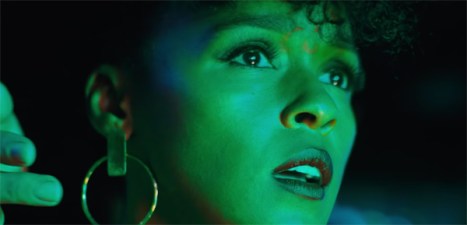
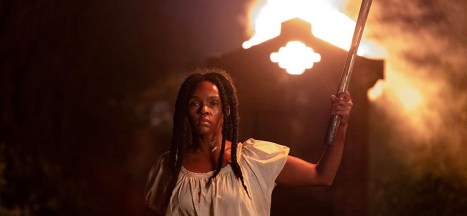
Antebellum never seems entirely sure whether it wants to be a biting social commentary or a pulpy genre exercise.

To be clear, this is a false dichotomy. One of the most interesting aspects of horror is how frequently it can satisfy both of those objectives. Get Out is perhaps the most obvious recent example of this, and it is telling that (like so many modern horrors) Antebellum markets itself as “from the producers of Get Out.” However, this has always been a feature of horror, as demonstrated by the films of directors like Wes Craven and John Carpenter. Antebellum shouldn’t have to choose between being socially relevant and being an effective horror, but it insists on doing so.

Shining some light on the matter.

There is a good movie buried somewhere in Antebellum. It is very clear that writers and directors Gerard Bush and Christopher Renz have a good idea that resonates in the current moment. Indeed, Antebellum hammers that point pretty heavily. It opens with a quote from William Faulkner, reminding audiences that “the past is never dead. It’s not even past.” In case the audience doesn’t get how that applies to the movie’s set-up, a character repeats it about forty minutes into the runtime. Antebellum has things to say, and is not shy about saying them.

However, what Antebellum is trying to say is muddled by a number of awkward structural choices. Antebellum is a film that is consciously built around a number of developments that are intended to wrong-foot the audience and catch them off-guard, to invite the viewer to ask questions about what is happening and why, and maybe even add some compelling gif-able content for the film’s marketing. This structuring of Antebellum is wrong-headed on a number of levels, but most profoundly in the way that it reduces the movie’s biting thesis to a cheap narrative hook.

Burning unease.

Continue reading

200. Goodfellas – Summer of Scorsese (#17)

Hosted by Andrew Quinn, Jay Coyle and Darren Mooney, and this week with special guest Jenn Gannon, with Andy Melhuish, Jack Hodges and others, The 250 is a (mostly) weekly trip through some of the best (and worst) movies ever made, as voted for by Internet Movie Database Users. New episodes are released every Saturday at 6pm GMT.

This time, continuing our Summer of Scorsese season, Martin Scorsese’s Goodfellas.

Martin Scorsese is one of the defining directors in American cinema, with a host of massively successful (and cult) hits that have shaped and defined cinema across generations: Taxi Driver, Raging Bull, The Colour of Money, The Aviator, The Departed, Hugo, The Wolf of Wall Street. The Summer of Scorsese season offers a trip through his filmography via the IMDb‘s 250.

As far back as he could remember, Henry Hill always wanted to be a gangster. However, the life that Henry leads doesn’t turn out exactly as the young hoodlum might have expected, as he finds himself navigating a web of betrayal and violence involving his closest friends.

At time of recording, it was ranked 17th on the Internet Movie Database‘s list of the best movies of all-time.

Continue reading