• Following Us

  • Categories

  • Check out the Archives


  • Awards & Nominations

New Podcast! The Escapist Movie Podcast – “Three Overlooked Horror Movies You Should Watch”

The Escapist have launched a movie podcast, and I was thrilled to join Jack Packard and Bob Chipman for the sixth episode. Because it was a slow week for film news, and because this is officially October, we decided that we’d take the chance to look at three horror movies that are perhaps under-appreciated and well worth your time: Jeff Barnaby’s Blood Quantum (2020), John Carpenter’s In the Mouth of Madness (1995) and Steve Miner’s House (1986).

You can listen to the episode here, back episodes of the podcast here, click the link below or even listen directly.

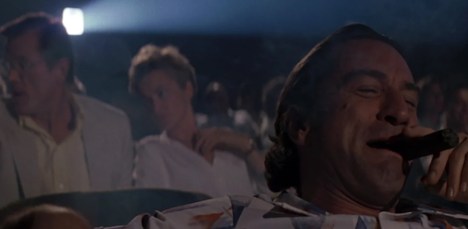
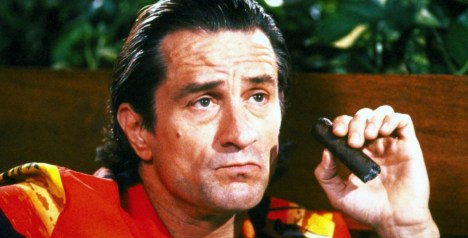
202. Casino – Summer of Scorsese (#141)

Hosted by Andrew Quinn, Jay Coyle and Darren Mooney, and this week with special guest Aoife Martin, The 250 is a (mostly) weekly trip through some of the best (and worst) movies ever made, as voted for by Internet Movie Database Users. New episodes are released every Saturday at 6pm GMT.

This time, continuing our Summer of Scorsese season, Martin Scorsese’s Casino.

Martin Scorsese is one of the defining directors in American cinema, with a host of massively successful (and cult) hits that have shaped and defined cinema across generations: Taxi Driver, Raging Bull, After Hours, Goodfellas, Cape Fear, The Wolf of Wall Street, The Irishman. The Summer of Scorsese season offers a trip through his filmography via the IMDb‘s 250.

Against the backdrop of the seventies, the mob pushes westward. Hustler and gambler Sam “Ace” Rothstein is sent to Las Vegas to oversee the mob’s holdings in the Tangiers, and he discovers an unspoiled paradise just waiting for exploitation. However, Sam doesn’t count on the inevitable complications that will bring that house of cards crashing down.

At time of recording, it was ranked 141st on the Internet Movie Database‘s list of the best movies of all-time.

Continue reading

Non-Review Review: Cats and Dogs III – Paws Unite

The pandemic has been an interesting time for film critics.

The general dearth of mainstream theatrical releases has allowed critics to essentially pick and choose the films that they cover on streaming. As a general rule, this has led to the elevation of good films, with critics generally picking films out of the mass of streaming service releases that merit coverage and attention – films like Palm Springs or Greyhound. Of course, there have been a couple of stinkers, particularly among children’s fare with mass audience appeal like Artemis Fowl or Scoob!, but by and large critics have been able to avoid true stinkers.

Dogsbody work.

As such, the arrival of Cats and Dogs III – Paws Unite! marks something of a return to normality and business as usual. It is the kind of film that critics would have had to see and review as a matter of course in the pre-pandemic era as a major theatrical release, but which might have slipped under the radar had it gone straight to streaming. Watching Cats and Dogs III – Paws Unite is a reminder of a time not too long ago when critics were expected to see every major theatrical release, no matter how dark or how soul-destroying that experience might be.

With that in mind, there is something almost reassuring in the awfulness of Cats and Dogs III – Paws Unite!, a movie that few critics would actively seek out if it weren’t for the obligations of their job. In a world that is desperately scrambling for any vague sense of a return to normality, Paws Unite! servers as a welcome reminder when seeing terrible movies was the worst thing with which film critics had to contend.

Keep on trucking.

Continue reading

“There’s Nobody Here to See Us”: The Untamed Frontier in Martin Scorsese’s “Casino”…

The podcast that I co-host, The 250, continued our belated Summer of Scorsese last week with a look at Goodfellas. This week, we’re looking at Casino. It is a fun and broad discussion that is well worth your time, but it spurred some of my own thoughts about Martin Scorsese’s 1995 gangster classic.

When Casino was released, it experienced something of a minor backlash.

Part of this backlash was motivated by the film’s perceived similarities to Goodfellas – Scorsese had made another soundtrack-heavy period-piece mob movie starring both Robert DeNiro and Joe Pesci, adapted from the work of Nicholas Pileggi. To a certain extent, this was fair. There were legitimate concerns that Scorsese was simply repeating himself, and that any comparisons to Goodfellas did not flatter Casino.
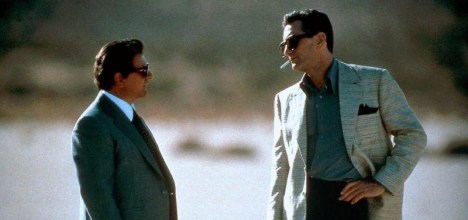
These problems were compounded by content. At time of release, Casino was Scorsese’s longest movie, clocking in at just shy of three hours. That is a lot of mobster movie, particularly if that movie felt in anyway derivative of the appreciably shorter Goodfellas. There were also rumblings of the movie’s brutality and violence, which was seen as being particularly excessive and graphic. These complaints circulated even before Casino hit cinemas. Peter Travers summarised the mood, “Even before Casino opened, the black cloud of letdown hung over Scorsese’s epic tale.”

However, time has been kind to Casino. Although the film undoubtedly still exists in the shadow of Goodfellas, it has come to be recognised as one of the great crime films and to merit some appreciation on its own terms. Casino is a fascinating piece of work. It is bold and ambitious, epic and sweeping. However, what is most striking about Casino is not how it compares to Goodfellas, but how it contrasts. The differences are instructive.
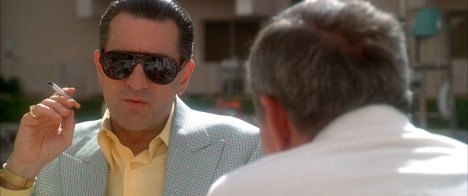
Casino is often categorised as a mob movie, and it is definitely that. It is a story about gangsters and organised crime. However, it is also a western. It is perhaps the closest that Scorsese has come to making a traditional western in his entire cinematography. More than that, while Goodfellas is anchored in the character of Henry Hill, Casino lacks a similar hook. Both Sam and Nicky are much more oblique characters than Henry; Sam is less proactive, and Nicky is much more brutal. They are harder to invest in, tougher to root for.

However, this allows Casino to take a much wider view of this world and the people that inhabit it. Casino is arguably a religious parable, a story about mankind’s destruction of paradise and the inevitable exile that followed. In that sense, Casino feels like more of a bridge between Goodfellas and Scorsese’s more overtly religious-tinged parables like Bringing Out the Dead or Silence than it initially seemed. This is a story about heaven on earth, and the fallen sinful human beings who turn that heaven into a nightmarish hell.

Continue reading

“Your Reminiscence”: Martin Scorsese’s “Cape Fear”, Nostalgia, and Parental Anxiety…

The podcast that I co-host, The 250, continued our belated Summer of Scorsese last week with a look at Goodfellas. This week, we’ll looking at Casino. It is a fun and broad discussion that is well worth your time, but the season skips over large swathes of Scorsese’s filmography. So I thought it might be worth taking a look back at Cape Fear.

Cape Fear is often overlooked in terms of Martin Scorsese’s filmography.

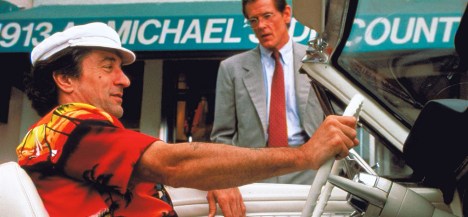
It falls in the gap between the instant classic Goodfellas and the sleeper masterpiece Casino. It shares that gap with The Age of Innocence, which is one of the films in Scorsese’s filmography that has been begging for a reappraisal and seems more likely to receive critical attention than a trashy remake of a pulpy sixties thriller. (The Age of Innocence recently received a re-release as part of the high-end Criterion Collection.) Indeed, Cape Fear seems designed to be seen as disposable in the context of Scorsese’s filmography.

At best, Cape Fear is typically seen as a curiosity – and potentially a worrying one. While Roger Ebert praised the film, he lamented “a certain impersonality in a film by this most personal of directors.” There was a whiff of moral panic to Kenneth Turan’s review, which asked, “Are we, perhaps, too quick to heap praise on films just because they are expertly done, shrugging off the troubling nature of the content? Is an audience’s increasing avid addiction to increasingly twisted thrills any justification for cheering on the people who provide them?”

However, there’s a lot interesting happening in Cape Fear. Most obviously, the film is a vehicle for Scorsese’s love of a certain style of directorial technique. The original Cape Fear had been directed by J. Lee Thompson, who had worked as a dialogue coach under Alfred Hitchcock. The film arrived two years after Alfred Hitchcock’s Psycho, and the influence of Hitchcock is obvious on Thompson’s work; it’s scored by Hitchcock collaborator Bernard Herrmann, editted by Hitchcock veteran George Tomasini and features art direction from Robert Boyle and Alexander Golitzen.

However, what’s particularly interesting about Cape Fear is the way in which it actively translates the original movie from the early sixties to the early nineties, playing not only on the same underlying fears that informed the original, but also understanding that they existed in a different context during the nineties. It’s a movie that cannily and shrewdly transposes those two times, tapping into the same fears, but in a way that demonstrates both how those fears have evolved – and also how they haven’t.

Cape Fear is a lurid b-movie thriller, but in the most interesting and unsettling ways. It is a film fascinated by what lurks beneath the surface.

Continue reading

Non-Review Review: Kajillionaire

Kajillionaire is “quirky”, in a manner that is typical of the modern American independent film.

Miranda July’s third feature-length film operates on its own distinct wavelength, populated by eccentric and exaggerated characters who exist in a world caught in a twilight zone between the mundane and the surreal. Kajillionaire has a distinct sensibility, which it signals as early as a shot of its leading trio trying awkwardly to evade the landlord desperately seeking overdue rent. Kajillionaire operates at a level of heightened reality that immediately gives it a “marmite” flavour.

However, if the viewer can get past the abundance of quirk, there’s a lot to enjoy in Kajillionaire‘s study of emotional dysfunction. Kajillionaire is a con artist movie about a family living on the margins, but one that doesn’t seem particularly interested in the art of the con. Veteran hustlers Robert and Theresa are well removed from the smooth operators of films like Dirty Rotten Scoundrels, Matchstick Men or The Brothers Bloom. Instead, they are a mess of contradictions and maladaptations.

Kajillionaire works largely due to its wry sense of humour, which manages to offset a lot of what might otherwise be suffocating quirkiness. It also benefits greatly from a set of impressive performances. Debra Winger and Richard Jenkins do good work as Robert and Theresa, but the film belongs to Evan Rachel Wood as their daughter Old Dolio and Gina Rodriguez as Melanie, the character who quickly gets swept up in their hijinks.

Continue reading

New Escapist Video! On How the “Star Wars” Sequels Didn’t Need a Plan, “The Rise of Skywalker” Needed a Vision…

So, as I have mentioned before, I am launching a new video series as a companion piece to In the Frame at The Escapist. The video will typically launch with the Monday article, and be released on the magazine’s YouTube channel the following week.

With that in mind, here is last week’s episode, covering the frequent argument that Disney needed a “plan” for the sequel trilogy, when in fact Star Wars: Episode IX – The Rise of Skywalker just needed a vision. You can watch the pilot video here, and read the companion article here.


New Escapist Column! On the Joker’s Attempts to Hijack “The Dark Knight”…

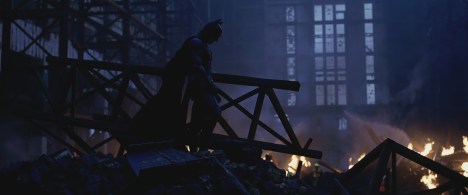
I published a new In the Frame piece at The Escapist this evening. Because the Monday column is now published with a companion video, we thought it might be worth trying something a bit more visual than usual. Because TENET is still in wide release, we thought it might be interesting to try something visual that was related to Christopher Nolan.

The Dark Knight is an interesting film for a number of reasons. Interestingly, it is the rare Christopher Nolan movie that is almost entirely linear. Nolan’s other films tend to jump around a lot in time, but The Dark Knight progresses quite clearly from beginning to end. This is interesting, because it serves to provide an interesting and compelling contrast to the Joker. Because The Dark Knight is so linear, there’s an interesting tension as the Joker struggles to take control of the narrative and bend the view to his perspective. Sometimes in a very literal manner.

You can read the piece here, or click the picture below.

New Podcast! The Escapist Movie Podcast – “Enola Holmes, WandaVision and Antebellum Spoilers”

The Escapist have launched a movie podcast, and I was thrilled to join Jack Packard and Bob Chipman for the fifth episode, primarily discussing Enola Holmes, the first trailer for WandaVision and a spoiler-filled discussion Antebellum.

You can listen to the episode here, back episodes of the podcast here, click the link below or even listen directly.

201. Batman & Robin (-#71)

Hosted by Andrew Quinn and Darren Mooney, this week with special guests Joe Griffin and Alex Towers, The 250 is a (mostly) weekly trip through some of the best (and worst) movies ever made, as voted for by Internet Movie Database Users.

This time, Joel Schumacher’s Batman & Robin.

A new villain has arrived in Gotham City. Calling himself Mister Freeze, the fiend is stealing diamonds for his scientific experiments. Meanwhile, Bruce Wayne finds himself struggling to strike the right balance with his young and reckless partner Dick Grayson, while managing his unconventional family unit.

At time of recording, it was ranked 71st on the list of the worst movies of all time on the Internet Movie Database.

Continue reading