• Following Us

  • Categories

  • Check out the Archives


  • Awards & Nominations

New Escapist Column! On How “The Force Awakens” Killed the Unlikely Adult-Oriented Christmas Blockbuster…

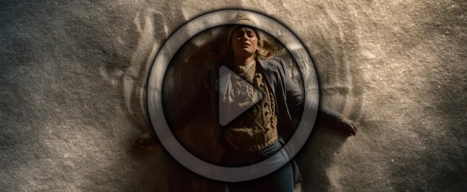
I published a new In the Frame piece at The Escapist this evening. It has been five years since the release of Star Wars: Episode VII – The Force Awakens. While this anniversary has been discussed and dissected from countless directions over the past few weeks, there is one under-explored aspect of it.

In the early 2010s, as blockbuster cinema came to dominate the cultural landscape, something interesting happened in the Christmas release window. Movies like The Girl With the Dragon Tattoo, Django Unchained and The Wolf of Wall Street somehow managed to thrive in the Christmas corridor, by offering reasonably-budgeted adult-skewing movies that could draw crowds over the holiday season, safe from the blockbuster pile-up over the summer. Sadly, The Force Awakens signalled the end of this.

You can read the piece here, or click the picture below.

New Podcast! The Escapist Movie Podcast – “An Ever-Escalating Series of Star Wars”

The Escapist have launched a movie podcast, and I was thrilled to join Jack Packard and Elijah Beahm for the sixteenth episode. Obviously, the big news is the slate of announcements from Disney’s Investor Day, including plenty of Star Wars and Marvel announcements, more news about Zack Snyder’s Justice League, and reports about Tom Cruise’s rant on the set of the new Mission: Impossible movie.

You can listen to the episode here, back episodes of the podcast here, click the link below or even listen directly.

New Escapist Video! “The Mandalorian – Chapter 16: The Rescue”

I’m thrilled to be launching 3-Minute Reviews on Escapist Movies. Over the coming weeks and months, I will be joining a set of contributors in adding these reviews to the channel. For the moment, I’ll be doing weekly reviews of The Mandalorian.

The review of the finale episode of the second season, The Rescue, is available below.

213. Black Christmas – Christmas 2020 (-#75)

Hosted by Andrew Quinn and Darren Mooney, and this week with special guests Doctor Bernice Murphy and Joey Keogh, The 250 is a weekly trip through some of the best (and worst) movies ever made, as voted for by Internet Movie Database Users. New episodes are released Saturdays at 6pm GMT.

So this week, Sophia Takal’s Black Christmas.

As Christmas settles on Hawthorne College, something more unpleasant is in the air. A series of attacks on female students suggests that a killer is loose on campus, but the young members of the Mu Kappa Epsilon sorority begin to suspect that there is something far more toxic at work.

At time of recording, it was ranked 75th on the list of the worst movies of all time on the Internet Movie Database.

Continue reading

New Escapist Video! “Ma Rainey’s Black Bottom – Review in 3 Minutes”

I’m thrilled to be launching 3-Minute Reviews on Escapist Movies. Over the coming weeks and months, I will be joining a set of contributors in adding these reviews to the channel. For the moment, I’m honoured to contribute a three-minute feature film review to the channel, discussing Ma Rainey’s Black Bottom, which features the last major live-action performance from Chadwick Boseman.

New Escapist Column! Twenty Years Later, “Battle Royale” Still Stands Apart…

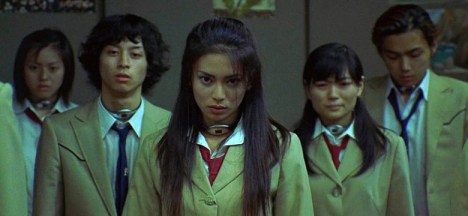
I published a new In the Frame piece at The Escapist this evening. Because Battle Royale is twenty years old this month, it seemed like a good opportunity to take a look back at the iconic Japanese film.

In the years since the release of Battle Royale, there has been an explosion of dystopian young adult fiction based around similar premises: the idea of children forced to kill other children to survive. There are plenty of examples of this subgenre, most notably The Hunger Games, Divergent and The Maze Runner. However, Battle Royale has aged better than these other films for two core reasons. First of all, it acknowledges the horror of its premise, rather than sanitising it. Second of all, it understands that this social decay is perhaps more mundane than sensationalist.

You can read the piece here, or click the picture below.

Luke Inside Yourself: The Self-Help Philosophy of “Return of the Jedi”…

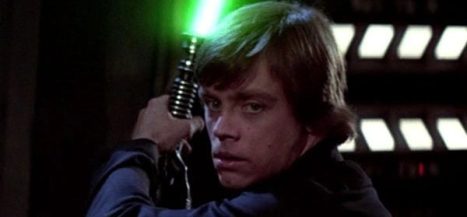
The podcast that I co-host, The 250, has a tradition of covering Star Wars films at Christmas. Last weekend, we covered the last of the films on the list, Star Wars: Episode VI – Return of the Jedi. It’s a fun, broad discussion. However, watching the film and talking about the film got me thinking about the film as a cultural snapshot of 1983.

Every generation gets the Star Wars movie that they deserve.

The original film was intended as George Lucas’ statement on Vietnam. Lucas had originally planned to make Apocalypse Now, and it is possible to see shades of that in his existential parable about a plucky band of rebels facing a technologically superior evil empire. Star Wars: Episode V – The Empire Strikes Back was perhaps one of the first true blockbusters of the eighties, and also helped to further codify the future of mainstream cinema as the New Hollywood movement endured its death throes with failures like Heaven’s Gate.

As such, it makes sense that Star Wars: Episode VI – Return of the Jedi was the perfect film for 1983. It was a much less creative sequel, one that reduced the franchise down to a set of easily repeatable iconography while also maximising its toyetic potential. However, there is more to it than that. Return of the Jedi arguably marked the end of a journey that began with Star Wars. After all, the original Star Wars was in many ways a radical allegory for late seventies America, bristling with anger and rage at a broken world.

In contrast, Return of the Jedi is essentially a self-help movie, where the fate of the galaxy matters much less than how Luke Skywalker chooses to think about his father.

Continue reading

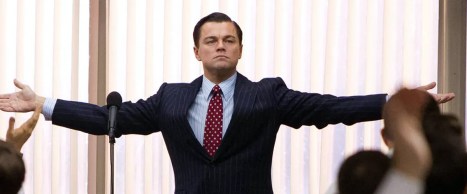
“He’s Smart, You’re Dumb!” The Cynical Idiocy of “The Wolf of Wall Street”…

The podcast that I co-host, The 250, just finished a season of coverage of director Martin Scorsese. The weekend before last, we discussed Scorsese’s The Wolf of Wall Street. It’s a fun, broad discussion that digs into the movie in a lot of depth. However, watching the film and talking about the film got me thinking about the film’s portrayal of Jordan Belfort.

Martin Scorsese was seventy-one years old when The Wolf of Wall Street was released, and had a filmography that stretched across six decades.

As such, it is heartening that Scorsese had a film like The Wolf of Wall Street in him. The film runs three hours, but moves with an impressive and exhausting energy. Critic Robbie Collin described The Wolf of Wall Street as “a picture that would have exhausted a director half his age.” Indeed, it seems fair to say that the film exhausted quite a few of its audience. The Wolf of Wall Street was the highest-grossing movie of Scorsese’s career, but there is some evidence it was divisive with audiences – earning a controversial “C” CinemaScore.
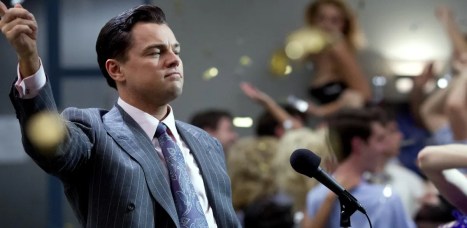
Indeed, the film earned no shortage of outrage. Scorsese himself was reportedly accosted at a screening for the Academy of Motion Picture Arts and Sciences by veterans chanting “shame on you!” The film’s portrayal of greed and excess prompted something of a moral panic. There legitimate concerns raised about where the money to fund the movie came from. There was also the reasonable observation that Scorsese had constructed The Wolf of Wall Street in such a way as to obscure the victims of Jordan Belfort.

Of course, this is something Scorsese’s films have always done, and a way in which they have consistently made the audience uncomfortable by effective immersing them in a world governed by characters who are hostile and dangerous. Taxi Driver seldom allowed itself to step outside Travis Bickle’s head, with the audience forced to confront “god’s loneliest man.” Raging Bull refused to pathologise or explain Jake LaMotta, declining to reduce his psychology to trite cause and effect. Henry Hill took centre stage in Goodfellas, but the film itself suggested he was not to be trusted.
Scorsese’s output is often framed in religious terms, and there is a strong spirituality that runs through his work. It is obviously most apparent in films like The Last Temptation of Christ, Kundun or Silence, but it is a constant throw line – even where religious authority is defined by its absence, with Casino feeling like a story about what happens when man believes that God is not watching. However, Scorsese’s films also trade in doubt, challenging the audience with the fear that there may be no external arbitrator to balance the scales.

The Wolf of Wall Street offers little in the way of emotional catharsis, little by way of reassurance that people like Belfort will be punished for their crimes or that the victims will be compensated. After all, even by 2013, it was obvious that nobody actually responsible for the financial crisis would be held to account. Scorsese stated in interviews that the anger that The Wolf of Wall Street generated was part of the film’s point. “It should touch a nerve!” he insisted in interviews around the film’s release, explaining why he declined to offer a more moralistic movie.

Of course, like Taxi Driver and Raging Bull and Goodfellas before it, The Wolf of Wall Street does condemn its subjects. Of course there are plenty of reports of stockbrokers on Wall Street loving the movie, just as many gangsters loved The Godfather. However, it seems highly unlikely that any reasonable person leaving The Wolf of Wall Street could feel any sympathy or warmth for Jordan Belfort, or that anybody paying attention to the film could imagine that his lifestyle would lead to anything other than disaster and betrayal, even if he avoided jail or bankruptcy.

More than that, The Wolf of Wall Street is notable for its refusal to glamourise Belfort himself. The film consistently portrays its subject as a moron defined only by his ravenous id, all impulse and no control. Indeed, some of that Scorsese spirituality shines through. Belfort often seems less than human, incapable of the reasoning, self-control and empathy that elevates a human being. Indeed, to frame the portrayal in Catholic terms, the elements that suggest the existence of a soul. The Wolf of Wall Street is about an animal more than a man.

Continue reading

Non-Review Review: Wonder Woman 1984

Wonder Woman 1984 is ambitious and messy.

In many ways, the original Wonder Woman could be said to be the first true blockbuster of the Trump era, in much the same way that The Dark Knight was the closing blockbuster of the Bush era and Star Trek was the opening blockbuster of the Obama era. It is not a literal or a chronological distinction, but instead that acknowledges the film’s place as a cultural marker. The original Wonder Woman spoke to the question of what it meant to be good in a world that is not, which resonated in the second half of the decade.

No spoilers.

As such, it feels appropriate that Wonder Woman 1984 will be the last blockbuster of the Trump era. Part of this is simply down to factors outside the film’s control – it was originally meant to release earlier in the year, and Warner Brothers had originally planned for Dune to take the Christmas release slot that ultimately went to it. Still, it’s hard to watch Wonder Woman 1984 without getting a sense that director Patty Jenkins has a lot to say about the current moment. Even insulated by its mid-eighties setting, Wonder Woman 1984 is a movie anchored firmly in the present.

There’s a lot of rich thematic material here and grand ideas. Indeed, Wonder Woman 1984 might just be the first superhero blockbuster that serves as a metaphor for the idea of an economy. However, the execution is a little too broad and too clumsy. Wonder Woman 1984 works best when it is anchored in its characters and giving them room to breathe. It struggles a bit when it tries to position itself as a brand extension of a recognisable franchise.

Continue reading

New Escapist Video! On “Dune” and “Flash Gordon” as Biblical Epics for the Eighties…

So, as I have mentioned before, I am launching a new video series as a companion piece to In the Frame at The Escapist. The video will typically launch with the Monday article, and be released on the magazine’s YouTube channel the following week. This is kinda cool, because we’re helping relaunch the magazine’s film channel – so if you can throw a subscription our way, it would mean a lot.

As Flash Gordon is forty years old this month and as a new Dune was supposed to open this month, I thought it was worth taking a look at Dino DeLaurentiis’ two big eighties science-fiction epics. In particular, the ways in which they responded to Star Wars by drawing on the scale and spectacle of the biblical epics of the fifties.