• Following Us

  • Categories

  • Check out the Archives


  • Awards & Nominations

418. Paths of Glory (#65)

Hosted by Andrew Quinn and Darren Mooney, this week with special guest Cethan Leahy, The 250 is a (mostly) weekly trip through some of the best (and worst) movies ever made, as voted for by Internet Movie Database Users. New episodes are released every second Saturday at 6pm GMT, with the occasional bonus episode between them.

This week, Stanley Kubrick’s Paths of Glory.

At the height of the Great War, Major General Georges Broulard issues an order to Brigadier General Paul Mireau: his command is to storm and hold the ant-hill, a heavily-fortified enemy position. It is pure military folly, which will lead to the deaths of thousands of men under the command of Colonel Dax. However, Dax and the men under his command very quickly discover that this is just the tip of the iceberg of the insanity that consumes the chain of command.

At time of recording, it was ranked 65th on the list of the best movies of all time on the Internet Movie Database.

Continue reading

Doctor Who: The Story and the Engine (Review)

“A beating heart inside a brain?”

“Brilliant. What else is a story?”

The Story and the Engine marks a clear return to form for the season around it.

Once again, it is interesting that Davies’ return to Doctor Who has adopted its own structures and rhythms, so that these two eight-episode seasons are more obviously paired with one another than with the thirteen-episode seasons of his first tenure. The Robot Revolution and Space Babies were retrofuturist pastiches, Lux and The Devil’s Chord were formally ambitious attempts to do something new with the format, The Well and Boom were militaristic high-concept science-fiction, Lucky Day and 73 Yards were Ruby-centric stories about encroaching fascism.

Tree’s company.

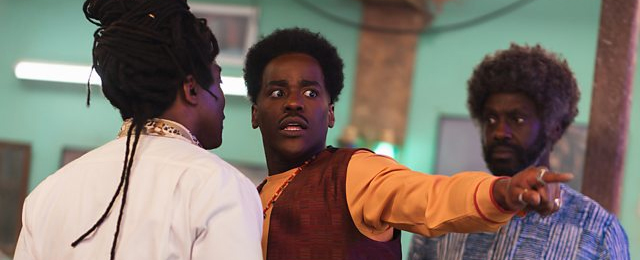
The Story and the Engine is an interesting companion piece to Dot and Bubble, in that both episodes are – at their core – stories about what it means for the Doctor to be a person of colour. Within their respective seasons, The Story and the Engine and Dot and Bubble are both constructed as stories that simply could not work if the Doctor still looked like David Tennant, Jodie Whittaker or Peter Capaldi. While Dot and Bubble cleverly built to this concept as a twist, The Story and the Engine makes it clear from the opening scenes.

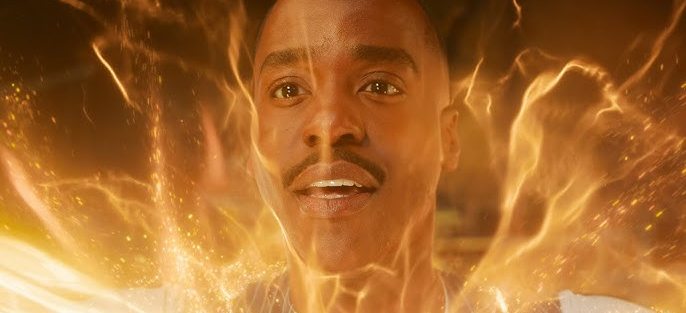
The Story and the Engine is a clever, thoughtful meditation on what it means that the Doctor now looks like Ncuti Gatwa. It’s well-observed, well-structured and well-written, a classic Doctor Who story told from a fresh angle.

A cut above?

Continue reading

Doctor Who: Lucky Day (Review)

“At least your special effects are improving.”

To be fair, a pretty solid run had to end at some point, and a Pete McTighe script is as good a place as any.

Lucky Day is an interesting episode. It solidifies the sense of this second Davies era as its own distinct object with its own distinct rhythms and structures. Just as one might pair Space Babies and The Robot Revolution, The Devil’s Chord and Lux, or Boom and The Well, Lucky Day is very obviously designed for the same slot as 73 Yards. This is another Doctor-lite episode built around Ruby Sunday, featuring U.N.I.T., set on contemporary Earth. It even brushes against rural folk horror, invoking The Wicker Man in its discussion of English villages.

Food for thought.

However, the episode takes a sharp and ambitious turn in its second half. As with a lot of recent Doctor WhoLucky Day is an episode engaged with the larger context of the show and its place in the popular discourse. It is obviously structured around things that matter to both Davies and McTighe. It is commendably self-aware and playful. There is, on paper, a lot to appreciate about Lucky Day.

The problem is the execution, as the episode’s themes break like waves against the actual narrative itself. Lucky Day only really makes sense as metatext, but cannot support the weight of its big ideas whether inside or outside the fictional universe. It’s an unlucky break.

Absolutely floored.

Continue reading

The Spielberg Slap

Hey, I made a short video.

300. Everything Everywhere All At Once (#—)

Hosted by Andrew Quinn and Darren Mooney, this week with special guest Deirdre Molumby, The 250 is a (mostly) weekly trip through some of the best (and worst) movies ever made, as voted for by Internet Movie Database Users. New episodes are released every second Saturday at 6pm GMT, with the occasional bonus episode between them.

This week, the Daniels’ Everything Everywhere All At Once.

Evelyn Wang struggles to maintain her relationship with her wayward daughter Joy and to manage the laundromat that he owns, while largely ignoring her doting husband Waymond. Taxes are due, and Evelyn’s father is making a rare trip to visit the family from China. Just when it looks like things cannot get any more hectic, Evelyn discovers that she might be the key to stop the entire multiverse from collapsing into itself.

At time of recording, it was not ranked on the list of the best movies of all time on the Internet Movie Database.

Continue reading

Doctor Who: The Well (Review)

“There’s still hope.”

“Hope is irrelevant.”

The Well is a strange and triumphant exercise, a collection of contradictions that coheres remarkably well.

It is a chamber piece, a very basic Doctor Who story that could easily have been executed on the classic BBC budget, blown up with Disney+ money. It is a very obvious sequel to at least one beloved story from Davies’ original tenure as showrunner, and saturated with references to others, while still feeling undeniably like a produce of his second era overseeing the show. It is an exercise in nostalgia, but also a story about how that nostalgia is cursed. It is also Russell T. Davies revisiting his early work, while taking cues from Steven Moffat.

All’s well…

It shouldn’t work. The Well should collapse under its own weight. It should feel like an indulgent mess, a collection of clashing recycled imagery and iconography. However, The Well manages to strike a very careful balance between its competing priorities, allowing the individual elements to add up to more than the sum of its individual parts. It’s an episode that feels like an extension of Davies work in both The Robot Revolution and Lux, solidifying a rich thematic vein running through the first three stories of the season.

The Well is a remarkable accomplishment.

Spaced out…

Continue reading

Doctor Who: Lux (Review)

“And tell me, how did you enter this world?”

“I’m a two-dimensional character, you can’t expect backstory.”

There has been a lot of discussion about the reduction in the number of episodes of Doctor Who produced within a year. These discussions are often alarmist in nature, and framed in some sort of despairing lament about how the show is not what it once was. However, there is less discussion about how this compression of the show affects its format.

While Davies can be a chaotic writer within individual episodes, particular rushing towards a climactic resolution to a story or a season, he has always had a very vision of the structure of a given season of Doctor Who. Both of Davies’ successors, Steven Moffat and Chris Chibnall, experimented with different season structures.

Ring-a-Ding-Ding…

Moffat’s fifth season was structured identical to the previous four, and then his sixth season was structured as an inversion of that – opening with an epic two-parter, closing with a single run-around episode. His seventh season was all stand-alone episodes, while his ninth season was comprised primarily of two-parters, most of which adopted an interesting approach to the basic structure of a two-parter.

Chibnall’s first season was comprised entirely of standalone and disconnected episodes, with the Stenza serving as recurring antagonists. Chibnall’s second season was much more arc-focused, opening and closing with two big two-part adventures, with The Timeless Children rewriting the show’s lore. Chibnall’s third season was a single narrative spread across six episodes, Doctor Who: Flux.

An animated discussion.

However, Davies had a structural formula and he largely stuck to it. Davies’ seasons often opened with triptych of present-past-future stories to orient new viewers in the world of Doctor Who, before leading into a toyetic monster two-parter. This would be followed later in the season by a more high-brow two-parter, and then a two-part season finale that had been seeded through the season to that point. Davies adhered rigidly to that structure.

That structure worked within the confines of thirteen-episode seasons, but obviously cannot be applied to an eight-episode season. After all, just counting through the “obligatory” episodes within that structure eats up nine of the season’s episodes. So Davies has had to come up with a new structure for the show’s seasons. Space Babies and The Robot Revolution effectively compress those opening three episodes into a single story, while The Devil’s Chord and Lux suggest an entirely new narrative archetype.

The next stage of the show…

There is some online debate about whether Davies is repeating himself, whether his approach to Doctor Who is meaningfully different now than it was twenty years ago. While it’s easy to focus on the places where Davies’ writing is similar – notably the premieres and the finales – it is also worth acknowledging where it is different. The Devil’s Chord and Lux are two episodes that are of a piece with one another, two episodes as similar to one another as Rise of the Cybermen and The Age of Steel are to The Sontaran Stratagem and The Poison Sky, fitting within Davies’ season structure.

However, they are also new and exciting. They are a type of episode that is fundamentally different from anything that Davies even attempted during his first tenure as showrunner. Indeed, they are fundamentally different from anything that Moffat and Chibnall attempted as well. They are big, bold and self-aware. They represent a clear evolution of what is possible on Doctor Who. If nothing else, they prove the show is still alive – that it is still animated.

Rave about this episode until you are blue in the face…

Continue reading

“No one trusts each other anymore.” Brian Michael Bendis’ “Avengers” and the War on Terror

One of the great things about long-running pop art, whether television shows, film franchises or comic books, is the sense in which they can serve as a reflection of shifting cultural concerns.

The Marvel Universe spans more than six decades of continuity. It is perhaps too much to call it a single story, even if comic book continuity is held together by that fiction. It is the work of countless writers and artists, working under different editorial regimes with different creative and commercial constraints. The visual language of the medium has shifted over decades, along with its target audience, not to mention its relationship with the mainstream culture.

Still, while monthly superhero comics are rarely considered high or important art, they are an interesting window into their particular cultural moment. These characters and archetypes are constantly changing and evolving, being reworked and recontextualised to fit the perpetual present. Rereading old comic books can feel like stepping inside a time machine, taking the reader back to not just a particular moment in comics continuity, but a funhouse mirror of the larger culture.

Brian Michael Bendis stewarded the Avengers titles for eight years, from 2004 to 2012. He managed the brand across multiple titles starting with Avengers Disassembled into New Avengers and Mighty Avengers, and through a host of epic status quo-altering events. Some of those events, like House of M, Secret Invasion and Siege, Bendis wrote himself. Other events, like Civil War, he simply tied into from the sidelines.

Still, that initial run of comics from Avengers Disassembled to Siege remains hugely important. Bendis restructured the Marvel Universe to place the Avengers franchise at its core, displacing the X-Men as the company’s flagship brand. Coinciding with the launch of Marvel Studios, that run is an obvious and ongoing touchstone for the Marvel Cinematic Universe, which has directly adapted segments of this run into films like Captain America: Civil War and shows like Secret Invasion.

Even as the big crossover events like Avengers: Infinity War or Avengers: Secret Wars draw more heavily from the work of Bendis’ successor on the Avengers titles, Jonathan Hickman, Bendis’ Avengers remains a key influence. Thunderbolts*, for example, feels heavily indebted conceptually to Bendis’ Dark Avengers and even leans heavily on the character of Sentry, a continuity curiosity who became central to Bendis’ larger arcs.

However, even outside of its obvious cultural footprint, the remains one of the definitive explorations of the War on Terror in popular American culture, elevating the emotional and symbolic response to the 9/11 terrorist attacks into a sort of pop mythology, playing out the country’s psychodrama in costumes and capes. Bendis’ Avengers run is messy and uneven, occasionally downright clumsy in its execution. It is also a snapshot of a moment.

Continue reading

Kneel Before Pod – “Andor, Season 1”

I was thrilled to stop by the great Kneel Before Pod for a (long) conversation looking back at the first season of Andor, with the wonderful Craig McKenzie and the delightful Aaron Billingham. It’s a fun, involved conversation about the show, its influences, its context and what separates it from (and ties it to) the larger Star Wars canon.

417. Laapataa Ladies (Lost Ladies) (#—)

Hosted by Andrew Quinn and Darren Mooney, The 250 is a (mostly) weekly trip through some of the best (and worst) movies ever made, as voted for by Internet Movie Database Users. New episodes are released every second Saturday at 6pm GMT, with the occasional bonus episode between them.

This week, Kiran Rao’s Laapataa Ladies.

A mishap on a train involving a set of matching wedding veils leads two brides to end up in the wrong locations. As the families try desperately to set things right, reconnecting the lost ladies with their soon-to-be husbands, each of the two brides embarks on a surprising journey that teaches them something profound about the human condition.

At time of recording, it was not ranked on the list of the best movies of all time on the Internet Movie Database.

Continue reading