• Following Us

  • Categories

  • Check out the Archives


  • Awards & Nominations

New Podcast! The Time is Now – Season 1, Episode 2 (“Gehenna”)

Thrilled to be asked back to join The Time is Now podcast to follow up on last week’s discussion of The Pilot.

This week, I’m joining Kurt North to discuss the second episode of Gehenna. It’s often tough to nail the early episodes of a new show, especially as the creative team slip into the demanding cycle of television production. It has been observed that many television series spend their first six (or even thirteen) episodes just remaking the pilot in order to get a feel for the texture of the show. As such, Gehenna has quite a lot to accomplish, mostly demonstrating that Millennium can work as a weekly television series.

It was a delight to be asked back, and I’m really looking forward to popping up once or twice more before the end of the first season. You can listen to the episode here, subscribe to the podcast here, or click the link below.

Continue reading

Non-Review Review: Detective Pikachu

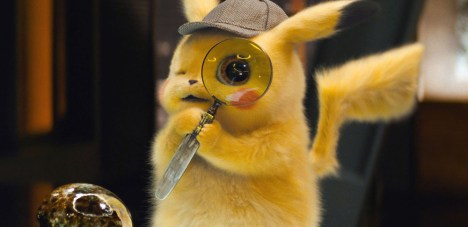
Detective Pikachu is disarmingly cute, both the movie and the character.

There are a number of serious problems with Detective Pikachu, although none of them are so serious as to become fatal flaws and most are easily explained by virtue of the film’s target audience. Most obviously, Detective Pikachu is never a movie that is particularly elegant in its storytelling. This is a film that burdened with an impressive volume of visual and spoken exposition, particularly in the opening half-hour. Characters are constantly expositing to one another, and often spelling out their motivations and perspectives for the benefit of the audience.

“Just want to take another Pikachu.”

However, once Detective Pikachu gets past that, there’s a lot of charm on display. A lot of that is down to the two central performances from Ryan Reynolds and Justice Smith, both of whom provide solid emotional throughlines and play the comic absurdity of the premise. There is also a lot to be said for the efficiency of the script, which rockets through virtually everything that the audience might expect from a Pokémon film. The energy of the cast prevents it from ever feeling too much like a checklist.

Detective Pikachu never quite achieves the level of transcendence, never pushes past its simple premise towards something more intriguing or compelling. Instead, Detective Pikachu delivers pretty much what it promises, with an endearing and infectious smile on its face.

No drive.

Continue reading

129. Avengers: Endgame – This Just In (#6)

Hosted by Andrew Quinn and Darren Mooney, and this week with special guest Tony Black, This Just In is a subset of The 250 podcast, looking at notable new arrivals on the list of the 250 best movies of all-time, as voted for by Internet Movie Database Users.

This time, Joe and Anthony Russo’s Avengers: Endgame.

At time of recording, it was ranked 6th on the list of the best movies of all time on the Internet Movie Database.

Continue reading

Star Trek: Voyager – The Void (Review)

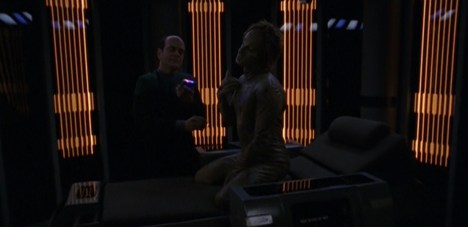
The Void feels like a belated mea culpa on the part of Star Trek: Voyager.

It is unfair and an exaggeration to say that The Void finally delivers on the potential of Voyager. After all, there have been several earlier episodes that flirted with following the basic premise of the show to its logical conclusion; Alliances, Year of Hell, Part I and Year of Hell, Part II, Night, Counterpoint, Equinox, Part I and Equinox, Part II. Of course, many of those episodes ultimately ended with a repudiation of that premise, a retreat back to the safety of a familiar formula. Voyager has always been a television show terrified of the implications of its own starting point.

Conflict aVoidant.

Nevertheless, there is a strong sense that The Void looks and feels a lot more like Voyager should have looked and felt from the outset. It is the story of explorers trapped in a strange environment with limited resources, facing tough choices in order to survive, and desperate to forge alliance to keep them afloat. The eponymous “void” feels like a metaphor for the Delta Quadrant itself, the teaser playing like a truncated version of Caretaker. An intrepid crew plucked from familiarity and thrown into a hostile world of scavengers and pirates, stripped of their comforts.

Of course, The Void ultimately retreats from this premise. Much like the eponymous anomaly is just a pocket universe, this exploration of the show’s premise is just an episodic diversion. If it took Voyager six-and-a-half seasons to find a way to explore its core premise, it only takes forty-five minutes to wrap a bow around it and return to business as usual. The Void is a fluke and an aberration. Even ten episodes from away from the finale, Voyager can only briefly imagine how things ever might have been different.

In the Void, here’s a ‘noid…

Continue reading

Non-Review Review: Extremely Wicked, Shockingly Evil And Vile

There’s an interesting film somewhere within Extremely Wicked, Shockingly Evil And Vile.

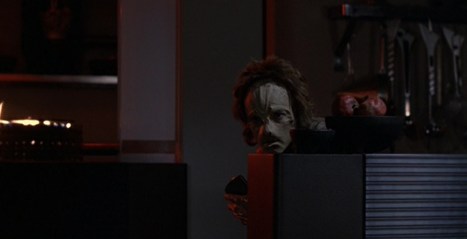
After all, the serial killer is a fascinating figure in the American popular consciousness. Although the serial killer’s stature has declined since its peak in the nineties, the recent “true crime” boom on both streaming services and in podcasts have helped to reignite some interest in the figure. Indeed, it is worth noting that Extremely Wicked, Shockingly Evil And Vile feels almost like a companion piece to director Joe Berlinger’s other Ted Bundy project, the Netflix documentary Conversations with a Killer: The Ted Bundy Tapes. As such, it is perhaps revealing that Extremely Wicked, Shockingly Evil And Vile feels like an appendix to The Ted Bundy Tapes, an extra that dramatises the meatier material presented in that streaming service true crime documentary.
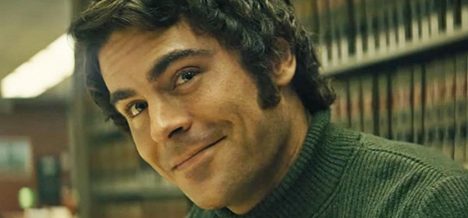
Killer good looks.

After all, although Berlinger has worked on narrative films before, he is known primarily as a documentarian. (There is some small irony that his most prominent narrative film is Blair Witch 2: Book of Shadows.) Inevitably, Extremely Wicked, Shockingly Evil And Vile would feel secondary. It may have premiered on the festival before The Ted Bundy Tapes, but it was released afterwards, ensuring that to the casual viewer it will seem like something of a response to that breakout hit. More than that, though, Extremely Wicked, Shockingly Evil And Vile feels like it has very little new to say about either its serial killer or its cultural context. There is surprisingly little in Extremely Wicked, Shockingly Evil And Vile that isn’t evoked by the words “Ted Bundy.”

The serial killer is a well-explored subject in popular fiction, having been the focus of decades of narratives and deconstructions. Extremely Wicked, Shockingly Evil And Vile looks for an interesting angle on its subject, but never finds a way in. The result is a film that has an interesting premise, but which struggled to get under the skin of a serial killer.

Slice of life.

Continue reading

Non-Review Review: The Curse of La Llorona

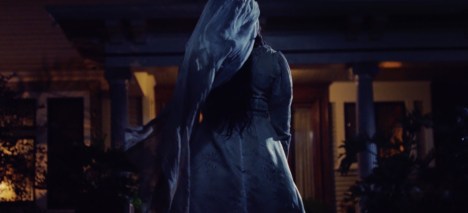
The Curse of La Llorona is fairly solid as contemporary studio horrors go.

Although the arrival of Avengers: Endgame has a lot of attention focused on the largest and most successful shared cinematic universe of the twenty-first century, there is a lot to be said for the strange horror universe that has been built outwards from The Conjuring. Although this trend is most overt in The Conjuring 2, the rare horror movie to also feature a car chase sequence, there is something fascinating in how these films have transformed studio horror into a blockbuster concern.

Mother have mercy.

There is a reason that these films are released during the summer months, as counter-intuitive as that might seem. Again, discussing The Curse of La Llorona in such terms might seem cynical, but it is genuinely striking. It takes a lot of work to satisfy the competing demands of the two genres; the shock of horror with the familiarity of blockbuster storytelling. The challenge with The Curse of La Llorona lies in offering audiences something that satisfies all their expectations of a film like this, while still offering a few shocks and starts along the way. It is a remarkable accomplishment.

The Curse of La Llorona strikes that balance relatively well. The film knows the formats and rhythms of a horror film, and director Michael Chaves knows both what the audience expects and how to work within that format to build a genuine and compelling sense of dread. The Curse of La Llorona is well-made, efficient, and delivers what the audience anticipates from a Conjuring spin-off. There’s something endearing in the reliability, in the care with which the film strikes these sorts of balances.

Scream queen.

Continue reading

Non-Review Review: A Dog’s Journey

A Dog’s Journey is incredibly earnest.

To be fair, it kind of goes with the territory. A sequel to A Dog’s Purpose, the film fits comfortably in the same “narrating baby or animal observes the adult world” subgenre as the Look Who’s Talking films. The basic premise of the film finds a beloved family pet reincarnating over and over again in order to serve as a spiritual companion to a family across three generations. Voiced by Josh Gad across a wealth of breeds, genders and personas, this “boss dog” finds themselves drawn towards a family struggling to hold itself together amid incredible internal tension.

Hardly a crowning accomplishment.

The premise and execution are admittedly very hokey. The characterisation is threadbare. The actors vary wildly in terms of skill. The jokes are often hackneyed and overly familiar. The script is full of strange narrative cul de sacs and tangents that occasionally stall the forward momentum of the film. A Dog’s Journey is an exceptionally tightly (or even well-) constructed film. However, the almost aching levels of sincerity almost hold it together despite these sheering forces.

At the heart of A Dog’s Journey is an incredibly simple-yet-heartfelt idea of the relationship that exists between a dog an it’s owner. Late in the film, one character concedes to another, “It must be nice to have something that loves you unconditionally.” For all the film’s flaws, it never doubts the idea that the love of a dog for its owner (and perhaps vice versa) is truly unconditional and uncompromising, no matter how complicated the world around that relationship might become.

Fields of gold.

Continue reading

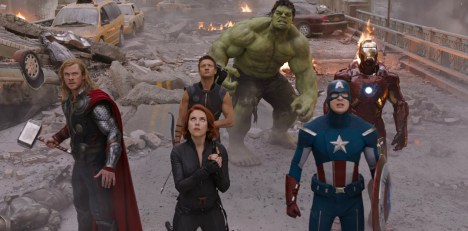
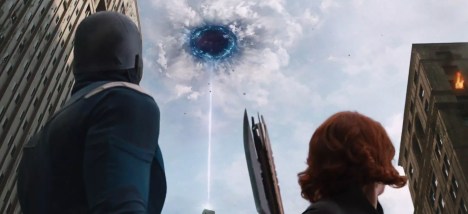
“We’re Not Soldiers”: The Cautious Superhero Optimism of “The Avengers”…

Before it was a Bomb, the Bomb was an Idea. Superman, however, was a Faster, Stronger, Better Idea. It’s not that I needed Superman to be “real,” I just needed him to be more real than the Idea of the Bomb that ravaged my dreams. I needn’t have worried; Superman is so indefatigable a product of the human imagination, such a perfectly designed emblem of our highest, kindest, wisest, toughest selves, that my Idea of the Bomb had no defense against him.

– Grant Morrison, Supergods

There was an idea, Stark knows this, called the Avengers Initiative. The idea was to bring together a group of remarkable people, see if they could become something more. See if they could work together when we needed them to to fight the battles we never could.

– Nick Fury, The Avengers

In hindsight, The Avengers looks like a sure bet; a bunch of recognisable characters from successful properties bound together to create a blockbuster.

It is a testament to how profoundly The Avengers has reshaped the media landscape in its image that this appears almost a given. In a world that has seen the release of Avengers: Infinity War and Avengers: Endgame, the original film in the franchise seems almost quaint. Only six heroes? Only one primary villain, and one who was previously defeated by Thor in Thor? Sure, Thor is “the strongest Avenger”, but that seems almost quaint in this era of universe-spanning crossovers that fold on the expansive casts of films like Ant Man or Black Panther or Guardians of the Galaxy. Perhaps it is an ode to the power of  the idea that The Avengers feels so small in hindsight.

At the same time, there’s a maturity and reflection in the original Avengers that is largely lacking from Infinity War and Endgame. One of the most frustrating aspects of Infinity War and Endgame is the way in which the films devolve into unquestioning power fantasies; stories about great men who wield the power of gods for their own benefit with little regard for the obligations or responsibilities that come with that power. The characters of Infinity War and Endgame never question the use of their power for their own benefit, never contemplate their right to hold the fate of four different universes in their hands. Banner never questions the appeal of living as the Hulk forever, just as Thor insists on abandoning his people to have wack adventures with the Guardians of the Galaxy cast.

In hindsight, what is most striking about The Avengers is how fascinated it is with the question of what superheroes are, and what function they serve. Perhaps in keeping with the general enthusiasm of the Marvel Cinematic Universe, or perhaps reflecting his own affection for the genre, Joss Whedon keeps coming back to the suggestion that superheros represent an idea and an ideal. They represent an idealised manifestation of American power and identity, quite literally contrasted at the end of the film with the horror and majesty of the atomic bomb.

Continue reading

New Podcast! The Time is Now – Season 1, Episode 1 (“Pilot”)

The wonderful folk responsible for The X-Cast have launched another podcast, covering another beloved Chris Carter property, and I’m thrilled to be a guest on it.

Millennium is a massively underrated (and largely underseen) show. It is one of the most striking television series of the late nineties, and a show with an impressive cultural footprint and reach. I’m on record as arguing that the second season of Millennium is one of the best twenty-odd-episode seasons of television ever produced, but the first season also has a lot to recommend it.

Tony has already recorded a primer or introduction to Millennium, but I’m honoured to be the guest invited on to discuss The Pilot. Indeed, The Pilot is a remarkable piece of television, and one of the most striking pieces of television that Carter ever produced. Millennium struggles a bit in the first half of the season to establish a sense of tone and to figure out how to tell the stories within this framework.

You can listen to the episode here, subscribe to the podcast here, or click the link below.

Continue reading

128. The Avengers (-#68)

Hosted by Andrew Quinn and Darren Mooney, and this week with special guest Phil Bagnall, The 250 is a (mostly) weekly trip through some of the best (and worst) movies ever made, as voted for by Internet Movie Database Users. New episodes are released every Saturday at 6pm GMT.

This time, Jeremiah Chechik’s The Avengers.

When the sinister Sir August de Wynter discovers a way to harness the weather for his own monstrous ends, there is only one way to stop him. Sophisticated secret agent John Steed teams up with meteorologist Emma Peel in order to prevent the villain from bringing his fiendish plot to fruition.

At time of recording, it was ranked 68th on the Internet Movie Database‘s list of the worst movies of all-time.

Continue reading