• Following Us

  • Categories

  • Check out the Archives


  • Awards & Nominations

130. (ii) Mary and Max (#177)

Hosted by Andrew Quinn and Darren Mooney, and this week with special guest Andy Hazel, The 250 is a (mostly) weekly trip through some of the best (and worst) movies ever made, as voted for by Internet Movie Database Users. New episodes are released every Saturday at 6pm GMT.

This time, Adam Elliot’s Mary and Max.

Mary Daisy Dinkle is a precocious eight-year-old growing up in the suburbs of Waverley outside Melbourne. One day, on the spur of the moment, she picks a name at random out of a phone book and decides to write to Max Jerry Horovitz, an atheist Jew living in New York City. The two strike up an unlikely friendship that crosses decades, navigating their interwoven lives separated by half the world.

At time of recording, it was ranked the 177th best movie of all time on the Internet Movie Database.

Continue reading →

New Podcast! Scannain Podcast (2019) #19!

It’s time for the Scannain podcast!

This week, I join Jay Coyle, Grace Duffy and Luke Dunne from Film in Dublin to discuss the week in film. Jay has returned from holidays, but has still had the time to take in a variety of films including Steven Spielberg’s remake of War of the Worlds. Grace has enjoyed both Lady Macbeth and Short Term 12. Luke has watched a variety of films including Netflix’s Something Great, which is more like something so-so.

In film news, the Cannes Film Festival is underway. Closer to home, eight Irish film festivals have undertaken the 5050 x 2020 challenge to improve gender representation and transparency in how these festivals are organised and run. Alex Gibney is attending the new DOCS festival in Belfast in June. The Irish Film Institute is hosting their third Dark Skies season focusing on killer artificial intelligences.

The top ten:

  1. Wonder Park
  2. Wild Rose
  3. Dialogues Des Carmelites – Met Opera 2019
  4. The Curse Of La Llorona
  5. Dumbo
  6. A Dog’s Journey
  7. Long Shot
  8. The Hustle
  9. Avengers: Endgame
  10. Detective Pikachu

New releases:

You can listen to the podcast directly here.

Non-Review Review: John Wick – Chapter III: Parabellum

The biggest issue with John Wick: Chapter III – Parabellum is that it lacks an ending.

To be clear, there’s nothing wrong with an ambiguous or open-ended film. Indeed, a large part of the thrill of John Wick: Chapter II was the extent to which it fudged such boundaries. Despite the fact that John Wick offered something of a satisfying conclusion, the sequel picked up mere moments later to offer a coda that audiences never realised was needed. The ending of the first sequel bled (both literally) into the one that would follow. Open-endedness is not an issue of itself.

“So John Wick flees on horseback, the assassin’s after them on a motorcycle and it’s like a battle between motors and horses, like technology versus horse.”

After all, Chapter II belonged to the now-familiar family of “second films in trilogies.” Traditionally, the first film in a series would be relatively self-contained, with a broad teasing ending at best that could provide closure if the box office numbers didn’t work; Star Wars, Back to the Future. In contrast, after those movies were box office hits, sequels were often commissioned in batches of two; Star Wars: Episode V – The Empire Strikes Back bleeds more obviously into Star Wars: Episode VI – Return of the Jedi, Back to the Future II bleeds into Back to the Future III.

However, there tended to be an understanding that closure was necessary at some point. Not necessarily in a definitive or conclusive manner for the series as a whole; Return of the Jedi is not the last Star Wars movie. However, a sense that the single narrative being tidied up. The characters’ journeys may not be completed, but their arc within this particular story is complete. Parabellum feels very much like a cheat on this front. Although building from a premise with a clear ending, it seems to be awkwardly constructing a perpetual motion device.

Shattering expectations.

After all, John Wick’s journey has a clear end point. The character arc that began in John Wick has any number of potential resolutions. Chapter II seemed to offer some clear linear progress to that journey, taking the character from his position in the closing moments of John Wick and escalating the existential stakes significantly. The single biggest problem with Parabellum is that the film doesn’t manage a comparable transformation. Wick’s situation doesn’t seem particularly different between the beginning and the end of the film. At most, the character has run a closed loop.

This is a shame, as that is a lot to like in Parabellum. As with both John Wick and Chapter II, this is a visually stunning film. It is saturated with neon glows of reds and blues, mingling and reflecting into beautiful purples on grimy streets and immaculate sterile sets. The stunt choreography is breathtaking, and a testament to an underappreciated artform, ballet with blades and bullets. Indeed, Parabellum even improves upon the already enchanting heightened operatic (and gloriously melodramatic) storytelling of John Wick and Chapter II, weaving them into an engaging parable.
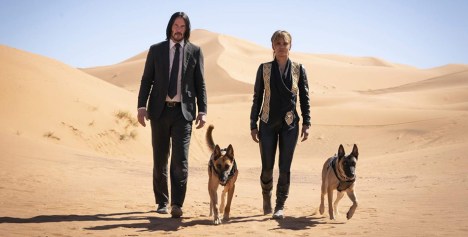
Getting their just deserts.

Continue reading →

130. (i) Mary and Max (#177) – Interview with Adam Elliot and Andy Hazel

Hosted by Andrew Quinn and Darren Mooney, The 250 is a (mostly) weekly trip through some of the best (and worst) movies ever made, as voted for by Internet Movie Database Users. New episodes are released every Saturday at 6pm GMT.

This weekend, we’ll be discussing Adam Elliot’s Mary and Max with the wonderful Andy Hazel.

However, Andy actually managed to sit down with director Adam Elliot to discuss the film and his career in general. It’s a fun and wide-ranging discussion, covering a host of topics from the writer-director’s influences to his future plans to the film’s place on the list and even the difficulty securing international distribution. We hope you enjoy, and join us again on Saturday for our discussion of the film itself with Andy.

Continue reading →

New Podcast! The Pensky File – Star Trek: Deep Space Nine, Season 5, Episode 23 (“Blaze of Glory”)

I was thrilled to be asked back to join The Pensky Podcast to discuss Star Trek: Deep Space Nine. I joined Wes as their coverage of the fifth season winds down, discussing the Maquis- and Michael-Eddington-centric Blaze of Glory.

I’ve talked before about how the fifth season of Deep Space Nine might be the best season of Star Trek ever produced. As a result, a lot of the really great episodes in the season tend to get a bit of a short shrift when we talk about them, overshadowed by the bigger and even better episodes around them. Blaze of Glory is one of those episodes that is often overlooked, wrapping up several recurring plot threads so the show can focus on its priorities going forward.

This was a fun discussion. Wes and I talk about the episode, about the Maquis, about Sisko’s arc, about tomatoes, about what Eddington really used the cloaking devices for, and about proper seasoning. All very important, totally relevant stuff.

You can find more from The Pensky Podcast here, and listen to the podcast by clicking the link or just listening below.

Continue reading →

New Podcast! Scannain Podcast (2019) #18!

It’s time for the Scannain podcast!

This week, I join Jay Coyle and Ronan Doyle to discuss the week in film. Ronan is just back from Paris and from the Trish McAdams season at the Irish Film Institute. Jay has been continuing his journey into Columbian noir and enjoyed Jeanne Dielman, 23, Quai du Commerce 1080 Bruxelles.

In film news, there’s a bumper crop of Quentin Tarantino news, including the Netflix cut of The Hateful Eight, the late Cannes entry of Once Upon a Time in Hollywood and his continuing plans to make a Star Trek film. Beyond that, the Writers’ Guild of Ireland announced the nominees of their annual ZeBBie awards.

The top ten:

  1. Shazam!
  2. Greta
  3. Wild Rose
  4. Tolkien
  5. Wonder Park
  6. Dumbo
  7. The Curse Of La Llorona
  8. A Dog’s Journey
  9. Long Shot
  10. Avengers: Endgame

New releases:

You can listen to the podcast directly here.

New Podcast! The X-Cast – Season 4, Episode 4 (“Unruhe”)

I’m back on The X-Cast this week, covering Unruhe with the incomparable Carl Sweeney.

Unruhe is an interesting episode. It is an episode of The X-Files focusing on a serial killer at the point in time when Chris Carter had just launched Millennium to deal specifically with that menace. In fact, it served as something of a trial run for writer Vince Gilligan, who would write another (more popular) episode focusing on a serial killer later in the fourth season with Paper Hearts.

Unruhe is often overlooked in discussions of the fourth season, and it is easy to understand why given the quality of the episodes around it. Nevertheless, it is a fascinating piece of work that speaks to a lot of the core interests of the series and also reflecting a lot of the work of writer Vince Gilligan. As such, it was a thrill to be asked to discuss the episode.

The truth is in here. You can listen to the episode here, or click the link below.

Continue reading →

Non-Review Review: Booksmart

Booksmart has charm to burn.

Olivia Wilde’s feature length directorial debut is built from a familiar high school coming-of-age template. It is the story of two kids who just want to party before graduation and before heading their separate ways. There are any number of films built outward from that premise, or even core components of that premise. Booksmart is canny enough to understand the genre in which it is working. Indeed, the casting of Beanie Feldstein seems designed to directing invoke two key touchstones; Feldstein’s most notable role to date remains her supporting role in Lady Bird, and her brother Jonah Hill launched his career (in part) off the success of Superbad.

Partying is such sweet sorrow.

As with any movie in a familiar genre, the success Booksmart hinges on the execution more than the concept. There are dozens of films riffing on similar ideas, so Booksmart needs to distinguish itself in how it approaches the material in question. The film elevates this somewhat stock premise through the use of a charming cast and surprising emotional earnestness. It helps that the comedy driving the film is both very well-observed on its own terms and tends towards the affectionate rather than the mean-spirited. There’s an affectionate humanism in Booksmart, and the recurring suggestion that characters are more than just the roles that they play in the highly performative environment of high school.

However, it is the two leads that truly elevate Booksmart, working with a sharp script and confident direction to create an engaging and endearing portrait of teenage insecurities.

Hold on!

Continue reading →

Non-Review Review: Float Like a Butterfly

Unlike its protagonist, Float Like a Butterfly never quite figures out what it wants to be.

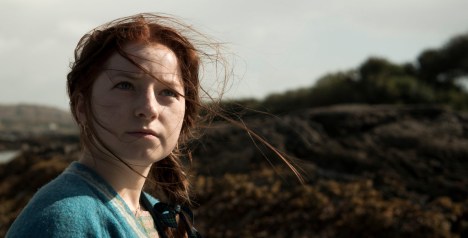
Float Like a Butterfly finds itself trapped between two different genres. On one side, Float Like a Butterfly aims for gritty social realism, charting a Traveller family as they attempt to navigate the uncaring Ireland of the early seventies. This is a familiar and naturalistic coming of age story, focusing on young Frances as she tries to hold her family together while her recently released father Michael sinks deeper and deeper into a drunken stupor. Frances is caught between the conservative patriarchal ideals of her own community, and the predatory hatred of the outside community.

The haymaker.

On the other hand, Float Like a Butterfly tries to position itself as an empowering sports movie, the familiar template about a confused and alienated young person who finds meaning and purpose through the expression that sport offers. Inspired by none other than Mohammad Ali himself, Frances aspires to become “the greatest.” She takes up boxing, even inheriting a set of gloves at one point. This is a story about a woman who is pressed in by a conservative society, but who finds a necessary outlet through sport. It is a feel-good triumphant narrative.

To its credit, Float Like a Butterfly plays both sides of this narrative relatively well; it offers a compelling portrait of life on the margins when it aims for naturalism, and delivers the feeling of empowerment and elation when it evokes those upbeat sports films. The big problem with Float Like a Butterfly is that it never reconciles these two competing halves into a single cohesive film. It is too meandering and too grounded to really sell itself as a sports narrative, but too heightened and too structured in its familiar plot rhythms to work as a slice of life.

Winning ribbons.

Continue reading →

New Podcast! Scannain Podcast (2019) #17!

It’s time for the Scannain podcast!

This week, I join Jay Coyle, Grace Duffy and Ronan Doyle to discuss the week in film. Ronan has been away for a few weeks at the Irish Film Institute’s “Our Battle in Images” season, looking at (largely outside) perspectives of the Troubles and curated by Donal Foreman, and so discusses a few films that he saw as part of the season. Jay has been watching more Columbian noir on the Criterion Channel and took in the latest Liam Neeson action joint Hard Powder Cold Pursuit. Grace watched Colossal and took in her first Agnés Varda film. I watched The Dig, and took in a couple of classic Marvel Cinematic Universe films.

In film news, there’s a lot to cover, including the passing of director John Singleton. There is also the IFI Spotlight coming in early May, and the announcement of the latest batch of W.R.A.P. funding. As ever, we also cover the top ten and the new releases in a crowded week under the shadow of Avengers: Endgame.

The top ten:

  1. Five Feet Apart
  2. Little
  3. Missing Link
  4. Peppa Pig: Festival of Fun
  5. Wild Rose
  6. Greta
  7. Shazam!
  8. Wonder Park
  9. Dumbo
  10. Avengers: Endgame

New releases:

You can listen to the podcast directly here.