• Following Us

  • Categories

  • Check out the Archives


  • Awards & Nominations

178. Snatch – World Tour 2020, w/ When Irish Eyes Are Watching (#100)

Hosted by Andrew Quinn and Darren Mooney, and this week with special guests Alex Towers and Sean Driver from When Irish Eyes Are Watching, The 250 is a (mostly) weekly trip through some of the best (and worst) movies ever made, as voted for by Internet Movie Database Users.

This time, Guy Ritchie’s Snatch.

Two low-level grifters looking to buy a caravan from some Irish travellers. One international thief lying low in London after an Antwerp job. A former Soviet secret agent. A reliable Jewish fence and his American counterpart. A tough old gangland geezer who isn’t used to not having things go his way. A diamond. A dog. And the chaos that ensues when all of these elements collide in the most unexpected of ways.

At time of recording, it was ranked 100th on the list of the best movies of all time on the Internet Movie Database.

Continue reading

New Escapist Column! On “Dune” as a Deconstruction of the “Chosen One” Fantasy…

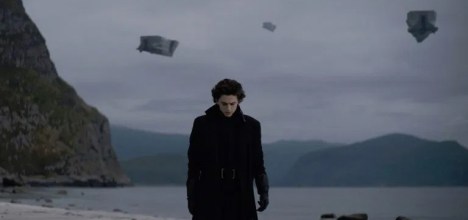
I published a new In the Frame piece at Escapist Magazine this evening. This week saw the release of the first production photos from Denis Villeneuve, so it felt like the perfect opportunity to dig into Frank Herbert’s science-fiction classic.

A lot of the press around Dune is making a big deal about the novel as an epic on the scale of something like Star Wars or The Lord of the Rings. However, this seems to sell the novel short. Dune is not a simple “chosen one” fantasy narrative, although it has many of the familiar trappings of the genre. It is the story of a teenage boy who comes to inspire religious devotion in his followers, after all. However, the novel problematicises that sort of story, by complicating the messiah at its core. Dune is warped and grotesque reflection of those power fantasies.

You can read the piece here, or click the picture below.

Non-Review Review: Underwater

There’s a surprising charm to Underwater, which largely extends from its sense of propulsive forward momentum.

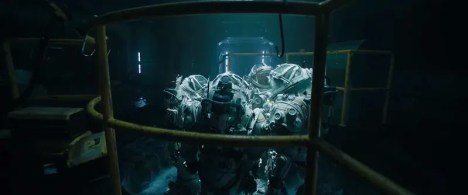
Underwater is not necessarily a good movie. It often feels like two radically different and highly derivative science-fiction movies stitched together, transposed from deep space to the deep sea. Underwater is never entirely sure whether it wants to be Gravity… but in the ocean” or Alien… but in the ocean”, and so repeatedly finds itself caught between the two extremes. It is a film populated by archetypes rather than characters, and which is pushed from one set piece to the next by percussive force rather than any coherent throughline.

A deep dive.

And yet, in spite of all that, there’s something strangely appealing about the mismatch of elements at play in Underwater. It isn’t just the way in which the film bounces haphazardly between a disaster film and a monster movie, it is also reflected in the casting. Underwater is a B-movie that brings together quite an eclectic set of leads. Kristen Stewart continues the gentle transition back towards the mainstream that began with Charlie’s Angels, but finds herself working opposite a cast including arthouse favourite Vincent Cassel and broader performers like T.J. Miller.

These seemingly contradictory elements create a strange frisson within the film, one that is just as volatile as the energy reactor that (inevitably) threatens to got critical to add an extra layer of pressure to the already beleaguered characters. However, director William Eubank seems to understand that these components are highly unstable, and so Underwater moves a dizzying pace that helps to prevent any of internal imbalances from reaching critical mass. It’s hardly the stuff of create cinema, but it’s a surprisingly sturdy and energised B-movie.

Suited to the task.

Continue reading

Non-Review Review: Fantasy Island

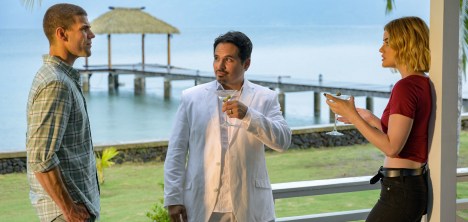
What, exactly, is the point of the Blumhouse reboot of Fantasy Island?

To be fair, Blumhouse are a studio with a varied track record. They have produced some of the most interesting and compelling mainstream horror movies of the past few decades, including films like Get Out and The Invisible Man. They have also produced a fair amount of cynical schlock, such as Truth or Dare. There are also a number of films that seem to exist in the middle ground between those two extremes, like The Hunt or Black Christmas. It’s certainly a more varied approach than the standard horror films that heralded the studio’s arrival, like Insidious or Sinister.

Palming it off.

Jason Blum is a shrewd producer, and there’s a sense in looking at the studio’s output of trying to balance competing artistic and commercial demands. Blum tends to keep budgets under control, but he also seems to offset the riskier and more ambitious projects with generic crowd-pleasing fare. Fantasy Island would seem to belong in that category, but exactly what crowd is it intended to please? Watching Fantasy Island is a strange experience, and not just because of the multitude of structural and storytelling problems.

On a more basic level: who exactly is this movie for?

Can’t stick the island-ing.

Continue reading

New Podcast! Make It So – Re:Discovery, Season 1, Episodes 1 & 2 (“The Vulcan Hello” & “Battle at the Binary Stars”)

The first season of Star Trek: Picard has wrapped, and so Make It So: A Star Trek Universe Podcast has turned its gaze backwards, looking at the start of the Kurtzman and Goldman era of Star Trek. I was flattered to be invited to join the wonderful Kurt North to discuss The Vulcan Hello and Battle at the Binary Stars, the two-part premiere of Star Trek: Discovery.

I’m generally quite fond of the first season of Discovery, although I think it comes a little off the rails towards the end of the season. However, I unequivocally think that The Vulcan Hello and Battle at the Binary Stars comprise the best first episode of any Star Trek series. They are a bold statement of purpose, largely serving as a eulogy for the Berman era of the franchise, typified by Star Trek: The Next Generation, Star Trek: Voyager and Star Trek: Enterprise. Instead, these two episodes offer an immediate and distinct vision of what modern Star Trek might look like. There’s an incredible and infectious confidence at play, including a conscious effort to update the trappings and sensibilities of the franchise for a new era of television.

Anyway, it was a huge honour to be invited on, and I hope you enjoy. You can listen to the episode here, or click the link below.

“You Understand Me Now, Don’t You?” Guy Ritchie’s “Snatch” and the Chaos of Miscommunication…

This Saturday, I’ll be discussing Snatch on The 250, the weekly podcast that I co-host discussing the IMDb’s Top 250 Movies of All-Time. However, I had some thoughts on the film that I wanted to jot down first.

“Have I made myself clear, boys?”

“Yeah, that’s perfectly clear, Mickey. Yeah… just give me one minute to confer with my colleague.

“… did you understand a single word of what he just said?”
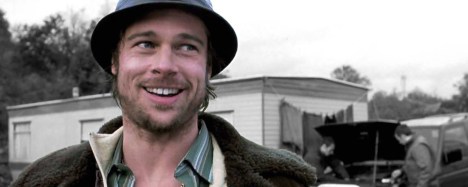
Guy Ritchie is an interesting director, in large part because there seems to be very little that actively defines “a Guy Ritchie film” outside of a few stylistic quirks.

Films like Lock, Stock and Two Smoking Barrels, Snatch, Revolver, RocknRolla and The Gentlemen suggest a director fascinated with “hard men”, and some of this sensibility undoubtedly carries over into his blockbuster filmography, most obviously in the rambunctious stylings of Sherlock Holmes and most painfully in the attempts at grit in King Arthur. However, Ritchie has also spent a lot of time working as a director-for-hire on mainstream blockbusters worlds apart from that hypermasculinity, such as Swept Away, The Man From U.N.C.L.E. or Aladdin.
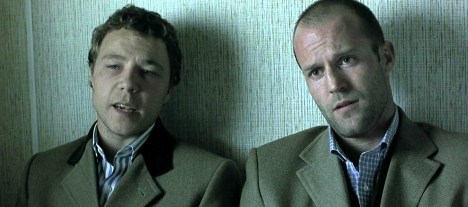
More than that, Ritchie’s work is more often recognised for its visual flourish rather than its thematic coherance, the director adopting a high-energy approach to camera movements and editing. Ritchie’s emerged from British independent cinema in the late nineties, and his work shares more than a few passing similarities to the work of young and hungry filmmakers working on the contemporary American scene. It is perhaps too much to describe Ritchie as “the British answer to Quentin Tarantino”, but it’s not entirely unfair either.

This is what makes Snatch such an interesting film. It is Ritchie’s second film, one that notably added some transatlantic flavour to the sensibilities of Lock, Stock and Two Smoking Barrels. Indeed, it’s tempting to write Snatch as an inferior copy of that earlier film, as a reiteration of that striking cinematic debut with extra Brad Pitt thrown in for marketability. After all, this was a particularly common line of criticism when the film was released. While there’s certainly some substance to this accusation, it overlooks the way in which Snatch makes its arguments much more clearly.

Continue reading

New Escapist Column! On Understanding “Twin Peaks” Emotionally, Rather than Intellectually…

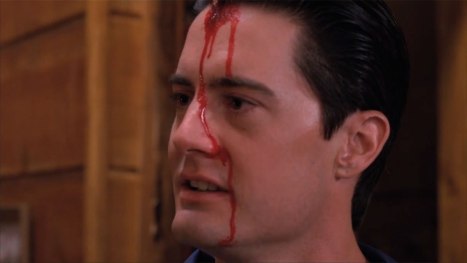
I published a new In the Frame piece at Escapist Magazine yesterday. With the thirtieth anniversary of Twin Peaks, I got to talk a little bit about the show and David Lynch.

Lynch has a reputation as a “difficult” artist for audiences, a filmmaker whose art is challenging and provocative. It’s easy to see why. On a simple mechanical level, it can be very difficult to explain what happens during a David Lynch film or television show. More to the point, two different audience members might provide two very different descriptions. However, that’s always been what I admired about Lynch. As a critic, he forces me to engage emotionally with his work because an intellectual understanding is never enough. I feel Lynch’s work, even if I don’t comprehend it.

You can read the piece here, or click the picture below.

New Escapist Column! On “The Last Jedi”, “The Rise of Skywalker” and What Makes a Good Sequel…

I published a new In the Frame piece at Escapist Magazine on Friday.

It seems like the arguments over Star Wars: Episode IX – The Rise of Skywalker have at least entered that “justification” stage. This week, editors Maryann Brandon and Mary Jo Markey reopened the conversation by trying to shift the blame on to Star Wars: Episode VIII – The Last Jedi, claiming that it represented a betrayal of Star Wars: Episode VII – The Force Awakens. This is nonsense, of course, but it does invite a larger debate about what exactly makes for a good sequel. What does a follow-up owe to an original?

You can read the piece here, or click the picture below.

177. Portrait de la jeune fille en feu (Portrait of a Lady On Fire) – This Just In/World Tour 2020 (#226)

Hosted by Andrew Quinn and Darren Mooney, and this week with special guests Aoife Barry, Rioghnach Ní Ghrioghair and Charlene Lydon, The 250 is a (mostly) weekly trip through some of the best (and worst) movies ever made, as voted for by Internet Movie Database Users.

This time, Céline Sciamma’s Portrait de la jeune fille en feu.

Marianne is a portrait artist who is summoned to a remote island and assigned a strange task. The Contessa would task Marianne with preparing a portrait of her daughter Héloïse, which might be sent to a waiting suitor in Milan. There is just one complication; Héloïse has refused to sit for any portrait painter, and so Marianne must paint the young woman without her knowledge. However, as Marianne studies her subject more intensely, she finds herself more and more drawn to this isolated and lonely soul.

At time of recording, it was ranked 226th on the list of the best movies of all time on the Internet Movie Database.

Continue reading

Non-Review Review: Butt Boy

Butt Boy is a single joke stretched over one hundred minutes. However, the film is elevated by its sheer and unrelenting commitment.

At its core, Butt Boy is a piece of surrealist comedy. Chip Gutchell is a middle aged man who works a deadend job “in computers” and lives with a wife who seems actively hostile to the idea of intimacy with him. His life is empty and meaningless, until he has a spiritual experience in the middle of a proctology exam. Chip becomes obsessed with placing objects in his butt, indulging those urges whenever he is left unattended. Gradually, those desires grow in intensity with catastrophic results.

It is a naturally absurd set-up, one that simultaneous offers broad riffs on heterosexual masculine anxieties and the escalating horrors of addiction. After several people go missing, alcoholic police officer Russel Fox begins to put the pieces together with no idea about where it might end. Butt Boy is an ultra low budget independent film, and unapologetically so. Everything is hypersaturated, props and locations often seem improvised, and the quality of performance varies wildly from scene-to-scene. More than that, the film is essentially an extended riff on one comedic set-up.

And yet, in spite of all of that, Butt Boy works surprisingly well. The key is the film’s single-minded focus on that single absurd premise, on the image of a man who has developed an anal fixation so strong that he at point tries to consume an entire police car. Butt Boy never flinches. It never breaks eye contact. It never corpses, not matter how far it follows that premise down its various rabbit holes. There is something strangely appealing in that, which suggests a bright future for writer, director and lead actor Tyler Cornack.

Continue reading