• Following Us

  • Categories

  • Check out the Archives


  • Awards & Nominations

Millennium – Season 3 (Review)

This July, we’re taking a trip back in time to review the sixth season of The X-Files and the third (and final) season of Millennium.

Three seasons is a good run.

It’s not a great run, but it is worth noting that Millennium ran longer than any of Chris Carter’s creations other than The X-Files. Given you grim and esoteric Millennium turned out to be, that is quite impressive. Notably, even the third season of Millennium performed better in the ratings than the first season of Harsh Realm. In many respects, Millennium is a very odd television show; it seems surprising that it lasted for three seasons. While fans (and many who worked on it) might have wanted more, Millennium is not a failure.

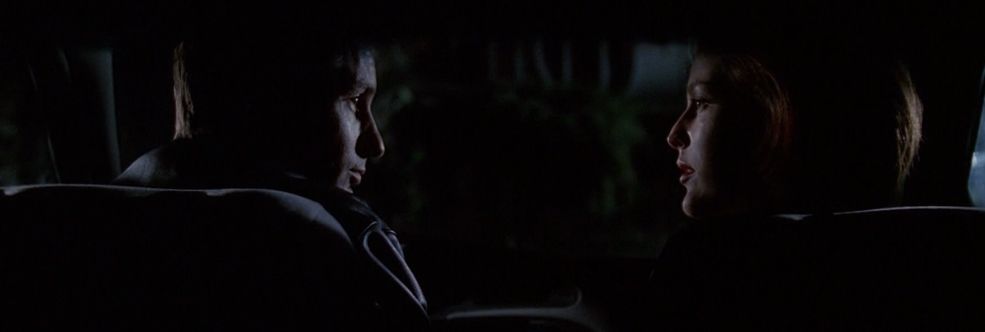
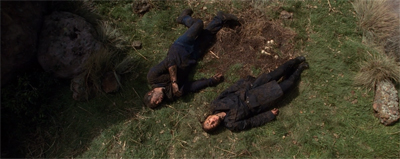
millennium-thesoundofsnow28

That said, the third season of Millennium is a disaster. There are a lot of reasons for this. The show was renewed by Fox quite late in the process, meaning the production team had little time to prepare. Glen Morgan and James Wong had no interest in returning to run the show, even if the rest of the staff would have them. Either due to time constraints or frustration, nobody asked Morgan and Wong about resolving the ending of The Time is Now. Michael Duggan was hired as showrunner, only to depart eight episodes into the season.

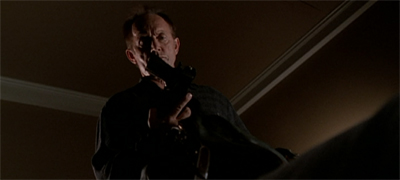
With all of this going on, the problems with the third season are entirely understandable. The season feels like a disjointed mess because there was chaos behind the scenes. The season was confused about its own continuity because the production team had no idea what to make of the second season. With ratings plunging, the show sought comfort in the familiar; there is an extended stretch near the start of the third season where it feels like the production team were trying to turn the show into a copy of The X-Files.
millennium-teotwawki22

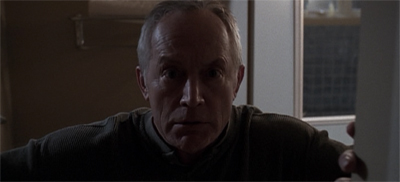
The third season of Millennium has fairly terrible reputation among fans. This is not entirely undeserved; the early stretch of the third season contains a string of the worst episodes that Millennium ever produced. As sympathetic as the surrounding circumstances might make an audience to the show, that goodwill evaporates when confronted with episodes like The Innocents, Exegesis, TEOTWAWKI, Skull and Bones, Through a Glass Darkly, Human Essence and Omertà. The series improves dramatically in its middle section; but it is never consistent.

The third season contains a number of underrated episodes that do count among the best that the show ever produced, and a whole host of more interesting failures around those episodes. Perhaps the best thing that might be said about the third season is that it is interesting at least as often as it is bad. That might not sound like a ringing endorsement. It isn’t. The third season of Millennium doesn’t work. The reasons for this are entirely understandable, but that does not make it any easier to watch.
millennium-sevenandone24

Continue reading

The X-Files – Season 6 (Review)

This July, we’re taking a trip back in time to review the sixth season of The X-Files and the third (and final) season of Millennium.

The sixth season of The X-Files is notable for many different reasons. It was the first season after the release of The X-Files: Fight the Future. It was the first season following the move to Los Angeles. It saw the “end” (at least nominally) of the show’s conspiracy mythology in the massive Two Fathers and One Son two-parter. It was the first season to begin closer to the end of the show’s nine-year run than to the beginning. It was also the first season to open past the hundred-episode mark.

That last landmark is important, because it marks the point at which The X-Files could effectively be sold into syndication. One hundred episodes meant that a network could air the show five nights a week for twenty weeks, filling up almost half a year’s worth of broadcasting slots. Reaching the one hundred episode mark meant that a show was a bona fides success, and that anything else was really just gravy on top. The bulk of the work had been done. The X-Files would be a rare prime-time drama to pass two hundred episodes.

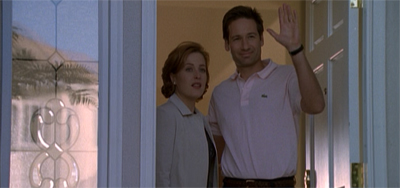
xfiles-howtheghostsstolechristmas2a

Of course, times have changed. By 2011, the number of episodes required for a syndication deal had slipped from one hundred to a mere eighty-eight, with the goal being four seasons of twenty-two episodes. (This trend happened while The X-Files was on the air, with the show dropping from twenty-four or twenty-five episodes in a season at the start of its run to twenty-two or twenty towards the end.) Even then, streaming has changed the media landscape, making it more possible than ever to syndicate show with shorter runs, like Community.

So syndication beckoned for The X-Files. In fact, syndication would pose no shortage of trouble for the show in the years ahead. During the seventh season, David Duchovny would file a lawsuit against Fox alleging that the company’s syndication policy had cost him financially. After the show went off the air, Carter would find himself embroiled in a similar lawsuit over syndication rights, delaying production of The X-Files: I Want to Believe. There are worse ways to argue that The X-Files was a victim of its own success than to look at the syndication of the show.

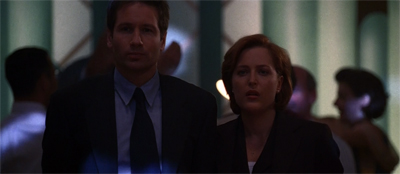
xfiles-arcadia7

Nevertheless, it was clear that The X-Files had accomplished everything that it could ever want by the start of the sixth season. Chris Carter had his five seasons and a movie. Fox had a show they could syndicate. David Duchovny had forced the production to move to Los Angeles so that he could spend time with his family. Although nobody knew it at the time, the fifth season secured the highest rankings that a season of The X-Files would enjoy in the Nielsen Ratings. So going into the sixth season of The X-Files, there was only one question hanging in the air.

What now?

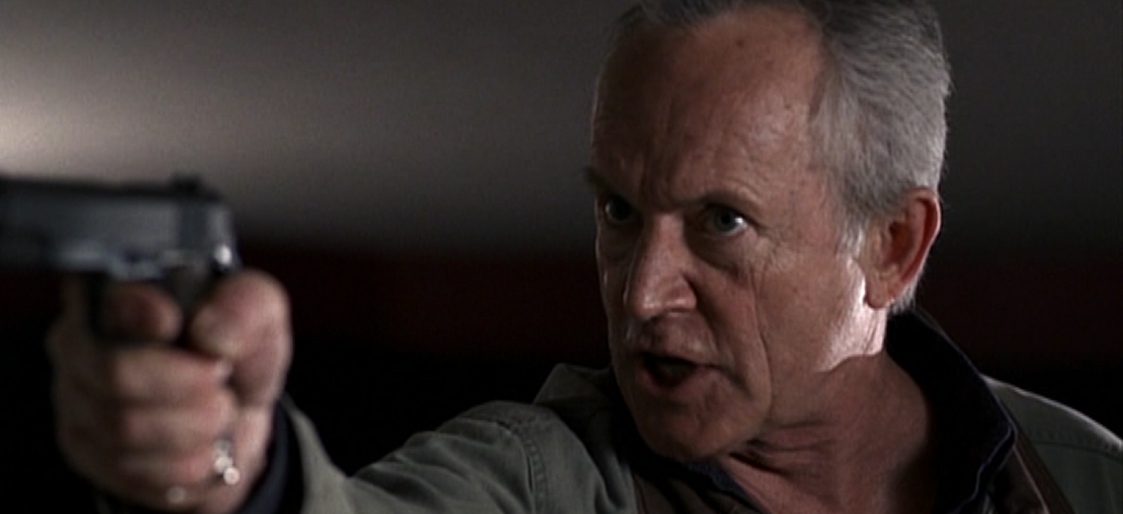
xfiles-therainking25

Continue reading

Millennium – Goodbye to All That (Review)

This July, we’re taking a trip back in time to review the sixth season of The X-Files and the third (and final) season of Millennium.

Goodbye to All That is not a bad place to leave Millennium, truth be told.

Sure, the episode has its problems, but that is true of pretty much every third season episode. However, showrunners Chip Johannessen and Ken Horton do try to offer the show some sort of closure. While Emma betraying Frank before he rides off into the sunset might have been a nice set up for a new fourth season status quo, it also feels like a nice place to leave the show as well. Director Thomas J. Wright frames that closing shot beautifully, to the point where anything that follows does feel like a coda to the three-season show.

Don't be dark, Frank Black...

Don’t be dark, Frank Black…

More than that, there’s a curious magnanimity to Goodbye to All That. The episode seems to suggest that perhaps Millennium has finally resolved all its internal conflicts about its own history. As with Borrowed Time, The Sound of Snow or Collateral Damage, there is a sense that Goodbye to All That is trying to create a cohesive theory of Millennium – suturing together three very different seasons into something approaching a singular entity. The task is impossible, but Goodbye to All That makes a valiant effort.

Yes, the actual plotting is ridiculous and Goodbye to All That tries to do too much in a single forty-five minute episode, but these are far from the worst vices of the third season. It is too much to suggest that Goodbye to All That wraps up Millennium on a high, but it does allow the show to bow out with its head held high.

"You know, for a secret organisation, we sure do a lot of branding..."

“You know, for a secret organisation, we sure do a lot of branding…”

Continue reading

The X-Files – Biogenesis (Review)

This July, we’re taking a trip back in time to review the sixth season of The X-Files and the third (and final) season of Millennium.

‘When Alexan­der saw the breadth of his domain, he wept for there were no more worlds to con­quer.’ Ben­e­fits of a clas­si­cal education.

– Hans Gruber, Die Hard

In hindsight, “ending” the mythology with a two-parter in the middle of the season was always a risky proposition.

Airing Two Fathers and One Son during February Sweeps was a logical decision. Ending the mythology that had been running through the show for five-and-a-half seasons was certain to grab the attention of casual viewers, reeling them in to boast up ratings. The X-Files had always aired mythology two-parters during Sweeps, putting them forward as examples of the best that the series could do and cementing the show’s claim to be “blockbuster television.” Choosing to wrap up the mythology during February Sweeps was just an extension of that approach.

Look what just washed up...

Look what just washed up…

And it worked. Two Fathers earned the second highest Nielsen score of the sixth season, landing just behind The Rain King. Two Fathers was the last time that The X-Files would rate so highly. As such, the decision to “close off” the mythology in the middle of the season was a very shrewd decision. However, it did raise questions about what the show would do at the very end of season. After all, The X-Files liked to bookend its seasons with mythology episodes, counting on a mythology cliffhanger to carry viewers across the long gap between seasons.

How do you tell a mythology story when you’ve just worked so hard to tidy it all away?

Behind the curtain...

Behind the curtain…

Continue reading

Millennium – Via Dolorosa (Review)

This July, we’re taking a trip back in time to review the sixth season of The X-Files and the third (and final) season of Millennium.

And so, Millennium ends.

That is not entirely accurate. Via Dolorosa and Goodbye to All That are really the third ending to Millennium. Chris Carter’s oft-overlooked series famously reinvented itself in each of its three seasons. Every season finalé was a series finalé, bidding farewell to one version of the show before another arrives. In the first season, it was a serial killer procedural with ominous spiritual undertones. In its second season, it was the story of a family breakup that drew in all manner of religious conspiracy theories and eschatology. In its third season, it was…

"Did I tell you that I REALLY like The Silence of the Lambs?"

“Did I tell you that I REALLY like The Silence of the Lambs?”

Well, it is hard to tell what the third season was – or even what it wanted to be.

Nevertheless, Via Dolorosa and Goodbye to All That feel like an attempt to grant the series some sense of closure. In a way, these episodes typify the third season. They are messy and confused, awkwardly paced and drawn in broad strokes. At the same time, there are enough interesting ideas and clever concepts that one can see how they might have come together with a bit more craft. There is an outline of a great episode here, with Via Dolorosa and Goodbye to All That making a valiant effort to pull together messy strands of continuity from across the show’s run.

"Yep, it feels a little bit like that."

“Yep, it feels a little bit like that.”

The third season of Millennium was hampered by terrible decisions made out of the gate, but the final stretch of the season has no shortage of ambition and drive. It is no secret that the third season suffered from a number of serious problems at the start of the year. Maybe if those had been avoided, Via Dolorosa and Goodbye to All That would have an easier time drawing down the blinds. Still, it is impossible to know what might have been, and the truth is that Via Dolorosa and Goodbye to All That are a flawed conclusion to a flawed year.

Perhaps appropriately, Via Dolorosa and Goodbye to All That offer a rather disjointed conclusion to a rather disjointed year. Via Dolorosa and Goodbye to All That are written by two different teams of writers and directed by two different directors. Although the plot carries across both episodes, there are points where the transition seems rather inelegant or incongruous. Then again, this is about wrapping up the show’s troubled third season, so it is certainly representative.

"Take a picture. It'll last longer."

“Take a picture. It’ll last longer.”

Continue reading

The X-Files – Field Trip (Review)

This July, we’re taking a trip back in time to review the sixth season of The X-Files and the third (and final) season of Millennium.

Field Trip works well as the penultimate episode of the sixth season.

It returns to a lot of big ideas threaded through the sixth season, particularly as they relate to endings and mortality. It also pushes the bond between Mulder and Scully to the fore; it feels like something of a spiritual successor to both Bad Blood and Folie á Deux in its portrayal of the dynamic between Mulder and Scully, charting a rough arc in how Mulder and Scully come to see themselves and each other. Even beyond all that, it contains another surrogate romantic relationship for Mulder and Scully, this time in Wallace and Angela Schiff.

A lot to digest...

A lot to digest…

More to the point, Field Trip seems to hit on the core anxieties at the heart of the sixth season. It is a meditation on the show’s success and the status quo that has to be so careful maintained to keep the show from tipping over. As with TriangleDreamland IDreamland II, How the Ghosts Stole Christmas and Monday, our heroes find themselves trapped in something of a weird alternate reality. The climax of Field Trip hinges on both Mulder and Scully deducing that their world operates according to the logic of a television show.

However, Field Trip is perhaps most intriguing in the way that it proposes two separate endings to The X-Files. The humongous fungus at the heart of Field Trip offers both Mulder and Scully a conclusion to their six-year journey, an opportunity for closure and satisfaction. In doing so, Field Trip suggests that it is the central tension at the heart of The X-Files that keeps the show young. There is no way to end the show without absolutely and definitively declaring that one of the characters is right and the other is wrong.

Down the rabbit hole...

Down the rabbit hole…

As such, the endings seem mutually exclusive. Field Trip suggests that endings designed to satisfy Mulder and Scully and mutually exclusive and irreconcilable – recalling the implication in Bad Blood that both Mulder and Scully filter the same events through different lenses. However, Field Trip is rather more optimistic in its assessment of the dynamic between Mulder and Scully. While it might not be able to provide an ending to the show that satisfies both, Field Trip suggests that the duo have reconciled themselves to each other.

Whereas Bad Blood seemed to state that Mulder and Scully would never share the same perspective, Field Trip suggests that both characters have evolved and matured to the point where they can see the world through the eyes of the other. Bad Blood featured the two characters positing wildly different accounts of the same event, but Field Trip only resolves when Mulder and Scully come to share each other’s perspective. It feels entirely appropriate to close out the sixth season suggesting a new harmony between the two leads.

It's a dirty job...

It’s a dirty job…

Continue reading

Millennium – Nostalgia (Review)

This July, we’re taking a trip back in time to review the sixth season of The X-Files and the third (and final) season of Millennium.

Nostalgia is the last “serial killer of the week” story produced by Millennium.

Sure, there is a serial killer in Via Dolorosa and Goodbye to All That, but the last two episodes of Millennium are much more interested in the show’s mythology than in a nuts-and-bolts “Frank catches a serial killer” story. Appropriately enough, given its title, Nostalgia feels like a throwback to a simpler version of Millennium. In a way, it does more to capture the mood and feel of the first season of the show than anything like Matryoshka or Seven and One. It helps that Nostalgia is a great episode, judged by it own merits.

Frank sees all. All.

Frank sees all. All.

It makes sense that Nostalgia should come from Michael R. Perry. With his debut script for The Mikado in the second season, Perry had demonstrated quite a knack for traditional Millennium storytelling. The Mikado was arguably something of a throwback itself, the most old-school “serial killer of the week” story in the show’s delightfully off-kilter second season. If the show wanted to do one last “serial killer of the week” story, there was no writer better suited to crafting it than Michael R. Perry.

In a way, Nostalgia feels like belated vindication for the “back to basics” aesthetic running through the third season – proof that perhaps it might be possible for the show to recapture some of the stronger aspects of the first season even this late in the game. Nostalgia is a much better version of the stories that Closure and Through a Glass Darkly had tried to resurrect earlier in the year. It might be enough to entirely redeem the season’s stubborn fixation on a past fading into history, but it does demonstrate that there were interesting stories to be told using that technique.

Parks and recreation...

Parks and recreation…

Continue reading

The X-Files – Three of a Kind (Review)

This July, we’re taking a trip back in time to review the sixth season of The X-Files and the third (and final) season of Millennium.

Unusual Suspects is perhaps an underrated episode.

The third episode broadcast of the fifth season is a light adventure that offers viewers an origin story of the Lone Gunman. Byers, Langley and Frohike have been around since E.B.E. towards the end of the first season, and have become an integral part of the show’s ensemble cast. Unusual Suspects is frequently written off as a piece of fluff designed to work around the limited availability of David Duchovny and Gillian Anderson due to on-going production work on The X-Files: Fight the Future.

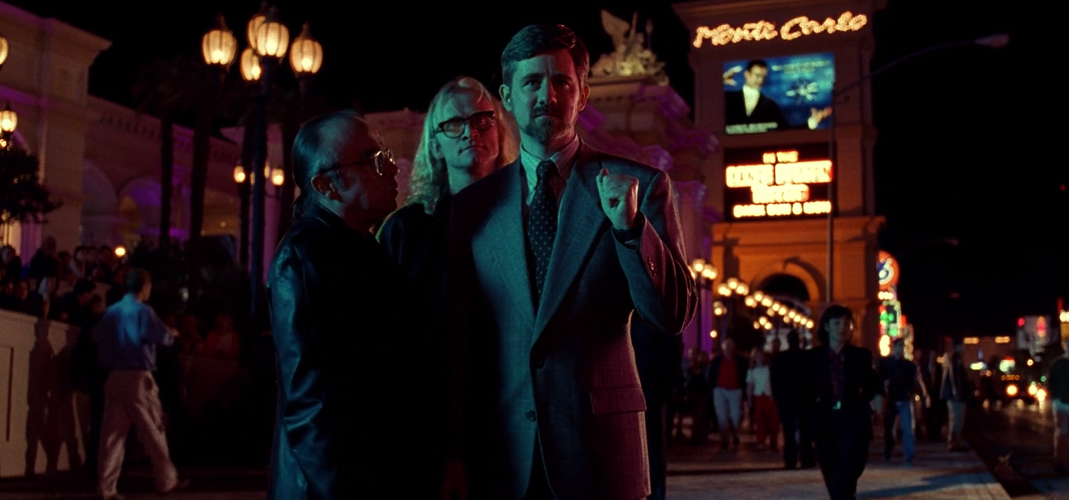
Viva Las Vegas...

Viva Las Vegas…

This seems dismissive of Vince Gilligan’s paranoid origin story, which is one of the few times that Gilligan engages directly with the themes that underpin the sprawling mythology at the heart of the show. Unusual Suspects is not a “mythology episode” in the way that gets episodes repackaged on DVD collections, but it does explore the idea of conspiracy and paranoia as a personal narrative. Unusual Suspects is a very sweet story about a lost and heartbroken man who builds a conspiracy mythology around himself because he has nothing else to do.

Three of a Kind is very much a sequel episode to Unusual Suspects, focusing again on the Lone Gunmen and bringing back Susanne Modeski. However, it is a much lighter and more disposable story. Barring the beautifully crafted prologue, Three of a Kind is an entirely disposable episode of television. It feels like filler. It is neither a beginning nor an end to the story of Byers or the Lone Gunmen. It is just a long middle, with the characters ending up back where they began. In a way, this makes it feel very much like a standard sixth season episode.

A man alone...

A man alone…

Continue reading

Millennium – Seven and One (Review)

This July, we’re taking a trip back in time to review the sixth season of The X-Files and the third (and final) season of Millennium.

Seven and One is the last episode of Millennium to be written by Chris Carter and Frank Spotnitz.

That is a pretty big deal. Frank Spotnitz had been a vital part of Ten Thirteen since the second season of The X-Files. He had also been the only X-Files writer apart from Chris Carter, Glen Morgan and James Wong to cross over to work on Millennium. He would become one of Carter’s most trusted associates, also contributing scripts to Harsh Realm and The Lone Gunmen. When The X-Files: Fight the Future took Carter’s attention away from Millennium in its second season, he proposed Spotnitz to run the show in his stead.

Here's Frankie!

Here’s Frankie!

Chris Carter had created Millennium, and it was clearly a show that meant a lot to him. While The X-Files was populist and accessible, Millennium always felt like more of an auteur project. It was solemn, abstract, contemplative. There is a sense that he was quite disappointed when his attention was diverted away from the show in its second year. Carter has talked time and time again about how he created Millennium as an examination of evil in the world. Appropriately enough, Seven and One finds him circling back around to that idea right before the show concludes.

Seven and One might be the most overtly religious script that Carter and Spotnitz have ever written. It seems to foreshadow the closing themes of Carter’s script for The Truth, the final episode of The X-Files. It emphasises just how essential religious themes are to Carter’s work.

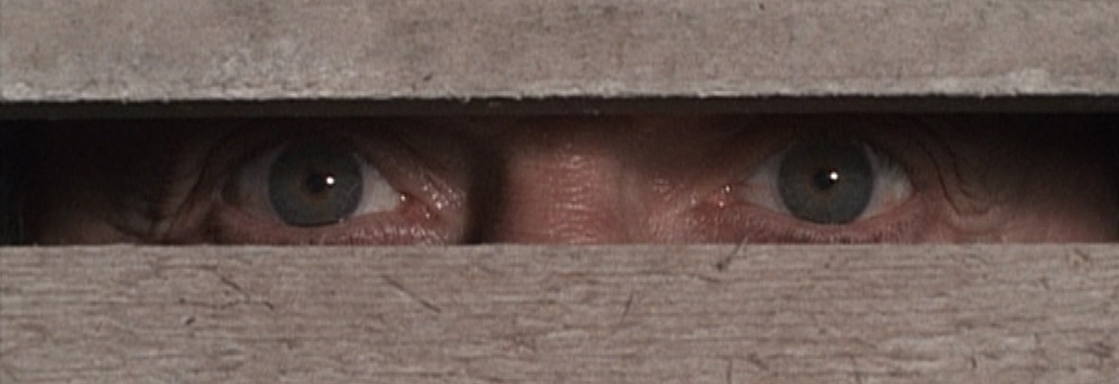
Eye spy...

Eye spy…

Continue reading

The X-Files – The Unnatural (Review)

This July, we’re taking a trip back in time to review the sixth season of The X-Files and the third (and final) season of Millennium.

Let me get this straight: a free-spirited alien fell in love with baseball and ran away from the other non-fun-having aliens and made himself black, because that would prevent him from getting to the majors where his unspeakable secret might be discovered by an intrusive press and public and you’re also implying that…

You certainly have a knack for turning chicken salad into chicken spit.

– Fox Mulder and Arthur Dales discuss the merits of The Unnatural

Swing and a hit...

Swing and a hit…

Continue reading