• Following Us

  • Categories

  • Check out the Archives


  • Awards & Nominations

Star Trek: Enterprise – Season 3 (Review)

Next year, Star Trek is fifty years old. We have some special stuff planned for that, but – in the meantime – we’re reviewing all of Star Trek: Enterprise this year as something of a prequel to that anniversary. This August, we’re doing the third season. Check back daily for the latest review.

The third season of Star Trek: Enterprise is a mess.

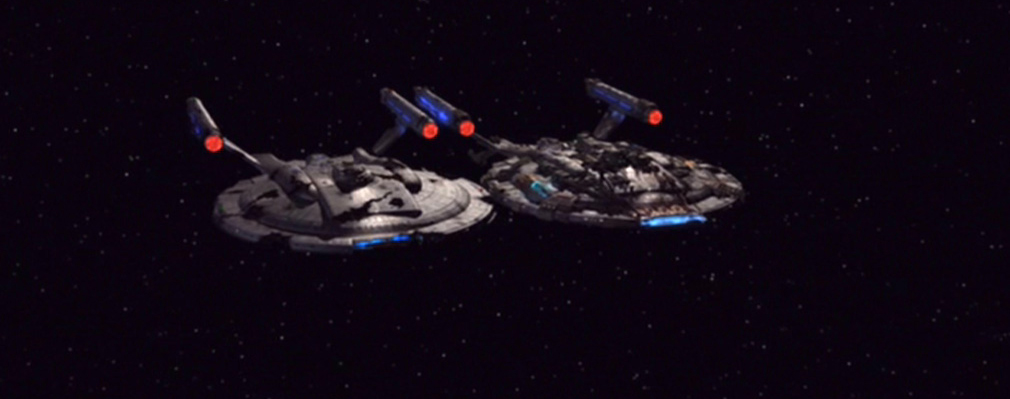
It is very clearly the work of a production team still figuring out how to plot long-form stories and struggling with the logistical difficulties of mapping out a single narrative across what was originally planned as a twenty-six episode season. There are extended periods where narrative momentum stalls; there are key moments where it seems like the show has no idea where it wants to go next. It seems like the production team never sat down in the gap before production began to figure out what story they wanted to tell, and ended up improvising.
ent-e2f1

However, it is also a bold and ambitious piece of television. It demonstrates an energy and excitement that had been lacking from the Star Trek franchise since Star Trek: Deep Space Nine went off the air. It is a season of television that doesn’t always work, but that is to be expected when the production team are trying something new. The failures of the first two seasons of the show often stemmed from a lack of ambition on the part of the production team; the failures in the third season are rooted in a surplus of ambition. It is hard to find them too objectionable.

The Xindi arc doesn’t always work as well as it might, but it works more than often enough to excuse the clumsy missteps along the way. There is something compelling and dynamic about a Star Trek show that is willing to push itself so far outside its own comfort zone. There is a spirit of adventure to the third season of Enterprise that had been sorely lacking from the first two seasons of the show. The biggest disappointment is that it took the show this long to find that confidence and that adventurousness.
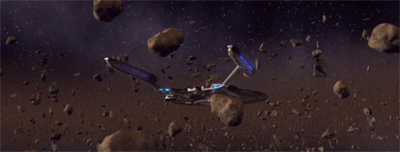
ent-thexindi25 Continue reading

The X-Files – The Sixth Extinction (Review)

This November, we’re taking a trip back in time to review the seventh season of The X-Files and the first (and only) season of Harsh Realm.

The fate of individual human beings may not now be connected in a deep way with the rest of the universe, but the matter out of which each of us is made is intimately tied to processes that occurred immense intervals of time and enormous distances in space away from us. Our Sun is a second- or third-generation star. All of the rocky and metallic material we stand on, the iron in our blood, the calcium in our teeth, the carbon in our genes were produced billions of years ago in the interior of a red giant star. We are made of star-stuff.

– Carl Sagan’s Cosmic Connection

Sea of blood...

Sea of blood…

Continue reading

Star Trek: Enterprise – Zero Hour (Review)

Next year, Star Trek is fifty years old. We have some special stuff planned for that, but – in the meantime – we’re reviewing all of Star Trek: Enterprise this year as something of a prequel to that anniversary. This August, we’re doing the third season. Check back daily for the latest review.

There was a very real chance that Zero Hour might have been the last episode of Star Trek: Enterprise to air.

In fact, it was entirely possible that Zero Hour‘s distinctive (and downright provocative) closing shot of an evil!alien!space!Nazi might have been the last shot of Star Trek to air on television for quite some time.

Time is running out...

Time is running out…

Continue reading

Harsh Realm – Inga Fossa (Review)

This November, we’re taking a trip back in time to review the seventh season of The X-Files and the first (and only) season of Harsh Realm.

Inga Fossa is a noteworthy episode of Harsh Realm for a number of reasons.

In production terms, it closes out the loose three-episode introduction to the series. The Pilot, Leviathan and Inga Fossa were all written by Chris Carter and served as an introduction to the world and rules of Harsh Realm. Perhaps owing to the relative complexity of the show’s premise, Carter takes a bit of time to lay out and establish the core ideas of the show. It isn’t until the end of Inga Fossa that characters like Thomas Hobbes and Sophie have reached the status quo that will carry them through the rest of the first season.

Game on...

Game on…

However, all of this is ultimately irrelevant. Inga Fossa will always be notable for being the final episode of Harsh Realm to air on Fox. Chris Carter’s new show was infamously cancelled after only three episodes were broadcast. The six episodes that had been produced before cancellation were quietly shuffled off Fox’s 1999 schedule; they eventually aired on FX in mid-2000, to little fanfare. The cancellation was a shocking development. The ratings were spectacularly terrible, but Harsh Realm had been intended to establish Carter as the network’s idea-generating machine.

Something was very wrong.

"You can't $@!# in here, this is the war room!"

“You can’t $@!# in here, this is the war room!”

Continue reading

Star Trek: Enterprise – Countdown (Review)

Next year, Star Trek is fifty years old. We have some special stuff planned for that, but – in the meantime – we’re reviewing all of Star Trek: Enterprise this year as something of a prequel to that anniversary. This August, we’re doing the third season. Check back daily for the latest review.

Star Trek: Enterprise spent a lot of the final stretch of the third season playing at being Star Trek: Deep Space Nine. There are a number of episodes that provide a direct parallel with stories from that earlier underrated Star Trek show. Damage riffs on In the Pale Moonlight. is very much Children of Time. More than that, the moral ambiguity and the long-form storytelling that define the third season of Enterprise also owe a very conscious debt to the work done on Deep Space Nine.

However, the final two episodes of the third season drift away from the ethical uncertainties and moral quagmires that defined a lot of the year’s stories. The Council effective resolved the big thematic questions hanging over the third season, allowing Archer the chance to propose a diplomatic solution to the Xindi crisis. This allows Countdown and Zero Hour to go about the task of providing a suitably impressive action climax to this twenty-four-episode season-long arc. There is precious little soul-searching here; instead, there is one big race against time.

The life aquatic...

The life aquatic…

In that respect, the last two episodes of the third season hark back to a more traditional form of Star Trek storytelling. In particular, Countdown and Zero Hour feel like an old-school blockbuster two-parter, in the style of Star Trek: The Next Generation or Star Trek: Voyager. In fact, with Archer’s fate in question and a hostile unstoppable force invading the solar system only to be destroyed in orbit of Earth, Countdown and Zero Hour play like an extended homage to The Best of Both Worlds.

While one of the most frequent criticisms of Enterprise is the sense that the writing staff are simply regurgitating classic Next Generation and Voyager plots, this feels almost earned. The third season has largely been about the show’s journey back to the heart of the Star Trek franchise, a trip that concluded with Archer embracing traditional Star Trek values in The Council. But what fun is that journey if you don’t get to celebrate it with an epic high-stakes world-ending rollercoaster ride?

"We cool?" "We cool."

“We cool?”
“We cool.”

Continue reading

Harsh Realm – Leviathan (Review)

This November, we’re taking a trip back in time to review the seventh season of The X-Files and the first (and only) season of Harsh Realm.

The first three episodes of Harsh Realm are an interesting combination, and not just because they were the only three episodes of the show to air before cancellation.

All three episodes are written by Chris Carter. The first two are directed by Daniel Sackheim. Taken together, they form a loose triptych. They are effectively three separate stories that come together to form a three-part pilot for the show. It is only by the end of Inga Fossa that Thomas Hobbes (and the audience) fully accept the virtual world into which they have been placed, embracing the hero’s journey that lies ahead. It isn’t until Kein Ausgang that the show really offers the audience a sense of how it might work on a weekly basis.

Fading out...

Fading out…

This is not to suggest that the events of The Pilot flow elegantly into Leviathan, nor that the events of Leviathan bleed over into Inga Fossa. All three episodes of television are discreet and individual; foreshadowing the format that the show would take in its relatively brief life. Interestingly, Carter does not take advantage of the show’s video game structure to enforce more rigid serialisation. If anything, most the nine episodes (particularly the back six) are rigidly episodic.

Leviathan is particularly relaxed in its structure. The Pilot offered all the spectacle and exposition necessary to establish Harsh Realm. In contrast, Leviathan is a bit more focused on mood and atmosphere. There is an impressive action sequence to close out the episode, but there is a larger sense that Leviathan is about establishing what day-to-day existence must be like in this virtual world.

General problems...

General problems…

Continue reading

Star Trek: Enterprise – The Council (Review)

Next year, Star Trek is fifty years old. We have some special stuff planned for that, but – in the meantime – we’re reviewing all of Star Trek: Enterprise this year as something of a prequel to that anniversary. This August, we’re doing the third season. Check back daily for the latest review.

From a technical standpoint, The Council is the third last episode of the third season. From an arc-based standpoint, the third season Xindi arc is not completely resolved until the events of Home three episodes into the fourth season. However, there is an argument to be made that The Council represents the logical conclusion of the third season arc. Sure, Countdown and Zero Hour provide a suitably bombastic resolution to the year-long story, but The Council is the story that really resolves the central conflict driving the season.

After twenty-one episodes of moral ambiguity and ethical compromise, The Council exists to assure viewers that Star Trek: Enterprise has not forgotten the optimistic humanism that has guided the franchise. The Council confirms what most even-handed fans had probably deduced from The Expanse and what had been rendered explicit in The Shipment. The third season was never about getting away from the core utopian values associated with the Star Trek franchise; instead, it was about an attempt to get back to those hopeful ideals.

"I told you not to interrupt me when I'm working on my tan!"

“I told you not to interrupt me when I’m working on my tan!”

As the name implies, The Council is a rather talky script; it is certainly the most talky script between this point and the end of the third season. The episode’s plot finds Archer making his case to the Xindi Council, appealing for a peaceful resolution to the escalating crisis. Archer puts aside his anger and his thirst for retribution, in the hope of finding common ground that might accommodate both sides without resort to warfare or attempted genocide. Naturally, Archer is not entirely successful; the season needs an action climax. However, he is close enough.

Much like The Forgotten, it turns out that The Council is a script about moving beyond grief and hatred towards reconciliation and understanding. It affirms that the third season of Enterprise is (and was always) following a very traditional Star Trek arc.

"Et tu, Dolim?"

“Et tu, Dolim?”

Continue reading

Harsh Realm – Pilot (Review)

This November, we’re taking a trip back in time to review the seventh season of The X-Files and the first (and only) season of Harsh Realm.

Hereby it is manifest, that during the time men live without a common Power to keep them all in awe, they are in that conditions called Warre; and such a warre, as is of every man, against every man.

– Thomas Hobbes, Leviathan, The First Part, Chapter XIII

Harsh Realm is essentially a war story, or a collection of war stories.

To be fair, there are other themes that bleed through the show’s short nine-episode run; a critique of late-stage capitalism, a healthy dose of Chris Carter’s patented nineties existential spirituality, an exploration of American masculinity. The show plays on all sorts of genres across its short lifespan, from horror story to western to modern noir film. However, all of these unfold against the backdrop of a world locked in total warfare. The opening scenes of The Pilot unfold against the Siege of Sarajevo, setting the tone for the rest of the series.

Tom's not here, man...

Tom’s not here, man…

Carter tends to wear his cinematic and televisual influences on his sleeves. The X-Files was a spiritual successor to Kolchak: The Night Stalker, with a little bit of The Parallax View and The Silence of the Lambs thrown in for good measure. Millennium launched in 1996 and owed a lot to the look and feel of David Fincher’s work on se7en. Harsh Realm owes a lot to the resurgence in war movies towards the end of the twentieth century, coming less than a year after Saving Private Ryan and The Thin Red Line both scored Best Picture nominations.

On the commentary for The Pilot, Chris Carter notes that the show’s protagonist was named for the philosopher Thomas Hobbes. Carter cites that Hobbes’ most famous observation is that life is “solitary, poor, nasty, brutish, and short.” The same might be said of the life of Harsh Realm.

Fading out...

Fading out…

Continue reading

Star Trek: Enterprise – E² (Review)

Next year, Star Trek is fifty years old. We have some special stuff planned for that, but – in the meantime – we’re reviewing all of Star Trek: Enterprise this year as something of a prequel to that anniversary. This August, we’re doing the third season. Check back daily for the latest review.

Conventional wisdom treats as a bump in the road between The Forgotten and The Council, an episode that could easily be skipped on a marathon rewatch of the season. The argument suggests that the episode ultimately provides little meaningful information and advances the season’s over-arching plot by inches. The most critical of fans will consider an episode that saps the momentum out of the final run of the third season, preventing a clear home run between Azati Prime and Zero Hour.

This is certainly true from a plot-driven perspective. It would be easy enough to trim from the twenty-four episode season order without anybody batting an eyelid. At least Shran gets to make a cameo appearance in Zero Hour, while Lorian fades into discontinuity and non-existence. Like so many time travel stories, the final act of conveniently erases itself from existence. This just reinforces the sense that nothing that happened actually mattered in the grand scheme of things.

It's like looking in a mirror...

It’s like looking in a mirror…

This is another example of the complications that tend to come with serialised storytelling. The conventional way of telling a long-form story is to drive it via plot – to have a clear path along which the characters might advance with a number of clear markers along the way. In the case of the third season of Star Trek: Enterprise, the launch of the Xindi weapon is an obvious marker; it is a plot point which the show must address before the end of the season. As such, the show’s serialisation is typically measured by whether it moves the crew in relation to that plot point.

doesn’t move the crew appreciably closer to that plot point. There is a miniature hurdle for the crew to overcome (getting into the subspace corridor to make the meeting with Degra), but it is very clearly just window-dressing on a plot that is very clearly more interested in the time-travel dynamics of having the Enterprise crew meet their descendants. The same narrative ground could have been covered by having Degra accompany Archer to the Xindi Council at the end of The Forgotten.

He's all ears...

He’s all ears…

However, plot is not the only thing important to long-form storytelling. Theme and character are just as important, as The Forgotten demonstrated. The biggest problem with is that it is a plot-driven episode of television that advances the season’s thematic and character arcs, but with a story that is disconnected from the season as a whole. Which is a shame, because the thematic and character dynamics are fascinating. This is the perfect point at which to confront Archer with the idea of legacy and consequence; to ask what kind of future might lie ahead.

As with a lot of the scripts for the third season, feels like a meditation on Enterprise‘s relationship with the rest of the franchise and where it stands at this point in its run.

"Worf and Dax neve rhad to put up with crap like this."

“Worf and Dax neve rhad to put up with crap like this.”

Continue reading

Star Trek: Enterprise – The Forgotten (Review)

Next year, Star Trek is fifty years old. We have some special stuff planned for that, but – in the meantime – we’re reviewing all of Star Trek: Enterprise this year as something of a prequel to that anniversary. This August, we’re doing the third season. Check back daily for the latest review.

The Forgotten opens with a funeral service.

It is nominally a service for the eighteen people who died in the Xindi attack. (The total was given as seventeen in Damage, but it is possible that Archer is counting the death of Fuller from Anomaly or that another crew member died in the interim from their wounds.) It is a nice illustration of just how strongly the final stretch of the third season embraces serialisation, with the episode’s teaser serving as a coda to the events of the previous two episodes. It is a nice, small touch that sets the mood for the episode ahead.

Funeral for a friend...

Funeral for a friend…

However, it also seems like a very self-aware sequence. Archer is nominally talking about the death of eighteen characters, but he might as well be talking about the looming death of this iteration of the Star Trek franchise, or of the death of innocence that featured in Damage. “We’re in bad shape, I can’t deny that,” Archer tells his crew. He could just as easily be talking about the show, which seemed practically under siege at this point. “But we’re still in one piece. Enterprise is a tough ship. She took more than anyone could ask her to and then some.”

In many ways, the beating that the Enterprise took in Azati Prime reflects the beating that Star Trek: Enterprise had taken over its three year run: from a fandom hostile to the idea of a prequel and unsatisfied with an overly familiar storytelling structure; from a network that had changed hands during the first season of the show; from an eager Hollywood press that could smell blood in the water that had been ripely aged eighteen years; even from former allies like Majel Barrett, William Shatner and Ronald D. Moore.

Tripping over his emotional state...

Tripping over his emotional state…

The Forgotten is a story that is very consciously symbolic and metaphorical. It is also something of an oddity. In a way, it feels like a more successful version of what the show attempted with Harbinger, offering a light character-driven story falling between two bigger beats in the larger plot arc. With its fixation on sex and violence, Harbinger was goofy and pulpy in equal measure. In contrast, The Forgotten is an episode that is morose and sombre. It is an episode that very clearly articulates where the third season is going – and where it always has been going.

If Damage was a show about how Star Trek could easily get lost in a grim and gritty War on Terror metaphor, The Forgotten reveals that the third season was never about rationalisation or justification. The Forgotten is a show about how the Star Trek franchise needed to find a way back to its more traditional values.

A massive breach...

A massive breach…

Continue reading