• Following Us

  • Categories

  • Check out the Archives


  • Awards & Nominations

Non-Review Review: Fear Street Part Two – 1978

Fear Street Part Two: 1978 sets itself a more modest goal than Fear Street Part One: 1994.

Part of that is simply the luxury of being the second part of a larger series. Fear Street Part Two: 1978 has appreciably less table-setting to do than Fear Street Part One: 1994, as the earlier film did a lot of the hard work in terms of establishing rules and building a framework for the trilogy’s internal mythology. While Fear Street Part Two: 1978 obviously builds on the foundations established by Fear Street Part One: 1994, it also has the luxury of working within an established template that saves it the bother of having to unload a lot of exposition very quickly while also serving as a self-contained slasher tribute.
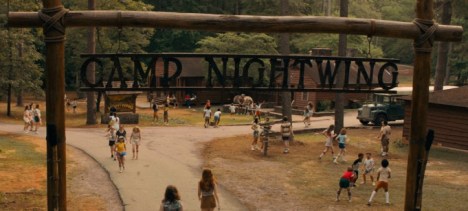
Camp Fear.

Part of it is also because Fear Street Part Two: 1978 is referencing a much less ambitious and self-aware set of movies. Fear Street Part One: 1994 was drawing from a pool of self-aware nineties horror movies like Scream, Urban Legends and I Know What You Did Last Summer, movies made by filmmakers who had grown up watching classic slasher movies on video cassettes and wanted to put their own self-aware spin on the genre and its conventions. So Fear Street Part One: 1994 was a self-aware riff on self-aware riffs on the genre. In contrast, Fear Street Part Two: 1978 draws from a purer sort of slasher movie.

These two factors mean that Fear Street Part Two: 1978 feels a lot less busy and cluttered than Fear Street Part One: 1994, if appreciably less ambitious. More than that, with a lot of the mythology building out of the way, Fear Street Part Two: 1978 is able to use its own narrative real estate to deepen and develop the core themes of the trilogy, foregrounding its big ideas with a little more finesse than the previous entry. The result is a movie that is perhaps less energised and less dynamic than its predecessor, but also a lot more comfortable and assured in what it is doing.

Sister, sister.

Continue reading

Non-Review Review: Black Widow

Black Widow was originally supposed to release in May 2020.

This would have marked as something of a “coda” movie to the main saga of the Marvel Cinematic Universe, a belated follow-up tidying away loose ends from Avengers: Endgame in much the same way as Spider-Man: Far From Home. Like a lot of the releases immediately following that massive cultural phenomenon, Black Widow feels like a bit of unfinished business. It is the first solo movie based around the only female founding member of The Avengers, a project that gestated in various forms over decades across multiple production companies.

A vicious cycle.

Of course, Black Widow would always have felt curiously out of step and out of time. Scarlett Johansson wrapped up her tenure as Natasha Romanoff in Endgame, with the superhero sacrificing her life in the quest to defeat Thanos. As a result, Black Widow has to position itself earlier in the timeline. It functions as something of an interquel between Captain America: Civil War and Avengers: Infinity War, following the title character as she desperately evades capture by United States Secretary of State Thaddeus “Thunderbolt” Ross.

Had Black Widow released on time, it still would have felt like a movie that arrived four years too late. After all, despite introducing Natasha Romanoff as early as Iron Man 2, the Marvel Cinematic Universe would not build a solo superhero film around a female character until Captain Marvel. For all the chaos unfolding behind the scenes, the DC Extended Universe managed to beat Marvel Studios to the punch with the release of Wonder Woman in May 2017. It’s interesting to wonder whether the decision to position Black Widow as a direct sequel to a May 2016 release is something of a retroactive grab at that title.

Widow maker.

Even aside from all of this baggage, Black Widow is a frustrating film. It is a movie that feels only a draft or two (or an editting pass or two) away from greatness. The film grapples with big themes and bold character work in interesting ways that occasionally verge on confrontational. After all, Natasha Romanoff has consistently been portrayed as a complicated and ambiguous figure within this world of gods and legends, an international assassin whose moral and bodily autonomy was violated in the most grotesque ways, and who responded to this by trying to reinvent herself as a superhero.

There’s a fascinating story there, and Black Widow intermittently acknowledges as much. However, when the film gets close to hitting on any nerves, it immediately retreats into snarky irony and wry one-liners that rob the story of any real weight and the characters of any real agency. Black Widow is supposed to be a story about a character asserting her own agency in the face of an uncaring machine. Instead, it feels like a film where the machine always wins.

Continue reading

New Escapist Video! “Black Widow – Review”

I’m thrilled to be launching movie reviews on The Escapist. Over the coming weeks and months, I will be joining a set of contributors in adding these reviews to the channel. For the moment, I’m honoured to contribute a three-minute film review of Black Widow, which is releasing theatrically and on Disney+ Premier Access this weekend.

New Escapist Video! On the Theme Park Ride Appeal of “Raiders of the Lost Ark”…

So, as I have mentioned before, I am launching a new video series as a companion piece to In the Frame at The Escapist. The video will typically launch with every second Monday’s article, and be released on the magazine’s YouTube channel the following week. This is kinda cool, because we’re helping relaunch the magazine’s film content – so if you can throw a subscription our way, it would mean a lot.

This week, with Raiders of the Lost Ark celebrating its fortieth anniversary, it seemed like a good opportunity to take a look at the film. In particular, how Spielberg built Raiders of the Lost Ark as a cinematic spectacle. It is one of the purest blockbusters, but also a triumph of filmmaking.

New Escapist Column! On James Cameron’s “Aliens” as a Challenge to Ridley Scott’s “Alien”…

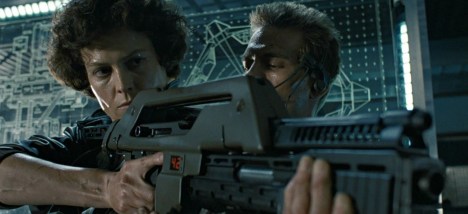
I published a new In the Frame piece at The Escapist this evening. James Cameron’s Aliens is thirty-five years old this July, so it seemed like a good opportunity to take a look back at one of the best sequels ever made.

Aliens works in large part because it’s smart enough to avoid directly challenging Alien, in that it avoids simply recycling the original formula with a shift in location or with a new cast. Instead, it offers a very different approach to the core material. More than that, James Cameron positions Aliens as a direct challenge to Alien, deliberately and pointedly inverting some of the core themes of the original film. This choice enriches both films, turning Alien and Aliens into a conversation.

You can read the piece here, or click the picture below.

Non-Review Review: Fear Street Part One – 1994

Nostalgia is a strange creature, by turns deceptive and revealing.

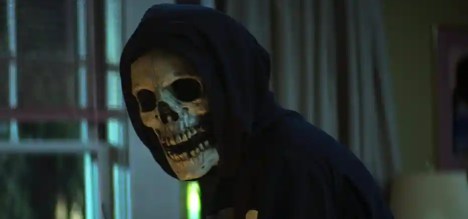
Netflix’s Fear Street trilogy, based on an original story inspired by the books written by R.L. Stine, is effectively a loving slice of horror nostalgia and a trip through slasher movie history. Fear Street Part Two: 1978 is very obviously an effort to take the genre back to its roots, evoking classics like Halloween or Black Christmas, and with its summer camp setting directly inviting comparisons to Friday the 13th and Friday the 13th, Part II. Similarly, Fear Street Part One: 1994 is clearly constructed as a loving homage to the slasher revival of the nineties, to films like Scream, Urban Legends or I Know What You Did Last Summer.

Skull Kill Crew…

In some ways Fear Street feels like a companion to that other big Netflix nostalgia property, Stranger Things. The three films are directed and co-written by Leigh Janiak, who is married to Stranger Things co-creator Ross Duffer. Like Stranger Things, there is a strong sense that Fear Street Part One: 1994 is aimed at a generation of viewers too young to remember the era firsthand. As such, Fear Street Part One: 1994 doesn’t feel like an attempt to accurately recreate the era so much as provide a cartoonish snapshot. It captures the pop memory of the period much more than the reality.

Fear Street Part One: 1994 is an appealing slice of genre nostalgia populated with a charming cast and an appealing high concept, albeit one that is occasionally so preoccupied by its broad brush strokes that it misses the final details. Then again, that is how nostalgia often works. Ironically, Fear Street Part One: 1994 probably has less to say about the genre than the movies that it is invoking.

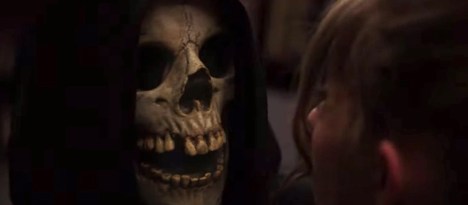
“I have a bone to pick with you.”

Continue reading

New Escapist Video! “The Tomorrow War – Review”

I’m thrilled to be launching movie reviews on The Escapist. Over the coming weeks and months, I will be joining a set of contributors in adding these reviews to the channel. For the moment, I’m honoured to contribute a three-minute film review of The Tomorrow War, which is streaming on Amazon Prime this weekend.

Non-Review Review: The Tomorrow War

The Tomorrow War is a mess of a movie.

Rumour has it that Amazon paid $200m to acquire the movie from Paramount Pictures, which has taken the pandemic as an excuse to offload films like The Lovebirds, The Trial of the Chicago 7 and Coming 2 America. Blockbuster cinema is still something of a siren call for streaming services, with Paramount famously able to entice Netflix into buying The Cloverfield Paradox as a big post-Superbowl release. However, it’s notable that most major studios would be reluctant to part with a surefire financial hit.

“We need to have grown up conversation about how many deaths are acceptable in an alien invasion.”

The Tomorrow War feels very much like a streaming era blockbuster, something to fire up on television rather than to enjoy in cinemas, something that might be justified as a perk that comes with all the free shipping rather than a movie that is worth the audience’s time and attention (and the price of a ticket) on its own merits. The Tomorrow War is a clumsy misfire of a movie, essentially three different movies awkwardly stitched together with a bloated runtime and no internal coherence.

This would be a problem if any of the individual three movies were good. It’s somehow worse for the fact that all three are awful and are worse in combination.

Continue reading

Non-Review Review: @zola

The opening line of @zola is inevitable.

“Y’all wanna hear a story about why me and this b!tch here fell out?” asks Aziah King, the “Zola” of the title. “It’s kind of long but full of suspense.” There was simply no other way that the film was going to start. The line was foregrounded in the movie’s first trailer, and of course it was the opening tweet of the viral twitter thread (#TheStory) that inspired this cinematic adaptation. To put it simply, there was never any way that @zola was going to open any other way.

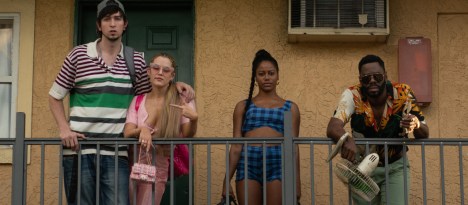
#NoTimeForReflection

However, the opening line is also a statement of purpose and a key to the film’s central joke. @zola positions that opening salvo as an iocnic statement of itself, a millennial riff on “it was the best of times, it was the worst of times…” and “call me, Ishmael.” The central conceit of Janicza Bravo’s adaptation of the twitter thread is to treat the work like a piece of some modern literary canon, a snapshot of modern America filtered through the prism of art, captured 140 characters at a time. It’s a clever approach, and the best part of @zola is how eagerly it commits to that wry framing.

@zola is an impressive piece of craft, a collision of a very classical formalism with a more modern sensibility to create something that exists in a striking and imaginative space. However, there are times when @zola commits too heavily to studying its characters through the prism of social media, making them feel more like macabre exhibits in some twenty-first century freakshow than actual human beings. Still, @zola sets out to capture an extremely online aesthetic and it largely succeeds – for better and for worse.

#FreaksAndGeeks

Continue reading

New Podcast! The Escapist Movie Podcast – “Censor is a Celebration of and Exploration into Classic “Video Nasty” Horror”

The Escapist have launched a movie podcast, and I was thrilled to join Jack Packard for the twentieth episode of the year. We discussed two interesting new horror releases: the restoration of George A. Romero’s long lost The Amusement Park and director Prano Bailey-Bond’s celebration of the “video nasty” era with Censor. We really enjoyed both of them.

You can listen to back episodes of the podcast here, click the link below or even listen directly.