• Following Us

  • Categories

  • Check out the Archives


  • Awards & Nominations

New Escapist Column! On the “Just Create New Female Characters” Argument…

I published an In the Frame piece at Escapist Magazine last week, on an interesting and age-old debate.

The question of how best to foster diversity in cinema and wider pop culture is a challenging one. Whenever the suggestion of race- or gender-shifting an existing character like the Doctor or James Bond comes up, the responses are always the same: “just create new characters!” It’s a strong argument conceptually, because it’s rooted in the (entirely correct) moral presumption that women shouldn’t need to repurpose old characters, but instead should have new characters. However, it also glosses over the economic and cultural realities of the current cinematic climate. The debate is more complicated than it might appear.

You can read the piece here, or click the picture below.

Doctor Who: Can You Hear Me? (Review)

Do you have any idea where those planets might be?

You get me an A-Z of the universe, and I’ll be able to stick my finger straight… no. I’ve got no idea.

The twelfth season of Doctor Who at least has a little more ambition than the eleventh.

In some ways, Can You Hear Me? feels like a companion piece to Praxeus. Both episodes adhere to a relatively similar structure, albeit applied in a slightly different way. Both Can You Hear Me? and Praxeus cannily split up the TARDIS crew for the first half of the episode, hopping between a series of seemingly disconnected narratives that eventually intertwine in the second half. Praxeus did this with a global adventure, scattering the characters across the planet. Can You Hear Me? attempts to do it with time and space, a story stretching from ancient Aleppo into the deepest void.
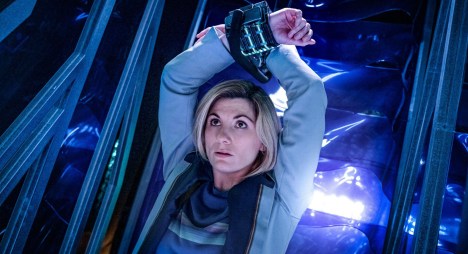
“It’s all gone a bit Colin Baker here, right?”

It’s notable that this is a mirror of the approach that Chris Chibnall took to the plotting of Spyfall, Part I and Spyfall, Part II. Spyfall, Part I was a global adventure that sent the crew across the world. Spyfall, Part II then attempted to shake things up by having the Doctor journey through time. It’s an interesting approach to narrative, albeit one that fits with the Chibnall era’s larger approach to plotting. The Chibnall era often plots episodes like old four- or six-parters, offering setting, plotting and cast shifts with each act that often seems to compress the narrative into forty-five minutes.

Can You Hear Me? grapples with big ideas. It has a fairly consistent set of internal themes. Like Orphan 55 or Nikolai Tesla’s Night of Terror, it is at least “about” something in a way that too few of the surrounding episodes are willing to be. The episode is also willing to go large in terms of scope, to tackle the sort of scale and spectacle that is often missing from surrounding episodes. All of this is very good. However, there’s also a certain lifelessness to all of this, a sense that the show has so much ground to cover that it is more exposition than story.
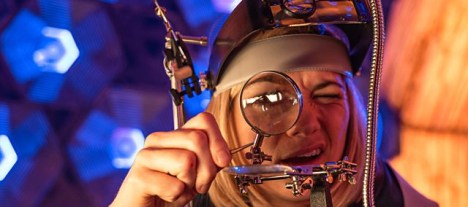
Eye see!

On paper, there is a lot to like about Can You Hear Me? This is an episode that includes actual character development for the supporting cast, especially the perennially under-served Yaz. It allows the regular cast to drop back into their everyday lives, which helps provide a sense of context for them. More than that, it is an episode that broaches important questions for these characters, particularly concerning their long-term plans to stay with the Doctor. It features monsters that work on a thematic level. It also offers a strong and important message to young viewers at home.

However, it also feels more like a checklist than an actual episode. It is a collection of interesting elements arranged like a bullet point list, bouncing from one idea to the next without any real sense of flow guiding it. Can You Hear Me? often feels like a rough draft of a much stronger episode.
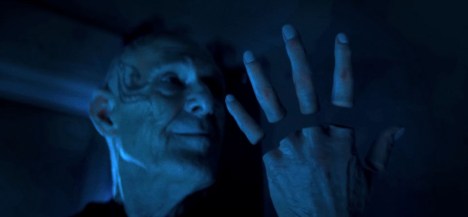
Fingers in the air.

Continue reading

169. 1917 – This Just In (#49)

Hosted by Andrew Quinn and Darren Mooney, The 250 is a fortnightly trip through some of the best (and worst) movies ever made, as voted for by Internet Movie Database Users.

This time, Sam Mendes’ 1917.

It’s April 1917. Lance Corporal Blake and Lance Corporal Schofeld are tasked with a dangerous assignment. They must cross no man’s land and deliver orders to stop a doomed advance against the retreating German forces. As time runs out, Blake and Schofeld venture further and further into the insanity of war.

At time of recording, it was ranked 49th on the list of the best movies of all time on the Internet Movie Database.

Continue reading

Non-Review Review: Birds of Prey (And the Fantabulous Emancipation of One Harley Quinn)

Birds of Prey (And the Fantabulous Emancipation of One Harley Quinn) is an immensely charming and high-energy romp, that is as unfocused as its central character and suffers more than a little bit from a non-linear narrative style that it never really justifies or employs effectively.

There is a lot to love in Birds of Prey, but perhaps the most charming aspect of it is the intimacy. Birds of Prey is bereft of the sort of city-, planet- or galactic-sized stakes that have come to define so much of modern superhero cinema, from Thor: The Dark World to Man of Steel to Avengers: Endgame. The bulk of Birds of Prey consists of a wrestling match over a diamond that happens to contain bank account details that point to an even larger payday. Its climax is on the scale of an eighties or nineties action movie, which means it involves anonymous henchmen rather than a literal army.

A cutting retort?

This consciously low-stakes approach allows Birds of Prey to simply enjoy itself, to revel in the charm of the cast and the relatively straightforward journeys of the central characters. Warner Brothers have been pushing their DC properties away from the MCU-emulating shared universe model that led to the spectacular disaster of Justice League, instead focusing on affording creators the freedom to do what they want to do. Joker rejected the modern superhero template to offer a throwback to films like Taxi Driver and King of Comedy. In contrast, Birds of Prey seems to hark back to The Long Kiss Goodnight.

Birds of Prey is perhaps a little too messy and unfocused in terms of narrative, which affects the movie’s pacing and rhythm. However, it also trusts its cast and its energy to carry it a long way, working best when it feels confident enough to play as a live action Looney Tunes cartoon.

Girl gang.

Continue reading

168. Little Women – This Just In (#—)

Hosted by Andrew Quinn and Darren Mooney, and this week with guests Charlene Lydon, Rioghnach Ní Ghrioghair and Aoife Barry, The 250 is a fortnightly trip through some of the best (and worst) movies ever made, as voted for by Internet Movie Database Users.

This time, Greta Gerwig’s Little Women.

Receiving an urgent telegram summoning her home, Jo March reflects on the life that she has lived. As memories come flooding back, Jo contemplates friendship and family against the backdrop of her New Hampshire upbringing.

At time of recording, it was not ranked on the list of the best movies of all time on the Internet Movie Database.

Continue reading

Hindsight is 2020: In Defense of the Best Picture Nominations…

It’s a strange position to be in, to mount a radical argument that the Best Picture race is actually fairly solid this year.

To be fair, there are legitimate grievances to be had. The Academy went with old favourites in several of the acting categories, overlooking amazing work. The Best Actress category would be stronger if the voters opted for Lupita Nyong’o for Us over than Charlize Theron for Bombshell. The Best Supporting Actress race would have been more interesting had Kathy Bates for Richard Jewell been replaced by Jennifer Lopez in Hustlers. The all-male Best Director category is also frustrating, considering the fine work done by directors like Olivia Wilde, Lulu Wang, Céline Sciamma, Lorene Scafaria, and more over the past year.

However, there is also something inevitable about the tone of the debate over the Best Picture race. The Academy Awards is never going to actually please everybody. There are several hundred films released every year that meet the criteria for eligibility. Taste is inherently subjective. Everybody likes different things. More than that, the Academy is a large body comprised of a variety of different voices, especially after recent diversity pushes to modernise the membership. Even if there was a list of (up to) ten films that would satisfy everybody, the Academy would never be the body to produce it. And that is okay.

Instead, the Best Picture nominees this year offer a snapshot of cinema as it was in 2019. They offer a glimpse of the breadth and the depth of mainstream movie-watching, a list of nine very distinct films that offer nine very distinct perspectives on where the medium is and where it might be going. The beauty of the Best Picture nominees this year is that there’s something for everyone, but nobody gets everything. This seems fair, even if the impulse is to want an entire slate that reflects personal taste.

Continue reading

Doctor Who: Praxeus (Review)

Praxeus is business as usual for Chris Chibnall’s era of Doctor Who.

It’s always slightly fun when a showrunner takes a co-writing credit on an episode, because it implies heavy involvement in a particular aspect of the story. It’s always fun to speculate what that aspect might be. When Russell T. Davies took a rare co-writing credit on Waters of Mars, it seemed reasonable to suggest that he was (at least) heavily involved in the “Time Lord Victorious” stuff. When Steven Moffat took a co-writing credit on The Girl Who Died, it seemed likely that he worked on the Twelfth Doctor’s explanation of his choice of face.

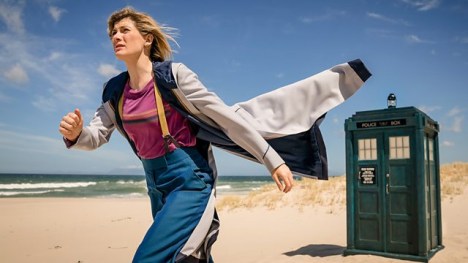
Beach’s own.

Normally, it’s fairly easy to see what hand a showrunner took in a given script. Fugitive of the Judoon brought back Vinay Patel, who wrote one of the best-received episodes of the previous season in Demons of the Punjab, but paired him with Chris Chibnall. There were any number of elements in Fugitive of the Judoon that might have merited the heavy hand of the showrunner. The most obvious stuff is the subplot involving Jack Harkness, which is both isolated from the story and heavy on foreshadowing. That said, the Ruth!Doctor stuff was also a big deal.

This makes Chibnall’s credit on Praxeus seem very strange. On the surface, and even with the direct cliffhanger feeding in from Fugitive of the Judoon,there is nothing in the story that would seem to merit or necessitate the showrunner stepping in to work with writer Peter McTighe on the episode.

Net loss.

Continue reading

167. Marriage Story – This Just In (#225)

Hosted by Andrew Quinn and Darren Mooney, and this week with guests Tara Brady and Donald Clarke, The 250 is a fortnightly trip through some of the best (and worst) movies ever made, as voted for by Internet Movie Database Users.

This time, Noah Baumbach’s Marriage Story.

Charlie and Nicole had an ideal marriage, until they didn’t. Unsatisfied with her marriage, Nicole decides to separate from her husband Charlie. The couple agree to keep things amicable, but the situation quickly escalates as Charlie finds him completely unprepared for the process that will follow.

At time of recording, it was ranked the 225th best movie of all time on the Internet Movie Database.

Continue reading

New Escapist Column! On how “Star Trek” has Always Been more about Our Present than Our Future

I published an In the Frame piece at Escapist Magazine this evening, looking at the launch of Star Trek: Picard last week.

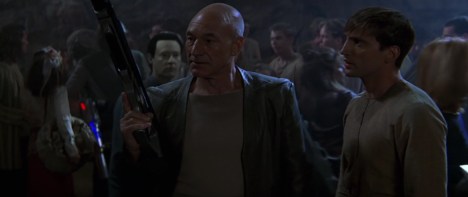
One of the minor controversies around Picard has concerned the series’ more cynical and world-weary tone, particularly in contrast to the optimism and enthusiasm of Star Trek: The Next Generation. However, the mythology around Star Trek tends to over-emphasise the franchise’s optimistic outlook, ignoring the extent to which the shows are better reflections of the present than reflections of the future. They offer snapshots of moments in time, rather than a roadmap to a better future. In that regard, Picard is very much a snapshot of this moment in time, grappling with the legacy of The Next Generation.

You can read the piece here, or click the picture below.

Non-Review Review: The Rhythm Section

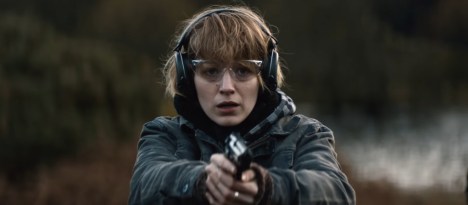
Perhaps the most revealing distinction between The Rhythm Section and the James Bond franchise is that the characters in The Rhythm Section appear to have done their beer sponsorship deal with Stella Artois rather than Heineken.

That’s a little facetious. After all, it seems highly likely that Heineken paid a great deal more to sponsor No Time to Die than Stella Artois paid for a few minutes of screentime in a late January release from producers Barbara Broccoli and Michael G. Wilson. Nevertheless, there is something to it. Although the marketting copy is keen to sell The Rhythm Section as something of a gender-swapped teaser for No Time to Die“from the producers of James Bond,” boasts the trailer and the advertising – it’s to the credit of director Reed Morano that she is interested in something a little bit more complex and sophisticated.

Taking a shot at it.

Of course, The Rhythm Section doesn’t entirely work. It is a messy and clumsy film. At points, this seems to be a deliberate stylistic choice and a clear point of contrast, an attempt to imbue the classic spy movie format with a sense of the chaos that informs and shapes the real world. At other moments, it feels like a miscalculation and an error in judgment. The Rhythm Section is an earnest attempt to crash the trappings of an espionage revenge thriller into a more intimate personal drama about grief and trauma, but sometimes the mix goes wrong and the film veers into the realm of indulgent self-parody.

Still, there’s a lot to like about The Rhythm Section in spite of its imbalances. The film is genuinely trying something something ambitious, even if it occasionally buckles under the weight of those attempts. At its best, The Rhythm Section suggests a new spin on an old formula. At its worst, it is at least anchored in a compelling central performance amid overwrought clichés. The Rhythm Section might not hit every note perfectly, but it manages to keep time.

Spy, craft.

Continue reading