• Following Us

  • Categories

  • Check out the Archives


  • Awards & Nominations

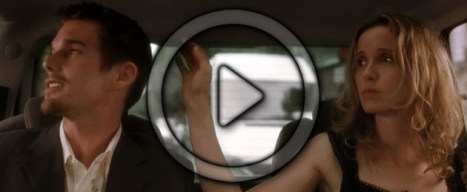
170. Before Sunset – “Two Guys Die Alone 2020” (#236)

Hosted by Andrew Quinn and Darren Mooney, and this week with special guest Jay Coyle, The 250 is a fortnightly trip through some of the best (and worst) movies ever made, as voted for by Internet Movie Database Users.

This time, a Valentine’s treat. Richard Linklater’s Before Sunset.

Finishing up his book tour in Paris, Jessie crosses paths once again with Celine. With a little over an hour before Jessie has to catch a flight back to the United States, the pair take a stroll through Paris. As they do, the nine years since their last encounter fades away, allowing them to reminisce about what might have been and consider what might yet be.

At time of recording, it was ranked the 236th best movie of all time on the Internet Movie Database.

Continue reading

Non-Review Review: Lost Girls

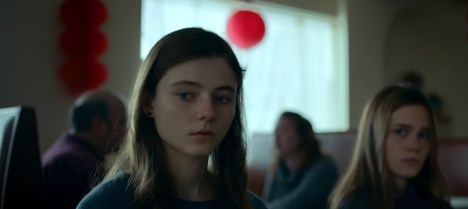
Lost Girls is a solid and unfussy true crime drama, anchored in a strong central performance from Amy Ryan.

There are interesting ideas simmering in the background of Lost Girls. Director Liz Garbus is best known as a documentarian, and there are certainly aspects of Lost Girls that feel like they belong more comfortably in a documentary than a narrative feature. Michael Werwie’s script is adapted from Robert Kolker’s book of the same name, looking at the case of the Long Island Serial Killer. The killer was never caught, with some speculation as to whether his last documented murder occurred in 2010 or 2013. The investigation is currently ongoing, which gives the film a certain edge and rawness.

However, Garbus works hard to keep things tasteful and restrained. In actual narrative terms, Lost Girls is fairly conventional. It often feels assembled from a list of scenes that audiences expect to see in a drama like this. There are plenty of scenes of concerned mother Mari Gilbert yelling at impotent authority figures, countless scenes dictating the indifference or ineptitude of the authority figures tasked with protecting these young women, lots of emotional scenes in which Mari comes to terms with her own imperfections as a mother following her daughter’s disappearance.

However, the most interesting aspects of this “unsolved American mystery” lurk at the edge of the frame, recalling the quiet tweaks that Just Mercy made to the death penalty drama this past awards season. Lost Girls is a serial killer film that is much more interested in systemic injustice than it is in the sensationalist actions of a single monstrous villain. Lost Girls never quite manages to convincingly restructure the serial killer investigation movie template to the extent of something like Zodiac, but perhaps it doesn’t have to. It is more interesting for subtle shifts in emphasis within a familiar formula.

Continue reading

New Escapist Column! On the Inevitability of a “Knives Out” Sequel…

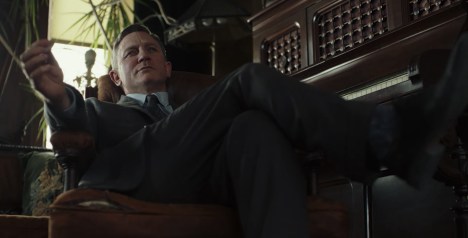
I published an In the Frame piece at Escapist Magazine on Monday, to mark the news that Knives Out would officially be getting a sequel.

To be fair, this news was hardly a surprise given the box office success of the film. With a tiny budget, Knives Out managed to gross over three hundred million dollars worldwide. Even before the sequel was officially announced, it seemed inevitable. And it will most likely be another great time at the cinema. At the same time, though, it’s hard not to feel like the proper way to celebrate the success of Knives Out might not be to start producing Knives Out sequels en masse, but instead to simply make more movies like Knives Out.

You can read the piece here, or click the picture below.

Non-Review Review: Sergio

Sergio belongs to the same school of earnest, overwrought, tonally misjudged, narratively unfocused, clumsily paced biopics that includes Noble, The Price of Desire and A Girl from Mogadishu.

This films offer heartwarming stories about truly exceptional individuals. There is undoubtedly value in that. However, the genre often confuses subject for substance. These biographies assume that the story they are telling is so compelling and so engaging that the actual art of storytelling doesn’t matter, that the basic mechanics of constructing a satisfying narrative or balancing a consistent tone or finding an interesting hooks are fundamentally less important than the simple fact that they are about something that makes them inherently “worthy.” Worthy of attention, worthy of praise, worthy of time.

“You can’t spell U.N. with U.”

Sergio certainly tells a story that is worth telling. It is an adaptation of the life of Sérgio Vieira de Mello, the United Nations diplomat. By all accounts, de Mello was a genuinely exceptional person who made a very real and very tangible difference to the world. There is a compelling story to be told here, a life that is worthy of study and discussion. Indeed, director Greg Barker seems to think so. Sergio is Barker’s first narrative feature, and it serves as a companion piece to his 2009 documentary of the same title. It’s easy to understand why Barker was so drawn to the subject.

Unfortunately, Sergio is a complete misfire. It is a disaster. It is a clumsily constructed film with no strong sense of identity or purpose, with little to say about its central character or his circumstances beyond “this was a remarkable person.” However, even that is communicated through exposition and information dumps rather than through actual storytelling.

“You wanna live like common people.
You wanna see whatever common people see.”

Continue reading

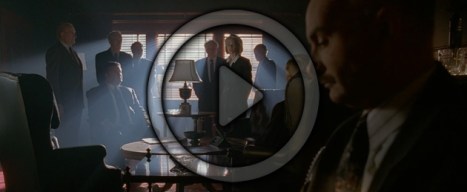
New Podcast! The X-Cast – Season 5, Episode 13 (“Patient X”)

Anybody who has heard me talk about The X-Files knows that Patient X and The Red and the Black are comfortably my second-favourite mythology episodes, behind Nisei and 731. So it was a huge pleasure to be invited on The X-Cast to discuss them with the sensational Kurt North.

I get into it a lot on the podcast itself, but I think a large part of what I love about Patient X and The Red and the Black is that there is so much to it. As a two-parter, it’s the rare X-Files mythology episodes that manages to blend the propulsive blockbuster aesthetic of stories like Colony and End Game with the more existential musings of episodes like Biogenesis, The Sixth Extinction and The Sixth Extinction II: Amor Fati. It has both big ideas and an epic scope, offering one of the strongest overlaps between The X-Files and Star Wars, which has always been bubbling away in the background as a key influence.

As ever, I hope you enjoy. You can listen to the episode here, or click the link below. Kurt and I will be teaming up again next week to discuss The Red and the Black.

Continue reading

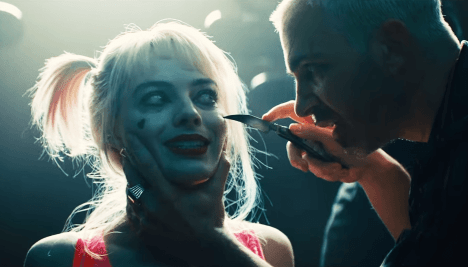
New Escapist Column! On “Birds of Prey” and Marginalised Characters…

I published an In the Frame piece at Escapist Magazine last week, to mark the release of Birds of Prey.

One of the interesting aspects of Birds of Prey is the way in which it’s essentially a story about marginalised characters, characters who have historically been pushed to the edge of comic book narratives – erased and reinvented by the demands of universe-wide reboots, defined primarily in relationship to more popular male characters, and just generally subject to the whims of the shared universe. Part of what makes Birds of Prey so interesting is the way in which it builds that into the narrative, creating a story for its characters where the absence of Batman and the Joker is the entire point of the exercise.

It’s a very clever approach to the source material, and one which suggests a more fundamental understanding of the source material than many critics credit it. In some ways, it is a more faithful adaptation of the Suicide Squad concept than Suicide Squad, building itself around the flotsam and jetsam of DC continuity. It helps that Birds of Prey finds an emotional hook into this story and uses it to offer a feminist perspective on this familiar trope. After all, its notable that so many of these marginalised and erased characters are women.

You can read the piece here, or click the picture below.

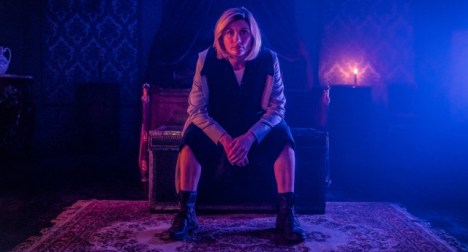
Doctor Who: The Haunting of Villa Diodati (Review)

The Haunting of Villa Diodati is an episode of extremes.

On one extreme, it’s a genuinely well-constructed piece of television that is both a triumph of production and which offers a genuinely novel approach to a familiar and iconic Doctor Who villain. It’s a fairly solid concept – to a certain extent, it’s a collision of Dalek with Army of Ghosts – but with a distinct enough flavour that it stands apart from what has come before. More than that, it continues the season’s trend of offering a more proactive and decisive version of the Doctor, building on earlier episodes like Orphan 55 and Nikola Tesla’s Night of Terror.

Missing pieces.

At the same time, it feels like an episode that is stronger on concepts and production than it is on narrative execution. The big ideas all fit in place, but the underlying ideas feel just a little bit off. Most obviously, it’s an episode that leans very heavily into the mythos of the Chibnall era, its climax hinging not on any moral authority but the conservatism that informed stories like Rosa or Kerblam! This is an episode where the Doctor refuses to sacrifice a life to save the future, but not because that life has inherent value, but because that life happens to be Percy Shelley.

It’s a very strange and ill-judged narrative beat, not least because it so squarely misses the obvious pay-off to that set-up. “You know that in nine hundred years of time and space and I’ve never met anybody who wasn’t important before?” the Eleventh Doctor remarked in A Christmas Carol, an expression of the humanism at the heart of the show. In contrast, The Haunting of Villa Diodati argues that some lives are much more important than others.

Time Out.

Continue reading

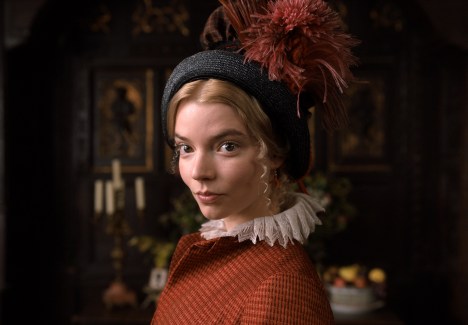
Non-Review Review: Emma.

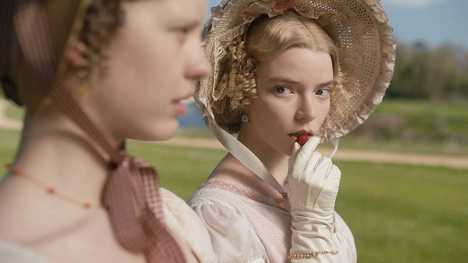
Emma. is gorgeous to look at.

Autumn de Wilde’s adaptation of Jane Austen’s classic novel is immensely stylised in a way that suits the material. Austen’s Emma has always been a story about characters who exist ensconced in a world without any material wants or desires, without any existential threats or simmering tensions. The story’s stakes derive within the context of the comforts and luxuries in which Emma Woodhouse has lived her life. When the film opens, Emma’s biggest concern is the departure of her beloved governess, who is simply moving a kilometre and a half down the road and will remain part of her social circle.

Indeed, de Wilde even opens with an intertitle quoting the novel’s opening setnence, “Emma Woodhouse, handsome, clever, and rich, with a comfortable home and happy disposition, seemed to unite some of the best blessings of existence; and had lived nearly twenty-one years in the world with very little to distress or vex her.” The film is built around this idea, creating a stylish cocoon for Emma, a world that looks like it might have been entirely constructed from those brightly coloured confections that its characters serve at afternoon tea.

The result is a beautiful and charming film that captures a lot of the low-stakes charm of the source material, offering a richly designed world in which the novel’s romantic comedy trappings might unfold.

Continue reading

Non-Review Review: Greed

Greed, for lack of a better word, is not good.

Greed belongs to a relatively recent subgenre, the sort of ironic and winking social commentary of films like The Big Short, Vice and Bombshell. There is a sense with these sorts of films that earnestness is overdone, that aching sincerity will only get a strong moral message so far, and that the proper way to engage with audiences is through a wry self-awareness that acknowledges the cynicism of the world in which people live. Theoretically, this approach allows the film to communicate strong central themes without potentially alienating audiences through self-righteousness or self-satisfaction.

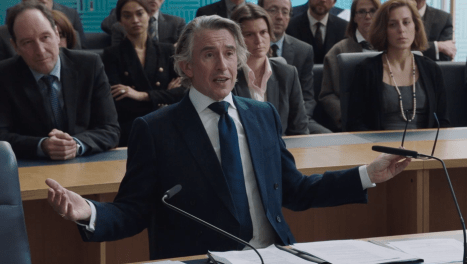
Like all subgenres, the quality of the end result varies on a case-by-case basis. However, Greed seems like a project perfectly suited to director Michael Winterbottom. Winterbottom is a director who frequently blends fact and fiction in his work – to point where, due to his work on projects like The Trip and Tristram Shandy, a lot of his collaborations with Steve Coogan involve the actor playing a fictionalised version of himself. So there’s something interesting in the way that Greed takes a template often applied to true stories and instead builds a story around a fictional avatar of capitalism, Sir Richard MacReady.

However, Greed just doesn’t work. It’s not consistently funny enough to pull off the knowing approach to its tale of global inequality. It packs fewer genuine laughs into its runtime than more direct critiques of capitalist excess like The Wolf of Wall Street. It also lacks the comfort of projects like The Big Short and Vice in blending exposition into narrative, often clumsily halting its story to deliver earnest lectures almost directly into the camera through painful framing devices. “Think of me as an idiot,” insists one character, before setting in motion the obligatory “how capitalism works” montage.

More to the point, the narrative elements themselves also struggle, with the film awkwardly trying to casually set up dominoes to build to a seemingly chaotic outcome that looks a little too arch and too planned to come across as spontaneous. This is the problem with Greed. The film, ironically enough, seems greedy. It wants to do too much, it wants to be too many things. As a result, it winds up under-cooking the constituent elements and struggling to find a way to integrate them into a cohesive whole.

Greed is an interesting work in that – like Bombshell – it serves as a reminder that films like The Big Short and Vice are managing a much more complicated balancing act than might originally appear.
Continue reading

New Escapist Column! On How “The Dark Knight” Changed the Oscars…

I published an In the Frame piece at Escapist Magazine on Friday, to mark the occasion of the Oscars.

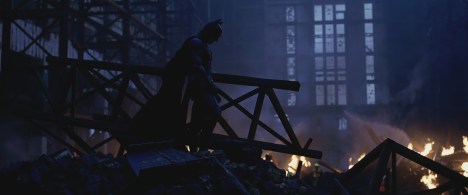
The Dark Knight was famously locked out of the Best Picture race. However, it still had a tremendous impact on the field. Eleven years later, the snub of The Dark Knight has profoundly reshaped what the Oscars actually looks like, causing the Academy to dramatically alter a couple of its core underlying assumptions. Most of these changes are for the better, sparking an expansion of the Best Picture field that looks to have broken its long-standing anchor to the Best Director category, encouraging the recruitment of a younger voting base, and even paving the way for populist films like Black Panther and Joker at the awards.

You can read the piece here, or click the picture below.