• Following Us

  • Categories

  • Check out the Archives


  • Awards & Nominations

“I Never Kid About Money”: Marty Goes Mainstream With “The Colour of Money”…

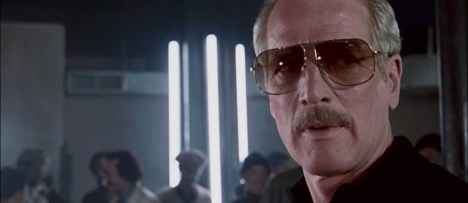
The podcast that I co-host, The 250, continued our belated Summer of Scorsese last week with a look at Goodfellas. Next week, we’ll looking at Casino. It is a fun and broad discussion that is well worth your time, but the season ends up largely avoiding Scorsese’s output during the 1980s. So I thought it might be worth taking a look back at The Colour of Money.

For Martin Scorsese, the eighties come sandwiched between two masterpieces: Raging Bull and Goodfellas.

These are two of the quintessential Martin Scorsese movies. They are frequently ranked among the best movies that Scorsese has made, and often included in lists of the best movies ever made. Indeed, there’s a famous Hollywood myth that director Brian de Palma reacted to a screening of Goodfellas by involking Raging Bull, proclaiming, “You made the best movie of the eighties and, God damn it, we’re barely into the nineties and you’ve already made the best movie of this decade, too!”

With that in mind, there’s a tendency of overlook Scorsese’s work during the eighties – to treat it as something equivalent to a cinematic lost decade largely defined by the failure of King of Comedy and the controversy over The Last Temptation of Christ. This is understandable, but it is also unfair. Indeed, recent years have seen a welcome push to reassess Martin Scorsese’s tumultuous journey through the era of excess.

Scorsese’s eighties might not have been the best decade or most productive decade in his filmography, but they were instructive. They were a time of growth and evolution for the filmmaker, a point at which the director seemed to finally figure out how to reconcile the movies that he wanted to make with movies that studios wanted to finance. Although often overlooked and ignored in this context, The Colour of Money is perhaps the most instructive of Scorsese’s films from this period.

Continue reading

New Escapist Video! On the Childish Wonder of “Black Panther”…

So, as I have mentioned before, I am launching a new video series as a companion piece to In the Frame at The Escapist. The video will typically launch with the Monday article, and be released on the magazine’s YouTube channel the following week.

With that in mind, here is last week’s episode, covering Ryan Coogler’s use of childish wonder in Black Panther. You can watch the pilot video here, and read the companion article here.

New Escapist Column! On the Planning of Disney’s “Star Wars” Sequel Trilogy…

I published a new In the Frame piece at The Escapist this evening. Because the news cycle around Star Wars: Episode IX – The Rise of Skywalker never dies, it seemed like an appropriate time to look at the famous refrain that Disney needed a “plan” for their Star Wars sequel trilogy.

In truth, this is at best a simple solution to a complex problem. After all, fans have hardly proven themselves willing to offer movies the benefit of the doubt because they were “planned” in advance. The Star Wars prequel trilogy was not greeted with any greater warmth or understanding because George Lucas knew where he was going. Instead, the problem is that The Rise of Skywalker needed a strong vision of what it wanted to be and what it wanted to say.

You can read the piece here, or click the picture below.

Holy Camp, Batman: The Redemptive Queerness of “Batman & Robin”…

The podcast that I co-host, The 250, will be looking at Batman and Robin this weekend. It is a fun discussion, well worth a listen, and I hope you enjoy. However, I had some thoughts that I wanted to get down before specifically about the film.

Batman and Robin is not a good movie, by any stretch of the imagination.

However, it is somewhat unfairly vilified. This is particularly true in comparison to its direct predecessor, Batman Forever. Very few people would attempt to argue that either Batman Forever or Batman and Robin were good films on their own terms, but the consensus seems to have formed around the idea that – to paraphrase Edward Nygma – Batman Forever was bad, Batman and Robin was worse. This calcified into the idea that Batman and Robin is among the very worst comic book movies ever, and Batman Forever is not.

It is interesting to speculate on why this might be. Batman Forever and Batman and Robin are both cynically constructed blockbusters aimed at the youngest and least discerning audiences, eschewing concepts like plot and characterisation in favour of cheap thrills and terrible jokes. Both films offer incredibly condescending exposition, betraying the sense in which they have been constructed for audiences with the shortest possible attention span. However, while Batman and Robin embraces this cynicism, Batman Forever clumsily tries to disguise it.

Much has been made of the fact that director Joel Schumacher wanted to make a better movie than Batman Forever. He singled out Batman: Year One as the Batman movie that he wanted to make. Traces of this better movie occasionally surface in discussions of Batman Forever and are often framed in reference to the film’s admittedly darker and more artistic deleted scenes. There is a clear sense that Batman Forever harboured something resembling ambition before it was brutally bent and broken into its final released form.

However, Batman Forever also offers its audience condescending and trite pop psychology. The result is a veneer of faux profundity that suggests hidden depths that the movie is unwilling and unable to explore. Batman Forever vaguely touches on the question of whether Bruce feels responsible for the death of his parents and the trouble he has reconciling the two halves of himself, but in no real depth. Two-Face is one of the primary antagonists of Batman Forever, and the film can’t even be bothered to make that thematic connection.

It’s interesting to wonder if Batman Forever has a slightly warmer reputation because of this unearned grasp at weightiness, these small gestures towards the idea of “psychological complexity” and “psychological nuance” in the most trite manner imaginable. After all, Batman Forever is a movie that has Bruce Wayne dating a psychologist, and feel inordinately proud of that idea. It’s easier to pass off Batman Forever as more mature or more considered than Batman and Robin, because it gestures broadly at ideas that are a little darker and more complex.

This is strange, because there’s a lot more interesting stuff happening in Batman and Robin. Unlike its direct predecessor, Batman and Robin makes no broad gesture towards profundity or insight. It is a profoundly stupid movie, and it is cognisant of both that stupidity and the audience’s relationship to that stupidity. However, there’s something much more interesting going on underneath the surface of Batman and Robin, in direct response to Batman Forever.

Batman Forever feels like a moral panic picture, a direct response to some imagined public outrage about certain earlier interpretations of the Caped Crusader. As such, it aims to produce the most generic and vanilla iteration of the character, the most boring and the most normative. What makes Batman and Robin so interesting is that it represents a firm rejection of that conservativism, and actively works to inject a lot of the queerness back into the Batman mythos. It doesn’t do this especially elegantly or smoothly, but it does it nonetheless. The results are compelling and engaging.

Continue reading

Non-Review Review: Antebellum

Antebellum never seems entirely sure whether it wants to be a biting social commentary or a pulpy genre exercise.

To be clear, this is a false dichotomy. One of the most interesting aspects of horror is how frequently it can satisfy both of those objectives. Get Out is perhaps the most obvious recent example of this, and it is telling that (like so many modern horrors) Antebellum markets itself as “from the producers of Get Out.” However, this has always been a feature of horror, as demonstrated by the films of directors like Wes Craven and John Carpenter. Antebellum shouldn’t have to choose between being socially relevant and being an effective horror, but it insists on doing so.

Shining some light on the matter.

There is a good movie buried somewhere in Antebellum. It is very clear that writers and directors Gerard Bush and Christopher Renz have a good idea that resonates in the current moment. Indeed, Antebellum hammers that point pretty heavily. It opens with a quote from William Faulkner, reminding audiences that “the past is never dead. It’s not even past.” In case the audience doesn’t get how that applies to the movie’s set-up, a character repeats it about forty minutes into the runtime. Antebellum has things to say, and is not shy about saying them.

However, what Antebellum is trying to say is muddled by a number of awkward structural choices. Antebellum is a film that is consciously built around a number of developments that are intended to wrong-foot the audience and catch them off-guard, to invite the viewer to ask questions about what is happening and why, and maybe even add some compelling gif-able content for the film’s marketing. This structuring of Antebellum is wrong-headed on a number of levels, but most profoundly in the way that it reduces the movie’s biting thesis to a cheap narrative hook.

Burning unease.

Continue reading

200. Goodfellas – Summer of Scorsese (#17)

Hosted by Andrew Quinn, Jay Coyle and Darren Mooney, and this week with special guest Jenn Gannon, with Andy Melhuish, Jack Hodges and others, The 250 is a (mostly) weekly trip through some of the best (and worst) movies ever made, as voted for by Internet Movie Database Users. New episodes are released every Saturday at 6pm GMT.

This time, continuing our Summer of Scorsese season, Martin Scorsese’s Goodfellas.

Martin Scorsese is one of the defining directors in American cinema, with a host of massively successful (and cult) hits that have shaped and defined cinema across generations: Taxi Driver, Raging Bull, The Colour of Money, The Aviator, The Departed, Hugo, The Wolf of Wall Street. The Summer of Scorsese season offers a trip through his filmography via the IMDb‘s 250.

As far back as he could remember, Henry Hill always wanted to be a gangster. However, the life that Henry leads doesn’t turn out exactly as the young hoodlum might have expected, as he finds himself navigating a web of betrayal and violence involving his closest friends.

At time of recording, it was ranked 17th on the Internet Movie Database‘s list of the best movies of all-time.

Continue reading

New Podcast! The Escapist Movie Podcast – “The Devil All the Time, Antebellum, Mandalorian, and Pushbacks”

The Escapist have launched a movie podcast, and I was thrilled to join Jack Packard and Bob Chipman for the fourth episode, primarily discussing The Devil All the Time, Antebellum, the trailer for the second season of The Mandalorian, and the changes to the release schedule after the releases of TENET and Mulan.

You can listen to the episode here, back episodes of the podcast here, click the link below or even listen directly.

New Escapist Column! On the Charming Crassness of “The Boys”…

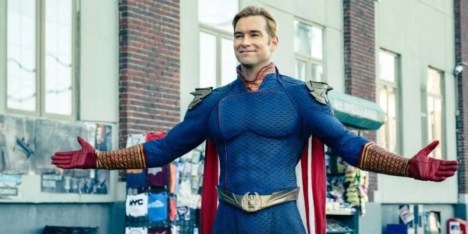
I published a new In the Frame piece at The Escapist this evening. With the second season of The Boys releasing on Amazon Prime, it seemed worth a look.

The Boys is not a subtle television show. There is little ambiguity or nuance in its cartoonish portrayal of a world dominated by superheroes defined by their selfishness, vindictiveness and childishness. However, this lack of subtlety is not necessarily a weakness. The Boys is outlandish to the point of being crass, but that’s part of the appeal. These are crass and vulgar times, and so it seems reasonable to filter the superhero genre through that sensibility. The age of prestige television is over, but then there is nothing especially prestigious about this moment.

You can read the piece here, or click the picture below.

“It Had Nothing to Do With Me”: The Moral Sloth of Henry Hill in “Goodfellas”…

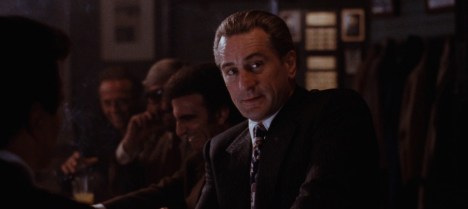
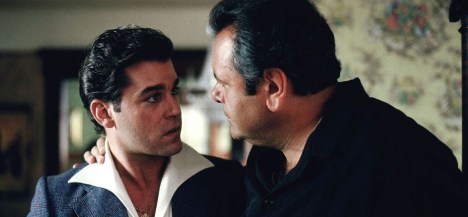
The podcast that I co-host, The 250, continued our belated Summer of Scorsese last week with a look at Raging Bull. This week, we’re looking at Goodfellas. It is a fun and broad discussion that is well worth your time, but it spurred some of my own thoughts about Martin Scorsese’s 1990 gangster classic.

There is a long-running debate concerning the films of Martin Scorsese, one that arose most recently around The Wolf of Wall Street.

To his critics, Scorsese is seen as a director who glorifies and venerates a certain form of toxic masculinity. There’s a certain logic to this argument. After all, whatever Scorsese’s intentions may be, there is no denying that his films attract a certain unironic fandom that gets swept up in these stories of tough men who do terrible things. This is reflected in everything from the ubiquity of Goodfellas as a “dorm room poster” to celebrations of its depiction of masculinity to the fact that real-life gangsters reportedly love it.

This criticism largely derives from the fact that Scorsese effectively surrenders control of the film’s narrative to his central characters. His movies are often literally narrated by their central characters: Henry and Karen Hill in Goodfellas, Ace Rothstein and Nicky Santoro in Casino and Jordan Belfort in The Wolf of Wall Street. These characters are given ample room to espouse their worldview and their philosophy, to craft the story that they want to tell.

Scorsese undoubtedly pushes back against his characters in interesting ways – often ironically juxtaposing their conceited monologues with brutal imagery to underscore the dissonance between their narrative of events with the reality of the situation. However, Scorsese largely avoids overtly moralising. He avoids the easy route of having external characters comment too obliquely or too loudly on the moral decadence at play. Indeed, the most interesting thing about Karen Hill is her own complicity in Henry’s immorality rather than any condemnation of it.

To be fair, there’s a lot to recommend this approach. American cinema has come a long way since the days of the Hays Code and the Breen Office, and there is a lot to be said for the importance of treating an audience as mature enough to grapple with complicated ideas or giving them room to reach conclusions on their own terms. Psycho is a classic piece of American cinema, but it suffers greatly from a closing scene where a new character shows up to lecture the cast (and implicitly the audience) on the film that they just watched.

Indeed, this is ultimately the beauty of Scorsese’s approach to these characters. Scorsese gives them all the room that they need, and they still manage to incriminate themselves. Their robust attempts to glorify and mythologise themselves inevitably backfire. Like a good detective or lawyer, Scorsese shrewdly just allows characters like Henry Hill to talk and talk and talk, knowing that they have been given enough rope with which they might hang themselves.

Continue reading

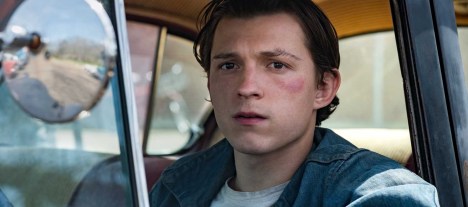
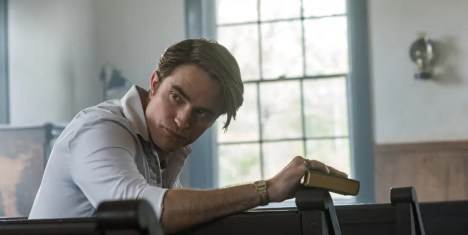
Non-Review Review: The Devil All the Time

The Devil All the Time demonstrates that the adjective “novelistic” isn’t always a compliment.

Writer and director Antonio Campos is clearly aiming for an epic sweep to The Devil All the Time. The film unfolds over the course of several decades, following several intersecting lives in rural Ohio in the space between the end of the Second World War and the height of the Vietnam War. This is a tale that spans generations, with an impressive density. Small characters get huge arcs, dramatic twists hinge on chance encounters, and a large amount of the film’s plot is delivered by way of folksy omniscient narration.

Holland of the Free?

It is easier to admire The Devil All the Time than it is to appreciate it. Campos has drawn together a formidable cast to tell a story that explores a host of big ideas about small town life. The Devil All the Time clearly aspires to be a piercing study of religion, sex and violence in the American northeast. The film maintains an impressive atmosphere, in large part due to Campos’ moody direction and the work of Lol Crawley and the rumbling soundtrack from Danny Bensi and Saunder Jurriaans.

However, nothing in The Devil All the Time has room to breath. There are so many elements competing for narrative space that even films two-hours-and-twenty-minute runtime feels overstuffed. Characters are never allowed to stew or develop in a way that a story like this demands, instead reducing the movie to a series of plot points and thematic observations delivered in a rich and moody manner, but without any real substance to bind them all together.

Book ‘im.

Continue reading