• Following Us

  • Categories

  • Check out the Archives


  • Awards & Nominations

New Podcast! The Pensky File – Star Trek: Deep Space Nine, Season 3, Episode 20 (“Improbable Cause”)

I had great fun talking about Defiant with Wes and Clay at The Pensky Podcast.

So I was thrilled by invited back to talk over one of my favourite episodes of Star Trek: Deep Space Nine with the guys, the late third season two-parter Improbable Cause and The Die is Cast. It’s a brilliant story, in large part because (unlike a lot of Star Trek two-parters) it is very clearly two different stories that happen to neatly dove-tail into one another.

Improbable Cause is a fascinating character study of Elim Garak, following a botched attempt on his life that suggests more powerful forces at work. As Odo investigates the bombing of Garak’s shop, he gradually uncovers evidence of a much larger scheme. It was a pleasure to record, and I’ll be back next week covering the conclusion, The Die is Cast.

You can find more from The Pensky Podcast here, and listen to the podcast by clicking the link or just listening below.

Continue reading

Non-Review Review: American Animals

“To do this thing would take extraordinary effort,” observers Warren Lipka of his fiendish heist scheme in American Animals. “Not ordinary effort.”

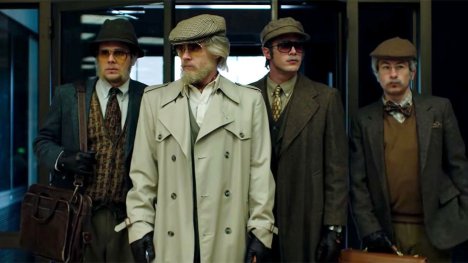
Written and directed by Bart Layton, American Animals is a blend of documentary and dramatisation. It explores the true story of the effort by four young men to steal a collection of precious books from the Library of Transylvania, a scheme that went disastrously and spectacularly wrong. Adopting a style that recalls Bernie or a slightly more grounded I, Tonya, Layton slices interviews with the real-life criminals into a narrative reconstruction of the attempted crime. The results are intriguing, occasionally veering into an exploration of the malleability of memory and the limits of personal perspective.

Up to their old tricks.

At the same time, American Animals is very much engaged with a masculine middle-class malaise. A recurring motif of the film has various figures from around the four criminals pause to reflect upon the character of these young men. “They were good kids,” various talking heads assert over the course of the documentary, talking fondly about their childhoods and their schoolwork and their aspirations. The four young men at the heart of American Animals did not plan (and botch) a heist because they were bad kids or because they needed the money. They did not act out of desperation or anger.

Instead, American Animals suggests that the characters enacted this ambitious and absurd scheme out of a sense of boredom, out of a desire to escape the mundanity of their everyday lives, to do something “extraordinary” to transcend their so-called “ordinary” lives.

Model citizens.

Continue reading

Star Trek: Voyager – Unimatrix Zero, Part II (Review)

To be fair, the clue is in the title.

It is hard to overstate just how big a cultural impact The Matrix had. The film was the fifth highest grossing movie in the United States, the fourth worldwide and the highest-grossing R-rated film of 1999. The Matrix immediately entered the Internet Movie Database‘s top 250 movies of all-time at in the twentieth position, and only climbed from there. The Matrix was the first movie to sell more than one million copies on the the nascent DVD format.

Can’t see the forest for the trees.

More than that, The Matrix became a cultural shorthand. Phrases from the film (and its production) entered the popular lexicon; “I know kung-fu”, “the woman in the red dress”, “the red pill”, “bullet time.” Quentin Tarantino named it as one of his favourite movies of the previous quarter-century. The film lives on a context beyond its original production, its language coopted by fringe groups like incels or men’s rights activists or the alt-right. This just speaks to the impact that the film had upon an entire generation of young men.

To be fair, The Matrix did not necessarily articulate anything new, instead bringing together a wealth of science-fiction tropes with an Asian-influenced action aesthetic. After all, it was just one of a wave of films dealing with similar thematic ideas around the same time; The Thirteenth Floor, Pleasantville, The Truman Show, Dark City, eXistenZ, Harsh Realm. Even Star Trek: Voyager had riffed on similar ideas in stories like Projections or Course: Oblivion. Nevertheless, The Matrix seemed to speak to a particular millennial anxiety at the end of the nineties.

Love across light years.

The Matrix was the story of a future in which humanity had been enslaved, in which human bodies were treated as batteries for a vast and uncaring system. In order to keep humanity docile, this system fed mankind a shared illusion of life at the end of the twentieth century. This illusory world was reality for those dreamers trapped within it, touching on various anxieties about reality and unreality in the context of the late nineties. The Matrix packaged up a host of ambient fears about capitalism, virtual reality, illusion and the end of history in a clever and exciting action film.

It seems inevitable that Voyager would offer its own take on this concept. After all, the series had been playing with similar ideas dating back to its own first season. The fragility of reality and the dangers of convincing simulation are a recurring motif. Indeed, Unimatrix Zero, Part I and Unimatrix Zero, Part II are not even the only episodes that draw heavily from The Matrix. There are shades of it to Work Force, Part I and Work Force, Part II. Nevertheless, Unimatrix Zero, Part I and Unimatrix Zero, Part II are undoubtedly the most overt examples of this.

Unimatrix reloaded.

Continue reading

Non-Review Review: Teen Titans Go! to the Movies

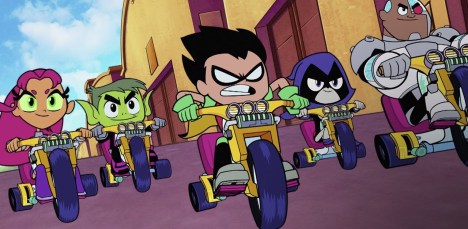
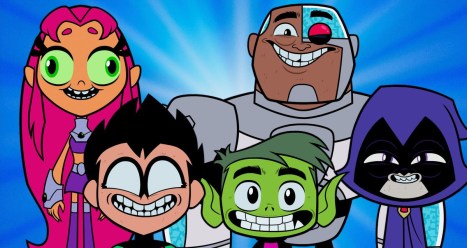
Teen Titans Go! to the Movies is a delight from beginning to end.

The go-to description of Teen Titans Go! to the Movies is “a G-rated Deadpool”, which is both accurate in general and interesting in specifics. Although the two Deadpool films have become cultural shorthand for “self-aware superhero parodies”, that is not what they really are; at their best, they are affectionate eighties action movie homages with a superhero veneer and a sheen of ironic self-awareness. Ironically, Teen Titans Go! to the Movies is a much better example of an affectionate and a committed parody of superhero cinema.

Cycles of violence.

Teen Titans Go! to the Movies is nonsense, but it is gleeful and self-aware nonsense, dedicated to both celebrating and gently mocking both the conventions and the specifics of superhero blockbuster filmmaking. It is too much to describe Teen Titans Go! to the Movies as a deconstruction of either superheroics or the modern cinema based around these characters, but the film cleverly plays on the tropes, conventions and history of these characters to do something that is highly amusing and occasionally gut-busting.

Teen Titans Go! to the Movies is cheeky fun, and it would be hard for anybody with any affection for either animation or superheroes to watch it without a grin on their face.

Teen work, people.

Continue reading

91. El secreto de sus ojos (The Secret in Their Eyes) (#136)

Hosted by Andrew Quinn and Darren Mooney, and this week with special guest Aine O’Connor, The 250 is a (mostly) weekly trip through some of the best (and worst) movies ever made, as voted for by Internet Movie Database Users. New episodes are released every Saturday at 6pm GMT, with the occasional bonus episode thrown in.

This time, Juan José Campanella’s El secreto de sus ojos.

Prompted by a desire to bring closure to an old case, retired detective Benjamín Espósito sets out to write a novel documenting his experiences during the turbulent seventies. Prying into his earlier investigation reawakens painful memories, and powerful emotions.

At time of recording, it was ranked the 136th best movie of all-time on the Internet Movie Database.

Continue reading

Non-Review Review: Ant Man and the Wasp

Marvel doesn’t get quite enough credit for its skill at scheduling.

Ant Man and the Wasp is an incredibly light film. Befitting its size-changing central characters, it might even be described as a very small film. In some ways, a distractingly small film. It doesn’t really have a central story so much as a collection of events and complications that occur as a variety of characters attempt to accomplish a number of varying small-scale objectives. It doesn’t really have a central villain so much as a collection of forces working in opposition to one another, locked in a handful of small-scale skirmishes over a variety of macguffins.

Ant Man’s reach exceeds his grasp…

None of this is a problem. Indeed, the relatively intimate stakes of Ant Man and the Wasp feel very welcome in this era of apocalyptic scale and epic urban devastation. At no point in Ant Man and the Wasp does a villain threaten an entire city, let alone the country or the planet or reality itself. That said, the disjointed and low-key nature of the film could easily be a problem under other circumstances; the central conflicts in Ant Man and the Wasp are never defined in any real detail, its characters never really grow, its outcome is never in any real doubt.

However, much like the original Ant Man worked very well as a contrasting counterpoint to the bombastic and bloated Avengers: Age of Ultron, Ant Man and the Wasp benefits as a refreshing change of pace from Avengers: Infinity War. The film seems almost tailor-made to serve as light relief following the epic stakes and universal devastation of the summer’s other Marvel Studios release. It’s debatable whether this serves to make Ant Man and the Wasp a better film on its own terms, but it does make it seem much stronger in contrast.

“We need some theme music!”
“Nah, just a nice sting.”

Continue reading

Star Trek: Voyager – Season 6 (Review)

The sixth season of Star Trek: Voyager was not an easy season, by any measure.

Star Trek: Deep Space Nine had come to an end during the previous television season. Paramount had made a conscious decision not to launch a new Star Trek television series to fill the gap on the airwaves. This was a rather ominous decision. When Star Trek: The Next Generation had finally wound down in the mid-nineties, Paramount had committed to having two different spin-offs on the air at the same time and springboarding the cast and crew on to the big screen with Star Trek: Generations less than a half a year later.

In contrast, the silence following the end of Deep Space Nine was deafening. Following the critical and commercial disappointment of Star Trek: Insurrection, it would be four years before the Next Generation cast returned to the big screen in Star Trek: Nemesis. At the same time, there was increasing concern about declining ratings for the larger Star Trek franchise in both the fan and mainstream press. Although there were already plans in place for the series that would become Star Trek: Enterprise, it was decided that no new series would premiere before Voyager ended.

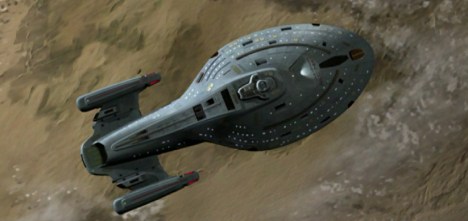
Voyager had never been more alone than it was during its sixth season.

Continue reading

Non-Review Review: The Equaliser 2

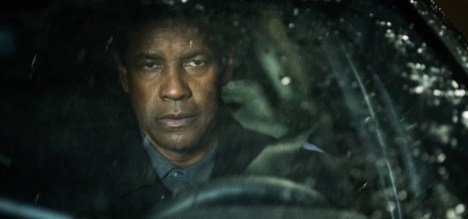
At one point in The Equaliser 2, Robert McCall is listening to a radio forecast of a storm front sweeping through the north east of the United States.

“It’s coming in slow,” the meteorologist explains. “It’s taking it’s time.” In theory, so is The Equaliser 2. The storm is itself a metaphor for both the film and its protagonist, a force of nature descending upon the characters with a slow and steady certainty. The Equaliser 2 is a film that is very consciously taking its time, the script structured in such a way as to prioritise mood and ambiance over plot and pacing. The Equaliser 2 is meant to seem a stately and poetic meditation on violence and the men who commit it. At least in theory.

Yeah, we don’t know why it isn’t called The Sequeliser either.

It is clear what writer Richard Wenk and director Antoine Fuqua are trying to do over the course of the film’s two-hour-and-nine-minute runtime, building a mounting sense of dread towards a cathartic release. However, there is something deadly unsatisfying in this. The Equaliser 2 is not nearly clever enough nor intricate enough to sustain that more relaxed pace. What should be profound is instead belaboured, what should be considered is instead clumsy. Plot threads are broached and disappear. The one that reach their conclusion arrive long after the audience.

The Equaliser 2 forsakes the grotty do-it-yourself brutality of its predecessor, aspiring towards something moving and insightful. Unfortunately, all of that gets lost in a haze. The storm passes overhead, and it seems unlikely that anybody would even notice.

A storm is coming.

Continue reading

Star Trek: Voyager – Unimatrix Zero, Part I (Review)

Once again, Star Trek: Voyager takes its cues from Star Trek: The Next Generation.

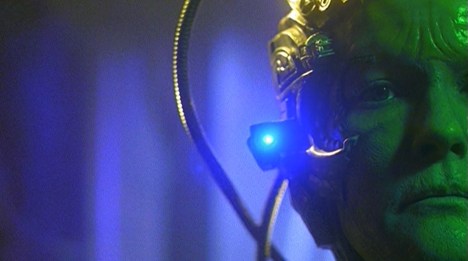
The Next Generation bridged its sixth and seventh seasons with Descent, Part I and Descent, Part II. That season-bridging two-parter was focused on discord within the Borg Collective, with the crew coming into contact with a group of drones that had separated themselves from the hive mind. It was a somewhat underwhelming two-parter, and is unlikely to rank alongside anybody’s favourite episodes (or even favourite two-parter) from the run of The Next Generation.
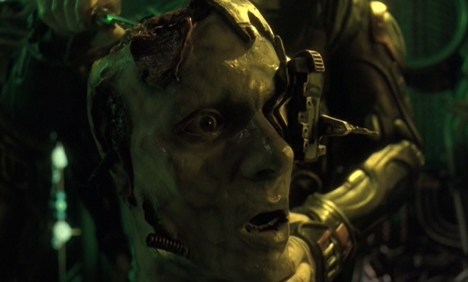
Things come to a head.

Even then, Descent, Part I and Descent, Part II had a lot of weight behind them. Glossing over the quality of the episodes themselves, they marked the big reintroduction of the Borg into The Next Generation following their appearance in The Best of Both Worlds, Part I and The Best of Both Worlds, Part II. The only episode to feature the Borg in the three years between those two-parters was I, Borg, meaning that the return of the Borg at the end of the sixth season of The Next Generation was a big deal.

As such, this seems like a strange cue for Voyager to take from The Next Generation. After all, Voyager doesn’t have that same luxury of built-in anticipation. Voyager bridged its own third and fourth seasons with Scorpion, Part I and Scorpion, Part II, but the Borg have been a steady fixture of the series since then. Ignoring the addition of characters like Seven of Nine and Icheb to the core cast, the Borg have played important roles in episodes like Hope and Fear, Drone, Dark Frontier, Part I, Dark Frontier, Part II, Collective and Child’s Play.
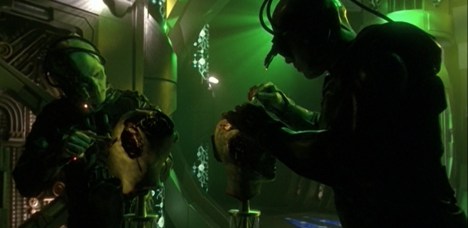
Picking their brains.

That is a lot of focus, particularly in the context of a television series like Voyager, where there is less continuity from episode to episode. Including hallucinations, dead bodies, screen images and holograms, the Borg appear in twenty-three episodes of Voyager, as compared to six episodes of The Next Generation. By way of contrast, the Hirogen appear in between nine and ten episodes, depending on how one counts Flesh and Blood, Part I and Flesh and Blood, Part II. The Malon only appear in four episodes.

All of this is to say that Unimatrix Zero, Part I and Unimatrix Zero, Part II feel like a rather blatant rip-off of an already underwhelming two-parter, but without the core appeal. Voyager has reached the point where the appearance of the Borg is a source of dread, but not for the reasons that it should be.

She’s had some bodywork done.

Continue reading

90. Incredibles 2 – This Just In (#183)

Hosted by Andrew Quinn and Darren Mooney, and with special guests Graham Day and Marianne Cassidy, This Just In is a subset of The 250 podcast, looking at notable new arrivals on the list of the 250 best movies of all-time, as voted for by Internet Movie Database Users.

This time, Brad Bird’s Incredibles 2.

At time of recording, it was ranked the 183rd best movie of all time on the Internet Movie Database.

Continue reading