• Following Us

  • Categories

  • Check out the Archives


  • Awards & Nominations

Star Trek: Voyager – Equinox, Part II (Review)

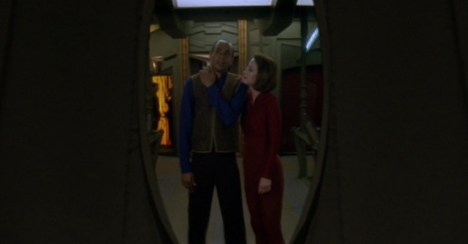
Equinox, Part II works worse than it should.

Equinox, Part II is undercut by three key factors. The most obvious is the premise itself. Equinox, Part I and Equinox, Part II tell a story that is baked into the DNA of Star Trek: Voyager, but there is a sense that the production lacks the will to tell that story. Secondly, Equinox, Part I and Equinox, Part II struggle with consistent characterisation and clear narrative arcs. The third factor is a sense of inevitability, with Equinox, Part I and Equinox, Part II feeling like they reveal nothing insightful about Voyager before concluding, and that the show will no lasting impact.
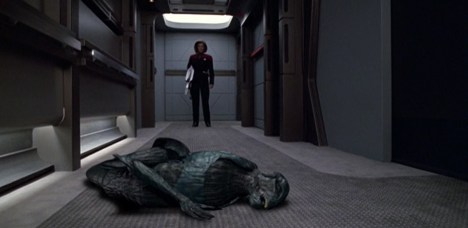
Fish out of fluidic space.

These three factors squander a lot of raw potential. Equinox, Part II is telling a story that feels essential to Voyager, a story that the franchise arguably should have been telling immediately after Caretaker. This season premiere represents the chance for Voyager to have a full and frank discussion with itself, particularly in the context of its sixth season. Star Trek: Deep Space Nine had concluded at the end of its seventh season. For the first time in its run, Voyager was the only Star Trek series on television. This was the perfect opportunity for introspection.

Equinox, Part II is an episode that fails to deliver upon a fantastic opportunity.
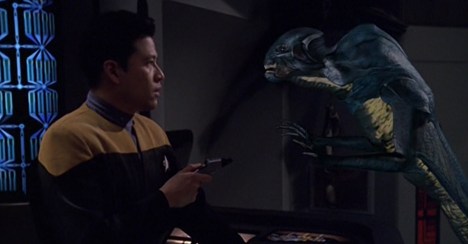
“What are you looking at?”

Continue reading

Black Mirror – USS Callister (Review)

What is Space Fleet? I’ll tell you what it is. It is a belief system founded on the very best of human nature. It is a goal for us to strive towards for the betterment of the universe, for the betterment of life itself.

And you assholes are f%$king it up!

Black Mirror originated in the United Kingdom, broadcast on Channel 4 and written by Brass Eye and The 11 O’Clock Show writer Charlie Brooker.

The first two seasons of Black Mirror tended to focus on British talent, drawing in a wealth of talent from the British Isles to tell a set of stories about technology run amok: Daniel Kaluuya, Rory Kinnear, Jodie Whittaker, Toby Kebbell, Domhnall Gleason, Lindsay Duncan, Jessica Brown Findlay, Rupert Everett, Hayley Atwell, Rafe Spall and Oona Chaplin. Jon Hamm appeared in White Christmas, but Hamm is arguably an honourary citizen of British television, having appeared in shows like Toast of London and A Young Doctor’s Notebook, and the film Absolutely Fabulous.

In contrast, the third and fourth seasons of Black Mirror moved over to America. This shift was most obvious in the change in locations and talent employed by the series: Bryce Dallas Howard, Jodie Foster, Wyatt Russell, Mackenzie Davis, Rashida Jones, Mike Schur and Cherry Jones. However, it is also quite clear from a shift in emphasis in the stories being told. In particular, the two stories being told that bookend the fourth season of Black Mirror feel uniquely American. Black Museum plays as an allegory for one of America’s foundational sins, its exploitation of its racial minorities.

The feature-length season premiere, USS Callister is transparently a riff on the larger Star Trek franchise and a broader cultural war raging over ownership of established franchises like Ghostbusters or Star Wars. There are undoubtedly ways in which this story could be told with an emphasis on British experience, but USS Callister is very firmly a story about the ownership of one of America’s most beloved and abiding pop cultural mythologies. It is at once a deconstruction of certain strains of fandom and a love letter to the idealism at the heart of such stories.

Continue reading

61. Three Billboards Outside Ebbing, Missouri – This Just In (#122)

Hosted by Andrew Quinn and Darren Mooney, and this week with special guest Stacy Grouden, This Just In is a subset of The 250 podcast, looking at notable new arrivals on the list of the 250 best movies of all-time, as voted for by Internet Movie Database Users.

This time, Martin McDonagh’s Three Billboards Outside Ebbing, Missouri.

Continue reading

Non-Review Review: The Commuter

The Commuter is the best Neeson Season movie since The Grey and the best movie about the financial crisis since The Big Short.

On paper, The Commuter is a mildly interesting premise that feels very much of a piece with the typical January awards-fare counter-programming. It is very much a high-concept action film that feels populated from a mad lib. [Liam Neeson/Bruce Willis/Gerard Butler] is a [former cop/current cop/law enforcement official] who finds himself embroiled in a race against time to [protect/rescue/expose/defeat] a [loved one/conspiracy].

McCauley took the instruction not to fire the gun inside the carriage a little… literally.

The Commuter is very much of piece with Liam Neeson’s other collaborations with director Jaume Collet-Serra; Unknown, Non-Stop, Run All Night. It is a movie about a weary protagonist embroiled in a situation beyond his control, the perfect fodder for a midweek movie to be enjoyed with a bucket of pop corn and a soft drink of choice. However, what elevated The Commuter above these earlier collaborations is similar to what elevated Collet-Serra’s The Shallows above so many familiar shark movies.

The Commuter has the look and feel of a big dumb action movie, a film inviting the audience to engage on its own terms rather than theirs. However, there is a very knowing and self-aware quality to The Commuter, an understanding of what the audience expects of the film and what the film can expect from the audience in return. The result is a film that always feels smarter and better than it needs to be, very carefully calibrated; just serious enough to work, just self-aware enough to charm. The result is a delightfully enjoyable action film.

Dial “C” for Commuter.

Continue reading

Deep Space Nine at 25 – The Most Humanist of (Star) Treks

On Earth, there is no poverty, no crime, no war. You look out the window of Starfleet Headquarters and you see paradise. Well, it’s easy to be a saint in paradise. but the Maquis do not live in paradise. Out there in the Demilitarized Zone, all the problems haven’t been solved yet. Out there, there are no saints — just people.

– Benjamin Sisko, The Maquis, Part II

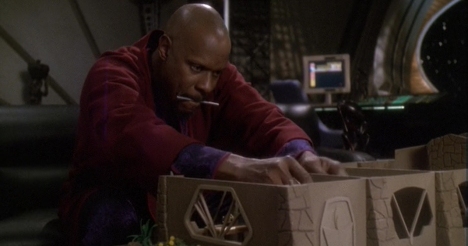
Star Trek: Deep Space Nine is contentious.

Writer Ronald D. Moore has talked about the franchise as the bastard stepchild of the Star Trek franchise. Star Trek: The Next Generation actor Marina Sirtis has described it as little more than a hotel in space and not worthy of the franchise name. While the show was still on the air, Majel Barrett Roddenberry took the time to write a public letter denounced the show and its perceived connection to her husband’s legacy. This argument rages on-line even today, as fans argue about the series’ legacy and its place in the broader canon.

The charges against Deep Space Nine are clear. It is generally regarded as the most cynical of Star Trek spin-off shows, the series most likely to question and interrogate the underlying assumptions of the Star Trek universe. Deep Space Nine was the series that introduced and developed the Maquis, terrorists who splintered off from Starfleet. Deep Space Nine introduced the concept of Section 31, and the idea that Starfleet might be dangerous if left to its own devices. Deep Space Nine devoted its final two seasons to a war arc, a rejection of Roddenberry’s utopia.

However, these arguments are all based upon awkward presuppositions that reveal a lot about the assumptions of Star Trek fandom, and which tend to miss the forest for the trees. Deep Space Nine is a deeply humanist and optimistic piece of television, one has a great deal of faith in its cast and in people. As wary as Deep Space Nine might be about institutions and authority, Deep Space Nine fundamentally believes that people are good and that it is possible to peacefully coexist. The show simply acknowledges that this takes work, but believes it can happen.

Continue reading

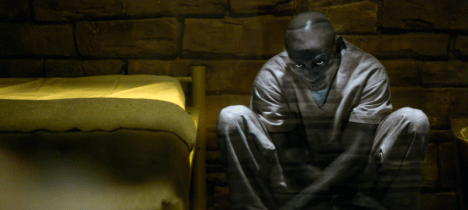
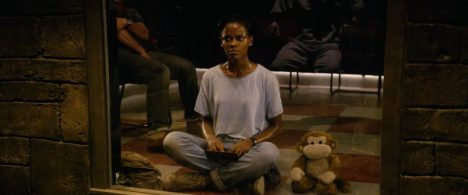
Black Mirror – Black Museum (Review)

One of the more interesting aspects of Black Mirror‘s migration from Channel 4 to Netflix has been the subtle shift from British science-fiction horror towards American science-fiction horror.

The two episodes bookending the fourth season – USS Callister and Black Museum – exemplify this trend, episodes that would seemed very out of place when Black Mirror was “just” a quirky British anthology. USS Callister is obviously steeped in the iconography of a very American science-fiction institution, and while its male entitlement is not a uniquely American experience, that attitude has been more firmly tied into modern American politics than to  contemporary British politics.

Black Museum is even more overtly American, to the point that even the lead character’s British accent is revealed as a sham. The episode opens with a montage that practically screams “Americana!”, a big American car driving through a big American desert, a long stretch of road dwarfed by a seemingly infinite stretch of nothing, where even the jutting mountains provide a sense of impressive scale. Black Museum is set in the mythological America, a country so large that it occasionally seems to be nothing but nooks and crannies, populated with curiousities and eccentricities.

Black Museum unfolds within one such curiousity, a macabre collection of the grotesque and the ghoulish, a twenty-first century freak show run by a twenty-first century P.T. Barnum. However, over the course of the hour, the shape of Black Museum comes into focus. This is not merely a story embracing American trappings, it is also engaging with a distinctly American horror. Slowly, over the course of seventy minutes, Black Museum reveals itself as a science-fiction allegory about the exploitation of African American bodies and African American suffering; one of America’s original sins.

Continue reading

New Podcast! Primitive Culture #19 – Star Trek: Voyager, History and Nostalgia

Over the Christmas Break, I had the pleasure of sitting down with the wonderful Duncan Barrett and talking about Star Trek: Voyager. Duncan is a historian, and I’ve had the pleasure of quoting some of his work on the blog in the past. He hosts Primitive Culture, with Tony Black and Clara Cook, a show wherein the hosts discuss certain historical-related items of interest in the Star Trek canon.

Duncan was in Ireland for part of the break, and so we took the opportunity to have a sit down to talk about the unique approach that Voyager had to the ideas of history and nostalgia within the Star Trek canon, how it viewed both the past and the future. We particularly focused on episodes like Distant Origin and Living Witness, along with a broad discussion of particular themes. It was a fun discussion, and you can listen to it below or directly via Primitive Culture‘s homepage on trek.fm.

New Podcast! On “Filibuster #63” Talking “Opening the X-Files” with Lee Hutchinson

I had the pleasure making a guest appearance on Filibuster with the great Lee Hutchinson, who very kindly invited me on to talk about my book, Opening the X-Files. Always a pleasure to talk about the X-Files, especially with Lee. I also talk a little bit about the origin of the book, the processes that I used when writing it, and the differences between doing a blog project over several years as opposed to filtering that down for a book.

You can listen to the podcast directly at the Filibuster website, but you can also listen to it directly below.

Deep Space Nine at 25 – The Most Multicultural of (Star) Treks

Star Trek: Deep Space Nine is the first (and perhaps only) multicultural Star Trek.

Ironically, Deep Space Nine is often derided by traditionalist fans for eschewing core Star Trek principles. Deep Space Nine was the first (and only) Star Trek series to unfold on a space station rather than a space ship, boldly sitting rather than boldly going. More than that, Deep Space Nine was the first Star Trek series to embroil the Federation in an active war, notwithstanding the Klingon or Romulan Cold Wars nor the Cardassian Wars that retroactively took place during the early seasons of Star Trek: The Next Generation.

However, in a very real and substantial way, Deep Space Nine was also the Star Trek series that hewed most closely to the humanist principles of Gene Roddenberry’s Star Trek. It could reasonably be argued that Deep Space Nine simply made an effort to interrogate and to explore premises that Roddenberry never properly considered. At its core, Star Trek had always been about embracing the unknown with open arms and about learning that what was different was not always scary or monstrous. Deep Space Nine embraced that.

Deep Space Nine was not a series about a bunch of explorers looking “to boldly go” in any literal sense, but about a bunch of characters struggling to fundamentally understand “new life forms and new civilisations.” More than the other Star Trek series, Deep Space Nine was about embracing other cultures and values, about recognising that differences could enrich as much as divide, and that there was no single “right” way build a better world. Deep Space Nine is an ode to humanism and compassion, embodying many of the virtues other Star Trek shows nod towards.

Continue reading

60. The Shawshank Redemption (#1)

Hosted by Andrew Quinn and Darren Mooney and this week with special guest Charlene Lydon, The 250 is a (mostly) weekly trip through some of the best (and worst) movies ever made, as voted for by Internet Movie Database Users. New episodes are released Saturday at 6pm GMT, with the occasional bonus episode along with them.

This time, Frank Darabont’s The Shawshank Redemption.

Convicted of murdering his wife, Andy Dufresne is sentenced to two life sentences in Shawshank Penitentiary. A harsh and unforgiving prison, Andy struggles to hold on to hope as the years go by.

At time of recording, it was ranked the best movie of all time on the Internet Movie Database.

Continue reading