• Following Us

  • Categories

  • Check out the Archives


  • Awards & Nominations

The X-Files: Season One (Topps) #2 – Deep Throat (Review)

This February and March, we’re taking a trip back in time to review the fourth season of The X-Files and the first season of Millennium.

Season One feels like a very odd way to franchise The X-Files.

Topps had enjoyed tremendous success with their licensed tie-in comic book, so it made a certain amount of sense to try to milk the franchise as much as possible. After all, they had already tried a number of other promotions, like releasing “digests” to supplement that monthly series and releasing tie-in comics to appear with magazines like Wizard. So offering another series that would publish on a regular basis starring Mulder and Scully made perfectly logical sense.
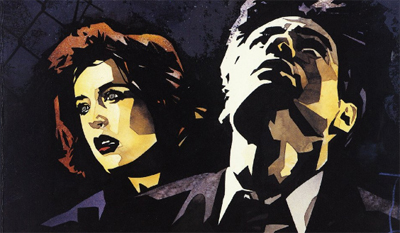
The truth is up there...

The truth is up there…

About a year after the release of their adaptation of The Pilot, Topps decided to push ahead with a series of regular adaptations of first season episodes of The X-Files. They reissued their adaptation of The Pilot as the first comic in the series, and then began publishing new adaptations of those early episodes written by Roy Thomas and illustrated by a rotating team of artists. The comics would be about twice as long as the issues of the monthly series, but would only publish once every two months. The monthly series was priced a $2.50, with Season One priced at $4.95.

It is hard not to feel quite cynical about Season One, particularly in an era where these classic episodes of The X-Files stream of Netflix and entire seasons are available to purchase at very low prices.
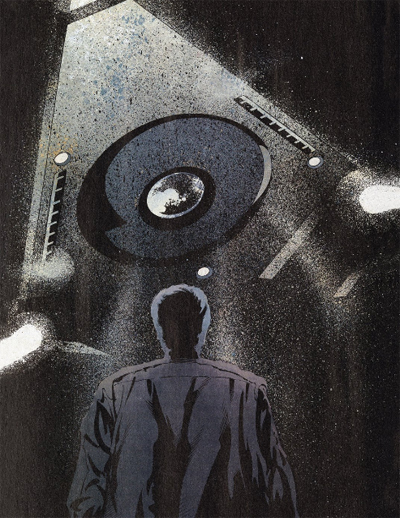
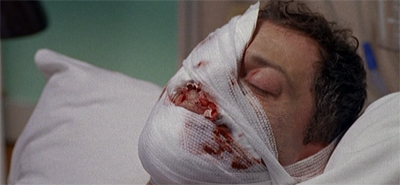
The shape of things to come...

The shape of things to come…

Continue reading

The X-Files – Season 4 (Review)

This February and March, we’re taking a trip back in time to review the fourth season of The X-Files and the first season of Millennium.

The fourth season of The X-Files is a work of chaotic genius.

While the third season of The X-Files is one of the most consistently well-made seasons of television ever produced, the fourth season is a lot more uneven. There are a lot of reasons for this. Chris Carter was busy launching Millennium. Fox had decided to press ahead with The X-Files: Fight the Future. Behind the scenes, it was chaotic. Glen Morgan and James Wong hung around for half the season before leaving to work on their own pilot, a planned script from Darin Morgan fell through, Chris Carter’s attention was divided.

xfiles-musingsofacigarettesmokingman17

However, the fourth season represents something of a changing of the guard on the writing staff, a transition between two generations. The fourth season sees the permanent departure of writers Glen Morgan, James Wong and Howard Gordon. These were all writers who worked hard to give The X-Files its unique flavour and identity in the show’s earliest years. The X-Files would not be the same show without the input of those three writers. It is a shame to see them depart, although four years is a long time in the industry.

In contrast, the fourth season also sees younger talent rising up. It sees the first collaboration of Vince Gilligan, John Shiban and Frank Spotnitz. The trio would become one of the most consistent (and productive) writing ensembles on the series. The fourth season also saw the rapid ascent of Vince Gilligan, who had only contributed one script to the third season; Gilligan’s three solo scripts for the third season are iconic and influential in their own right. These are the voices that will steer The X-Files through to the end of its nine-year run.

xfiles-paperhearts22

As such, the fourth season feels transitional. It is a season that lacks the finely-honed efficiency that defined the third season, in favour of a more ambitious and even experimental style. The result is a season that feels wildly creative, a joyous cacophony rather than a harmonious symphony. The fourth season may not always hit the notes, but it is doing something very fresh and exciting. There is an energy and enthusiasm to the season that carries even some of the weaker episodes.

The fourth season is not consistently brilliant, but it is more than occasionally transcendental.

xfiles-max15

Continue reading

Millennium – Season 1 (Review)

This February and March, we’re taking a trip back in time to review the fourth season of The X-Files and the first season of Millennium.

Millennium is a strange television show.

It is quite clear that Chris Carter and Fox both had a very different understanding about how best to follow on from the success of The X-Files. Fox clearly wanted another popular hit, a television show that it could plug comfortably into its 9pm Friday slot and grow into a multimedia franchise. The network spent a phenomenal amount of money promoting Millennium, with advertising and screenings and other publicity attempts. This approach paid off; The Pilot broke all sorts of records for Fox.

millennium-lamentation11

However, Millennium could not sustain those viewing figures. Over the first season, it haemorrhaged viewers. Chris Carter was not trying to present an accessible and popular pop hit; instead, Carter was taking advantage of the success of The X-Files to construct something decidedly more esoteric. Millennium is a tough show to watch. It is grim, unrelenting and oppressive. It is a show about darkness in the world that tends to roll up its sleeves and jump right in. Millennium has a clear idea of what it wants to be, but what it wants to be is alienating and uncomfortable.

On just about any level, the first season of Millennium is more accomplished than the first season of The X-Files. The production is more confident, the ideas are much bolder, the themes are much clearer. In fact, the first season of Millennium even holds up well when stacked against the fourth season of The X-Files on an episode-by-episode basis. But that’s not the problem. By definition, “Lance Henriksen fights serial killers and the concept of evil in America” will never be as popular as “David Duchovny and Gillian Anderson fight aliens and monsters and weird stuff!”

millennium-pilot11

The first season of Millennium is a show that offers a distinctive and uncompromising auteur vision which cares little for what the audience might want or expect. For better or worse, that approach would prevent Millennium from ever approaching the critical or popular support that The X-Files had already begun to accrue at the end of its own first season. The result is a television show that was never going to rival The X-Files as a pop culture phenomenon , but which serves as a bold philosophical statement from its creator.

“This is who we are,” the opening credits state, unapologetically. They seem to be speaking for the show as much for society.

millennium-bloodrelatives13 Continue reading

The X-Files (Topps) #32 – Crop Duster (Review)

This February and March, we’re taking a trip back in time to review the fourth season of The X-Files and the first season of Millennium.

Crop Duster feels rather generic.

That is a shame. After all, John Rozum’s script hits on all sorts of big themes related to The X-Files. It is a story about a small community that has its own secrets, haunted by the legacy of sins long past. The paranormal evil at work in the rural community of Kelly in Kentucky ultimately masks a more mundane story about human violence and betrayal. There is a sense that the basic ingredients of Crop Duster should add up to more than a disposable one-shot. Unfortunately, they don’t.

Alien bodies...

Alien bodies…

Continue reading

The X-Files – Gethsemane (Review)

This February and March, we’re taking a trip back in time to review the fourth season of The X-Files and the first season of Millennium.

Agent Mulder died late last night from an apparent self-inflicted gunshot wound to the head.

– Agent Dana Scully, 22nd October 1997

xfiles-gethsemane27 Continue reading

The X-Files (Topps) #30-31 – Surrounded (Review)

This February and March, we’re taking a trip back in time to review the fourth season of The X-Files and the first season of Millennium.

Surrounded marks the beginning of the end for Topps’ licensed X-Files tie-in comic book. There are only twelve issues remaining before Ten Thirteen would decided not to renew the contact, making this the last year for the comic. Of course, Topps would rather relentlessly milk the comic for whatever it was worth over the next year, publishing both a range of Season One adaptations and an adaptation of Kevin J. Anderson’s Ground Zero novel. They would also finally get around to releasing Stefan Petrucha and Jill Thompson’s AfterFlight graphic novel.

So there is a lot of content coming in the final year of Topps’ hold on that license. The X-Files was clearly a massive success for the newly-minted comic book wing of the company. Indeed, The X-Files was the last comic standing for Topps, and there is ample evidence that Topps was hoping to continue the line beyond The X-Files: Fight the Future, with several Season One adaptations solicited, but never published. Much like for the show itself, this was a boom time for Topps.

What's eating you?

What’s eating you?

However, the final year of the comic ultimately feels rather safe and generic. John Rozum is a competent comic writer; he understands the medium, and he knows how to play with other peoples’ toys. However, there is a sense that the comic book is really just marking time. There is very little that stands out about this last stretch of the comic; nothing which really demands to be read or to be added to the great X-Files canon. It is not bad, by any measure; it is just there.

Surrounded is a prime example of the comic book marking time. It feels like a retread of familiar ground – both for the comic book and for the parent show. When Stefan Petrucha and Charles Adlard set stories like Silent Cities of the Mind or Home of the Brave in militia compounds, they were very much ahead of the television. By the time that Surrounded was published at the end of the fourth season, the show itself had already told stories about this world in episodes like The Field Where I Died, Tunguska, Terma and Unrequited.

Shining some light on the matter...

Shining some light on the matter…

Continue reading

Millennium – Maranatha (Review)

This February and March, we’re taking a trip back in time to review the fourth season of The X-Files and the first season of Millennium.

Maranatha provides a nice close to Chip Johannessen’s four scripts for the first season of Millennium.

At its core, Maranatha is a story about stories. It is a tale about mythmaking and storytelling. It is about a monstrous man who seeks to transform himself into a creature of legend, brutally slaughtering innocent people in order to feed the idea that he is something much more than a corrupt political official. As such, the story sits quite comfortably alongside Johannessen’s other three scripts for the season, each of which is about storytelling or mythmaking in some form or another.

The power of Antichrist compels you...

The power of Antichrist compels you…

In Blood Relatives, James Dickerson attends the funerals of people he never knew, pretending to have been a part of the lives of the recently deceased; he tells stories and memories that never happened. In Force Majeure, Frank Black encounters a radical group of people who believe in the story of the end times; whether true or false, this story provides meaning to the life of the otherwise lost Dennis Hoffman. In Walkabout, Frank Black tries to piece together his recent history, constructing a narrative to account for out-of-character behaviour.

Maranatha serves as something of a culmination of this approach to Millennium. It the story of a sadist who seeks to elevate himself to the status of legend, dictating and shaping his own narrative through fear and manipulation.

"I wanna take his face... off!"

“I wanna take his face… off!”

Continue reading

The X-Files – Elegy (Review)

This February and March, we’re taking a trip back in time to review the fourth season of The X-Files and the first season of Millennium.

The first two-thirds of Elegy count as the best episode of The X-Files that John Shiban has written at this point of his tenure on the writing staff. Elegy starts out as an episode that leans into Shiban’s strengths. It is a very traditional and old-fashioned horror story, the first tried-and-tested ghost story that The X-Files has told in a while. The idea of a haunted bowling alley is so wonderfully weird and so quintessentially American that it fits The X-Files perfectly. For its first thirty minutes, Elegy is funereal and sombre, haunting and enchanting.

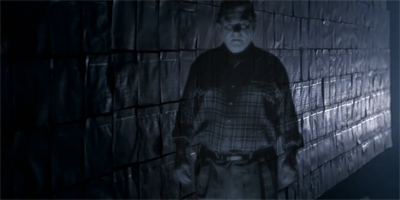
Elegy is a story packed with potentially interesting concepts. It is overflowing with clever ideas and memorable images. Shiban is a writer who has a great deal of affection for classic horror, and that affection shines through into Elegy. There is a slow and sorrowful atmosphere to the early stretches of the episode. Transparent grey spectres are a staple of the horror genre, but they work very well in this context. The X-Files has been quite reluctant to handle traditional monsters, so there is something rather strange and affecting about seeing such a classic depiction here.

Here there be ghosts...

Here there be ghosts…

Then things go to hell. To be fair, the problems with the last fifteen of Elegy are very much suggested from the start; they are just pushed to the fore. It becomes quite clear that Elegy has no idea how to resolve a “haunted bowling alley” story, so the script hastily and clumsily transitions to an “abusive care home” plot. The first two thirds of Elegy are not that interested in the character of Harold Spuller beyond his use as a plot device; a fact that becomes quite apparent in how the final third callously disposes of him.

Elegy is an episode that brushes against greatness. Its best ideas rank with the highlights of the fourth season. Unfortunately, all of that is undercut by a truly terrible final act.

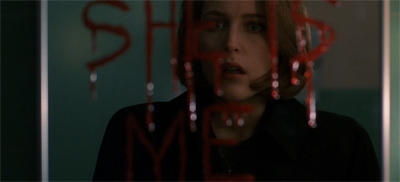
Blood on the mirror...

Blood on the mirror…

Continue reading

The X-Files – Zero Sum (Review)

This February and March, we’re taking a trip back in time to review the fourth season of The X-Files and the first season of Millennium.

For all that The X-Files exists in a murky shadow world populated by ambiguous figures and a government conspiracy dating back generations, the show has a pretty straightforward sense of morality. No good can stem from evil, the show seems to suggest; the show’s central mythology repeatedly has Mulder and Scully confront the legacy of sins committed by their forefathers. Even the title of Zero Sum alludes to the hollowness of Walter Skinner’s deal with the devil, his moral compromise that has no demonstrable benefit and severe demonstrable harm.

In Memento Mori, Walter Skinner compromised himself. He made a deal with the Cigarette-Smoking Man, in return for Agent Scully’s continued well-being. “What’ll it take?” Skinner asked, desperate for a chance to save Dana Scully. Ever ambiguous, the Cigarette-Smoking Man offered, “Well, I’ll have to get back to you on that.” Unfolding a few months later, Zero Sum is essentially about paying the piper. It is Walter Skinner settling up with the Cigarette-Smoking Man. He rolls up his sleeves and jumps into the dirty work.

Fire and brimstone...

Fire and brimstone…

Zero Sum is a story that you could not tell with Mulder. Although Mulder never faces the same choice as Skinner, the show has been quite consistent in its portrayal of Mulder’s morality. Mulder does not compromise; Mulder does not subscribe to the theory that a deal with the devil could ever pay dividends. In contrast, Skinner is a more ambiguous and pragmatic figure. Skinner spent significant sections of the second season caught between Mulder and the Cigarette-Smoking Man. The show only firmly committed him to Mulder and Scully in Paper Clip.

Zero Sum is a fantastic example of how the world of The X-Files has really grown and expanded around the lead characters. While the show will never quite develop into an ensemble, it is a series with a broad cast. It makes sense that it should begin to use them in a productive manner.

"Walter Skinner, F.B.I."

“Walter Skinner, F.B.I.”

Continue reading

The X-Files – Small Potatoes (Review)

This February and March, we’re taking a trip back in time to review the fourth season of The X-Files and the first season of Millennium.

Darin Morgan’s absence haunts the fourth season of The X-Files.

According to Frank Spotnitz, Darin Morgan had originally hoped to contribute a script in the middle of the season. Unfortunately, that idea fell through. The scramble to fill that gap in the schedule led to Memento Mori, which ultimately became the centre of the fourth season’s mythology arc, for better or worse. Scully’s cancer arc was just one result of the Darin-Morgan-shaped hole in the fourth season. Small Potatoes is another, the show’s first real “comedy” episode since Morgan departed the staff at the end of the third season.

A sting in the tale...

A sting in the tail…

Darin Morgan often gets credit for introducing the concept of comedy to The X-Files. That is not entirely fair; Glen Morgan and James Wong wrote Die Hand Die Verletzt shortly before Darin Morgan wrote Humbug. However, Morgan did refine the idea of comedy on The X-Files. Darin Morgan won an Emmy for writing Clyde Bruckman’s Final Repose, and he still considers Jose Chung’s “From Outer Space” to be among the best things that he has ever written.

Despite Morgan’s departure, it was clear that The X-Files could not completely avoid comedy. Once a show has demonstrated that it can do something particularly well, it becomes very difficult to stop doing that thing. Comedy episodes became something of a staple on The X-Files, with the show regularly churning out light-hearted and funny episodes (with varying degrees of success) until the show was finally cancelled after its ninth season. However, there was a long stretch after Morgan departed where the series seemed quite grim. Somebody would have to go first.

The inside, looking out...

The inside, looking out…

So Vince Gilligan stepped up to bat. Gilligan had been on staff for a bout a year at this point. He had quickly established himself as one of the most promising young writers in the room. While his first script for the show – Soft Light – was arguably more interesting than successful, Gilligan enjoyed an incredible hot streak when he joined the staff. Pusher, Unruhe and Paper Hearts are among the best scripts of the third and fourth seasons. With Small Potatoes, he seemed to position himself as the logical successor to Darin Morgan.

Darin Morgan even appears in Small Potatoes to pass the metaphorical baton.

"Here's Mulder!"

“Here’s Mulder!”

Continue reading