• Following Us

  • Categories

  • Check out the Archives


  • Awards & Nominations

Star Trek: Deep Space Nine – Wrongs Darker Than Death or Night (Review)

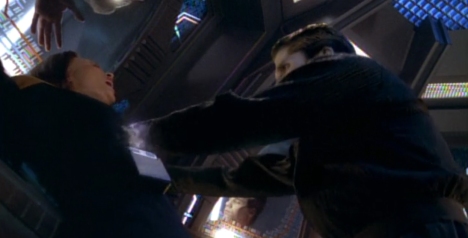
Wrongs Darker Than Death or Night once again brushes up against the limits of Star Trek: Deep Space Nine.

Wrongs Darker Than Death or Night is essentially two episodes wrapped up in one. Most basically, it is a character-driven melodrama that focuses on Kira and her relationship to her mother. Dark secrets are unearthed, and betrayals are revealed. Kira finds that she is much closer to Dukat than she once believed, and finds her own moral certainty tested as she confronts the reality of who her mother was and the compromises that she had to navigate in the context of the Cardassian Occupation. It is a bold and provocative episode, daring and unsettling.
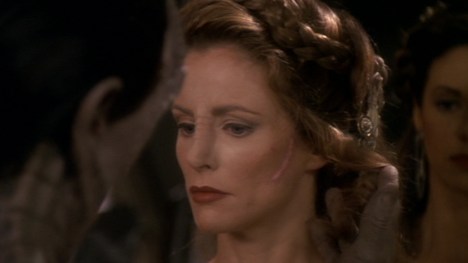
Everybody has scars.

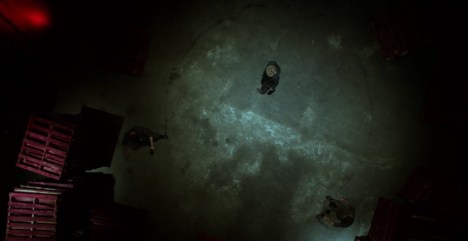
However, Wrongs Darker Than Death or Night is also trying to be an exploration of the kind of moral compromises necessary against the backdrop of the Cardassian Occupation, about the toll that such a horrific event inflicts upon a population. It is a tale of sexual slavery and brutality, about manipulation and abuse. It is a tale about power and violence, and how those aspects of an enemy occupation do not always manifest in brute force. This is story about the scars that such horrors leave. This is a clumsy episode, revealing the firm limits that exist within Deep Space Nine.

Wrongs Darker Than Death or Night does not work as well as it should, suggesting that there are some stories that Deep Space Nine simply cannot tell.
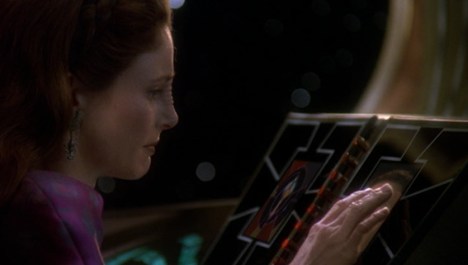
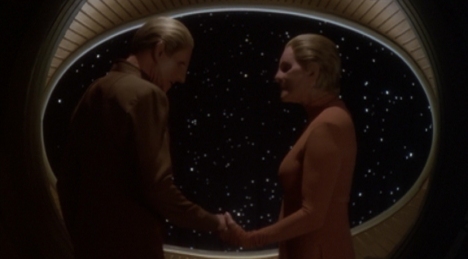
Screening her calls.

Continue reading

Iron Fist – Immortal Emerges From Cave (Review)

Immortal Emerges From Cave might just be the best episode of the first season of Iron Fist.

Of course, Immortal Emerges From Cave is not a good episode of television. It is bedevilled by all the other issues with Iron Fist, from inconsistent characterisation to dead-end subplots to pacing issues. It even adds a few new problems of its own, especially with a ham-fisted and ill-judged attempt to bring the character of Bride of Nine Spiders into live action. Immortal Emerges From Cave is unlikely to make much of an impression, and it certainly doesn’t rank with the other best episodes of the Marvel Netflix series.

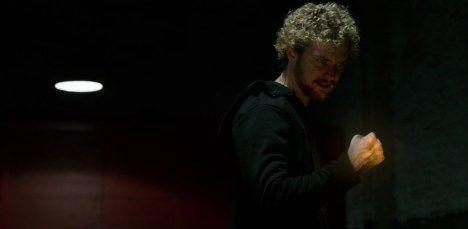
“Three men enter! One man (or two men) leave!”

At the same time, Immortal Emerges From Cave is the episode of Iron Fist that perhaps comes closest to fulfilling its own ambition. Immortal Emerges From Cave is a relatively self-contained narrative in the middle of the season, in which Danny finds himself forced to compete in a tournament against the Hand in order to save an innocent life. It is a hokey premise, but one that leads to a series of fairly middling set pieces in which Danny Rand works his way through various “levels” in pursuit of his goal.

Immortal Emerges From Cave feels very much like some forgotten z-list direct-to-video martial arts film from the nineties, a pulpy and absurd excuse to string together a collection of fight scenes. The result is not spectacular by any measure, but it is far more entertaining than the meandering story being told around it. Immortal Emerges From Cave might not succeed on general terms, or even on its own terms, but it at least has a strong sense of its own identity. That is enough to put it ahead of the rest of the season.

Glowing reviews.

Continue reading

Non-Review Review: Mindhorn

This film was seen as part of the Audi Dublin International Film Festival 2017.

The first half of Mindhorn is a pretty enjoyable British show business farce.

Richard Thorncroft is a failed British character, struggling to keep his career alive following a run on the cult eighties television show Mindhorn. Throncroft made his name playing the eponymous detective with a bionic eye that literally allowed him to see the truth. Inevitably Thorncroft ended up washed up and forgotten, a failed star crashing to Earth. When he is offered one last job, he is forced to return to Mindhorn both literally and figuratively. It is a fairly standard set-up, with Mindhorn reveling in Thorncroft’s lack of self-awareness and decency.

Not a patch on Bergerac.

Not a patch on Bergerac.

However, the second half of Mindhorn is something to behold, as this familiar set-up gives way to a high-energy surrealist farce.

Around midway through the film, Mindhorn makes a sharp pivot into something altogether more outlandish than the familiar British “failed celebrity” farce and evolves into something much less grounded and familiar. The result is one of the most enjoyable comedies in recent memory, and a cult film in waiting. As Thorncraft finds himself wading deeper and deeper into the chaos and insanity, Mindhorn feels like a psychological horror played as absurdist comedy. The result is nothing short of astounding.

King of the Beach.

King of the Beach.

Continue reading

Star Trek: Voyager – Year of Hell, Part I (Review)

Year of Hell, Part I and Year of Hell, Part II might just be the perfect episodes of Star Trek: Voyager.

Taken together, these episodes perfectly demonstrate the raw potential and strength of the third Star Trek spin-off. They are a boldly ambitious story of a ship that finds itself in hostile territory surrounded by a hostile force with superior firepower, all while playing into the recurring themes and fascinations of the wider series. Year of Hell, Part I and Year of Hell, Part II are effectively a story that finds history itself under threat, while emphasising Brannon Braga’s interpretation of Janeway by setting her against a similarly obsessive opponent.

Things fall apart.

Things fall apart.

The result is one of the most thrilling and engaging stories of Voyager‘s seven-season run, among the most satisfying of the series’ impressive “blockbuster” two-parters. Although the show is still being broadcast in the standard nineties 4:3 aspect ratio, it feels like a widescreen story. Part of that is due to the fact that the two-parter unfolds over three quarters of an entire year, part of that is the expanded room for storytelling, part of that is the fact that history itself hangs in the balance, part of that is the fact that Voyager itself feels at stake.

Year of Hell, Part I and Year of Hell, Part II do an excellent job capturing the essence of Voyager.

The Voyager cast Christmas party took a heavier toll than usual.

The Voyager cast Christmas party took a heavier toll than usual.

Continue reading

Star Trek: Deep Space Nine – Favour the Bold (Review)

With Favour the Bold, the writers begin winding down the ambitious six-episode arc that opens the sixth season of Star Trek: Deep Space Nine.

Indeed, Favour the Bold plays almost like the first part of a two-parter nestled at the end of the sprawling six-episode arc that opens the sixth season. At the end of the teaser, Sisko unveils his ambitious plan to Dax, boasting, “We’re going to retake Deep Space Nine.” It is the story that very clearly moves the arc that began with Call to Arms towards its conclusion, manoeuvring the series back towards the familiar status quo in which Captain Benjamin Sisko commands a lone Federation outpost near the distant planet of Bajor.

Point man.

Point man.

Favour the Bold is very much about lining up everything for the climax of the arc, moving the pieces into place so that that the dominoes can begin falling as early as possible in Sacrifice of Angels. However, the episode benefits from the fact that a lot of the heavy-lifting has already been done by this point in the arc. Behind the Lines already had Odo betray Kira, Rom get arrested and Damar figure out how best to dismantle those pesky self-replicating mines. That is already a lot of the table-setting for the arc’s epic conclusion, before Favour the Bold even begins.

As such, Favour the Bold has the luxury of beginning with a lot of its work already done and ending at the point where the action truly commences. The result is a surprisingly relaxed penultimate episode for this ambitious arc, one with the freedom to indulge in smaller character-driven scenes and the space in which to breathe.

They just need some space.

They just need some space.

Continue reading

Star Trek: Deep Space Nine – Sons and Daughters (Review)

If A Time to Stand and Rocks and Shoals demonstrate the raw potential and ambition of the sixth season of Star Trek: Deep Space Nine, then Sons and Daughters demonstrate its shortcomings.

The fourth and fifth seasons of Deep Space Nine rank among the very best seasons of Star Trek every produced. These two seasons demonstrated a striking level of consistency. There were undoubtedly terrible episodes, like Shattered Mirror and The Muse in the fourth season or The Assignment and Let He Who Is Without Sin… However, these episodes tended to be quite concentrated. Even other episodes that didn’t quite work, like The Sword of Kahless, Sons of Mogh, A Simple Investigation or Ferengi Love Songs, were more bland than outright bad.

Let me be your father figure...

Let me be your father figure…

The sixth and seventh seasons of Deep Space Nine lack that consistency. They are even more ambitious than the two seasons directly prior, pushing harder in bolder new directions and resulting in brilliant television like Waltz, Far Beyond the Stars, In the Pale Moonlight, Treachery, Faith, and the Great River, The Siege of AR-558, It’s Only a Paper Moon, Chimera, Inter Arma Enim Silent Leges and Tacking Into the Wind. The sixth and seventh seasons of Deep Space Nine were breathtaking and highly enjoyable on their own terms.

In fact, there is a very credible argument for ranking the sixth and seventh seasons of Deep Space Nine among the best seasons of the franchise. They represent the last great narrative leap forward until the third season of Star Trek: Enterprise. These two seasons are driven by a desire to take risks and try new things, to make ambitious gambles knowing that they might not pay off. These are certainly virtues to be encouraged, even without that laundry list of spectacular television.

The lost art of parenting.

The lost art of parenting.

However, with that level of ambition, the sixth and seventh seasons were also much more variable in terms of quality. They contained a lot more misfires than the previous two seasons. This is not just the obvious high-profile failures like Profit and Lace or The Emperor’s New Cloak, but also a lot more episodes that disappoint without hitting quite that level of awfulness; One Little Ship, The Reckoning, Time’s Orphan, Prodigal Daughter, Field of Fire, Extreme Measures. There is a sense that the number of bad episodes increases noticeably.

Sons and Daughters is perhaps the first example of this trend. It is an episode that is not soul-destroying terrible, but it simply does not work in the way that it is intended to work. Sons and Daughters is not only the weakest episode of the six-episode opening arc, it is also the first episode to be written by David Weddle and Bradley Thompson as members of the series’ writing staff. The two facts might not be unrelated.

All (Mar)tok tok tok.

All (Mar)tok tok tok.

Continue reading

Star Trek: Voyager – Revulsion (Review)

Revulsion is a solid episode elevated by a superb guest performance.

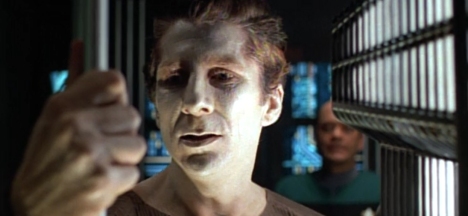
The most notable aspect of Revulsion is the guest appearance of veteran character actor Leland Orser. Orser’s screen presence is striking, making an impression with supporting role in high-profile films from The Bone Collector to se7en to Alien Resurrection to Daredevil. He has also worked reliably in television, holding down regular roles in shows like E.R. and Berlin Station, while recurring in series like 24 and Ray Donovan. To modern audiences, he is likely recognisable got his work as a fixture of the Taken franchise.

Not just holo praise.

Not just holo praise.

Even within the Star Trek franchise, Orser is very much a recurring fixture. While never a steady player like J.G. Hertzler or Jeffrey Combs, Orser made quite an impression. He played the changeling posing as Tal Shiar operative Colonel Lovok in The Die is Cast on Star Trek: Deep Space Nine, making the most of a rather minor role in one of the series’ most memorable two-part episodes. He would also do good work as the venal Loomis in the otherwise disappointing Carpenter Street during the third season of Star Trek: Enterprise.

However, his guest appearance in Revulsion on Star Trek: Voyager remains his most distinctive turn in the franchise. Playing Dejaren, a psychotic and fragmented hologram who murdered his crew, Orser singlehandedly elevates would could easily be a tired genre exercise. Revulsion is a solid episode, but one that sticks in the memory almost entirely due to the casting.

Kali Ma!

Kali Ma!

Continue reading

Star Trek: Voyager – Nemesis (Review)

Nemesis is a great example of Star Trek: Voyager pitching itself as generic Star Trek.

This is a story that is not unique or particular to this crew. In fact, the story could easily be adapted to service characters from Star Trek: The Next Generation or Star Trek: Deep Space Nine or even Star Trek: Enterprise. In some respects, Nemesis might even work better if Robert Beltran were swapped out for Jonathan Frakes or Colm Meaney or Connor Trinneer. There is very little in the script that relies on the particularities of this show or the nuances of its characters.

The Rifleman...

The Rifleman…

While this lack of a distinct identity is a problem for Voyager as a television series, it does lead to some great episodes. Many of the best episodes of Voyager could easily be ported to or from any of the other shows. It was an approach that really came to the fore during the third season, when Jeri Taylor and Brannon Braga made a conscious choice to steer the show away from its focus on a crew stranded far from home and towards a more generic Star Trek sensibility.

At its best, this leads to very strong allegorical storytelling. Episodes like Remember and Distant Origin are very much archetypal Star Trek episodes, extended science-fiction metaphors with a strong moral core that evoke the Star Trek beloved by so many of its fans. Nemesis is very much an episode constructed in that tradition, a metaphorical exploration of the dehumanisation of soldiers through combat training and conditioning. It is a powerful and thought-provoking piece of social commentary and a superb piece of Star Trek.

A hard shoot.

A hard shoot.

Continue reading

Star Trek: Deep Space Nine – Ties of Blood and Water (Review)

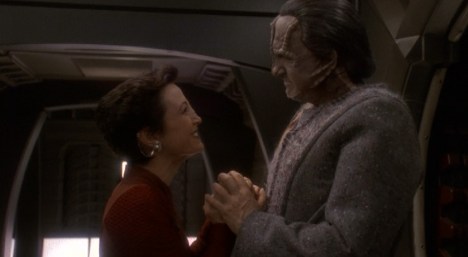
Ties of Blood and Water is a phenomenal piece of television, and a great example of the strengths of Star Trek: Deep Space Nine.

It is an episode that is tied to the personal and the political, a thriller about great powers squaring off against one another set against the more intimate story of a woman nursing her surrogate father in the final hours of his life. Ties of Blood and Water is both intimate and epic, never sacrificing one for the other. Its larger political story beats feel entirely in keeping with the demands of the larger shared universe, but it never loses sight of the story’s emotional centre. There is a very personal aspect to this tale, one firmly grounded in the characters and their relationships.

The ties that bind.

The ties that bind.

Ties of Blood and Water focuses on Tekeny Ghemor, the Cardassian Legate featured in Second Skin. There, he was convinced that Kira was his daughter who had been sent to infiltrate the Shakaar Resistance. In Ties of Blood and Water, Ghemor returns to the station as the relationship turns a full circle. In Second Skin, Kira Nerys had been a surrogate daughter to Ghemor, standing in for the lost Iliana. In Ties of Blood and Water, Ghemor finds himself cast as a surrogate father to Kira, providing her with a means to work through the loss of her biological father.

Ties of Blood and Water has a certain poetry to it, extending beyond the memorable title.

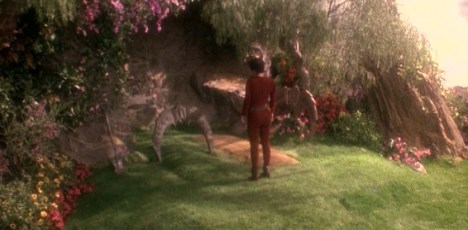
Greener pastures.

Greener pastures.

Continue reading

Star Trek: Deep Space Nine – The Ascent (Review)

Discussions of Star Trek: Deep Space Nine tend to focus on the big sweeping events and the epic scope.

It is easy to see why this is the case. Over the course of the show, alliances break and empires fall. Characters are elevated from the lowest rungs of the social ladder to command over entire planets. Whereas Star Trek: The Next Generation worked hard to flesh out alien cultures like the Romulans and the Klingons, it never committed to the kinds of sweeping long-form narratives that unfolded across the run of its younger sibling. The fall (and rise and fall again) of Cardassia, the broken and mended peace with the Klingons, the Dominion War.

"And to round out the thirtieth anniversary, we're going to climb the Paramount logo."

“And to round out the thirtieth anniversary, we’re going to climb the Paramount logo.”

Deep Space Nine deserves (and receives) a great deal of credit for telling these stories. Indeed, the franchise would not make another attempt at storytelling on this scale until the final two seasons of Star Trek: Enterprise. However, focusing on the bigger picture tends to gloss over the other strengths of Deep Space Nine. As much as the show crafts epic long-running stories of betrayal and redemption that span seasons of broadcast television, it interspaces these epic beats with lots of smaller character moments.

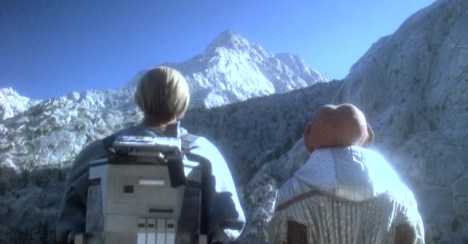
The Ascent is a wonderful example of this. The fifth season of Deep Space Nine is one of the most sweeping and epic seasons in the history of the franchise, but it still finds time for the smaller beats. The Ascent is essentially a set of low key character studies, playing to the strengths of both the cast and the characters.

An uphill struggle.

An uphill struggle.

Continue reading