• Following Us

  • Categories

  • Check out the Archives


  • Awards & Nominations

193. Gigli (-#19)

Hosted by Andrew Quinn and Darren Mooney, and this week with special guests Louise Bruton and Jenn Gannon, The 250 is a (mostly) weekly trip through some of the best (and worst) movies ever made, as voted for by Internet Movie Database Users.

This time, Martin Brest’s Gigli.

Larry Gigli is a low-level Los Angeles gangster who finds himself assigned the seemingly menial task of kidnapping and holding the brother of a district attorney hostage in the hopes of helping notorious criminal Starkman avoid prosecution. However, this seemingly simple assignment goes awry when a mysterious woman calling herself Ricki shows up, and Gigli finds himself warming to the young developmentally impaired man that he has taken under his wing.

At time of recording, it was ranked 19th on the list of the worst movies of all time on the Internet Movie Database.

Continue reading

Non-Review Review: Palm Springs

On the surface, Palm Springs is instantly recognisable as a genre-savvy update of the classic Groundhog Day template for the twenty-first century.

The basic plot finds two young adults – Nyles and Sarah – trapped living the same day over and over and over again. There is no escape from this nightmare, which finds the pair constantly reliving the wedding of Sarah’s sister Tala. As befitting the more modern media-literate approach to these sorts of stories, Palm Springs joins Nyles at a point where he has already been trapped in the loop for an extraordinarily long amount of time. He is already as familiar with the rules and limitations of this sort of narrative as any audience member who watched Groundhog Day on loop.

Making a splash.

This level of self-awareness in a story is potentially dangerous, encouraging ironic detachment. It’s very each for stories about these sorts of genre-savvy protagonists to feel more like plot devices than actual characters, particularly when operating within constructs that audiences only recognise from other films. “It’s one of those infinite time loop situations you might have heard of,” Nyles casually explains to Sarah early in the film. Sarah responds, aghast, “That I might have heard of?”

There are certainly moments when Palm Springs feels like it might be just a little too knowing and a little too arch, its own story too consciously framed in terms of familiar narrative devices. Most notably, even though the film is not directly named, one of the big emotional beats in Palm Springs seems to be lifted directly from Jurassic Park. Released the same year as Groundhog Day, it exists within the same nostalgic framework and was just as defining for an entire generation of movie-goers. Moments like that feel just a little bit too heavy-handed.

Some “him” time.

Continue reading

182. Hauru no ugoku shiro (Howl’s Moving Castle) – Ani-May 2020 (#134)

Hosted by Andrew Quinn and Darren Mooney and with special guests Graham Day and Bríd Martin, The 250 is a (mostly) weekly trip through some of the best (and worst) movies ever made, as voted for by Internet Movie Database Users. New episodes are released every Saturday at 6pm GMT.

This year, we are proud to continue the tradition of Anime May, a fortnight looking at two of the animated Japanese films on the list. This year, we watched a double feature of Hayao Miyazaki’s Tenkû no shiro Rapyuta and Hauru no ugoku shiro. We’ll also be covering a bonus on a recent entry on the list next week, Naoko Yamada’s Koe no katachi.

This week, the second part of the double bill, Hauru no ugoku shiro, Miyazaki’s first film after the breakout success of Spirited Away.

Chance encounters with both a mysterious young wizard and spiteful old witch find Sophie Hatter cursed. The eighteen-year-old young woman finds herself trapped in the body of a ninety-year-old crone. Never one to be defeated or outwitted, Sophie embarks on an adventure to lift the curse that takes her into the wilderness and to the heart of a majestic ambulatory castle inhabited by a fascinating bunch of misfits. As war simmers on the horizon, Sophie finds herself drawn to the temperamental but sensitive young magician Howl, but can they ever find peace?

At time of recording, it was ranked 134th on the list of the best movies of all time on the Internet Movie Database.

Continue reading

170. Before Sunset – “Two Guys Die Alone 2020” (#236)

Hosted by Andrew Quinn and Darren Mooney, and this week with special guest Jay Coyle, The 250 is a fortnightly trip through some of the best (and worst) movies ever made, as voted for by Internet Movie Database Users.

This time, a Valentine’s treat. Richard Linklater’s Before Sunset.

Finishing up his book tour in Paris, Jessie crosses paths once again with Celine. With a little over an hour before Jessie has to catch a flight back to the United States, the pair take a stroll through Paris. As they do, the nine years since their last encounter fades away, allowing them to reminisce about what might have been and consider what might yet be.

At time of recording, it was ranked the 236th best movie of all time on the Internet Movie Database.

Continue reading

159. Gone With the Wind – Winter of ’39 (#165)

Hosted by Andrew Quinn and Darren Mooney, and this week with special guests Grace Duffy and Rioghnach Ní Ghrioghair, The 250 is a fortnightly trip through some of the best (and worst) movies ever made, as voted for by Internet Movie Database Users. New episodes are released Saturdays at 6pm GMT.

So this week, Victor Fleming, George Cukor and Sam Wood’s Gone With the Wind.

A tale of revolution, romance and redemption set against the backdrop of the Civil War, Gone With the Wind remains one of the most sweeping epics ever produced by the studio system. The decades-long love affair between Scarlett O’Hara and Rhett Butler unfolds against the backdrop of the fall and rise of Scarlett’s family fortune.

At time of recording, it was ranked 165th on the list of the best movie of all time on the Internet Movie Database.

Continue reading

Non-Review Review: Last Christmas

Last Christmas certainly has its heart in the right place.

On paper, there’s a lot to recommend Last Christmas. Paul Feig is one of the most reliable comedic directors working today, and his work on films like Spy and A Simple Favour deserve consideration among the best comedies of the decade. Emilia Clarke is coming off an extended run as one of the two primary stars of genuine cultural phenomenon Game of Thrones, and has proven herself a likable romantic lead even in solid-if-unremarkable projects like Me Before You. Tony Golding has charisma to burn, as demonstrated by his supporting turn in Crazy Rich Asians.

Things are looking up.

Unfortunately, none of this really coheres as well as it should. Given the talent involved, this comedy should go down a festive treat. While it’s hardly a lump of coal, it is decidedly underwhelming. The problem isn’t a lack of surprises. After all, Last Christmas aspires to comfort rather than novelty. The problem is that Last Christmas is built around the assumption that it has the perfect festive surprise waiting for its eager and bright-eyed audience members to unwrap. Unfortunately, it vastly over-estimates how much some wrapping paper and bow can disguise a familiar outline.

Last Christmas feels far too pedestrian and far too predictable for what it is trying to do. There’s a potentially interesting premise here, but Last Christmas never really tries. It gives up the ghost too early.

Elf help.

Continue reading

Star Trek: Voyager – Human Error (Review)

Human Error is a staggering act of creative cowardice.

Star Trek: Voyager is in the literal home stretch of its final season; only seven more episodes remain. By this point in its final season, Star Trek: Deep Space Nine was mapping out an impressive and ambitious epic tying together seven years of threads into something loosely resembling a single tapestry; the “final chapter” was kicking into high gear with Strange Bedfellows. While Star Trek: The Next Generation was less assuredly wrapping things up, as Star Trek: Generations loomed, there was an air of finality and closure to stories like Journey’s End or Firstborn.
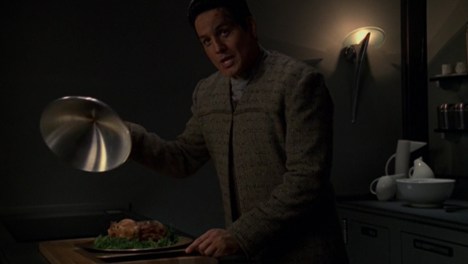
What a dish.

Voyager shows little real sign of progress in the final stretch. There is the occasional piece of housekeeping, such as the awkward decision to get Neelix off the ship in Homestead. There are occasional flashes of thematic reflection on the end of the journey, as in Workforce, Part I and Workforce, Part II. There are also episodes asserting the show’s place within the larger franchise, espousing hollow takes on familiar franchise storytelling in episodes like Critical Care or RepentanceVoyager even shows flashes of anxiety about the franchise iteration that will replace it, in episodes like Friendship One.

Watching the seventh season of Voyager, there is never any doubt that this will be the final season. There is a funereal atmosphere running through the season, that awkward sense of an exhausted athlete grasping desperately for the respite of the finish line. Watching the seventh season of Voyager, fatigue hangs in the air; it is abundantly clear that nobody involved expects an eighth season. However, it is equally obvious that nobody involved with the show has any idea what to do with the seventh season itself.
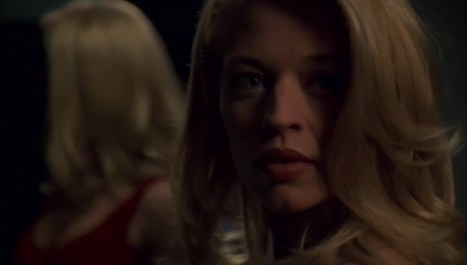
Not feeling herself.

On its own terms, Human Error is a disappointment in a manner similar to a lot of late Voyager episodes. The premise is highly derivative of a number of relatively recent episodes. As with Imperfection, Seven of Nine experiences a technological malfunction that may kill her due to her Borg implants. As with Someone to Watch Over Me, Seven of Nine experiments with her humanity. As with Pathfinder (and much earlier Hollow Pursuits), a character finds themselves escaping from reality into holographic fantasy. As with Fair Haven, a lead character falls in love with a holographic partner.

Human Error is dull and drab in terms of plotting. Its structure is fairly conventional. It’s secondary plot is underdeveloped, unnecessary and distracting. Its resolution is trite, with Seven of Nine naturally redeeming her earlier failures by saving the crew at the last possible minute using techno-babble and hazily-defined stakes. All of this is pretty standard Voyager plotting. It is not an aberration. There is very little to be said about these elements of the episode. These have been problems with the show for years, and Human Error is not even the most egregious example of any of them.
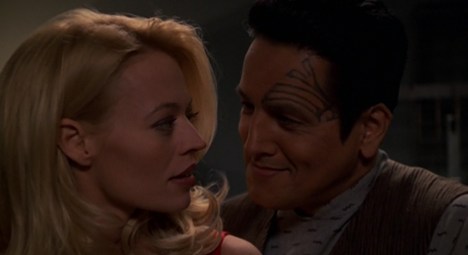
More like Chako-bae.

The big problem with Human Error is lack of conviction. Human Error is an episode with a premise that requires and demands proper development and exploration. It is an episode that lays down a marker, one that exists primarily so that it can be honoured over the final stretch of the season. Despite the problems within the episode itself, Human Error gambles in a big way on how the rest of the season builds off it. Naturally, Human Error loses this bet, its set-ups never honoured by the episodes that follow. This deals the episode a fatal blow, undercutting it brutally. Human Error is dull and drab, but also pointless.

To be clear, Human Error is not making an unreasonable request of the seven episodes that follow. The premise flowing from Human Error isn’t especially ambitious in the context of early twenty-first century television. Both The Next Generation and Deep Space Nine have built skilfully off individual episodes like Human Error, using these set-ups as stepping stones to build something more impressive. Even Voyager has employed that sort of storytelling before, albeit to mixed effect. There is no reason for Human Error to crash so spectacularly, beyond a complete disinterest from Voyager itself.
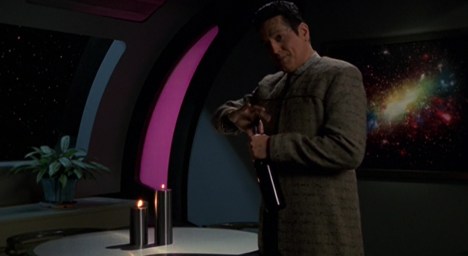
Don’t bottle it.

Continue reading

117. Before Sunrise – “Two Guys Die Alone 2019” (#204)

Hosted by Andrew Quinn and Darren Mooney, The 250 is a fortnightly trip through some of the best (and worst) movies ever made, as voted for by Internet Movie Database Users.

This time, a Valentine’s treat. Richard Linklater’s Before Sunrise.

An arguing couple on a train unexpectedly bring two much younger people into contact; Jessie is a seemingly cynical American who has found himself bumming around Europe while waiting for a flight home while Celine is a student returning to Paris. On a whim, the two young people decide to spend one magical night together, knowing that it may well be the only time that they ever spend together.

At time of recording, it was ranked the 204th best movie of all time on the Internet Movie Database.

Continue reading

Star Trek: Voyager – Fair Haven (Review)

Well, at least it’s better than Up the Long Ladder.

We’ll take what we can get.

Continue reading

Star Trek: Voyager – Someone to Watch Over Me (Review)

Someone to Watch Over Me is a decidedly atypical episode of Star Trek: Voyager.

The episode’s subplot, focusing on Neelix and a disorderly alien ambassador, harks back to the old diplomacy subplots of Star Trek and Star Trek: The Next Generation, when the crews would be asked to ferry ambassadors around only for terrible things to happen. There are any number of examples of that story template across the two earliest incarnations of the show; Journey to BabelElaan of Troyius, Is There in Truth No Beauty?Lonely Among UsLoud as a Whisper, SarekThe PriceMan of the PeopleData’s DayViolationsLiaisons.

The EMH rose to the occasion.

To be fair, Voyager has done a couple of these episodes before. There are a number of episodes in which the ship acts as a diplomatic courier shipping aliens from one destination to another or welcoming on board representatives of an alien culture; the subplot of Innocence comes to mind, as does the set-up of Remember. However, by and large, these diplomacy-driven subplots are a lot less frequent on Voyager than they were on the original Star Trek or The Next Generation. As such, the Neelix subplot feels very much like a throwback.

However, the primary plot of Someone to Watch Over Me feels very much like an episode of Star Trek: Deep Space Nine, an intimate romantic character study about an attraction between two individuals. Someone to Watch Over Me is very much an archetypal love story, one without the flavour of adventure or stakes defines other Star Trek romances like Captain’s Holiday or Counterpoint or Gravity. This is a low-stakes interpersonal attraction, very much in the style of Looking for Par’Mach In All the Wrong Places, His Way or Chrysalis.

A snap decision.

In fact, the basic plot of Someone to Watch Over Me is so archetypal that it can be traced back to number of classical inspirations. This is nothing new. The Star Trek franchise has long borrowed inspiration from various classics; Favourite Son and Bliss owe a great deal to The Odyssey and Moby Dick, for example. However, the choice of influences on Someone to Watch Over Me feels more like Deep Space Nine than Voyager; it draws from Pygmalion and its various adaptations, along with the early eighties comedy My Favourite Year.

The result is a decidedly strange blend of classic Star Trek storytelling that feels fresh and exciting in the context of Voyager. In many ways, Juggernaut was a showcase of Voyager‘s preference for blockbuster plot-driven storytelling. However, Someone to Watch Over Me is something much more compelling and intriguing. Someone to Watch Over Me is a character-driven episode of Voyager, and a very impressive and engaging one at that.

Putting the “ass” in ambassador.

Continue reading