• Following Us

  • Categories

  • Check out the Archives


  • Awards & Nominations

Non-Review Review: The Internship

When did Owen Wilson and Vince Vaughn get so old? The two rose to fame as part of the “frat pack” in the late nineties and the early part of the last decade, with The Internship serving as a reunion eight years after their collaborative effort in The Wedding Crashers. It’s interesting to look at how radically their screen personas have shifted. The Wedding Crashers positioned the two men as teenagers afraid to grow up, while The Internship joins them as two middle-aged men with life experience to share.

There’s a sense that something’s missing here, that we skipped a crucial step in the transition from rogue youngsters to hip uncles. The Internship doesn’t feel reckless or energetic. It feels safe and comfortable. If The Wedding Crashers saw the pair joyriding in a stolen Ferrari, The Internship feels more like a cruise in the family sedan.

A brand new day...

A brand new day…

Continue reading

Star Trek – Balance of Terror (Review)

To celebrate the release of Star Trek: Into Darkness this month, we’ll be running through the first season of the classic Star Trek all this month. Check back daily to get ready to boldly go. It’s only logical.

I’ve talked about it about it quite a bit in my earlier reviews, so I won’t dwell on it too much here, but Star Trek got really good really quickly. Balance of Terror is only the ninth ever episode of Star Trek ever produced, but it stands as one of the finest entries in the original series, and perhaps even the franchise. It also represents the moment where the model of what Star Trek would be really sort of solidified. The first eight episodes had contained any number of classic Star Trek tropes.

The Cage and Charlie X gave us old and immeasurably powerful alien civilisations, while Where No Man Has Gone Before gave us a god-like being. The Man Trap gave us space monsters. Mudd’s Women gave us awkward gender politics. The Enemy Within created the whole “transporter malfunction” and “evil duplicate” subgenres. However, Balance of Terror is the first episode to suggest outer space might be more than the place where crazy stuff happens and our heroes bump into monsters or ancient civilisations. The universe might have its own politics, its own history, its own civilisations that will emerge, contrasted with mankind’s expansion into space.

The Klingons are undoubtedly the most recognisable and iconic of the classic Star Trek races, but the Romulans are the first of the franchise mainstays to appear, and Balance of Terror is the first episode to devote considerable effort to world-building the Star Trek universe.

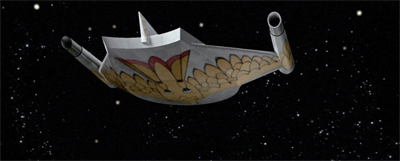
The not-so-great bird of the galaxy...

The not-so-great bird of the galaxy…

Continue reading

Star Trek – Where No Man Has Gone Before (Review)

To celebrate the release of Star Trek: Into Darkness this month, we’ll be running through the first season of the classic Star Trek all this month. Check back daily to get ready to boldly go. It’s only logical.

In a way, there’s a very clear divide between The Cage and Where No Man Has Gone Before. It’s clearer than the strange new actor sitting in the middle of the Bridge or the fact that Spock is suddenly a lot less casual. In a way, each is perfectly positioned in popular consciousness. The Cage was produced in late 1964, but wouldn’t be shown on television until 1988, after spending years touring the fan circuit. It remains a strange bit of Star Trek history, sitting simultaneously outside any of the five television shows, and simultaneously a completely inexorable part of the franchise’s evolution. It’s where it all began, but not where the first Star Trek began.

In contrast, Where No Man Has Gone Before feels more like the pilot episode of Star Trek. Sure, the fashion changes a bit in the episodes to come, the entire cast has yet to be assembled, but this is recognisably the same ship and the same show as The Corbomite Manoeuvre or The Man Trap. It’s more than the actors filling roles, the consistent characterisation of Spock or the fact that it actually aired on television in September 1966. This is what the next three years of Star Trek will be like. It’s an aesthetic or an approach to storytelling that is markedly different to the way that The Cage tackled many of the same themes and ideas.

While The Cage laid down many of the philosophical underpinnings of the broader Star Trek universe – including the classic show – it is also a lot less physical and visceral than the classic Star Trek. Indeed, The Cage featured the Captain of the Enterprise reasoning with an advanced bunch of god-like aliens, appealing to human virtues. The action sequences felt a bit extraneous. In contrast, Where No Man Has Gone Before sees the Captain of the Enterprise punching a god-like being repeatedly in the face while hitting on the same themes.

I think that’s perhaps the most dynamic difference between not only The Cage and Where No Man Has Gone Before, but between Star Trek and its spin-offs.
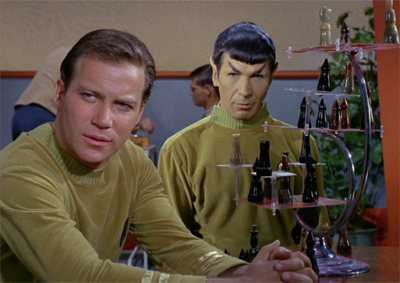
All the old familiar faces...

All the old familiar faces…

Continue reading

Non-Review Review: Throw Momma From the Train

Throw Momma From the Train feels like something of a dry run for Danny DeVito. The actor had previously directed a cable television movie, The Ratings Game, but Throw Momma From the Train represented his theatrical directorial début. While not nearly as effective as his follow-up, the classic War of the Roses, Throw Momma From the Train sustains itself with an interesting premise and two charming lead performances that help cover for a script that isn’t anywhere near as darkly comic as it would like to think that it is.

Snatching DeVito from the jaws of victory...

Snatching DeVito from the jaws of victory…

Continue reading

Non-Review Review: Identity Thief

It must be very difficult to balance the demands of a road-trip comedy. You need two solid leads with a definite sense fo chemistry, but with enough conflict between them to keep things interesting. You need a compelling objective for at least one of the characters to strive towards. You need a tightly-constructed scenario which rules out any easy use of mass-transit. You need a cast of quirky supporting characters to give the movie a distinct flavour, and to occasionally do a bit of heavy-lifting if you decide to develop your leads.

Identity Thief seems to realise this, but it fumbles a bit in the execution. Too many plot points and characters feel too convenient, inserted to either pad out the movie’s runtime or to construct a reasonably believable set of statistics to force the plot into motion. Identity Thief almost seems to try too hard to justify itself and to meet those requirements of a road movie. It’s best when it focuses on the two lead characters, even if it does overplay its hand slightly. It’s not a bad little comedy, but it’s not an especially strong one either. There are a few light chuckles, bu the film mostly runs on the charm of its two leading characters.

Not quite a breakout hit...

Not quite a breakout hit…

Continue reading

About Time: Time Travel Logic, Paradoxes and Looper…

I watched Looper again at the weekend. It’s still a pretty great movie, well-constructed and thoughtful. Of course, it still doesn’t feel like a proper “time travel” movie, because the time travel element doesn’t logically gel as easily as it otherwise would. After all, the original time line sees young!Joe kill old!Joe as soon as he appears. Therefore, old!Joe can’t logically kill Sara. If old!Joe doesn’t kill Sara, then why does Cyd become the Rainmaker? After all, we’re told (or it’s heavily implied) that young!Joe killing himself (and old!Joe) prevented Cyd from becoming the Rainmaker. So if this never happened in the time line where young!Joe grows into old!Joe, how did the Rainmaker come to be?

Oh no, I’ve gone cross-eyed.

This is the thing with time travel movies, and it’s something I’ve been thinking about. How important is internal consistency to a time travel movie? How necessary is it for a time travel movie to flow relatively logically from its own premise? At what point do we just stop trying to apply rules of logic and just enjoy the movie for what it is?

looper4

Continue reading

Star Trek: The Next Generation – Home Soil (Review)

To celebrate the twenty-fifth anniversary of Star Trek: The Next Generation, and also next year’s release of Star Trek: Into Darkness, I’m taking a look at the recent blu ray release of the first season, episode-by-episode. Check back daily for the latest review.

I’ve been complaining pretty consistently throughout this rocky first year of Star Trek: The Next Generation that the show is trying too hard to be a carbon copy of the classic Star Trek, rather than trying to define its own distinct identity. By that logic, I concede that I should detest Home Soil. Much like the less-than-classic The Naked Now, it is pretty much an attempt to update an episode from the original show.

In this case, the story of a bunch of terraformers provoking an unconventional native lifeform recalls The Devil in the Dark, one of the best-loved episodes of Star Trek‘s pretty stellar first year. While Home Soil doesn’t quite measure up to its rather wonderful progenitor, it does manage to put its own slant on the story, to the point where Home Soil doesn’t feel like a recycled Star Trek script; rather, it feels like a story told from the perspective of The Next Generation.

Spark of life...

Spark of life…

Continue reading

The Spirit Archives, Vol. 16 (Review/Retrospective)

We’re more than half-way through Will Eisner’s tenure on The Spirit, and I find myself struggling, just a bit, to come up with something novel to say about it. After all, I’ve gone on and on (and on and on) about how Eisner has handled the weekly strip for the bones of about 10,000 words at this point. As much as I like to examine each six-month period on its own terms and merits, there comes a point where I have to concede that this is just one giant project, and a lot of what I can say about it I have already said. Sure, there are some new themes and ideas, and Eisner always enjoys putting a new slant on old concepts, but I can’t help but feel that this extended bunch of reviews and retrospectives will wind up tripping over each other. (I say that as if they haven’t already.)

With that in mind, just because I might have a bit less to say about The Spirit Archives, Vol. 16 doesn’t mean that it isn’t a great collection of stories. We are, after all, in the middle of the most celebrated part of Eisner’s run. This collection is pretty consistently smart, funny and moving. Just because this reviewer is struggling not to cover old ground doesn’t mean that Eisner is any less of a master.

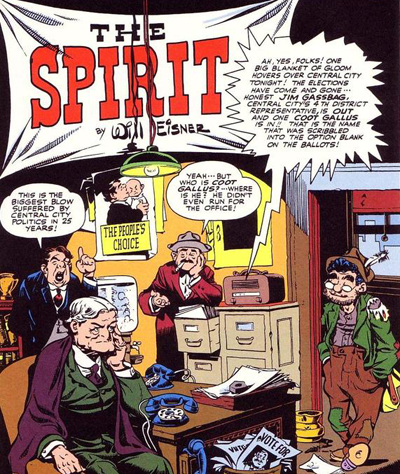
A web of deceit...

A web of deceit…

Continue reading

The Spirit Archives, Vol. 13 (Review/Retrospective)

With Eisner now back on the strip for over half-a-year, The Spirit is forging ahead into the middle part of its run. Many commentators and pundits would argue that the few years following Eisner’s return from military service were among the best in the strip’s history, and it’s hard to disagree. While Eisner took the time in his first six months to tidy up loose ends – killing the Squid, sending Satin home with a daughter – here we see the creator building up the world he has created. This collection includes the strips introducing (and a number of subsequent appearances from) both P’Gell and the Octopus, arguably two of the most important characters introduced into the strip following the Second World War. There’s also a sign that Eisner is branching out a bit, and pushing the strip out from the shadow of the Second World War. After all, a new era of prosperity and a Cold War were both just around the corner, very fertile ground for the creator to explore.

A banner year?

Continue reading

Star Trek: The Next Generation – The Big Goodbye (Review)

To celebrate the twenty-fifth anniversary of Star Trek: The Next Generation, and also next year’s release of Star Trek: Into Darkness, I’m taking a look at the recent blu ray release of the first season, episode-by-episode. Check back daily for the latest review.

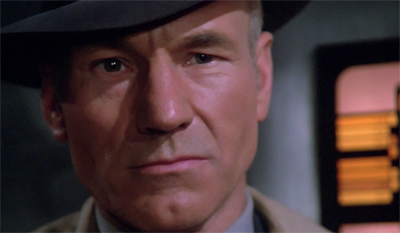
I actually enjoyed The Big Goodbye on a lot of levels. It’s not a great Star Trek episode, but I don’t think that the first season of Star Trek: The Next Generation produced a great episode. Even those episodes I do not actively hate are still significantly flawed. The Big Goodbye has more than its fair share of problems, but it does several things right. It never pretends to be more than it is, and it allows Patrick Stewart to do a lot of the heavy-lifting. Stewart is effectively charged with selling the episode to the audience, and he does a tremendous job. The result is something quite similar to the eponymous holonovel – something diverting and entertaining, but hardly profound or essential. Given the quality of the surrounding episodes, “diverting and entertaining” seems like just what the doctor ordered.

Over the Hill?

Over the Hill?

Continue reading