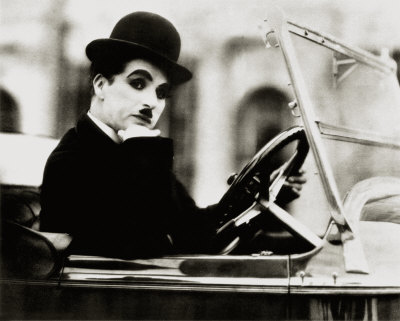
The wonderful lads over at Anomalous Materials are running a tournament over the summer to find the best comedy of all time. Think of it as a world cup, for film nerds. However, the competition – like our quad-annual footie fest – has had its share of upsets. Most notable in an early round where Galaxy Questtriumphed over Some Like it Hot or the trumping of Arsenic and Old Lace by A Fish Called Wandaanother day (the same day The General went home empty handed, losing to Mrs. Doubtfire) or Bringing Up Babygetting trounced by Little Miss Sunshine. There are more borderline cases, with The ApartmentbeatingThe Circus or The Great Dictatorlosing to The Graduate. However, the only victory for a “classic” classic film I could find was that of City LightsoverA Christmas Story. This sparked a bit of discussion between those taking part (which is, in fairness, the rather wonderful thing about events like this), but it got us wondering: Is comedy a fickle mistress? Has what the audience expected from a comedy changed dramatically with the times? Are what many consider to be “classics” of the genre subject to this winds of change and popular taste?
I was delighted over the weekend to be asked to take part in a joint blog post with the rather wonderful Frank over at the Pompous Film Snob, outlining my favourite trailer and why. The article’s well worth a look and features some fantastic contributions. There’s a lovely selection right there. Anyway, he got me in the trailer frame of mind and I thought I’d maybe just post some of my favourite trailers for non-movie-things here, as a kind of a spin-off.
It’s great when film makers find something original enough to play with. Daybreakers takes an intriguing little snippet most of us have probably had and dismissed while watching a cheap vampire film – “what would happen if the vampires won and became the dominant species?” – and stretches it out to a two-hour film. It’s a movie that’s bristling with all sorts of witty ideas, but the problem is that it never really takes the opportunity to lift itself out of the “trashy B-movie” category of vampire and futuristic military films. While there are some great notions and concepts at play here, they aren’t executed with a hint of finesse, instead played with the sort of skill you traditionally find in a hackneyed slasher movie. Which is a damn shame, because when the movie hits the right buttons, it really works.
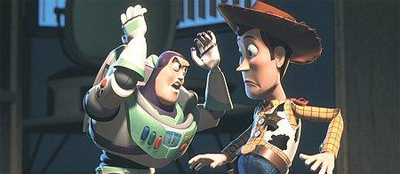
Toy Story 3 seems to be pretty much universally loved. I say ‘pretty much’, because there are currently two negative reviews on-line about it. To put that in context, that’s two negative reviews out of nearly one-hundred-and-fifty on Rotten Tomatoes. As always happens with this sort of thing – reviewers expressing a ridiculously unpopular opinions – this has prompted a bit of a reaction on-line:
They rail against anyone who likes it, happily sitting alone on their bitter, hate-filled island. An island of wrong. Hundreds of film critics have proclaimed their love for Toy Story over the course of three movies and the two baldies who hate it can’t really tell us why. Most of the time film is subjective. This time it’s not.
So, is film criticism ever objective? Can an opinion ever be wrong?
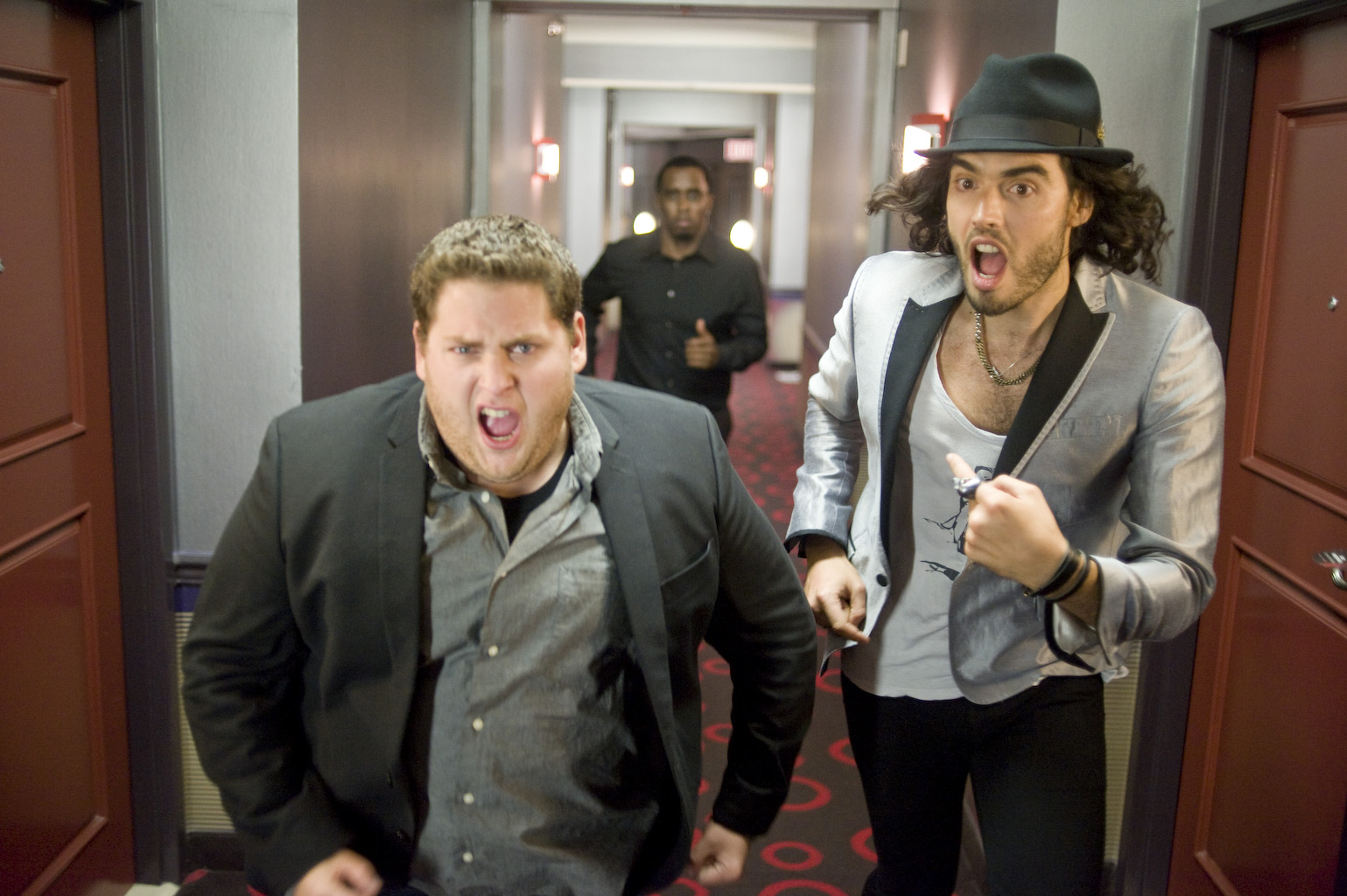
I’m a big fan of Russell Brand but he seems to be somewhat overshadowed by Jonah Hill in Get Him to the Greek. Hill easily steals the show and is the main reason this film is funny, I may even go as far as saying he’s the only reason this movie is funny. Without Hill this movie may have fallen down, but luckily he keeps everything a float throughout the course of the film.
I have the pleasure of checking out Philip Glass at the National Concert Hall tonight. Despite the fact that I know next-to-nothing about music, I’m quite fond of Glass’ rather wonderful compositions – mostly through pop culture osmosis. It seems that Glass is the go-to guy if you need something wonderfully emotional and catchy, yet grandiose and sweeping to accompany a given film. He’s done countless soundtracks, but these are the big “on-screen” moments which I think of when I think of Glass.
First up, Watchmen. There’s a wonderful sequence on Mars scored to Glass’ Prophecies and Pruitt Igoe, which is perhaps the best scene in the entire jumbled up and deeply flawed film, as the past and present collide to the ominous soundtrack and narration. However, I can’t find that, so watch the trailer instead.
The Hobbit is dead. Long live The Hobbit. Look, we all know it’s going to happen. Like the next James Bond film, the economics of the situation dictate that it must happen – a spin-off from The Lord of the Rings is too lucrative an opportunity to pass up, it’s an excuse to print money. Think of all the simple/theatrical/standard/deluxe/super/extended versions of the films have been released on video/DVD/HD DVD/Blu Ray. Now double that. So now you know why The Hobbit is going to happen, eventually. Unfortunately, I think we all know it’s not going to happen soon. And I’m here to tell you why Del Toro departing the film is actually a good thing.
Down the hobbit hole...
Note: This is part of a two-part article. Andrew over at the always wonderful Andrew at the Cinema is offering this article a jolly good rebuttal. Pop over and give it a read. Just make sure to spend a few minutes appreciating my flim-flam arguments before he pretty much destroys them with his advanced reasoning.
The reviews for Jonah Hex are not good. The box office for Jonah Hex is equally not good. I think it’s safe to say that there won’t be a sequel. But are the implications deeper than that? I’ve certainly read some suggestions that this might not just be a bad result for the bad ass, facially-scarred cowboy, but for fans of minor comic book characters in general:
Remember all those ambitious plans DC and Marvel’s film crews had to use their massive character libraries as movie R&D? After sub par returns for Kick-Ass, The Losers (two movies that deserved better box-office) and with Jonah Hex a near-certain bomb, fans may want to dial down those dreams of an Ant-Man or Booster Gold movie.
When the bell finally tolls in Hollywood for films based on B-list comic book characters – and you can bet Quasimodo is warming up in the bell tower — you might be able to blame Jonah Hex for being the tipping point.
So, has Jonah Hex killed any chance for lesser known characters on the big screen?
Has Jonah put a Hex on less popular comic book characters?
I remarked last week that I wholeheartedly trusted Christopher Nolan when he decided not to recast the Joker role in Batman 3, despite the fact that the character was rumoured to play a large in the planned sequel to The Dark Knight. However, it got me thinking as to what my reaction would have been had he announced that he was recasting the role, and that it was essential to the finale of his planned trilogy, and that (having worked with his star) Heath might even understand. I don’t know – I probably would have been a little skeptical and uncertain; I may even have hesitated at the suggestion. I accept, however, I probably would have trusted him on it. It’s a scarce commodity these days when the internet has given everyone a voice with which to trumpet their opinions and everybody has an opinion on everything. So, when should we trust a director? When do I trust a film maker, no matter what they choose to do?





















 the m0vie blog