• Following Us

  • Categories

  • Check out the Archives


  • Awards & Nominations

Non-Review Review: The Canyons

The Canyons struggles to surmount the weight of productions stories bearing down on it. Paul Schrader’s latest film was famously the subject of a 7,000-word article in the New York Times documenting the trials and tribulations behind the scenes. In a way, these troubles made the film somewhat larger-than-life, turning it into one giant attempt at career resurrection for director Paul Schrader and lead actor Lindsay Lohan.

Given the film’s much publicised sexual content (and the decision to cast pornography actor James Deen in the lead role), there’s a sense that this could be Lohan’s Last Tango in Paris, a bold and blistering performance from a once-respected talent eclipsed by years of behind-the-scenes gossip and idle chatter. Ironically, it’s none of the established talent that impresses with The Canyons. Bret Easton Ellis’ story feels like a shallow pastiche of Ellis-ian touches, while Schrader’s direction is intrusive and overwhelming. Lohan shows flickers of honesty and risk-taking, but is lost in the shuffle and the hum-drum plotting.

In contrast, it’s relative newcomer (as much a man with a filmography containing over 1,000 titles can be a newcomer) James Deen who makes the strongest impression as a surprisingly efficient Ellis-ian protagonist.

thecanyons1

Continue reading

Roger Ebert

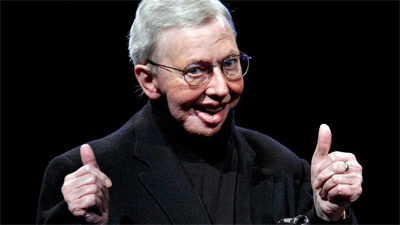
I’ve been away for a while, with personal stuff, so this is quite late. Which is probably for the best, as I don’t think I can really say too much about Ebert that hasn’t already been said by so many more eloquent individuals all around the internet.

Roger Ebert meant a lot to me. It’s no real exaggeration to suggest that he was the first real American film critic that I noticed. Obviously, I grew up with British and Irish film critics on television and radio. I was fond of (and am still fond of) Barry Norman, Jonathan Ross, Mark Kermode and Dave Fanning among others. However, Ebert was the first American film critic who really resonated with me.

rogerebert2

Continue reading

Non-Review Review: The Thing (2011)

The reflexive reaction to a film like the 2011 version of The Thing is one of scepticism. There’s something very strange about seeing a movie that had been relatively unloved on initial release garnering the remake/prequel treatment, an attempt to cash in on its cult success by turning it into a franchise. And, to be fair, a lot of that cynicism is justified by The Thing. There are times when it seems like – despite the obvious affection for the original horror master piece held by the writers and the director – that nobody really has any idea why John Carpenter’s The Thing has become such an iconic piece of cinematic horror.

There are some nice touches here, and it seems like director Matthijs van Heijningen Jr. is genuine in his love of the classic body horror. Unfortunately, it feels like the finished product is more the result of mechanical number-crunching than honest enthusiasm.

All fired up...

All fired up…

Continue reading

Non-Review Review: Tower Heist

Hollywood has always had a strange way of reacting to current trends and realities as they exist outside the multiplex. Films tend to take a while to react to shifting cultural phenomena. That said, changes in response to particular incidents can be relatively swift. Gangster Squad was famously re-shot following the Aurora shootings and released less than a year later. Although still in the early stages of its production, Zero Dark Thirty was heavily re-worked after Osama Bin Ladin had been shot and killed. However, it’s the broader changes that Hollywood takes longer to acknowledge.

The Dark Knight was praised by The Washington Times as “the first great post-Sept. 11 film”, but this was in 2008 – almost seven years after the attacks. The 9/11 zeitgeist still lingers over American film and television. However, it’s telling that – only recently – have we seen reactions to the financial crisis creep into contemporary blockbuster cinema, as the studios try to acknowledge the shifting economic reality.

Tower Heist is very clearly an attempt to capitalise on some of the anger and the hurt generated by the failure of banks and official bodies to protect the average citizen from the financial collapse. It’s confused, muddled and a little disjointed, even if the intentions seem noble. It still feels a little disappointing that it took almost half a decade to produce this rather bland reaction.

A crash course in economics...

A crash course in economics…

Continue reading

Non-Review Review: Oz – The Great & Powerful

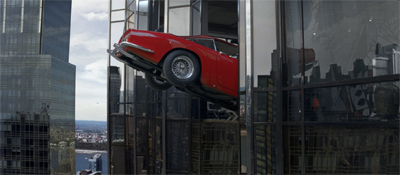
Oz: The Great & Powerful is a fabulous production. A few minor misgivings aside, it looks and sounds fantastic. Sam Raimi has done the best job bringing Oz to the screen since the original version of The Wizard of Oz all those decades ago. In its best moments, there’s an enthusiasm and a lightness of touch that fits the material perfectly and captures the wonder that we associate with Oz. It’s very clear that a lot of love and care was put into the production design of the film, and that Sam Raimi’s hand moved with the utmost consideration and affection for the original film. It makes it a little disappointing, then, that the script to Oz: The Great & Powerful should feel so undercooked, more like an early draft than a finished screenplay.

Up in the air or down to earth?

Up in the air or down to earth?

Continue reading

Look! Jack Kirby’s Designs for Argo!

I’m actually reasonably happy with Argo winning Best Picture. I’ve given up on the idea of the Academy Awards ever mirroring my own tastes, and Argo is a pretty great film from a director who is developing into a wonderful talent. And the awards last night spread the love around. It’s hard to hate a ceremony that can give Quentin Tarantino a Best Original Screenplay Oscar for Django Unchained.

Anyway, in celebrating the success of Argo, how about a look at Jack Kirby’s original designs for the fictitious movie Lord of Light (which became Argo)? Kirby was a comic book legend, who created The Fantastic Four, The X-Men, Captain America, Thor and countless other iconic comic characters. In the seventies, Kirby had an ever heavier science-fiction bint, creating his wonderful Fourth World and The Eternals and O.M.A.C. As part of the operation to rescue the escaped diplomats, Kirby designed these storyboards for the movie, which actually hit upon several of the author and artist’s favourite themes – including advanced god-like beings and the merging of the rational with the mystical.

Check out his sketches below. Click to enlarge.

Click to enlarge.

Click to enlarge.

Continue reading

Non-Review Review: Side Effects

This film was seen as part of the Jameson Dublin International Film Festival 2013.

On one level, Side Effects is a deliciously pulpy medical thriller, with the kind of zig-zagging twisty plot that you’d expect from a Michael Crichton novel. It’s more than satisfying on these terms, almost serving as a feature-length pilot for an imaginary medical drama starring Jude Law. After all, with House off the air, there’s a clear gap in the market for a smooth English actor playing the lead in an unconventional medical drama. If he is sarcastic, all the better. While the genius of the early years of House came from mashing up the medical subgenre with the police procedural to produce a then-unique hybrid, Scott Z. Burns instead blends the medical drama with a decidedly more trashy and sordid thriller to provide a satisfyingly twisty drama.

However, on another level, Side Effects teases issues that are far more interesting than the movie it eventually becomes. It’s very frustrating when your red herrings feel like they’d produce a more thoughtful or insightful piece of cinema than the final story. Side Effects broaches topics that mainstream cinema hasn’t really engaged with, and the opening scenes flirt with the idea of providing an entirely different film. It’s not always fair to judge a film for what it isn’t, but the problem is that Side Effects sets up a much more tempting and intriguing look at medicine than we get with the final product.

Love isn't the only drug...

Love isn’t the only drug…

Continue reading

Non-Review Review: Hitchcock

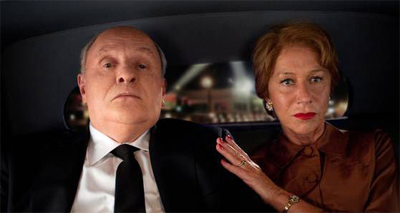
As a bit of a film fan (and a bit of a Hitchcock fan), Hitchcock had me interested. After all, Hitchcock’s Psycho is arguably among the most important films ever made, both creating an entire subgenre (“the slasher”) and imbuing it with artistic credibility at the same time. The production of Psycho was not only a huge gambit for Hitchcock, but it was also an incredibly difficult task for the auteur to accomplish. Hitchcock was sixty when Psycho was eventually released. It’s easy to imagine a director at that age resting on his laurels, and Hitchcock really works when it explores the drives of the talented film maker, willing to look at the implications of those drives and how the same things that made him one of the world’s greatest directors may also have made him a less-than-nice person.

Hitchcock occasionally gets a bit too cluttered with domestic drama, but it features two strong performances and a fascinating true story. It might not be as exceptional as it could have been, but it’s still a damn fine exploration of movie history.

Alma matters?

Alma matters?

Continue reading

Non-Review Review: Flight

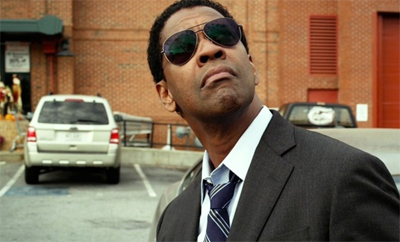
Flight has a lot to recommend it. It has an interesting subject, a fantastic central performance and wonderful supporting cast. As a result, it’s a shame that the movie makes such a mess of all these things. Flight is never less than interesting and Washington is always watchable, but it isn’t quite as compelling as a two-hour drama film needs to be. Director Robert Zemeckis struggles a bit with the tone of the piece, and Flight seems to be a bit all over the place, making it quite difficult to enjoy and hard to engage with.

Things are looking up...

Things are looking up…

Continue reading

12 Movie Moments of 2012: Running (Shame)

As well as counting down the top twelve films, I’m also going to count down my top twelve movie related “moments” of 2012. The term “moment” is elastic, so expect some crazy nonsense here. And, as usual, I accept that my taste is completely absurd, so I fully expect you to disagree. With that in mind, this is #8

It is quite common to see New York presented in an unpleasant light. After all, Martin Scorsese’s films capture the metropolis at its very best and its very worst, and there are countless gangster films devoted to exploring the dark underbelly of a city that is easily one of the most recognisable in the world. I have never been to New York, and yet I feel like – through years of film-watching – I have come to know the city almost as if I have lived there.

As such, I was surprised when Shame managed to offer me a somewhat novel take on New York itself. The city is as much a character in the film as any of Steve McQueen’s supporting cast. (Indeed, Carey Mulligan even gets to perform an extended version of “New York, New York” in tribute to her co-star.) McQueen manages to craft a distinctly unpleasant and uncomfortable exploration of the city without resorting to any of the trite clichés that one associates with the horrors of urban living.

Indeed, one long single-take shot of Brandon running within the confines of the city offered a more powerful sense of urban anomie and isolation than I have ever seen before, presenting a cold blue city completely indifferent and unaware of the millions of people living within the city limits.

shame11

Continue reading