• Following Us

  • Categories

  • Check out the Archives


  • Awards & Nominations

Non-Review Review: Stillwater

Stillwater is effectively three different movies bundled together. Each of those three movies have their own merits and their own weaknesses, but none of them really work when bundled together.

Stillwater stars Matt Damon as Bill Baker, a demolition worker from the eponymous town in Oklahoma. His daughter Allison is five years into a nine-year sentence in Marseilles, having been found guilty of a sensational crime involving the death of her roommate. Even half a decade later, Allison still protests her innocence and Bill tries to maintain some connection with his previously estranged daughter. However, the past is pulled into the present when a potential new lead opens up.
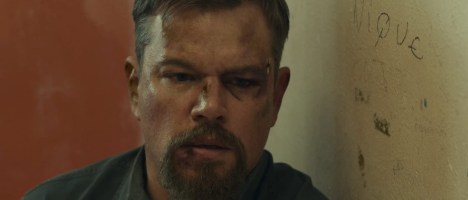
Damon’s demons.

Stillwater is directed by Tom McCarthy, who won the Best Original Screenplay Oscar (and was nominated for the Best Director Oscar) for his work on Spotlight. McCarthy has kept relatively busy since winning the award, collaborating on the script for Christopher Robin and doing uncredited rewrites on The Nutcracker and the Four Realms. However, Stillwater still feels likes something of a long-awaited return from McCarthy as a prestige filmmaker. Stillwater is built around a central movie star, deals with weighty issues, and even (faintly) echoes the very public spectacle of the Amanda Knox trial.

However, the film never coheres into a compelling narrative. It is disjointed and uneven, bouncing clumsily between tones and struggling to anchor itself as it switches freely between genres. Stillwater doesn’t run quite as deep as it needs to.

An American in Marseilles.

Continue reading

Non-Review Review: Jungle Cruise

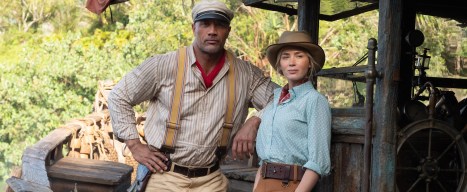
Jungle Cruise is a throwback to a throwback to a throwback.

Jungle Cruise is inspired by the eponymous theme park ride, a surprisingly common occurrence in the age of intellectual-property-derived blockbusters, and an approach that has led to films like Pirates of the Caribbean: Curse of the Black Pearl and The Haunted Mansion. However, because even narrative-driven theme park rides don’t necessarily provide enough story to sustain a feature-length film, Jungle Cruise positions itself as a very deliberate homage to movies like The Mummy, and traces that lineage back to classic eighties adventures like King Solomon’s Mines, Romancing the Stone and Raiders of the Lost Ark.

Cruise Control.

There’s an undeniable charm in this. After all, that adventure movie template can trace its roots back to movies like The African Queen and even into classic screwball comedies. It is a narrative framework that lends itself to charismatic movie star performances, and so it makes sense that Jungle Cruise features two genuinely engaging movie stars at its core: Dwayne Johnson and Emily Blunt. Jungle Cruise is at its strongest when it is willing to trust its leads to do what they do best, to be fun and charming while having exotic adventures together.

Unfortunately, Jungle Cruise feels too beholden to the conventions of modern blockbuster storytelling to lean into its stronger elements. Instead, those aspects of the films are constantly at war with the demands and the limitations of a modern spectacle-driven blockbuster. At times, Jungle Cruise feels more like a faded map promising a path to precious treasure. The broad outline is clear, but the richer detail has been lost to time.

Continue reading

Non-Review Review: The Sparks Brothers

The Sparks Brothers is a fan’s love letter. As the tagline helpfully summarises, it is a documentary about “your favourite band’s favourite band.”

Virtually everybody who appears on camera in The Sparks Brothers appears to rave about the eponymous siblings, Russ and Ron Mael, whose career has spanned more than half a century. There is a lot of joy and enthusiasm on display, even within fairly standard talking head sequences. Mike Myers takes a moment to playfully joke about how carefully the documentary team is getting is mole in focus, while the only character who has anything particularly negative or dismissive of the band is an animated Neil Tennant in a recollection from one of the band’s long-term associates.

An interesting framing…

This makes sense. The Sparks Brothers is a documentary from director Edgar Wright, a self-acknowledged fan of the band. Wright is careful never to crowd out or overwhelm his subjects, but he also takes advantage of his position as director to indulge his own fannish enthusiasm for the unlikely pop group. The Sparks Brothers is a surprisingly long documentary, running to two hours and twenty minutes. At least part of this is down to the fact that Wright takes great care to ensure that absolutely everybody gets a chance to have their say on what makes this “unusual duo from the seventies” such a monument

The Sparks Brothers is indulgent to a fault, but it’s also enthusiastic and excited. The energy of the assembled panel radiates through the screen, giving the documentary an infectious joie de vivre. The result is perhaps a little overlong and a little hagiological, but it is carried by a genuine sense of overdue celebration.

Oh, brother!

Continue reading

Non-Review Review: Fear Street Part Three – 1666

If Fear Street Part One – 1994 and Fear Street Part Two – 1978 didn’t make it clear enough, Fear Street Part Three – 1666 confirms that the trilogy is more of a miniseries than a set of films.

To be fair, this was quite clear from the outset. The films feature a large branching cast, with many actors carrying over from one installment to another. The continuity between the individual films is so tight that the two later installments each open with an extended “previously on…” segment. Fear Street Part Three – 1666 carries this idea to its logical conclusion, effectively functioning as a two-part season finale. It opens with an hour set in the past and then jumps forward for a forty-minute coda designed to close the book (if not literally) on the events from Fear Street Part One – 1994.

A sight for sore (or missing) eyes…

There’s not necessarily anything wrong with this. After all, there’s arguably not a huge difference between the structure of these three films and something like the Red Riding trilogy. More to the point, it demonstrates how porous the gap between various media has become. Demon Slayer: Mugen Train, the highest grossing movie of 2020, is really just a six-episode bridging arc between two seasons of the manga. Hamilton is both one of the best movies of all-time according to the Internet Movie Database and an Emmy nominee. Even the Marvel Cinematic Universe is arguably as much television as cinema.

As such, it’s hard to judge Fear Street Part Three – 1666 entirely on its own merits.

Tying it all up.

Continue reading

242. (ii.) Captain America (-#65)

Hosted by Andrew Quinn and Darren Mooney and with special guest Andy Melhuish, The Bottom 100 is a subset of The 250. It is a journey through the worst 100 movies of all-time, as voted for by Internet Movie Database Users.

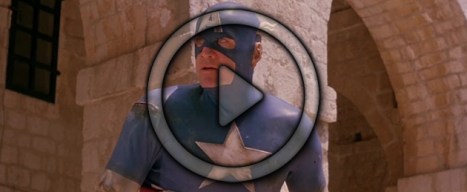
This time, Albert Pyun’s Captain America.

Polio sufferer Steve Rogers is selected for a dangerous experiment that could turn the tide of the Second World War, being reborn as Captain America. When a mission behind enemy lines throws him into conflict with the Italian supervillain the Red Skull, Steve Rogers ends up trapped in the ice. However, he awakens just as his country needs him most.

At time of recording, it was ranked the 65th worst movie of all time on the Internet Movie Database.

Continue reading

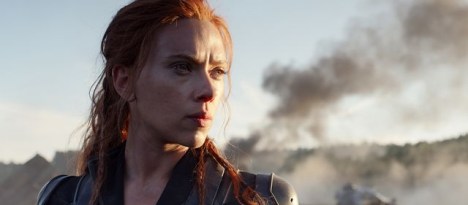
Non-Review Review: Black Widow

Black Widow was originally supposed to release in May 2020.

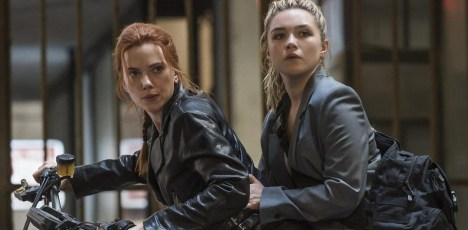
This would have marked as something of a “coda” movie to the main saga of the Marvel Cinematic Universe, a belated follow-up tidying away loose ends from Avengers: Endgame in much the same way as Spider-Man: Far From Home. Like a lot of the releases immediately following that massive cultural phenomenon, Black Widow feels like a bit of unfinished business. It is the first solo movie based around the only female founding member of The Avengers, a project that gestated in various forms over decades across multiple production companies.

A vicious cycle.

Of course, Black Widow would always have felt curiously out of step and out of time. Scarlett Johansson wrapped up her tenure as Natasha Romanoff in Endgame, with the superhero sacrificing her life in the quest to defeat Thanos. As a result, Black Widow has to position itself earlier in the timeline. It functions as something of an interquel between Captain America: Civil War and Avengers: Infinity War, following the title character as she desperately evades capture by United States Secretary of State Thaddeus “Thunderbolt” Ross.

Had Black Widow released on time, it still would have felt like a movie that arrived four years too late. After all, despite introducing Natasha Romanoff as early as Iron Man 2, the Marvel Cinematic Universe would not build a solo superhero film around a female character until Captain Marvel. For all the chaos unfolding behind the scenes, the DC Extended Universe managed to beat Marvel Studios to the punch with the release of Wonder Woman in May 2017. It’s interesting to wonder whether the decision to position Black Widow as a direct sequel to a May 2016 release is something of a retroactive grab at that title.

Widow maker.

Even aside from all of this baggage, Black Widow is a frustrating film. It is a movie that feels only a draft or two (or an editting pass or two) away from greatness. The film grapples with big themes and bold character work in interesting ways that occasionally verge on confrontational. After all, Natasha Romanoff has consistently been portrayed as a complicated and ambiguous figure within this world of gods and legends, an international assassin whose moral and bodily autonomy was violated in the most grotesque ways, and who responded to this by trying to reinvent herself as a superhero.

There’s a fascinating story there, and Black Widow intermittently acknowledges as much. However, when the film gets close to hitting on any nerves, it immediately retreats into snarky irony and wry one-liners that rob the story of any real weight and the characters of any real agency. Black Widow is supposed to be a story about a character asserting her own agency in the face of an uncaring machine. Instead, it feels like a film where the machine always wins.

Continue reading

241. Kimetsu no Yaiba: Mugen Ressha-Hen (Demon Slayer – Kimetsu no Yaiba – The Movie: Mugen Train) – This Just In (#238)

Hosted by Andrew Quinn and Darren Mooney, with special guests Graham Day and Bríd Martin, The 250 is a (mostly) weekly trip through some of the best (and worst) movies ever made, as voted for by Internet Movie Database Users. New episodes are released every Saturday at 6pm GMT.

This time, Haruo Sotozaki’s Demon Slayer – The Movie: Mugen Train.

Following a series of mysterious disappearances on a train from Tokyo to Mugen, three young demon slayers are dispatched to investigate possible supernatural influences. The three quickly team up with a veteran soldier in the battle against evil, and discover just how quickly their mission can go off the rails.

At time of recording, it was ranked 238th on the list of the best movies of all time on the Internet Movie Database.

Continue reading

Non-Review Review: Fear Street Part One – 1994

Nostalgia is a strange creature, by turns deceptive and revealing.

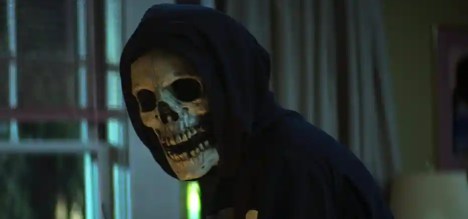
Netflix’s Fear Street trilogy, based on an original story inspired by the books written by R.L. Stine, is effectively a loving slice of horror nostalgia and a trip through slasher movie history. Fear Street Part Two: 1978 is very obviously an effort to take the genre back to its roots, evoking classics like Halloween or Black Christmas, and with its summer camp setting directly inviting comparisons to Friday the 13th and Friday the 13th, Part II. Similarly, Fear Street Part One: 1994 is clearly constructed as a loving homage to the slasher revival of the nineties, to films like Scream, Urban Legends or I Know What You Did Last Summer.

Skull Kill Crew…

In some ways Fear Street feels like a companion to that other big Netflix nostalgia property, Stranger Things. The three films are directed and co-written by Leigh Janiak, who is married to Stranger Things co-creator Ross Duffer. Like Stranger Things, there is a strong sense that Fear Street Part One: 1994 is aimed at a generation of viewers too young to remember the era firsthand. As such, Fear Street Part One: 1994 doesn’t feel like an attempt to accurately recreate the era so much as provide a cartoonish snapshot. It captures the pop memory of the period much more than the reality.

Fear Street Part One: 1994 is an appealing slice of genre nostalgia populated with a charming cast and an appealing high concept, albeit one that is occasionally so preoccupied by its broad brush strokes that it misses the final details. Then again, that is how nostalgia often works. Ironically, Fear Street Part One: 1994 probably has less to say about the genre than the movies that it is invoking.

“I have a bone to pick with you.”

Continue reading

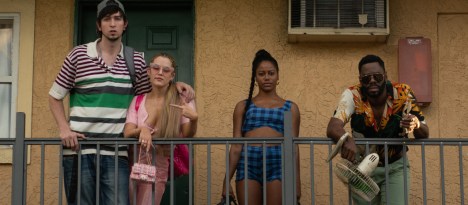
Non-Review Review: @zola

The opening line of @zola is inevitable.

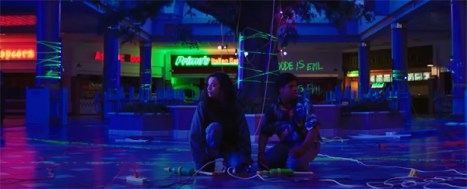
“Y’all wanna hear a story about why me and this b!tch here fell out?” asks Aziah King, the “Zola” of the title. “It’s kind of long but full of suspense.” There was simply no other way that the film was going to start. The line was foregrounded in the movie’s first trailer, and of course it was the opening tweet of the viral twitter thread (#TheStory) that inspired this cinematic adaptation. To put it simply, there was never any way that @zola was going to open any other way.

#NoTimeForReflection

However, the opening line is also a statement of purpose and a key to the film’s central joke. @zola positions that opening salvo as an iocnic statement of itself, a millennial riff on “it was the best of times, it was the worst of times…” and “call me, Ishmael.” The central conceit of Janicza Bravo’s adaptation of the twitter thread is to treat the work like a piece of some modern literary canon, a snapshot of modern America filtered through the prism of art, captured 140 characters at a time. It’s a clever approach, and the best part of @zola is how eagerly it commits to that wry framing.

@zola is an impressive piece of craft, a collision of a very classical formalism with a more modern sensibility to create something that exists in a striking and imaginative space. However, there are times when @zola commits too heavily to studying its characters through the prism of social media, making them feel more like macabre exhibits in some twenty-first century freakshow than actual human beings. Still, @zola sets out to capture an extremely online aesthetic and it largely succeeds – for better and for worse.

#FreaksAndGeeks

Continue reading

Non-Review Review: F9 – The Fast Saga

They say “start as you mean to go on.” So it seems appropriate that F9: The Fast Saga opens with a car crash.

The ninth installment in the Fast and Furious franchise arrives at an interesting time in the run of the series. Vin Diesel has announced that it might be time to retire the franchise, following a closing trilogy worthy of the characters. After much internal drama, two of the franchise’s core characters have spun out into their own franchise with Fast and Furious Presents: Hobbs and Shaw. The series is also still coming to terms with the passing of Paul Walker, who was the glue that held the franchise together. After all, what are Roman and Tej doing on the team now that Brian is gone?

Back in the ‘burgh.

Perhaps understanding that this is a tumultuous time for the Fast and Furious series, F9 makes a number of obvious plays for safe and familiar ground. Justin Lin returns as writer and co-director, a veteran of the franchise who helmed the four films between Fast and the Furious: Tokyo Drift and Fast and Furious 6. Lin directed Fast Five, which is probably the best film in the franchise, existing at the perfect intersection between the series’ origins as a gritty urban western and the bombastic blockbuster behemoth that it would become.

F9 clearly and repeatedly attempts to recapture some of the magic of Fast Five, but only serves to demonstrate that the franchise can’t go home again.

Continue reading