• Following Us

  • Categories

  • Check out the Archives


  • Awards & Nominations

Non-Review Review: Underwater

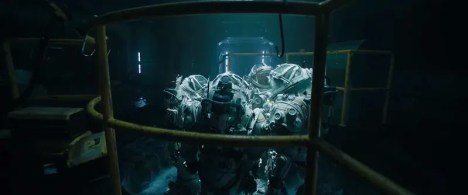
There’s a surprising charm to Underwater, which largely extends from its sense of propulsive forward momentum.

Underwater is not necessarily a good movie. It often feels like two radically different and highly derivative science-fiction movies stitched together, transposed from deep space to the deep sea. Underwater is never entirely sure whether it wants to be Gravity… but in the ocean” or Alien… but in the ocean”, and so repeatedly finds itself caught between the two extremes. It is a film populated by archetypes rather than characters, and which is pushed from one set piece to the next by percussive force rather than any coherent throughline.
A deep dive.

And yet, in spite of all that, there’s something strangely appealing about the mismatch of elements at play in Underwater. It isn’t just the way in which the film bounces haphazardly between a disaster film and a monster movie, it is also reflected in the casting. Underwater is a B-movie that brings together quite an eclectic set of leads. Kristen Stewart continues the gentle transition back towards the mainstream that began with Charlie’s Angels, but finds herself working opposite a cast including arthouse favourite Vincent Cassel and broader performers like T.J. Miller.

These seemingly contradictory elements create a strange frisson within the film, one that is just as volatile as the energy reactor that (inevitably) threatens to got critical to add an extra layer of pressure to the already beleaguered characters. However, director William Eubank seems to understand that these components are highly unstable, and so Underwater moves a dizzying pace that helps to prevent any of internal imbalances from reaching critical mass. It’s hardly the stuff of create cinema, but it’s a surprisingly sturdy and energised B-movie.

Suited to the task.

Continue reading

Non-Review Review: Fantasy Island

What, exactly, is the point of the Blumhouse reboot of Fantasy Island?

To be fair, Blumhouse are a studio with a varied track record. They have produced some of the most interesting and compelling mainstream horror movies of the past few decades, including films like Get Out and The Invisible Man. They have also produced a fair amount of cynical schlock, such as Truth or Dare. There are also a number of films that seem to exist in the middle ground between those two extremes, like The Hunt or Black Christmas. It’s certainly a more varied approach than the standard horror films that heralded the studio’s arrival, like Insidious or Sinister.

Palming it off.

Jason Blum is a shrewd producer, and there’s a sense in looking at the studio’s output of trying to balance competing artistic and commercial demands. Blum tends to keep budgets under control, but he also seems to offset the riskier and more ambitious projects with generic crowd-pleasing fare. Fantasy Island would seem to belong in that category, but exactly what crowd is it intended to please? Watching Fantasy Island is a strange experience, and not just because of the multitude of structural and storytelling problems.

On a more basic level: who exactly is this movie for?

Can’t stick the island-ing.

Continue reading

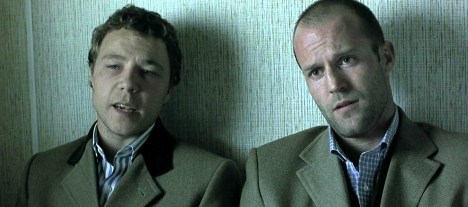
“You Understand Me Now, Don’t You?” Guy Ritchie’s “Snatch” and the Chaos of Miscommunication…

This Saturday, I’ll be discussing Snatch on The 250, the weekly podcast that I co-host discussing the IMDb’s Top 250 Movies of All-Time. However, I had some thoughts on the film that I wanted to jot down first.

“Have I made myself clear, boys?”

“Yeah, that’s perfectly clear, Mickey. Yeah… just give me one minute to confer with my colleague.

“… did you understand a single word of what he just said?”

Guy Ritchie is an interesting director, in large part because there seems to be very little that actively defines “a Guy Ritchie film” outside of a few stylistic quirks.

Films like Lock, Stock and Two Smoking Barrels, Snatch, Revolver, RocknRolla and The Gentlemen suggest a director fascinated with “hard men”, and some of this sensibility undoubtedly carries over into his blockbuster filmography, most obviously in the rambunctious stylings of Sherlock Holmes and most painfully in the attempts at grit in King Arthur. However, Ritchie has also spent a lot of time working as a director-for-hire on mainstream blockbusters worlds apart from that hypermasculinity, such as Swept Away, The Man From U.N.C.L.E. or Aladdin.

More than that, Ritchie’s work is more often recognised for its visual flourish rather than its thematic coherance, the director adopting a high-energy approach to camera movements and editing. Ritchie’s emerged from British independent cinema in the late nineties, and his work shares more than a few passing similarities to the work of young and hungry filmmakers working on the contemporary American scene. It is perhaps too much to describe Ritchie as “the British answer to Quentin Tarantino”, but it’s not entirely unfair either.

This is what makes Snatch such an interesting film. It is Ritchie’s second film, one that notably added some transatlantic flavour to the sensibilities of Lock, Stock and Two Smoking Barrels. Indeed, it’s tempting to write Snatch as an inferior copy of that earlier film, as a reiteration of that striking cinematic debut with extra Brad Pitt thrown in for marketability. After all, this was a particularly common line of criticism when the film was released. While there’s certainly some substance to this accusation, it overlooks the way in which Snatch makes its arguments much more clearly.

Continue reading

Non-Review Review: Butt Boy

Butt Boy is a single joke stretched over one hundred minutes. However, the film is elevated by its sheer and unrelenting commitment.

At its core, Butt Boy is a piece of surrealist comedy. Chip Gutchell is a middle aged man who works a deadend job “in computers” and lives with a wife who seems actively hostile to the idea of intimacy with him. His life is empty and meaningless, until he has a spiritual experience in the middle of a proctology exam. Chip becomes obsessed with placing objects in his butt, indulging those urges whenever he is left unattended. Gradually, those desires grow in intensity with catastrophic results.

It is a naturally absurd set-up, one that simultaneous offers broad riffs on heterosexual masculine anxieties and the escalating horrors of addiction. After several people go missing, alcoholic police officer Russel Fox begins to put the pieces together with no idea about where it might end. Butt Boy is an ultra low budget independent film, and unapologetically so. Everything is hypersaturated, props and locations often seem improvised, and the quality of performance varies wildly from scene-to-scene. More than that, the film is essentially an extended riff on one comedic set-up.

And yet, in spite of all of that, Butt Boy works surprisingly well. The key is the film’s single-minded focus on that single absurd premise, on the image of a man who has developed an anal fixation so strong that he at point tries to consume an entire police car. Butt Boy never flinches. It never breaks eye contact. It never corpses, not matter how far it follows that premise down its various rabbit holes. There is something strangely appealing in that, which suggests a bright future for writer, director and lead actor Tyler Cornack.

Continue reading

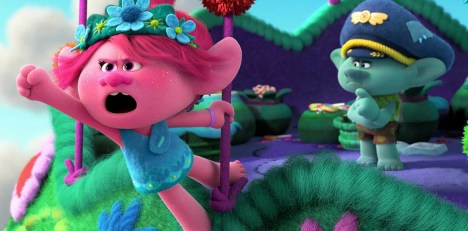
Non-Review Review: Trolls World Tour

If nothing else, Trolls World Tour demonstrates how far animated American films have come in the past few decades.

Modern family audiences have come to expect – and not unreasonably – a certain amount of polish and sophistication in terms of the stories being told. It’s common to credit Pixar with this evolution of expectation, given the narrative and thematic sophistication of films like Toy Story or Finding Nemo. However, the truth is that this was a movement across the medium, with Dreamworks also making significant contributions with films like Shrek, How to Train Your Dragon and even Kung-Fu Panda.

Keep Trollin’, Trollin’, Trollin’, ya!

Children have always been more sophisticated media consumers than people credit them, and it’s notable that younger children increasingly process information and storytelling in more concentrated bursts; platforms like Vine and Tik Tok spoke more to younger audiences than older ones, often hypercompressing narratives with an impressive efficiency. As an audience, kids are both smart and shrewd, and often capable of handling whatever film or television can throw at them. It seems like only recent have film and television begun to catch up to them.

This is part of what makes Trolls World Tour so disheartening, particularly in the context of this revolution in family films. Trolls World Tour believes that all it needs to do to distract children is to confront them with bold colours and familiar music. Maybe that’s correct, and it seems likely that Trolls World Tour will be suitably soothing to younger viewers. However, there’s something slightly cynical and patronising in the movie’s commitment to the philosophy of “just enough.”

Ballooning problems.

Continue reading

176. Mou Gaan Dou (Infernal Affairs) – World Tour 2020 (#—)

Hosted by Andrew Quinn and Darren Mooney, The 250 is a (mostly) weekly trip through some of the best (and worst) movies ever made, as voted for by Internet Movie Database Users.

This time, Alan Mak and Andrew Lou’s Mou Gaan Dou.

Trouble is brewing in Hong Kong. Crime boss Hon Sam has managed to evade the clutches of Superintendent Wong Chi-shing once too often. There can only be one explanation: Sam has a mole buried within the police department. However, as the police close in around him, Sam becomes convinced that Wong has is own embedded operative. What follows is a tense game of cat-and-mouse as the lines between cop and criminal – and self and other – blur

At time of recording, it was not ranked on the list of the best movies of all time on the Internet Movie Database.

Continue reading

Non-Review Review: Black Christmas (2019)

Black Christmas is an interesting misfire.

There’s something inherently clever about using the familiar template of a slasher movie to engage with the idea of toxic masculinity and the horrors of campus culture. Sophia Takal and April Wolfe certainly have a lot to say, and producer Jason Blum deserves a great deal of credit for positioning a film like this as part of the larger “social thriller” milieu that includes films like The Invisible Man or Get Out or Us. There’s a lot bubbling through Black Christmas, and it’s great to see a slasher film dabbling in these ideas.

Take a bow.

The biggest problem with Black Christmas is that it simply doesn’t work as a horror film. In terms of basic narrative mechanics and pacing, Black Christmas is a mess. The film suffers from many of the same structural problems that haunt so many disposable horror movies; the characters are thinly sketched, the film’s slow build-up feels a little too slow and its climactic confrontations feel a little too rushed and its internal logic is close to non-existent. These problems are compounded by the fact that actually positioning this movie as a remake creates an extra level of extraction.

Black Christmas has good ideas, but is somewhat lacking in the execution.

Don’t choke.

Continue reading

Non-Review Review: Downhill

Earlier this year, Parasite became the first non-English language film to win the Best Picture Oscar.

This was a landmark moment for the Academy Awards and for mainstream American cinema in general. It was significant enough in cultural terms to merit a racist dog-whistle from the President of the United States. It also suggested that it was possible for foreign films to make over the “one inch barrier of subtitles.” The film’s box office returns were impressive, and its cultural footprint quite sizable. Parasite seemed to make its own strong argument for the viability of foreign-language films in the English-language market place.

Passing each other on the down-slope of a marriage…

Downhill makes a similar argument, albeit in much less compelling terms. The indie cringe comedy is an adaptation of Ruben Östlund’s breakout foreign language sensation Force Majeure, premised on the idea that there are audience members who might be drawn to the basic premise of the original film, but alienated by the subtitles. Indeed, Östlund himself seems to have acknowledged this, moving on to more English-language-friendly pastures with The Square, a film with a lot of dialogue in English and starring actors like Dominic West and Elizabeth Moss.

Downhill makes its own argument for the necessity of Force Majeure, by demonstrating just how much can get lost in translation.

Cold reception.

Continue reading

Non-Review Review: Lady and the Tramp (2019)

Lady and the Tramp represents a new frontier for Disney’s reimaginings of their animated classics.

The studio has had great success adapting those older films for younger audiences with a hybrid of live action and computer-generated remakes, with Aladdin and The Lion King ranking among the highest grossing movies of last year. Mulan looked like it might have been on course to continue the trend, and the studio is working away on a new version of The Little Mermaid. However, what makes Lady and the Tramp so interesting is that it is not going to be one of those theatrical blockbusters. Instead, it was released directly on Disney+, the company’s streaming service.

A completely identical meatball game.

There are two ways of looking at this. Disney might have been hoping to give Disney+ a bit of a boost by offering an exclusive brand-name and star-driven family-friendly film. Alternatively, the studio might have accepted that Lady and the Tramp was never a viable theatrical release to begin with, whether because it didn’t scratch the right nostalgic itch or because of the quality of the adaptation simply wasn’t up to snuff. In reality, it seems like a combination of the two factors.

Lady and the Tramp is fairly standard as these adaptations go. It is hurt by the push to verisimilitude and by the decision to expand a tight animated story into a bloated live action one. It is also very visually, aurally and tonally flat. It’s a film that seems built around the ethos of “just enough”, often feeling like a television movie that has somehow earned a theatrical special effects budget. Lady and the Tramp is not the worst of the Disney live action adaptations, but it may be the most lifeless.

No far horizons.

Continue reading

Non-Review Review: The Way Back

The Way Back is a paint-by-numbers redemption narrative, anchored in a tremendous central performance from Ben Affleck and enriched by its keen observations.

The basic plot of The Way Back will be familiar to most audience members. Jack is an alcoholic construction worker who is struggling to hold his life together. He has learned to do just enough to remain functional, but not so much that the people around him haven’t noticed his struggles. Jack stubbornly refuses any assistance offer by his family or by his ex-wife, believing that he has found something resembling an equilibrium. His addiction has pushed him into a slow and noticeable decline, but he has yet to implode.

He’s Backfleck.

Almost entirely by chance, Jack finds himself drafted back to his old high school, emotionally blackmailed into coaching their basketball team. Jack had played basketball as a teenager, but gave up on the sport in much the same way that he has recently withdrawn from the world around him. Inevitably, through his coaching, Jack finds himself connected with the lovable misfits that he takes under his wing. Jack guides these young men towards sporting glory, helping them (and himself) to find purpose in what they are doing.

It is all very conventional. There are very few surprises in The Way Back, which feels almost like one of those well-executed manoeuvres that Jack has his team execute out of the court. Everything lines up, all the pieces are moved with purpose, and the end result is never really in doubt. However, The Way Back elevates this well-worn formula with two secret weapons. Most obviously, Affleck finds an intersection of his traditional movie-star charisma with the baggage of his star persona. More subtly, the film is willing to just observe its characters, to let them be themselves.

Team works.

Continue reading